Table of Contents
Introduction
Have you ever wondered why some scuba divers seem to float effortlessly while others struggle to stay at the right depth?
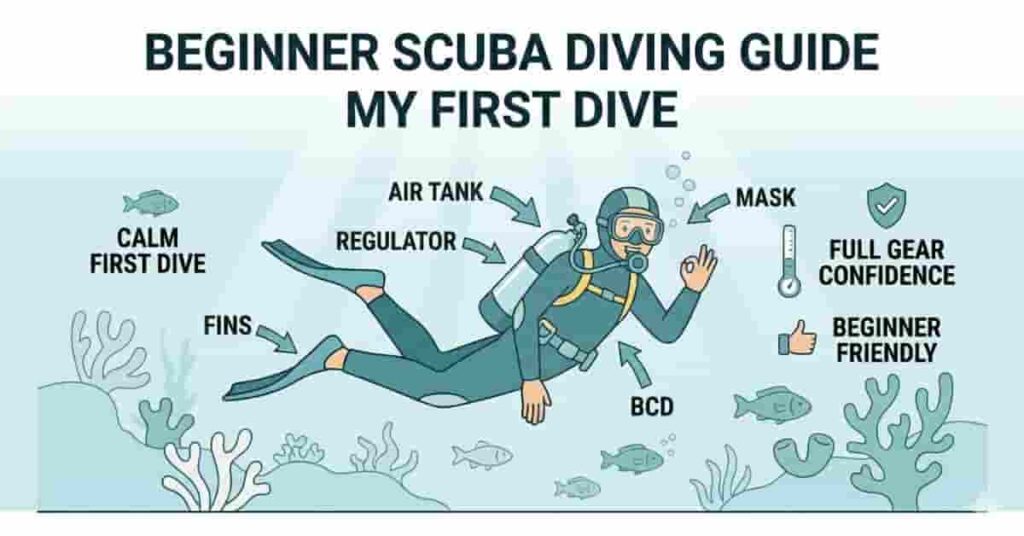
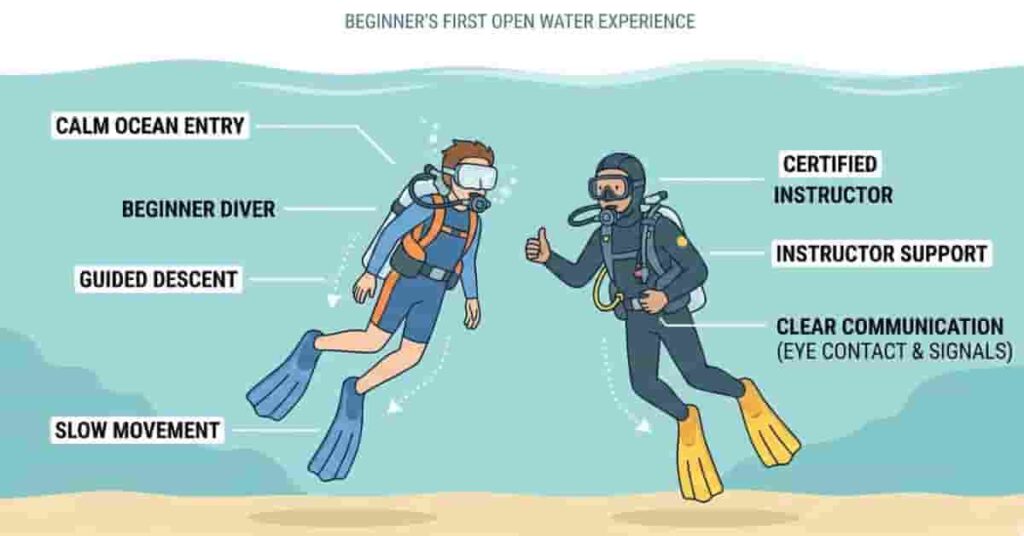
If you’re asking what is buoyancy in scuba diving, you’re already learning one of the most important diving basics. Buoyancy affects how you move, breathe, and stay safe underwater. It also helps protect delicate coral reefs and makes every dive feel smoother. For beginners in the USA, understanding scuba diving buoyancy early can build confidence before entering open water.
The good news is that buoyancy is much easier to understand than it sounds. You don’t need a science degree to learn the basics. Once you know how weight, air, and water work together, the concept becomes simple and practical.
In this guide, you’ll learn what buoyancy means, why it matters, and how it changes during a dive. We’ll also explain the different types of buoyancy, the equipment that affects it, and common beginner mistakes to avoid. By the end, you’ll have a clear foundation for becoming a safer and more confident scuba diver.
What Is Buoyancy in Scuba Diving?
If you’ve ever watched a scuba diver glide through the water, you’ve seen buoyancy in action. What is buoyancy in scuba diving? Simply put, buoyancy is the force that determines whether you float, sink, or stay suspended underwater. Every diver relies on buoyancy to move comfortably and safely during a dive.
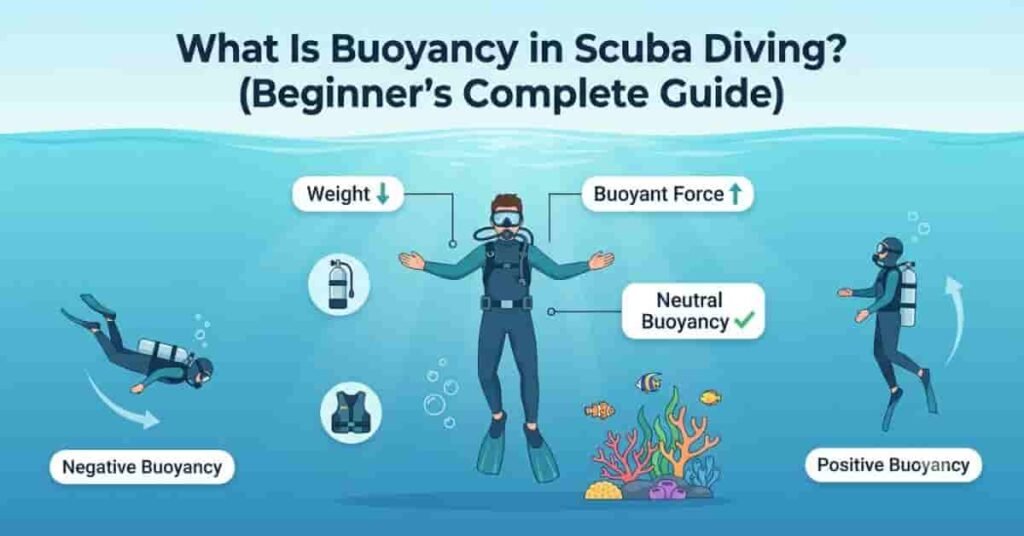
When you enter the water, three main factors work together: your body weight, the amount of air in your gear and lungs, and the water around you. If the upward force from the water is greater than your weight, you float. If your weight is greater, you sink. When both forces are equal, you achieve neutral buoyancy and remain at the same depth with little effort.
Water naturally pushes upward against your body and equipment. At the same time, your weight pulls you downward. Small changes in the air inside your BCD or even your breathing can slightly change your position in the water. This balance is why experienced divers appear to hover effortlessly instead of constantly swimming up or down.
For beginners, understanding scuba diving buoyancy is one of the most valuable skills to learn. Good buoyancy helps you stay comfortable, use less energy, and avoid accidental contact with coral reefs or the ocean floor. It also makes every dive feel more controlled and enjoyable.
Expert Tip: Think of buoyancy as finding your “balance point” underwater. You’re not trying to float or sink. You’re aiming to stay comfortably in the middle.
The Science Behind Buoyancy (Simple Explanation)
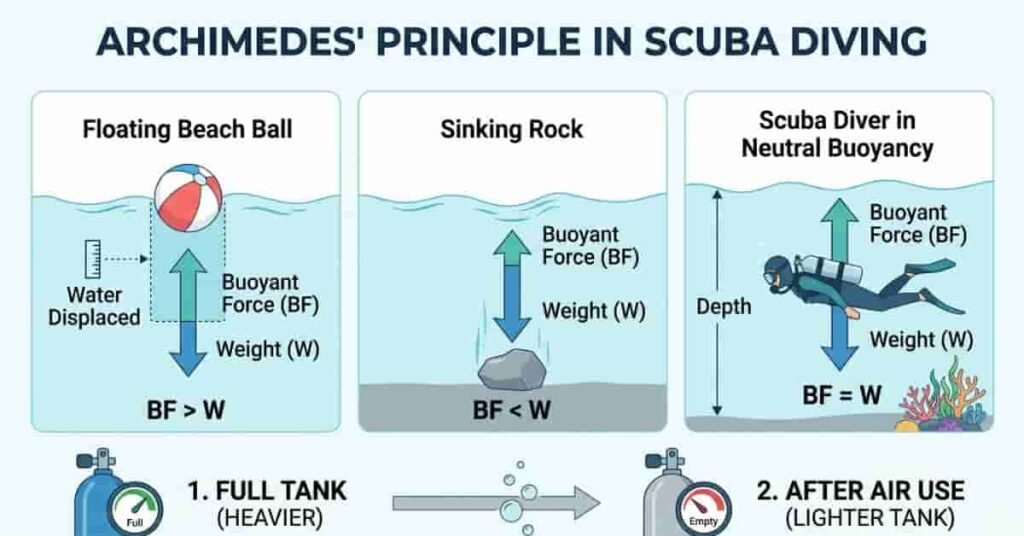
Buoyancy may sound technical, but the basic idea is easy to understand. It comes from Archimedes’ principle, which states that an object in water is pushed upward by a force equal to the weight of the water it displaces. In simple terms, the more water you push aside, the more support the water gives you.
The beach ball displaces a large amount of water compared to its weight, so it floats. The rock also displaces water, but it weighs much more than the upward force created by that water, so it sinks. Scuba divers fall somewhere between these two examples. By adjusting their equipment and breathing, they can balance these forces and stay neutrally buoyant.
Another important factor is water displacement. As you enter the water, your body and equipment push water aside. The amount of displaced water helps determine how much upward force acts on you. That’s why different wetsuits, tanks, and weights can change your buoyancy in scuba diving.
Your scuba tank also changes during a dive. At the start, it contains more compressed air and weighs slightly more. As you breathe, the tank gradually becomes lighter because the air inside decreases. This small weight change makes you slightly more buoyant near the end of the dive. Divers account for this change when choosing the correct amount of weight before entering the water.
Understanding these simple science principles helps explain why buoyancy changes underwater. Once you know why it happens, learning to manage it becomes much easier.
Key Takeaways
- Archimedes’ principle explains why objects float or sink.
- Water pushes upward on everything submerged.
- More displaced water creates greater buoyant force.
- Scuba tanks become slightly lighter as air is used during the dive.
- Small changes in weight and air can affect underwater balance.
Types of Buoyancy in Scuba Diving
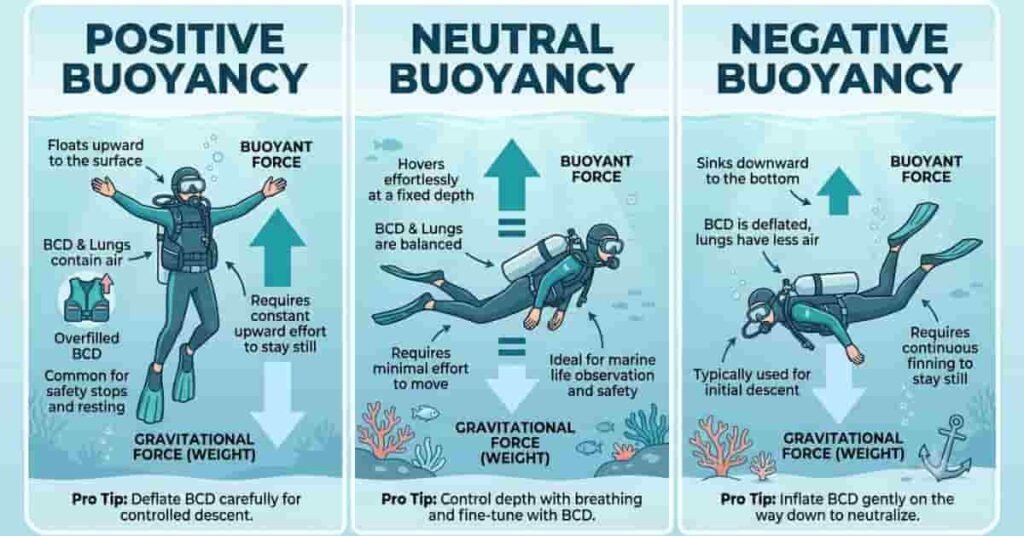
Every scuba diver experiences one of three types of buoyancy underwater. Understanding these basic states makes it easier to see how divers move through the water. While experienced divers learn to switch between them when needed, beginners should first understand what each type means.
Positive Buoyancy
A diver has positive buoyancy when the upward force of the water is greater than their weight. In this state, the diver naturally floats toward the surface. This is the same reason a life jacket keeps a person afloat.
Positive buoyancy is useful at the surface before and after a dive. It helps divers stay comfortable while waiting for a boat or preparing to enter the water. Underwater, however, too much positive buoyancy makes it difficult to remain at the planned depth.
Pro Tip: If you notice yourself floating upward without swimming, you’re experiencing positive buoyancy.
Neutral Buoyancy
Neutral buoyancy happens when the upward force from the water equals the diver’s weight. The diver neither floats up nor sinks down. Instead, they remain suspended at the same depth with very little effort.
This is the ideal state for most recreational diving. It allows divers to swim smoothly, conserve energy, and avoid touching the seabed or fragile coral reefs. Learning neutral buoyancy is one of the biggest milestones for beginner divers.
Pro Tip: Divers often describe neutral buoyancy as feeling almost weightless underwater.
Negative Buoyancy
A diver has negative buoyancy when their weight is greater than the upward force of the water. In this state, the diver sinks toward the bottom unless they swim upward or adjust their equipment.
Negative buoyancy is common during the first part of a descent. However, remaining too negatively buoyant throughout a dive can increase effort, disturb the seabed, and make depth control more difficult.
Pro Tip: Sinking quickly doesn’t mean better control. Balanced buoyancy is always the goal.
Why Is Buoyancy Important in Scuba Diving?
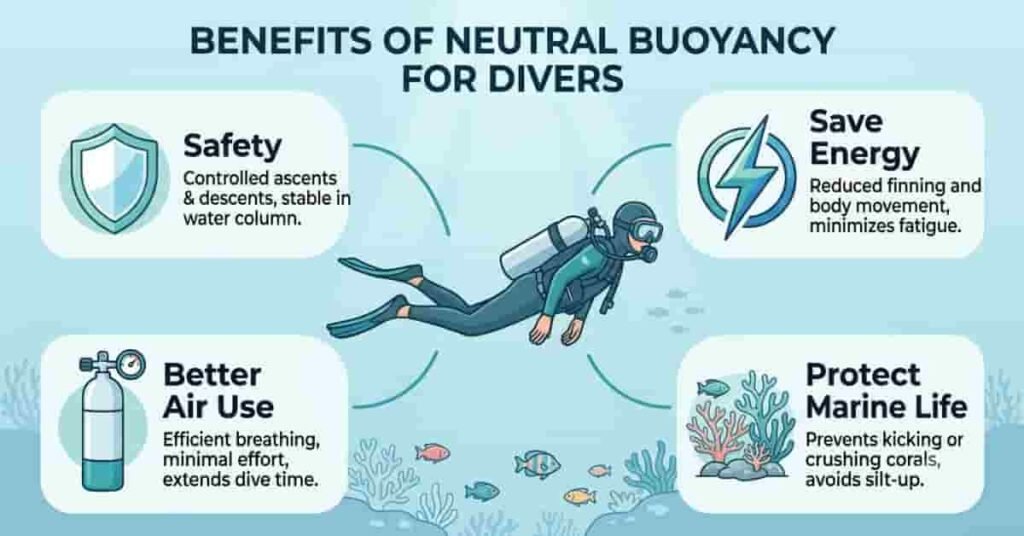
Buoyancy is much more than a diving skill. It affects your safety, comfort, and overall experience underwater. Whether you’re completing your first open-water dive or building confidence after certification, understanding why buoyancy is important in scuba diving helps you become a safer and more responsible diver.
Good buoyancy improves safety by helping you maintain better depth control. Sudden changes in depth can increase stress and make a dive less comfortable. Staying balanced underwater also makes it easier to follow your dive plan and remain close to your buddy.
Buoyancy also affects how quickly you use the air in your scuba tank. Divers who constantly kick to stay in position usually work harder and breathe faster. When you remain neutrally buoyant, you move more efficiently and often conserve energy throughout the dive. While many factors influence air consumption, good buoyancy can reduce unnecessary effort.
Another important reason to develop good scuba diving buoyancy is protecting the underwater environment. Poor buoyancy can cause accidental contact with coral reefs, marine plants, or the seabed. Even a small bump can damage delicate marine life that takes years to recover. Maintaining proper buoyancy helps preserve these ecosystems for future divers.
Finally, good buoyancy makes diving more enjoyable. Instead of fighting to stay at the right depth, you can focus on exploring marine life, taking photos, and enjoying the experience. Many new divers notice that their confidence grows as their buoyancy improves.
How Buoyancy Affects Beginner Divers
Many new divers understand what is buoyancy in scuba diving, but applying that knowledge underwater takes practice. It’s normal to feel less stable during your first few dives. Most beginners improve as they gain experience and become more familiar with their equipment.
One common challenge is staying at a consistent depth. Some beginners drift upward without noticing, while others sink faster than expected. These small depth changes can make diving feel tiring and reduce overall confidence.
Another frequent issue is overweighting. New divers often carry more weight than necessary because it feels safer during descents. However, too much weight can make movement less efficient and increase the amount of air needed in the BCD. This creates extra adjustments throughout the dive instead of smooth, controlled movement.
Poor trim is another beginner struggle. Trim refers to your body position in the water. Instead of staying flat and streamlined, beginners may swim with their feet too low or their head too high. Poor trim creates more drag, requires extra effort, and can make buoyancy feel harder to manage.
The good news is that these challenges are part of the learning process. Almost every certified diver experienced them at the beginning. With proper instruction and regular diving, buoyancy and trim usually improve together.
Equipment That Affects Buoyancy
A diver’s buoyancy depends on more than body weight alone. Several pieces of scuba equipment change how you float or sink underwater. Understanding their role helps explain why buoyancy in scuba diving is different for every diver.
Buoyancy Control Device (BCD)
The Buoyancy Control Device (BCD) is a jacket or wing-style piece of equipment worn during a dive. It holds compressed air, allowing it to become more or less buoyant underwater. The BCD is designed to help divers stay balanced at different stages of a dive.
Weights
Scuba weights help offset the natural buoyancy of your body and exposure suit. Different divers need different amounts of weight based on body composition, equipment, and water conditions. Using the correct amount is important for a comfortable dive.
Exposure Suits
Wetsuits and drysuits also affect buoyancy. Thick neoprene contains tiny air bubbles that make the suit naturally buoyant. Thicker suits usually require more weight than thinner suits. The type of exposure protection you wear can change your overall balance in the water.
Tank Material
Scuba tanks are commonly made from aluminum or steel, and each behaves differently underwater. Steel tanks usually remain more negatively buoyant throughout a dive. Aluminum tanks become more buoyant as air is used, especially near the end of the dive. This is one reason divers may notice slight buoyancy changes during longer dives.
Every piece of equipment contributes to your overall buoyancy. Understanding these differences makes it easier to see why two divers in the same water may require different setups.
Common Myths About Scuba Diving Buoyancy
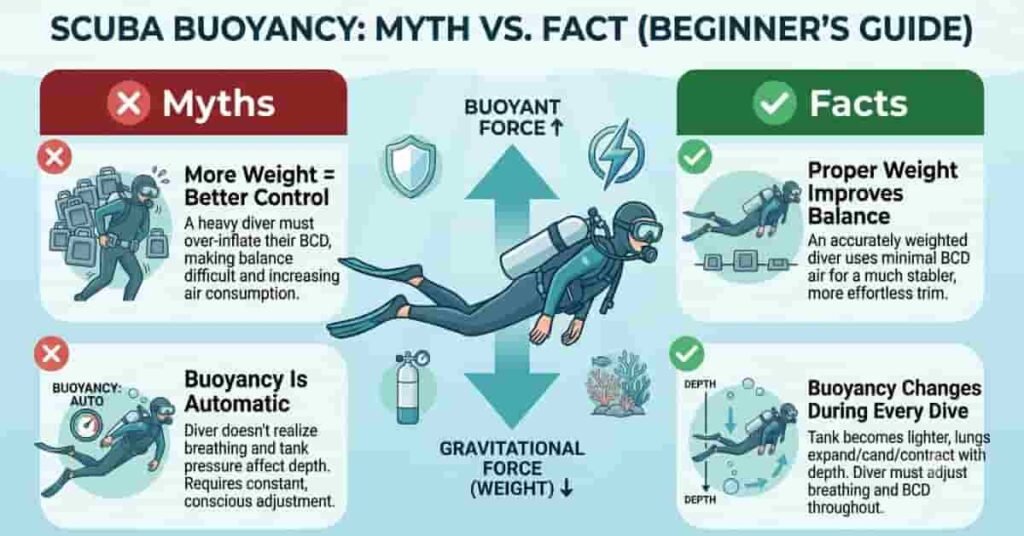
Many beginner divers hear advice from friends, online forums, or social media that sounds convincing but isn’t always correct. Believing these myths can make scuba diving buoyancy harder to understand and may slow your progress. Let’s clear up two of the most common misconceptions.
Myth 1: “More Weight Means Better Control”
This is one of the biggest myths in scuba diving. Some beginners think adding extra weight will make them more stable underwater. In reality, carrying too much weight often creates the opposite problem.
Extra weight causes you to sink faster and requires more air in your BCD to stay at the desired depth. That can lead to frequent adjustments and make the dive feel less comfortable. Every diver needs a weight setup that matches their body, equipment, and diving conditions—not simply “more weight.”
Myth 2: “Buoyancy Is Automatic”
Another common misunderstanding is that buoyancy takes care of itself once you’re underwater. While your equipment plays an important role, buoyancy is not automatic.
Your breathing, equipment, tank weight, and water conditions all influence your position in the water. As your scuba tank becomes lighter during the dive, your buoyancy changes slightly as well. This is why buoyancy requires awareness throughout every dive, even for experienced divers.
Expert Tip: Most experienced divers didn’t master buoyancy on their first dive. It improves gradually through training, practice, and better understanding of your equipment.
Conclusion
Understanding what is buoyancy in scuba diving is one of the first steps toward becoming a confident and safe diver. You now know how buoyancy works, why it changes underwater, the different types of buoyancy, and how your equipment affects it. These basics create a strong foundation for every future dive and help you better understand scuba diving buoyancy.
The next step is learning how to control buoyancy smoothly in real diving situations. With practice and the right techniques, staying balanced underwater becomes much easier and more natural.
If you found this guide helpful, share it with another beginner diver or leave a comment with your questions or experiences. You can also explore our other scuba diving guides and use our Scuba Weight Calculator to prepare for your next underwater adventure with greater confidence.
Frequently Asked Questions
What is buoyancy in scuba diving in simple words?
Why do scuba divers need neutral buoyancy?
Does buoyancy change during a dive?
What causes poor buoyancy in scuba diving?
- Using too much or too little weight
- Poor body position (trim)
- Changing equipment
- Limited diving experience
Does body weight affect scuba diving buoyancy?
Can beginners learn buoyancy quickly?
Does a wetsuit affect buoyancy?
Which is better for buoyancy: steel or aluminum tanks?
Why is buoyancy important for marine life?
Can I improve my buoyancy without buying new equipment?

Scuba Diving Researcher & Beginner Guide
Evan Calder is the creator of DiveBeginner, a website dedicated to helping beginners learn scuba diving simply and practically 🌊
He focuses on scuba fundamentals, beginner safety, and clear diving guidance. Evan has studied ocean and marine science through programs at the Scripps Institution of Oceanography, UC San Diego, a globally recognized leader in ocean research.
Instead of complex technical language, Evan provides easy-to-follow, beginner-friendly guides based on real-world research, helping first-time divers feel confident before their first dive 🤿
DiveBeginner reflects his passion for making scuba diving accessible, safe, and enjoyable for everyone.