Introduction
Have you ever wondered why many new divers make mistakes, even after earning their certification?
Beginner scuba diving mistakes are more common than most people expect. A scuba certification teaches essential skills, but it takes real dive experience to build confidence underwater. Many new divers in the USA face small challenges that can affect their safety, comfort, and enjoyment during the first few dives. Simple issues like poor buoyancy, fast breathing, or forgetting to monitor air happen to almost everyone at some point.
The good news is that most scuba diving mistakes are easy to avoid once you understand why they happen. Learning from these experiences helps you become a calmer, safer, and more confident diver without feeling overwhelmed.
This guide covers the most common beginner scuba mistakes, explains why they happen, and shares practical tips to prevent them. By the end, you’ll know how to improve your diving skills, protect the underwater environment, and enjoy every dive with greater confidence.
Why Beginner Divers Make So Many Mistakes
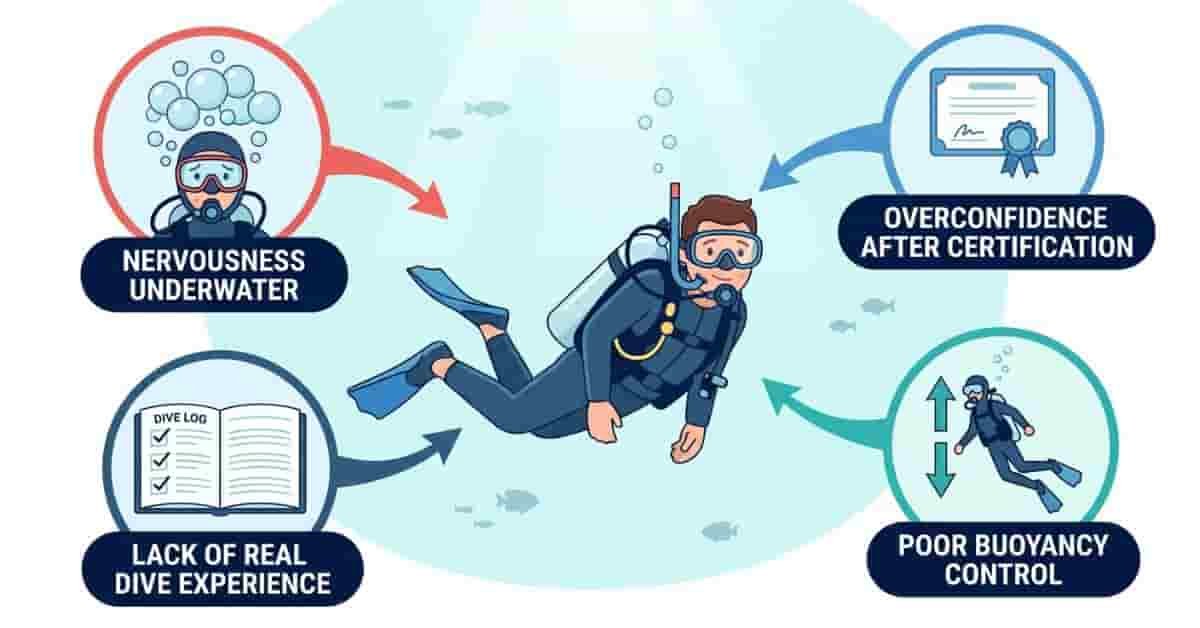
Most beginner scuba diving mistakes don’t happen because someone ignores safety rules. They happen because new divers are still developing confidence and practical skills underwater. A certification course teaches the fundamentals, but every dive brings new conditions that require experience and good judgment.
One common reason is overconfidence after certification. Earning a certification is a great achievement, but it doesn’t make anyone an expert. Some new divers feel ready for challenging dive sites before they have enough real-world practice. This can lead to poor decisions and unnecessary risks.
Many beginners also feel nervous underwater, especially during their first few open-water dives. Stress can cause faster breathing, rushed movements, and missed safety checks. Staying calm helps divers think clearly and respond to small problems before they become bigger ones.
Another challenge is poor buoyancy control. Learning to stay neutrally buoyant takes time and practice, not just classroom lessons.
Divers who struggle with buoyancy may accidentally kick up sand, drift upward, or use more air than necessary. Regular practice improves body position and underwater control.
Finally, many common beginner scuba mistakes come from a lack of real dive experience. Every dive teaches new lessons about communication, air management, and environmental awareness. The more time you spend diving in safe conditions, the more natural these skills become.
Key Takeaways
- Certification provides the foundation, but experience builds confidence.
- Overconfidence and nervousness can both lead to avoidable mistakes.
- Buoyancy control improves with regular practice.
- Safe diving habits become easier as you gain real-world experience.
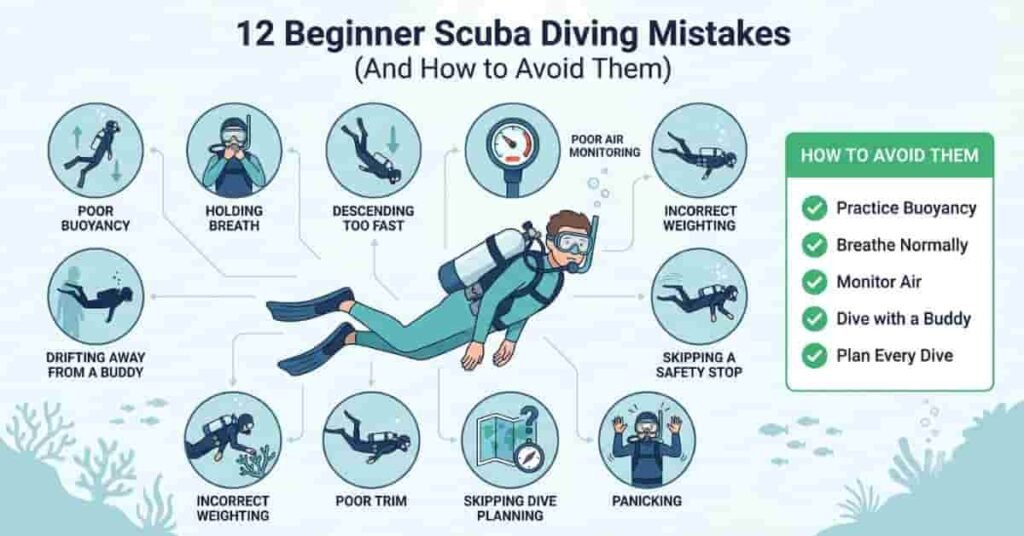
12 Biggest Mistakes New Scuba Divers Make
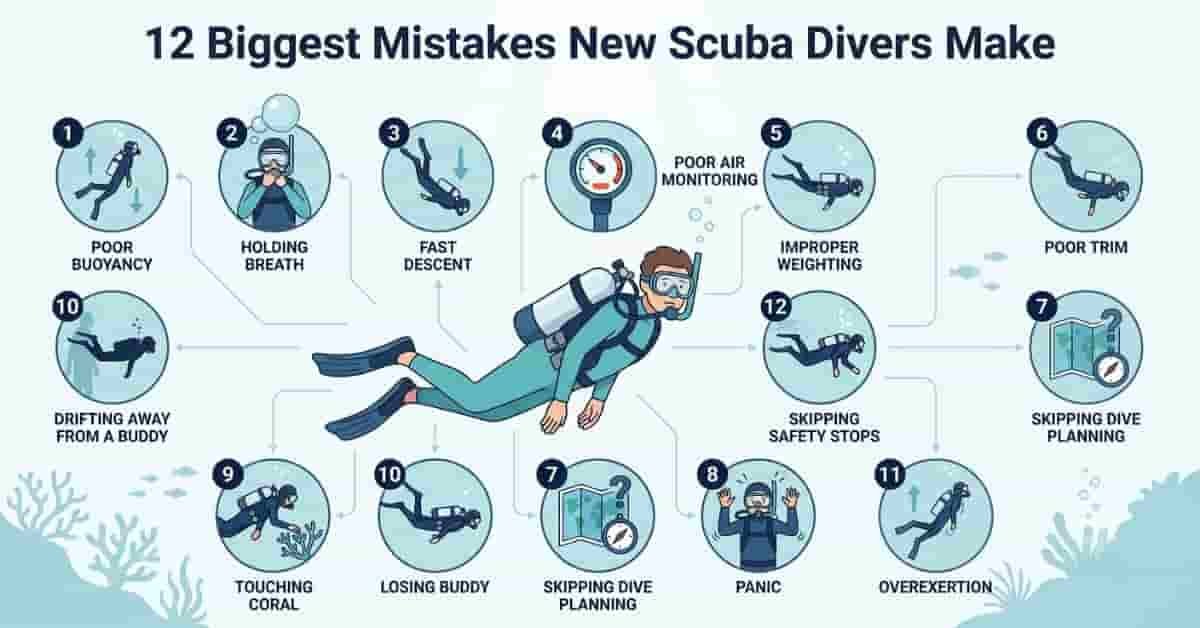
Every new diver makes mistakes while learning. That’s a normal part of gaining experience. The key is recognizing these mistakes early and learning how to avoid them before they affect your safety or enjoyment underwater.
Many beginner scuba diving mistakes happen because new divers are still building confidence and adapting to the underwater environment. Skills like buoyancy control, breathing, and dive planning improve with practice, not just classroom training. Even small mistakes can increase air consumption, damage marine life, or create unnecessary stress during a dive.
The following are some of the most common scuba diving mistakes beginners make. Understanding why they happen—and how to correct them—will help you become a safer, more confident diver.
1. Poor Buoyancy Control
Poor buoyancy control is one of the most common beginner scuba diving mistakes. New divers often struggle to stay at a steady depth because they are still learning how to balance breathing, weights, and buoyancy control devices (BCDs). As a result, they may sink too quickly, float upward unexpectedly, or constantly adjust their position.
Poor buoyancy can also affect the underwater environment. Accidentally kicking up sand reduces visibility for everyone nearby. Drifting too close to coral can break delicate reefs that take years to recover. Floating uncontrollably also increases air consumption because your body works harder to stay in position.
The best way to improve buoyancy is through regular practice. Make small BCD adjustments instead of large ones, breathe slowly, and maintain a horizontal body position. Before every dive, perform a proper weight check to avoid carrying unnecessary weight.
Pro Tip: Many experienced divers dedicate every dive to improving one buoyancy skill. Small adjustments over time lead to smoother, more efficient diving.
2. Holding Their Breath Underwater
Holding your breath underwater is one of the most dangerous scuba diving mistakes. During scuba training, divers learn an important rule: always breathe continuously. Even a short breath hold while ascending can increase the risk of lung overexpansion injuries because the air inside your lungs expands as pressure decreases.
Some beginners hold their breath without realizing it. This often happens when they feel nervous, focus on taking photos, or concentrate on a difficult skill. Instead of holding your breath, breathe slowly and naturally throughout the dive. A steady breathing pattern helps you stay relaxed, improves buoyancy, and reduces unnecessary stress.
If you ever need to stop and think underwater, continue breathing normally while you assess the situation. Calm breathing gives you more control and helps you respond safely.
Pro Tip: Before each dive, remind yourself of one simple habit: “Never hold your breath.” Repeating this during your pre-dive buddy check helps reinforce safe diving practices.
3. Descending Too Fast
Many beginners descend too quickly because they are excited to reach the bottom or feel uncomfortable on the surface. A fast descent gives your body less time to adjust to increasing water pressure. This often leads to equalization problems, ear pain, or discomfort in the sinuses.
Your ears need time to equalize as you go deeper. If you ignore pressure or continue descending when your ears hurt, you can increase the risk of an ear squeeze or other barotrauma. The safest approach is to descend slowly and equalize early, before you feel pain. If your ears do not equalize, stop your descent, ascend slightly, and try again. Never force equalization.
A controlled descent also helps improve buoyancy and keeps you close to your dive buddy. Using a descent line when available can make it easier to control your speed, especially in deeper water or low-visibility conditions.
4. Not Monitoring Air Consumption
Many new divers become so focused on the underwater scenery that they forget to check their pressure gauge. This is one of the most common scuba diving mistakes and can shorten a dive or create unnecessary stress near the end.
Checking your air regularly helps you understand how quickly you use breathing gas. Beginners often breathe faster because they are excited or nervous, causing their tank pressure to drop more quickly than expected. Looking at your submersible pressure gauge every few minutes allows you to spot changes early and plan your ascent with plenty of reserve air.
You can also improve your Surface Air Consumption (SAC) rate by staying relaxed, swimming slowly, and maintaining good buoyancy. Efficient breathing and smooth movements help conserve air without changing your natural breathing pattern.
Pro Tip: Make checking your air gauge part of your routine. Every time you look at your depth or your buddy, take a quick look at your remaining tank pressure as well.
5. Improper Weighting
Using the wrong amount of weight is one of the most common beginner scuba diving mistakes. Some new divers wear too much weight because they worry about floating. Others use too little and struggle to descend. Both situations make diving harder than it needs to be.
Being overweighted forces you to add more air to your BCD to stay neutrally buoyant. This can make buoyancy control less stable and increase air consumption. Being underweighted creates different problems. You may have trouble descending at the start of the dive or staying at your safety stop near the surface.
The easiest solution is to perform a proper weight check before diving. Your ideal weight depends on several factors, including your body composition, wetsuit thickness, tank type, and whether you’re diving in fresh or salt water. Adjust your weights gradually instead of making large changes between dives.
6. Poor Trim Position
Trim refers to your body position in the water. A good trim position means your body stays nearly horizontal while you swim. Many beginners naturally dive in a vertical position, similar to standing upright. Although this feels comfortable at first, it creates extra drag and makes efficient movement more difficult.
Poor trim affects more than your swimming speed. It often causes divers to kick the bottom, stir up sand, and accidentally contact coral or other underwater structures. A vertical position also increases effort, leading to faster breathing and higher air consumption.
Improving trim starts with proper weighting and buoyancy control. Keep your head up, bend your knees slightly, and hold your fins above the level of your body. Practice slow, controlled fin kicks instead of powerful movements. Over time, a balanced horizontal position will feel natural and make every dive smoother.
7. Ignoring Dive Planning
A great dive starts long before you enter the water. Many beginners focus on their equipment but spend very little time discussing the dive plan. Skipping this step can lead to confusion, poor communication, and avoidable problems underwater.
Before every dive, review the maximum depth, planned route, expected bottom time, and turn pressure with your buddy. You should also agree on hand signals and discuss what to do if you become separated. Taking a few minutes to understand the dive site helps you feel more confident and prepared.
Dive planning also includes checking weather conditions, currents, entry and exit points, and possible hazards. Even familiar dive sites can change due to tides or visibility. A simple plan makes it easier to stay calm if something unexpected happens.
8. Panicking in Minor Situations
Small problems can feel overwhelming when you’re new to scuba diving. A flooded mask, a loose fin, or a dropped regulator may seem like emergencies, but they are usually easy to manage with the right training.
Panic often causes divers to breathe rapidly and make rushed decisions. Instead of reacting immediately, stop, take a slow breath, and think about the situation. Most training agencies teach simple recovery skills for common underwater problems. Practicing these skills regularly helps you respond with confidence.
Remember that your instructor prepared you for these situations during certification. Staying calm gives you time to solve the problem safely or signal your buddy if you need help.
9. Touching Marine Life
One of the easiest scuba diving mistakes to avoid is touching marine life. Many beginners want a closer look at colorful coral, fish, or sea turtles. However, touching underwater plants and animals can harm both the environment and the diver.
Coral reefs are living organisms that grow very slowly. Even a light touch from a hand or fin can damage delicate coral structures. Some marine animals may also bite, sting, or carry protective coatings that can irritate your skin.
The best approach is to observe marine life from a respectful distance. Good buoyancy control helps you avoid accidental contact while giving you a better view of the underwater world. Taking only photos and leaving only bubbles is a simple rule every diver should follow.
10. Not Staying Close to Their Buddy
Your dive buddy is your most important safety partner underwater. Many beginners become distracted by marine life or underwater photography and slowly drift away without realizing it. Even a short separation can make communication more difficult if a problem occurs.
Stay close enough to reach your buddy within a few seconds while still giving each other enough space to move comfortably. Check your buddy’s location regularly, especially when visibility is poor or currents are stronger than expected.
If you lose sight of your buddy, follow the procedure you learned during training. Search briefly while turning in place, then begin a safe ascent if you cannot reconnect. Never continue the dive alone.
11. Overexerting Themselves
Many beginner divers think they need to swim hard to keep up or fight the current. In reality, overexertion wastes energy, increases air consumption, and can leave you tired before the dive is over.
Kicking too hard is one of the biggest causes of fast breathing underwater. The harder your muscles work, the more oxygen your body needs. This causes you to breathe faster and use your tank air much more quickly. It can also make buoyancy harder to control because rushed movements reduce stability.
Instead of swimming with force, use slow, relaxed fin kicks and let your equipment do the work. Good trim and neutral buoyancy reduce drag, allowing you to move through the water with less effort. If you encounter a strong current, stay close to the bottom when appropriate, move steadily, and avoid sprinting against it.
Pro Tip: If you notice your breathing becoming fast, stop for a moment, take slow, deep breaths, and allow your heart rate to settle before continuing the dive.
12. Skipping Post-Dive Safety Practices
A safe dive doesn’t end when you reach the surface. Many beginners focus on the underwater experience but overlook important post-dive safety habits. These simple steps help reduce fatigue, support recovery, and prepare you for your next dive.
One of the most important practices is completing a safety stop. Even on dives where it isn’t required, a three-minute stop at about 15 feet (5 meters) gives your body extra time to release dissolved nitrogen. After the dive, drink plenty of water because diving can contribute to dehydration. If you’re planning multiple dives, follow the recommended surface interval before entering the water again.
You should also log your dive, check your equipment for damage, and avoid flying too soon after diving. Following the recommended no-fly guidelines helps reduce the risk of decompression sickness.
Pro Tip: Build a simple post-dive routine. Performing the same safety steps after every dive makes them automatic and reduces the chance of forgetting something important.
How to Avoid These Scuba Diving Learning Mistakes
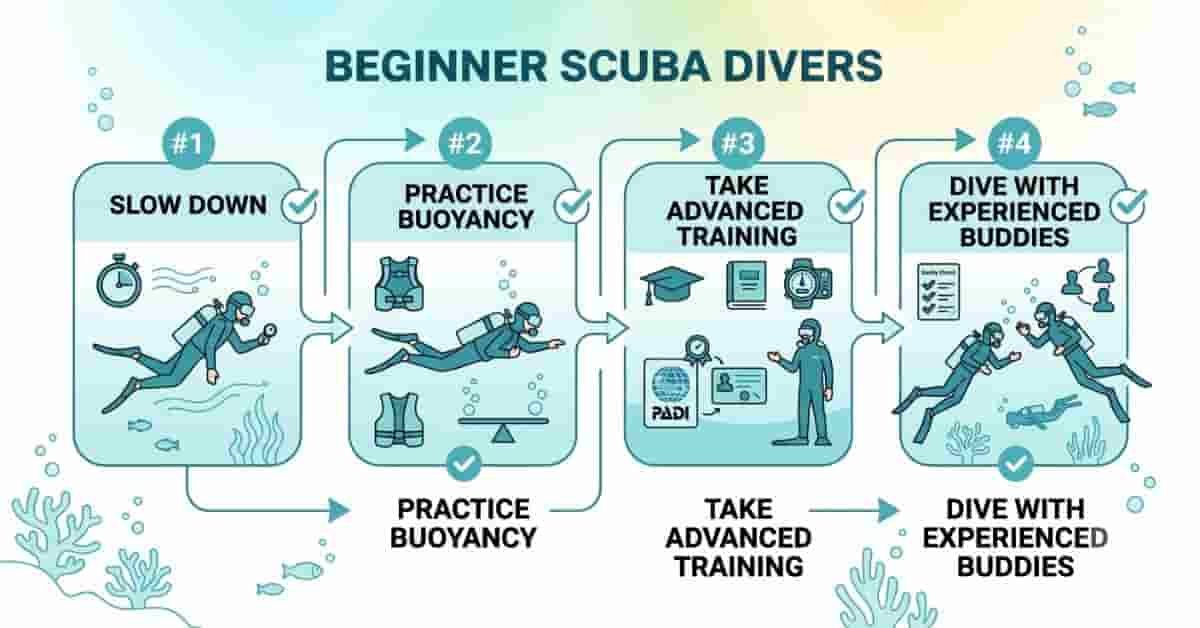
The best way to avoid scuba diving learning mistakes is to focus on steady improvement instead of trying to become an expert overnight. Every experienced diver started as a beginner and learned through practice. Building good habits early makes every future dive safer, easier, and more enjoyable.
Slow Down and Stay Relaxed
Many beginner mistakes happen because divers rush. Descend slowly, swim at a comfortable pace, and avoid making quick movements. Taking your time helps you breathe more efficiently, maintain better buoyancy, and notice potential problems before they become serious.
Practice Buoyancy on Every Dive
Good buoyancy is one of the most valuable scuba skills. Spend a few minutes during each dive practicing neutral buoyancy and proper trim. Small improvements make it easier to conserve air, protect coral reefs, and move comfortably underwater.
Continue Your Training
Your certification is only the beginning of your diving journey. Taking an advanced scuba course or a buoyancy specialty course helps you build confidence and learn new skills under the guidance of an experienced instructor. Continued training also prepares you for different dive environments and conditions.
Dive With Experienced Buddies
Diving with experienced buddies is one of the fastest ways to improve. You can observe good habits, ask questions after the dive, and receive helpful feedback about your buoyancy, trim, and air management. Learning from skilled divers often builds confidence much faster than diving alone with other beginners.
Quick Checklist for Every Beginner Diver
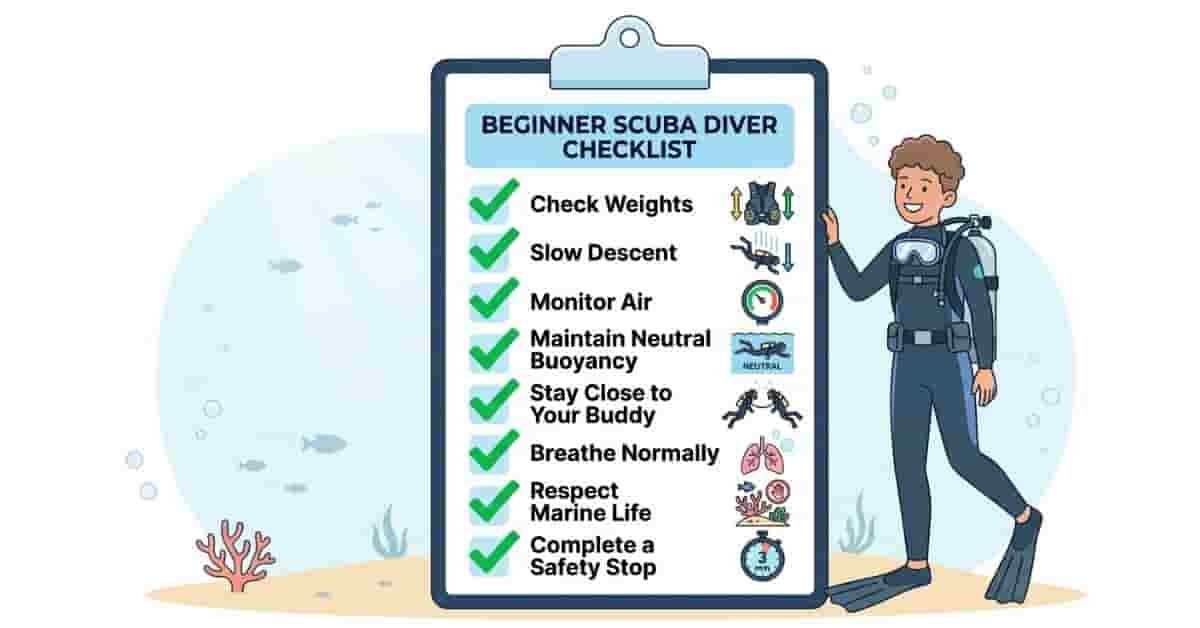
A simple pre-dive checklist can help you avoid many common beginner scuba diving mistakes. Review these points before every dive until they become part of your routine. Good habits developed early will improve your confidence, safety, and overall diving experience.
- ✅ Check your weights. Make sure you have the correct amount of weight for your wetsuit, tank type, and water conditions.
- ✅ Descend slowly. Equalize your ears early and often. Never continue descending if you feel pain or pressure.
- ✅ Monitor your air regularly. Check your pressure gauge throughout the dive instead of waiting until your tank is nearly empty.
- ✅ Maintain neutral buoyancy. Stay in a comfortable horizontal position and make small BCD adjustments instead of large ones.
- ✅ Stay close to your buddy. Keep visual contact and communicate regularly using standard hand signals.
- ✅ Move slowly and breathe normally. Relaxed movements help reduce air consumption and improve buoyancy.
- ✅ Respect marine life. Look, but never touch coral, fish, or other underwater animals.
- ✅ Complete a safety stop. Pause for about three minutes at 15 feet (5 meters) when appropriate before surfacing.
- ✅ Stay calm if something goes wrong. Stop, breathe, think, and then act. Most underwater problems have simple solutions.
Conclusion
Making beginner scuba diving mistakes is a normal part of learning. Every dive teaches new skills and builds confidence underwater. By understanding the biggest mistakes new scuba divers make, you can avoid common problems, improve your buoyancy, breathe more calmly, and make safer decisions on every dive.
Remember that experience is your best teacher. Focus on mastering the basics before taking on more challenging dives. Good buoyancy control, relaxed breathing, proper dive planning, and regular practice will help you become a more confident and responsible diver over time. Even experienced divers continue learning and refining their skills.
If you found this guide helpful, share it with another new diver or your dive buddy. You can also explore our other scuba diving guides and free calculators to continue improving your skills before your next underwater adventure.

Scuba Diving Researcher & Beginner Guide
Evan Calder is the creator of DiveBeginner, a website dedicated to helping beginners learn scuba diving simply and practically 🌊
He focuses on scuba fundamentals, beginner safety, and clear diving guidance. Evan has studied ocean and marine science through programs at the Scripps Institution of Oceanography, UC San Diego, a globally recognized leader in ocean research.
Instead of complex technical language, Evan provides easy-to-follow, beginner-friendly guides based on real-world research, helping first-time divers feel confident before their first dive 🤿
DiveBeginner reflects his passion for making scuba diving accessible, safe, and enjoyable for everyone.