Table of Contents
Introduction
Have you ever wondered why some divers glide effortlessly underwater while others keep floating up or sinking down? Learning how to control buoyancy while scuba diving is one of the most important skills every beginner should master. Good buoyancy control helps you stay comfortable, protect marine life, and use less air during every dive. It also makes your underwater experience safer and far more enjoyable, especially if you’re new to scuba diving in the USA.
In this guide, you’ll learn the simple techniques instructors teach to improve scuba diving buoyancy control. We’ll cover proper weighting, breathing, BCD adjustments, and body positioning in clear, beginner-friendly steps. You’ll also discover common mistakes that make buoyancy harder to control and practical drills to build confidence underwater. By the end of this article, you’ll understand how to achieve neutral buoyancy scuba diving and maintain better control throughout every dive, making each underwater adventure smoother, safer, and more enjoyable.
Why Buoyancy Control Is the Most Important Skill for Divers
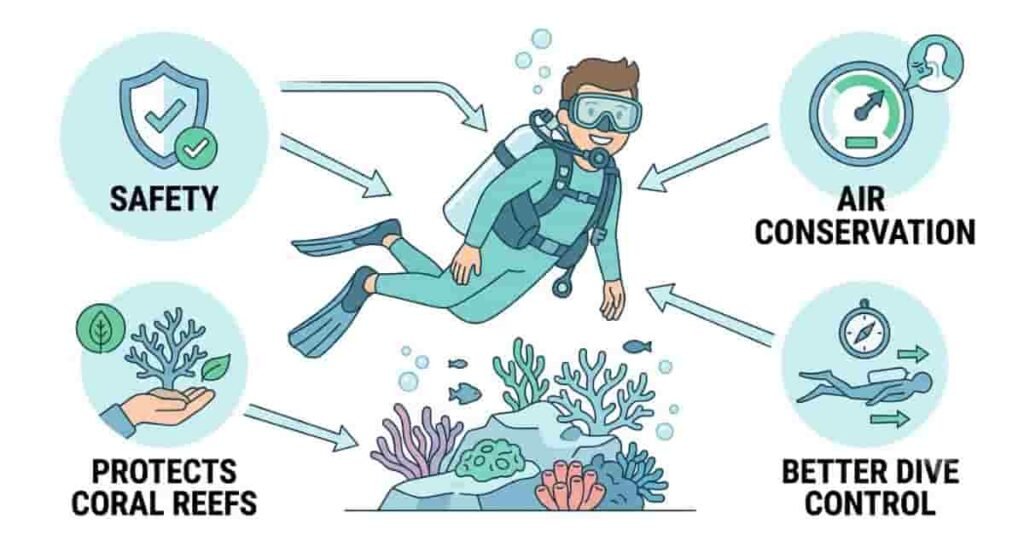
Buoyancy control is the foundation of safe and enjoyable scuba diving. If you can control your position in the water, every part of the dive becomes easier. You’ll move with less effort, stay at your planned depth, and feel more relaxed underwater. For beginners, mastering scuba diving buoyancy control builds confidence from the very first dives.
Many new divers think buoyancy is only about floating or sinking. In reality, it affects nearly everything you do underwater. Good buoyancy helps you protect fragile coral reefs, avoid stirring up sand, and keep a safe distance from marine life. It also reduces unnecessary movement, which can help you conserve breathing gas and enjoy longer dives.
Another benefit of good buoyancy is better control during common dive tasks. You’ll find it easier to clear your mask, take underwater photos, perform a safety stop, and swim alongside your buddy without constantly adjusting your position. These small improvements make every dive smoother and more enjoyable.
Expert Tip: Professional dive instructors often encourage students to focus on buoyancy before speed. A slow diver with good buoyancy usually feels more comfortable and develops better diving habits than someone who rushes through a dive.
Step 1 – Proper Weighting Before the Dive
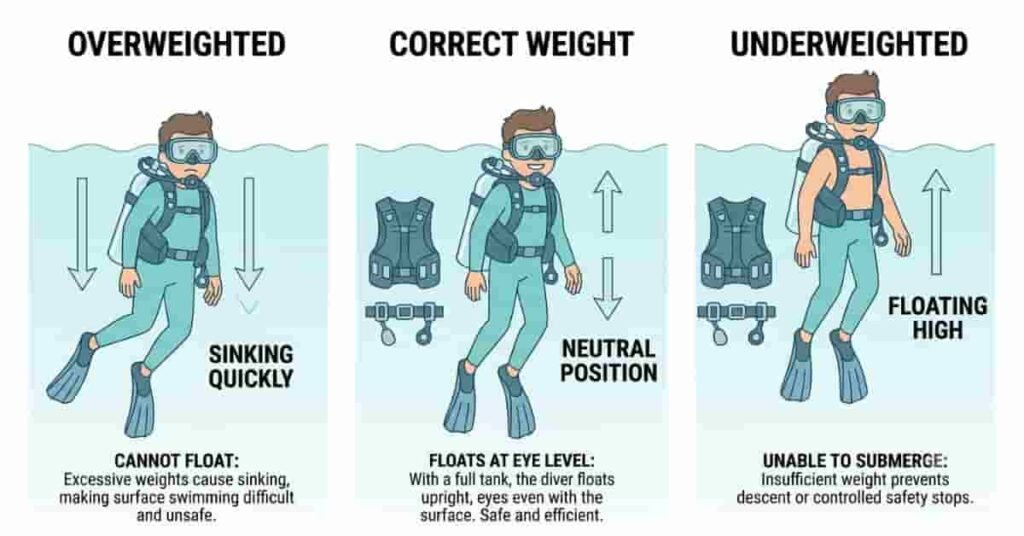
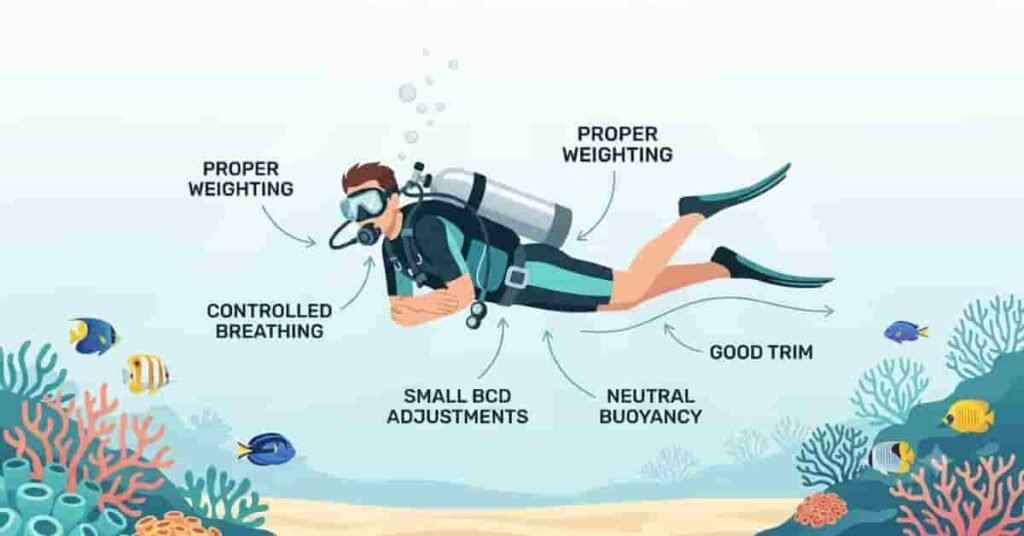
Proper weighting is the first step to learning how to control buoyancy while scuba diving. If you’re carrying the right amount of weight, you’ll need fewer BCD adjustments during the dive. That makes buoyancy easier to manage and helps you stay comfortable underwater.
Before every dive, perform a buoyancy check at the surface with a nearly empty BCD. While holding a normal breath, your eyes should stay around water level. When you exhale, you should slowly sink. If you float too high, you may need more weight. If you sink immediately, you may be carrying too much.
Being overweighted forces you to add extra air to your BCD. This creates larger buoyancy changes and makes depth control harder. An underweighted diver may struggle to descend or complete a safe safety stop near the end of the dive when the tank becomes lighter.
Weight needs can also change based on your wetsuit thickness, body composition, tank type, and whether you’re diving in saltwater or freshwater. Always perform a weight check when using unfamiliar gear or diving in a new location.
Expert Tip: Make small weight adjustments, usually 1–2 pounds (0.5–1 kg) at a time. Small changes are much easier to fine-tune than large ones.
Step 2 – Mastering Your Breathing for Buoyancy Control
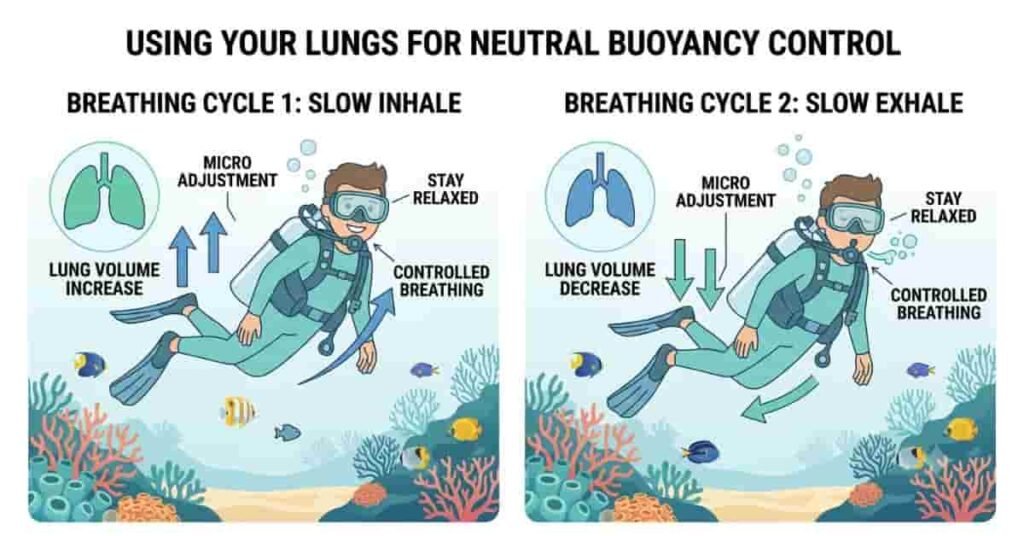
Your lungs work like a small natural buoyancy device. Every breath slightly changes your position in the water. Learning to control your breathing is one of the easiest ways to improve scuba diving buoyancy control.
Take slow, deep, and relaxed breaths throughout the dive. A full inhale increases your lung volume and makes you slightly more buoyant. A slow exhale reduces that volume and lets you sink gently. These changes are small, but they are enough to help you make fine depth adjustments.
Avoid holding your breath or breathing too quickly. Fast breathing causes unnecessary movement and makes it harder to stay at the same depth. Instead, keep a steady breathing rhythm and allow your body to respond naturally.
Use your breathing for micro-adjustments, not major depth changes. If you need to move several feet up or down, adjust your BCD first. Then use your breathing to maintain your position.
Expert Tip: If you notice yourself moving up and down constantly, focus on slowing your breathing before reaching for your BCD inflator.
Step 3 – Using Your BCD Correctly
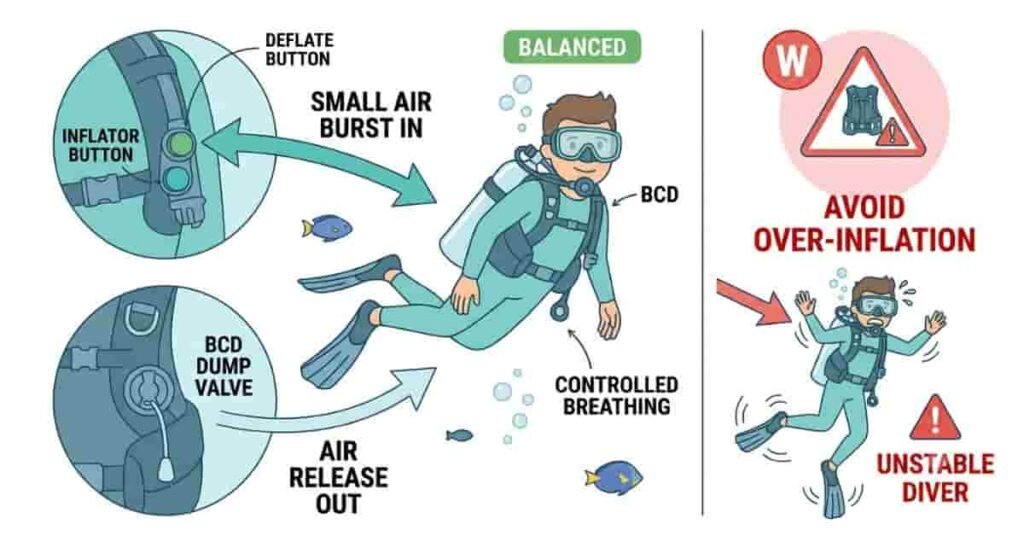
Your Buoyancy Control Device (BCD) is designed to make larger buoyancy adjustments. The key is to use it in small amounts instead of making large corrections.
Add air in short bursts rather than holding the inflator button. After each adjustment, pause for a few seconds. Air needs time to expand or compress as your body responds. Making several quick adjustments often causes divers to overcorrect.
When ascending, release air gradually from your BCD. Expanding air increases buoyancy as you move toward the surface. If you don’t vent it, you may rise faster than planned.
Avoid over-inflating your BCD. Too much air creates a cycle of floating up, dumping air, sinking again, and repeating the process. Small adjustments provide much better control.
Expert Tip: Think of your BCD as a tool for coarse adjustments. Once you’re close to neutral buoyancy, let your breathing handle the fine tuning.
Step 4 – Achieving Neutral Buoyancy
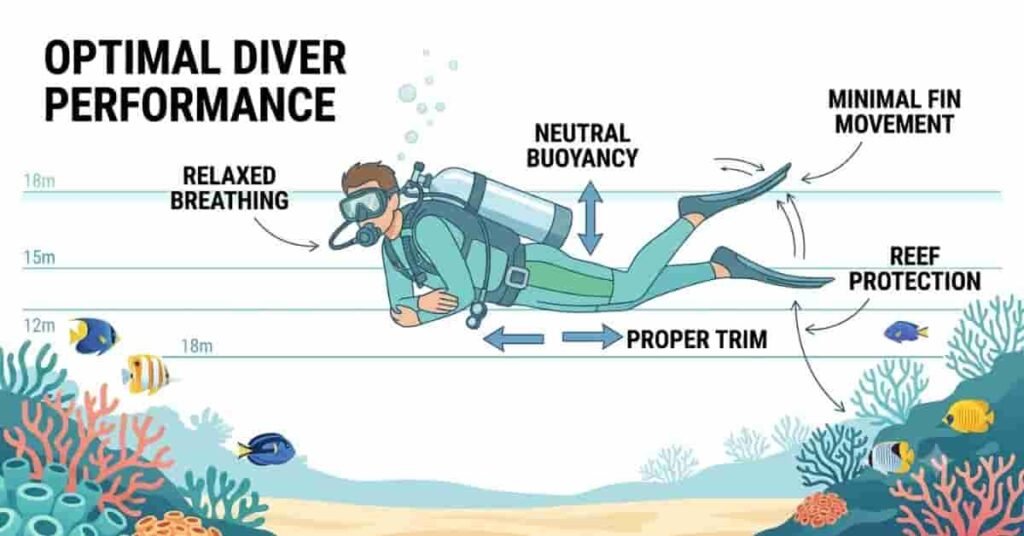
Neutral buoyancy means you stay at the same depth without floating upward or sinking downward. This is the goal every diver should work toward because it makes diving easier, safer, and more enjoyable.
After reaching your planned depth, make a small BCD adjustment and give your body time to stabilize. Then use slow breathing to fine-tune your position. Avoid making several corrections at once.
Practice hovering in open water without touching the bottom. A successful hover means you can remain nearly motionless with relaxed breathing and minimal fin movement. This simple exercise builds confidence and improves overall control.
Body position also matters. Keep your body horizontal with your knees slightly bent and fins raised behind you. Good trim reduces drag, improves efficiency, and helps you maintain a stable position underwater.
Expert Tip: If your feet or head keep dropping, check your trim before adding more air to your BCD. Body position often solves the problem.
Step 5 – Maintaining Buoyancy During the Dive
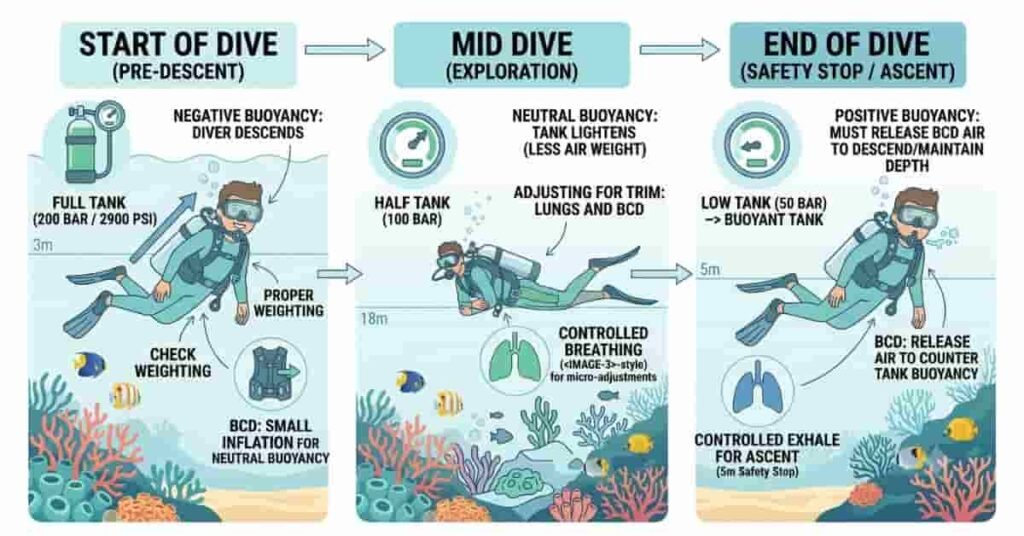
Achieving neutral buoyancy is only the beginning. You also need to maintain it as conditions change throughout the dive.
As you breathe from your tank, it becomes lighter. This gradual weight change makes you slightly more buoyant near the end of the dive. You may need to release a small amount of air from your BCD to stay balanced.
Depth changes also affect buoyancy. Descending compresses the air inside your BCD and wetsuit, making you less buoyant. Ascending expands that air, increasing buoyancy. Anticipate these changes and make small adjustments before they become large ones.
Good trim control helps you stay streamlined and reduces unnecessary movement. Keep your body level, use slow fin kicks, and avoid using your hands for balance. Smooth, controlled movements make buoyancy easier to maintain throughout the dive.
Expert Tip: Experienced divers make small, early adjustments instead of waiting until buoyancy becomes difficult to control.
Common Buoyancy Control Mistakes
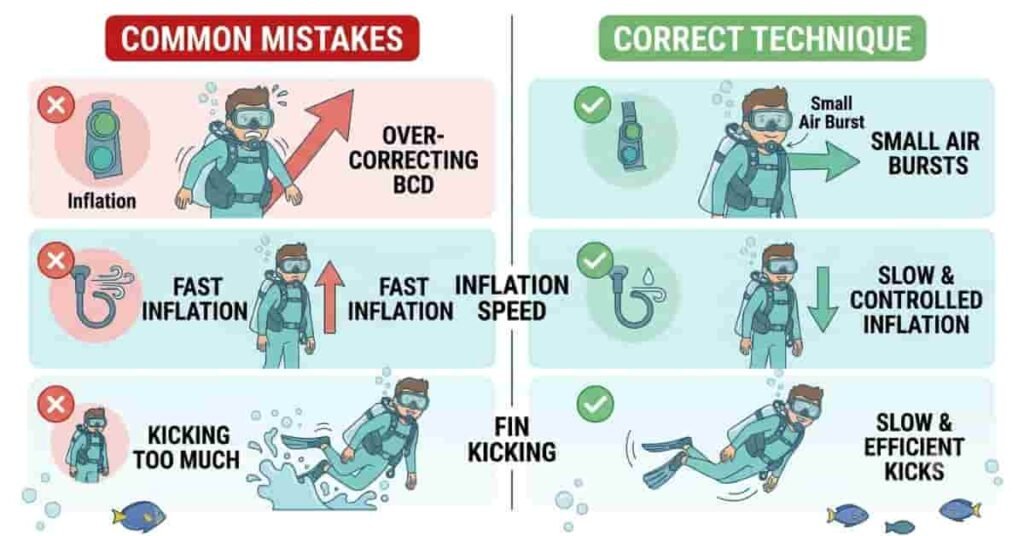
Even experienced divers make buoyancy mistakes from time to time. The good news is that most problems are easy to fix once you know what causes them. Avoiding these common errors will help you improve controlling buoyancy while scuba diving and make every dive more comfortable.
One of the biggest mistakes is over-correcting. Some beginners add too much air to the BCD, then quickly dump it when they float upward. This creates a continuous cycle of rising and sinking. Instead, make one small adjustment and wait a few seconds before making another.
Another common mistake is inflating the BCD too quickly. Large bursts of air are difficult to control and often push you above your target depth. Use short bursts and let your buoyancy stabilize before adding more air.
Many beginners also kick too much to stay at the same depth. Constant finning wastes energy, increases air consumption, and can stir up sand or damage delicate marine life. If you feel the need to kick constantly, check your weighting, breathing, and BCD instead.
Other habits can also affect buoyancy. Looking straight down causes your legs to drop, while swimming with your hands creates unnecessary movement. Keeping a horizontal body position and using slow, controlled fin kicks makes buoyancy much easier to maintain.
Drills to Improve Buoyancy Control
Like any diving skill, buoyancy improves with regular practice. These simple drills help beginners build confidence and develop better underwater control. Practice them in calm, shallow water with your instructor or dive buddy whenever possible.
Start with the hover drill. Find a safe depth and try to remain motionless for 30 to 60 seconds without touching the bottom or sculling with your hands. Use slow breathing and tiny BCD adjustments if needed. This drill teaches you how to maintain neutral buoyancy with minimal effort.
Next, practice the fin pivot drill. While lying gently on a sandy bottom or pool floor, use only your breathing to raise and lower your upper body. As you inhale, your shoulders should lift slightly. As you exhale, they should settle back down. This exercise helps you understand how lung volume affects buoyancy.
Finally, perfect your safety stop practice. Hold a steady position at approximately 15 feet (5 meters) for three minutes. Focus on staying at the same depth without constantly kicking or making large BCD adjustments. This drill combines breathing, buoyancy, and trim into one practical skill.
Conclusion
Learning how to control buoyancy while scuba diving doesn’t happen in a single dive. It develops through practice, patience, and consistent technique. Every dive gives you another chance to improve your weighting, breathing, BCD use, and body position.
Remember that good buoyancy is about making small, controlled adjustments instead of reacting with large movements. The more relaxed you become underwater, the easier it is to maintain neutral buoyancy and enjoy your dive. Over time, these skills become second nature and help you dive more safely while protecting the underwater environment.
If you’re still building confidence, don’t rush the process. Practice the drills in this guide, perform a proper weight check before every dive, and focus on smooth, steady breathing. Even experienced divers continue refining their buoyancy throughout their diving journey.
Frequently Asked Questions
Most beginner divers improve their buoyancy within the first 10 to 20 dives, but everyone learns at a different pace. Regular practice, proper weighting, and controlled breathing make the biggest difference. Don’t expect perfect buoyancy after one certification course. Instead, focus on making small improvements during every dive. With experience, maintaining neutral buoyancy becomes much more natural.
Floating upward usually happens because your BCD contains too much air, your lungs are full after a deep breath, or you’re ascending without releasing expanding air from your BCD. As you move toward the surface, air expands and increases your buoyancy. Make small BCD adjustments, breathe slowly, and ascend gradually to stay in control.
If you continue sinking, you may be carrying too much weight, your BCD may not have enough air, or you’re descending deeper where air compresses inside the BCD and wetsuit. Check your weighting before the dive and add small amounts of air as needed. If the problem continues, have your equipment inspected by a qualified dive professional.
Buoyancy control can feel challenging during your first few dives, but it becomes easier with practice. Most beginners improve quickly once they understand how weighting, breathing, and BCD adjustments work together. Taking your time and practicing simple buoyancy drills helps build confidence and better underwater control.
Yes. A thicker wetsuit contains more air and creates more positive buoyancy. This means you’ll usually need additional weight to descend comfortably. As you dive deeper, the wetsuit compresses, reducing its buoyancy. Always perform a weight check when using a different wetsuit or diving in new water conditions.
Use your BCD for larger buoyancy adjustments and your breathing for small, fine-tuned changes. Add or release small amounts of air when changing depth. Once you’re close to neutral buoyancy, maintain your position with slow, relaxed breathing instead of making constant BCD adjustments.
Buoyancy changes because your scuba tank becomes lighter as you use air, and the air inside your BCD and wetsuit expands or compresses with depth. These changes are normal and happen on every dive. Making small adjustments throughout the dive helps you maintain better control and stay comfortably neutral.
Yes. Poor buoyancy often leads to unnecessary finning, frequent BCD adjustments, and extra physical effort. All of these increase your breathing rate and cause you to use more air. Improving your buoyancy helps you move more efficiently, stay relaxed, and often extends your available bottom time.
The best way is to practice one skill at a time in calm water. Start with a proper weight check, then work on hovering, fin pivot drills, and maintaining a steady safety stop. Repeat these exercises on every dive. Consistent practice helps you develop smooth buoyancy control and greater confidence underwater.
Absolutely. Most buoyancy improvements come from better technique rather than new gear. Correct weighting, controlled breathing, proper BCD use, and good body position have a much bigger impact than expensive equipment. Once you’ve mastered these fundamentals, you’ll notice better control regardless of the gear you use.

Scuba Diving Researcher & Beginner Guide
Evan Calder is the creator of DiveBeginner, a website dedicated to helping beginners learn scuba diving simply and practically 🌊
He focuses on scuba fundamentals, beginner safety, and clear diving guidance. Evan has studied ocean and marine science through programs at the Scripps Institution of Oceanography, UC San Diego, a globally recognized leader in ocean research.
Instead of complex technical language, Evan provides easy-to-follow, beginner-friendly guides based on real-world research, helping first-time divers feel confident before their first dive 🤿
DiveBeginner reflects his passion for making scuba diving accessible, safe, and enjoyable for everyone.