Table of Contents
Introduction
Have you ever wondered how you would tell your dive buddy something important without saying a word?
Scuba diving hand signals give divers a simple way to communicate underwater when speaking isn’t practical. For beginners in the USA, learning these signals is an essential part of becoming a confident and safer diver.
Underwater, your regulator, mask, water pressure, and distance from your buddy make normal conversation impossible. Clear hand signals help you share important information about your air supply, direction, problems, and dive status.
In this guide, you’ll learn the most common scuba hand signals and what each one means. We’ll also explain when to use them and how to communicate clearly with your buddy.
By the end, you’ll have a practical reference for underwater communication and feel more prepared for your next dive.
Why Are Hand Signals Important in Scuba Diving?
Scuba diving hand signals help buddies communicate clearly when they can’t speak underwater. Regulators make normal conversation difficult, while water movement can quickly separate divers. Simple gestures provide a reliable way to share important information.
Because scuba divers can’t communicate normally on the surface, many beginners first wonder whether you can talk underwater while scuba diving.
Good communication also supports the buddy system, which is central to recreational scuba diving. Divers can signal their air status, direction, comfort level, or need to stop. These signals help both divers understand what’s happening without relying on guesswork.
Clear signals can also help prevent panic. A diver who feels uncomfortable or notices a problem can communicate it quickly. The buddy can then respond before a small concern becomes a serious problem.
Hand signals are also essential for dive control. Divers use them to communicate instructions such as stopping, ascending, descending, or checking their surroundings. Learning these signals before entering open water helps beginners communicate with more confidence.
Expert Tip: Practice common signals with your buddy on land before your dive. Familiar movements are easier to recognize when you’re underwater.
Clear communication underwater is one of the core safety skills taught in entry-level scuba certification.
How Do Underwater Hand Signals Work?
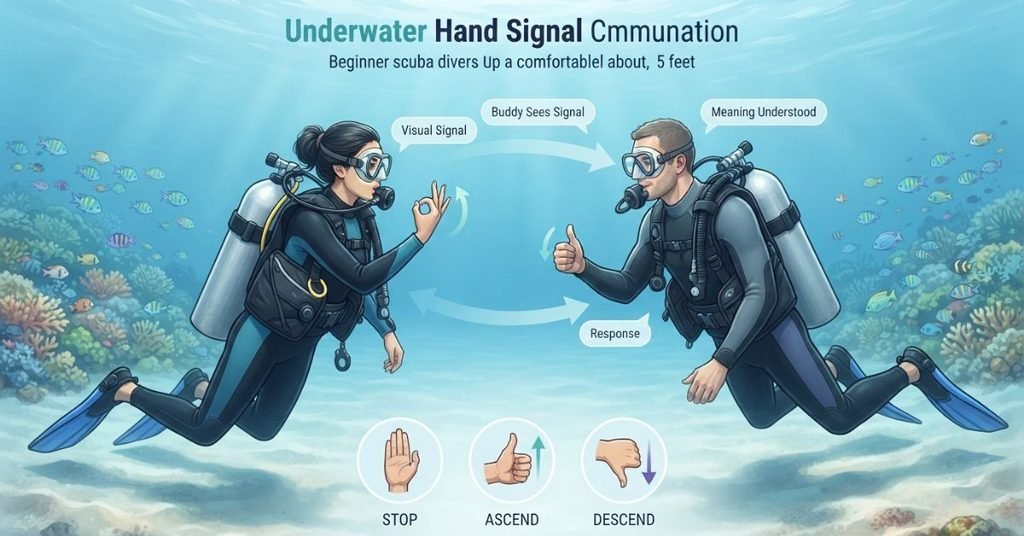
Underwater hand signals let divers communicate through clear visual movements. Since spoken words don’t work well underwater, divers rely on gestures instead.
Most recreational divers learn a common set of signals during entry-level training. These gestures communicate basic messages such as “OK,” “stop,” “ascend,” “descend,” and “something is wrong.”
The system works because many signals use simple, recognizable movements. Divers don’t need to speak the same language to understand many basic gestures. However, not every signal has exactly the same meaning across all diving communities.
Your dive leader, instructor, or buddy may also use specific signals for the dive plan. Always confirm unfamiliar signals before entering the water.
Expert Tip: Review your planned hand signals with your buddy before the dive. Agreeing on important signals reduces confusion when visibility or conditions become challenging.
The 15 Most Important Scuba Diving Hand Signals (With Meaning)
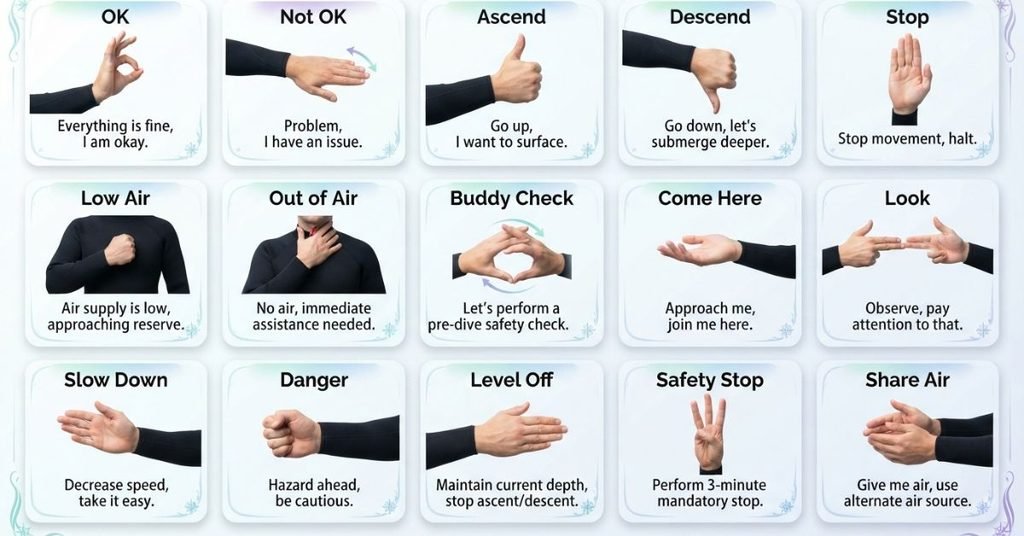
Learning common scuba diving hand signals makes underwater communication faster and clearer. These gestures help divers communicate without speaking or removing their regulators.
The signals below cover the most useful situations beginners may encounter. Always review your instructor’s preferred signals before a dive, especially for less common commands.
1. OK Signal
How to perform it: Touch your thumb and index finger together to form a circle. Keep your other three fingers extended.
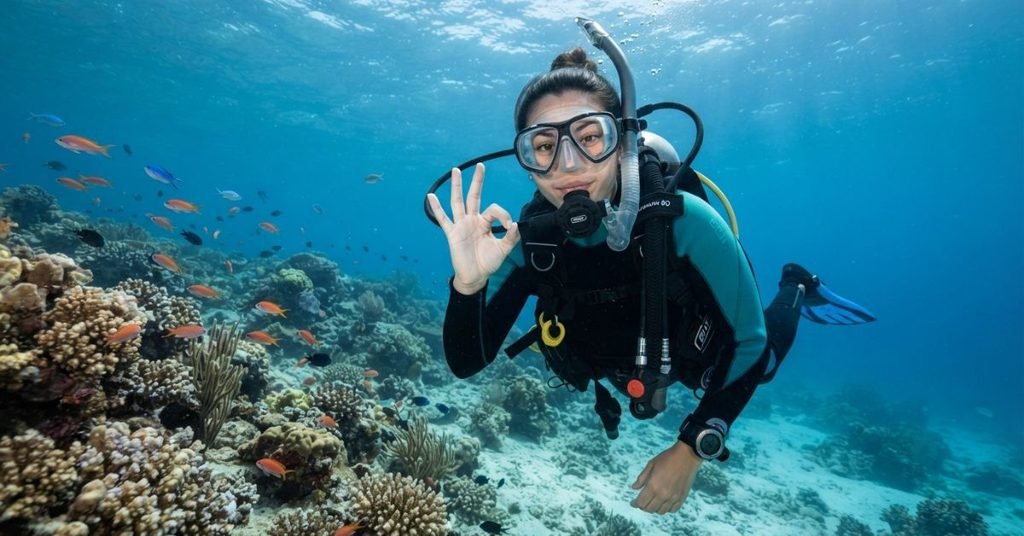
What it means: “I’m OK,” “Everything is fine,” or “Are you OK?” The meaning depends on who gives the signal.
When it’s used: Divers commonly use this signal during buddy checks, throughout the dive, and when confirming their condition.
2. Not OK / Problem
How to perform it: Hold your hand flat and gently rock it from side to side.
What it means: “Something is wrong” or “I have a problem.”
When it’s used: Use this signal when you feel uncomfortable, notice an equipment issue, or need your buddy’s attention. Follow it with another signal that explains the problem when possible.
3. Up / Ascend
How to perform it: Make a closed fist and point your thumb upward.
What it means: “Go up” or “Ascend.”
When it’s used: A diver may use this signal when starting an ascent or communicating that the dive should end. Your buddy should acknowledge the signal before changing depth.
4. Down / Descend
How to perform it: Make a closed fist and point your thumb downward.
What it means: “Go down” or “Descend.”
When it’s used: Use this signal when beginning a descent or asking your buddy to move deeper. Descend only when the dive plan and conditions allow it.
5. Stop
How to perform it: Hold one hand flat with your palm facing your buddy.
What it means: “Stop,” “Wait,” or “Do not continue.”
When it’s used: This signal can pause movement during a dive. It may help when a buddy needs attention, wants to check equipment, or notices a potential problem.
6. Low on Air
How to perform it: Make a closed fist and bring it toward your chest.
What it means: “I’m low on air.”
When it’s used: Give this signal when your remaining gas reaches the level you and your buddy planned for. Your buddy can then prepare for an appropriate ascent or follow the agreed dive plan.
7. Out of Air
How to perform it: Move the side of your hand across your throat in a clear cutting motion.
What it means: “I’m out of air” or “I need breathing gas.”
When it’s used: This is an emergency signal. Use it when you cannot continue breathing from your gas supply. Follow your training and established emergency procedures immediately.
8. Buddy Check
How to perform it: Point toward your buddy, then use the agreed checking gesture or point toward the relevant equipment.
What it means: “Check yourself,” “Check your equipment,” or “Let’s perform a buddy check.”
When it’s used: Use this before entering the water and whenever you need your buddy to verify equipment, gas, or another safety item.
9. Come Here
How to perform it: Extend your hand and make a repeated waving or pulling motion toward yourself.
What it means: “Come here” or “Move closer.”
When it’s used: Divers use this signal when they need their buddy nearby. It can also help bring a diver closer before giving another important signal.
10. Look / Watch
How to perform it: Point two fingers toward your eyes, then point toward the object or direction you want your buddy to watch.
What it means: “Look at this,” “Watch,” or “Pay attention.”
When it’s used: Use it to direct your buddy toward marine life, equipment, another diver, a navigation point, or a potential hazard.
11. Slow Down
How to perform it: Hold your palm downward and move it slowly toward the bottom.
What it means: “Slow down” or “Move more slowly.”
When it’s used: Use this when your buddy is moving too quickly or when the dive requires slower movement. It can help conserve gas and maintain better control.
12. Danger / Hazard
How to perform it: Point toward the hazard, then use a clear warning gesture agreed upon during your briefing.
What it means: “Danger,” “Hazard,” or “Be careful.”
When it’s used: Use it when you notice a potential hazard, such as a sharp surface, strong current, entanglement risk, or another underwater threat.
Important: Hazard signals can vary between dive teams. Confirm the exact signal before the dive.
13. Level Off
How to perform it: Hold both hands flat and move them horizontally to show a level position.
What it means: “Maintain this depth” or “Level off.”
When it’s used: This signal helps divers communicate that they should stop ascending or descending and maintain their current depth.
14. Safety Stop
How to perform it: Show the agreed safety-stop signal, commonly using a flat hand or other signal established during the dive briefing.
What it means: “Safety stop.”
When it’s used: Use it when communicating that the dive team should begin or prepare for the planned safety stop. Follow your training and dive plan for the stop.
15. Share Air
How to perform it: Give the appropriate out-of-air or gas-sharing signal, then indicate the need for an alternate air source.
What it means: “I need to share breathing gas.”
When it’s used: This is an emergency communication signal. Divers should respond according to their training and use the appropriate alternate-air-source procedure.
Pro Tip: Don’t assume every diver uses every signal exactly the same way. Review important signals with your buddy before entering the water.
Emergency Hand Signals Every Beginner Must Know
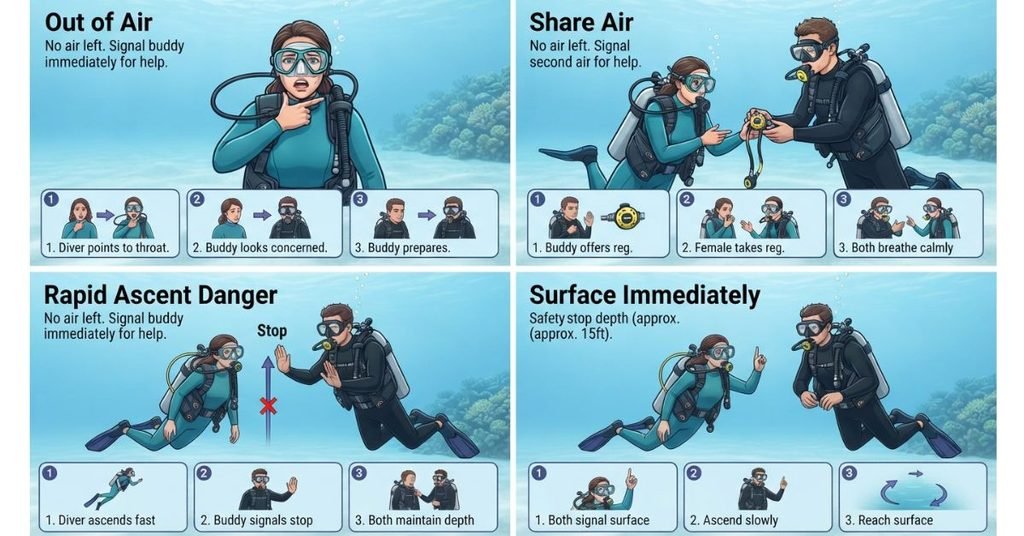
Emergency communication becomes critical when a diver cannot breathe normally, loses contact, or needs to end the dive. Knowing these signals can help you respond quickly instead of freezing during a stressful situation.
Good communication is especially important during longer dives, so it’s also useful to understand how long you can stay underwater scuba diving based on air supply and other factors.
Out of Air
Move the side of your hand across your throat to signal that you are out of air. Get your buddy’s attention and follow your training for an emergency gas-sharing procedure.
Share Air
Use the agreed gas-sharing signal to communicate that you need a breathing source from your buddy. Your buddy should respond according to your training and dive plan.
Rapid Ascent Danger
Use a clear warning gesture to indicate that someone is ascending too quickly. Rapid ascents can create serious diving risks, so communicate the concern immediately.
Surface Immediately
Use the agreed signal for ending the dive and returning to the surface. This signal should receive immediate attention when an emergency requires you to leave the water.
Safety matters: Never rely on hand signals alone during an emergency. Divers should follow their certification training, dive plan, and established emergency procedures.
Are Scuba Diving Hand Signals Universal?
Many recreational scuba diving hand signals are widely recognized across different countries and diving communities. Basic gestures such as “OK,” “stop,” “ascend,” and “descend” are commonly taught to recreational divers.
However, you shouldn’t assume every signal works exactly the same everywhere. Instructors, dive operators, training agencies, and professional teams may use slightly different gestures.
Commercial and technical diving can also involve more specialized communication systems. These divers may use additional signals for specific tasks, equipment, or working environments.
Before a dive, discuss any unfamiliar signals with your buddy or dive leader. Pay particular attention to emergency signals and commands used during that specific dive.
Expert Tip: When diving with a new buddy, spend a few minutes reviewing your most important signals before entering the water. This simple habit can prevent confusion later.
What If Visibility Is Poor?
Poor visibility can make normal hand signals harder to see. Murky water, darkness, silty conditions, or nighttime diving may reduce the distance at which you can recognize a gesture.
A dive light can help you communicate when visibility is limited. Divers can use controlled light movements to attract attention or highlight a hand signal. Avoid shining the beam directly into your buddy’s eyes.
Staying close to your buddy also makes communication easier. Maintain the agreed buddy position and follow your dive plan rather than separating unnecessarily.
When visibility becomes extremely limited, divers may use touch signals as part of their training. These signals allow buddies to communicate through physical contact when visual communication isn’t reliable.
Pro Tip: Agree on low-visibility communication methods before entering the water. Never improvise an unfamiliar touch signal during an emergency.
Do Professional Divers Use the Same Signals?
Professional divers use many of the same basic hand signals taught in recreational scuba training. Signals such as OK, stop, ascend, descend, and problem remain useful because they provide quick visual communication underwater.
However, commercial diving operations can require more specialized communication. Commercial divers may work around structures, tools, vessels, or other hazards. Their teams can establish additional signals for specific tasks and working conditions.
Technical divers may also use extra signals because their dives can involve complex equipment, multiple gas supplies, stages, or specialized procedures. The exact system depends on the dive team and planned activity.
This doesn’t mean beginners need to learn every professional signal. Start with the common signals required for your training and understand your buddy’s communication system.
Expert Tip: When joining a new dive team, ask about its specific signals during the pre-dive briefing. Never guess the meaning of an unfamiliar gesture.
How Beginners Learn Hand Signals During Training
Beginners usually learn hand signals as part of their basic scuba training. Instructors introduce important gestures before students depend on them during open-water dives.
During confined-water practice, students can learn signals while wearing their scuba equipment. The instructor may demonstrate a gesture, explain its meaning, and ask students to respond correctly.
Repetition helps make these movements more natural. Students practice communicating with instructors and other divers while managing basic diving skills.
Training also prepares beginners to recognize signals while maintaining awareness of their surroundings. This matters because underwater communication requires more than simply knowing what a gesture means.
Before open-water training, students should feel comfortable with common signals for normal communication and basic problems. Exact training steps vary by certification agency and course.
Pro Tip: Practice your signals before each dive briefing. A quick review can refresh your memory and reveal any differences between you and your buddy.
Common Beginner Mistakes With Hand Signals
New divers can know the correct signals but still communicate poorly underwater. Most mistakes happen because divers rush, forget a gesture, or fail to make sure their buddy noticed it.
Confusing “OK” With “Up”
The OK signal forms a circle with your thumb and index finger. The up signal uses a thumb pointing upward. Mixing these gestures can create serious confusion.
Not Making Eye Contact
A signal only helps if your buddy sees it. Get your buddy’s attention before giving an important message, especially in busy or low-visibility conditions.
Giving Signals Too Quickly
Fast movements can make a familiar gesture difficult to recognize. Use deliberate, clear movements and pause long enough for your buddy to respond.
Conclusion
Scuba diving hand signals give beginners a simple and reliable way to communicate underwater. You’ve learned the most important signals, their meanings, and when to use them.
Understanding these signals can improve buddy communication and help you respond calmly when something changes underwater. Remember that some signals may vary between instructors, agencies, or dive teams.
Before your next dive, practice the key scuba diving hand signals with your buddy. Make sure you both understand important emergency signals before entering the water.
Once you know the basic signals, you may still wonder whether you can talk underwater while scuba diving and what communication options are available besides hand signals.
Ready to improve your diving skills? Explore more beginner scuba guides on our website, and share this guide with another new diver.
What are the basic scuba diving hand signals?
The basic signals include OK, not OK, ascend, descend, stop, low air, out of air, come here, and look. Divers also use signals for slow down, danger, level off, safety stops, and air sharing. Your instructor may teach additional signals based on your certification course and diving environment.
How do divers communicate underwater?
Divers mainly communicate through hand signals and visual gestures. They may also use dive lights in darkness or poor visibility. Touch signals can help trained buddies communicate when they cannot see each other clearly. Divers should agree on important signals before entering the water.
Are scuba hand signals the same everywhere?
Many basic scuba signals are widely recognized, but they aren’t guaranteed to be identical everywhere. Instructors, agencies, technical teams, and commercial operations may use variations. Always review unfamiliar signals with your buddy or dive leader before entering the water.
What does thumbs up mean in scuba diving?
A thumbs-up signal means “ascend” in recreational scuba diving. It does not normally mean “everything is good.” Divers use the circle made with the thumb and index finger for the OK signal.
What is the most important scuba hand signal?
The OK signal is one of the most important signals because divers use it to confirm that everything is fine. It can also be used as a question when checking your buddy. Emergency signals, such as out-of-air and problem signals, are equally important to know.

Scuba Diving Researcher & Beginner Guide
Evan Calder is the creator of DiveBeginner, a website dedicated to helping beginners learn scuba diving simply and practically 🌊
He focuses on scuba fundamentals, beginner safety, and clear diving guidance. Evan has studied ocean and marine science through programs at the Scripps Institution of Oceanography, UC San Diego, a globally recognized leader in ocean research.
Instead of complex technical language, Evan provides easy-to-follow, beginner-friendly guides based on real-world research, helping first-time divers feel confident before their first dive 🤿
DiveBeginner reflects his passion for making scuba diving accessible, safe, and enjoyable for everyone.