Table of Contents
Introduction
Have you ever wondered if you can simply rent scuba gear and dive beneath the surface?
If you’re asking, do you need training for scuba diving, the answer depends on how you plan to dive. Beginners in the USA often see scuba as an easy extension of swimming or snorkeling. However, diving involves changing pressure, specialized equipment, buoyancy control, and underwater emergencies.
Proper training helps you build the skills needed to dive confidently and responsibly. It also helps you understand when a supervised experience is appropriate and when certification is required.
In this guide, you’ll learn why scuba training matters, what risks come with diving without proper preparation, and how certification works. We’ll also explain whether you can go scuba diving without training through a supervised trial dive.
By the end, you’ll know what beginners should do before making their first independent dive.
Why Training Is Important for Beginners
Scuba diving gives you access to an underwater world, but it also creates risks that beginners must understand. Proper training teaches you how to manage those risks before you dive independently.
If you’re unsure whether certification is required, learn more about whether you have to be certified to scuba dive and when exceptions may apply.
Safety Comes First
Underwater conditions can change quickly. Limited visibility, currents, depth, and equipment problems can challenge an inexperienced diver. Training teaches you how to recognize these hazards and make safer decisions.
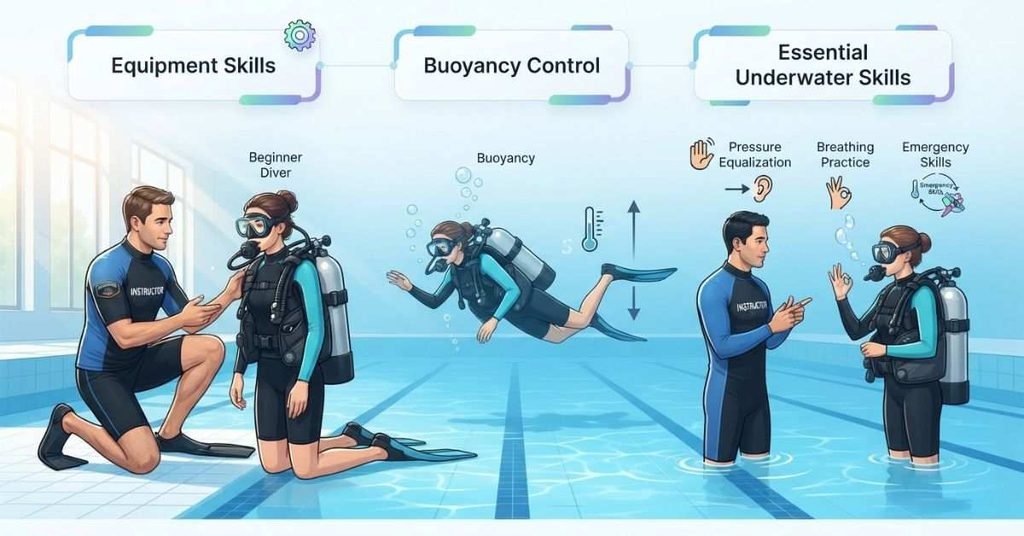
Buoyancy control is another essential skill. Good buoyancy helps you maintain a stable position without constantly rising or sinking. It also reduces unnecessary contact with the seafloor and marine life.
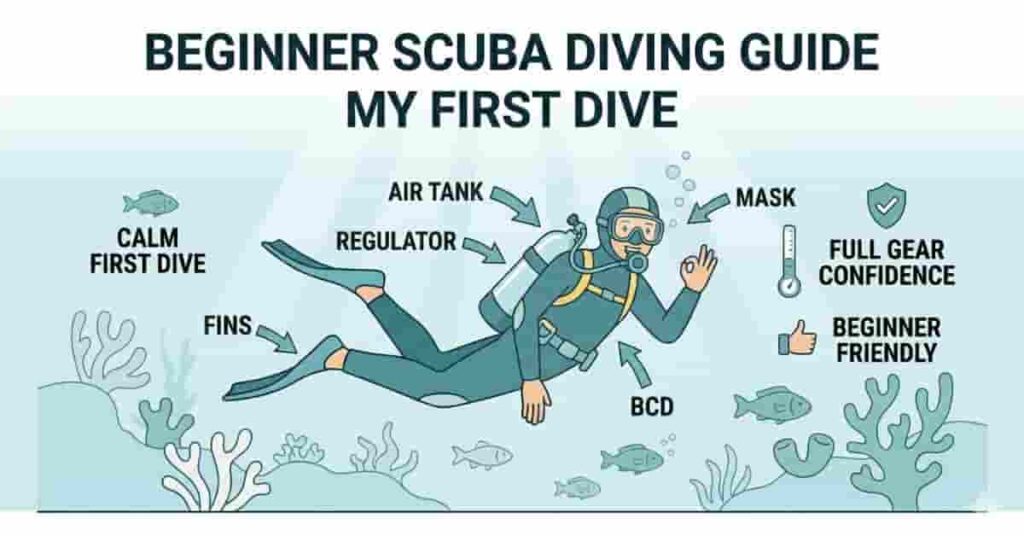
You’ll also learn how to inspect and handle essential scuba equipment. This includes your regulator, BCD, tank, weights, mask, and dive computer. Understanding your gear helps you identify problems before entering the water.
Building Essential Diving Skills
Scuba training develops skills that you cannot safely learn through swimming or snorkeling alone. You’ll practice breathing techniques, pressure equalization, underwater communication, and controlled ascents.
You’ll also learn how to respond when something goes wrong. Common training exercises include handling a flooded mask, sharing breathing gas, and responding to buoyancy problems.
These skills become more useful through repeated practice. Training allows you to make mistakes in controlled conditions while an instructor provides immediate guidance.
Confidence Comes From Practice
Confidence matters underwater, especially when you encounter something unexpected. Proper training replaces guesswork with practiced responses.
A good instructor also teaches you to recognize your limits. You’ll learn when to continue, when to slow down, and when conditions are unsuitable for your experience level.
Pro Tip: Choose a course that gives you enough practice time to feel comfortable with essential skills. Don’t rush certification just to start diving sooner.
Legal & Regulatory Requirements
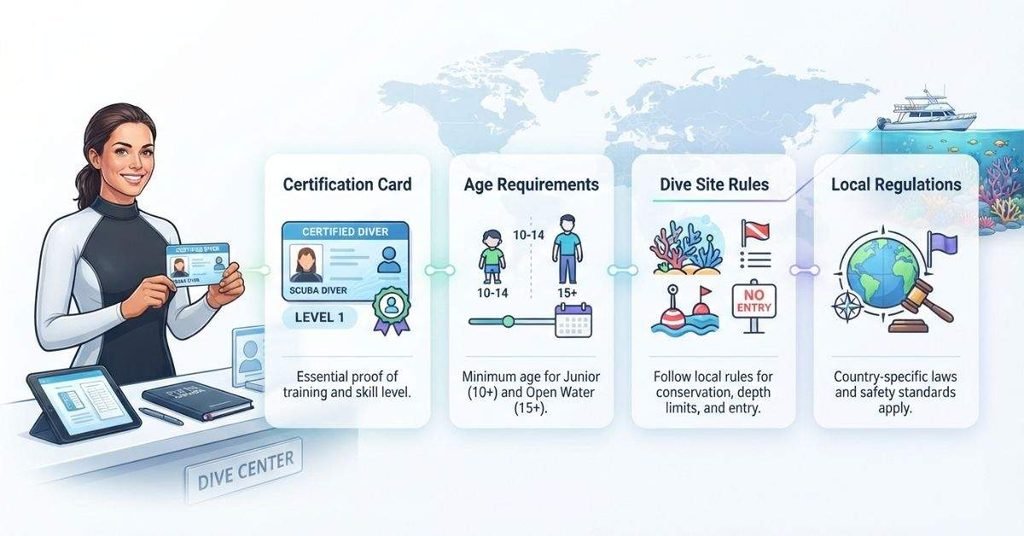
Scuba diving rules can vary by country, dive operator, and specific dive site. Understanding these requirements helps you avoid problems before your trip.
Dive Site and Local Rules
Some dive sites have special requirements for access, depth, equipment, or environmental protection. Operators may also require proof of certification before allowing you to join certain dives.
Rules can differ between locations, so check requirements before booking a dive. Your dive center can explain local restrictions and any additional qualifications you may need.
Specialized activities often require extra training. Examples include deep, wreck, night, cave, and technical diving.
Age Restrictions
Training agencies set minimum ages for their scuba programs. Requirements can also vary based on the type of training and local regulations.
For example, junior certifications may include additional depth or supervision limits. These restrictions help younger divers develop experience gradually.
Always check the current requirements with your chosen training agency and local dive center.
Why Your Certification Card Matters
A certification card provides proof that you completed the required training for your qualification. Dive shops and operators commonly ask to see certification before allowing independent recreational dives.
Some beginners also wonder whether they can complete the learning portion online, so here’s what to know about getting scuba certified online.
Keep your certification card accessible when traveling. Many agencies also provide digital certification records that you can access through their apps or websites.
Expert Tip: Check your certification requirements before booking a dive trip. Some operators may request proof of experience for specific dive conditions.
Risks of Diving Without Training
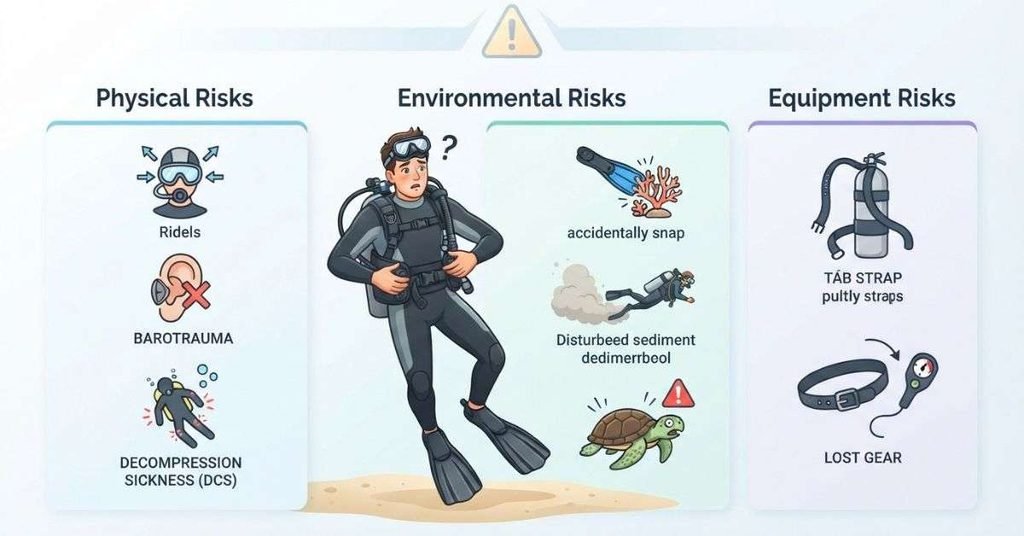
Scuba diving requires skills that beginners cannot safely develop through swimming or snorkeling alone. Without proper training, small mistakes can become serious underwater problems.
Physical Risks
Decompression sickness can occur when pressure changes cause inert gas to form bubbles in body tissues or blood. Proper dive planning and controlled ascents help reduce this risk.
Barotrauma happens when pressure differences injure air-filled spaces in the body. The ears and lungs can be especially vulnerable during descent or ascent.
Untrained divers may also struggle with buoyancy, breathing gas management, or emergency procedures. These problems can increase stress and make safe decision-making harder.
Environmental Risks
Poor buoyancy control can cause accidental contact with coral, rocks, or other marine life. Fins can also stir sediment and reduce visibility for other divers.
Equipment can become damaged or lost when divers don’t understand how to secure and manage their gear. Losing equipment underwater can also create additional safety concerns.
Liability and Operator Issues
Dive operators may refuse independent dives when participants cannot show the required certification. Some sites also require specific qualifications or documented experience.
Insurance policies and operator agreements may have their own conditions. Check these requirements before booking a dive.
Pro Tip: Never treat another diver’s experience as a substitute for your own training. Your certification should match the type of diving you plan to do.
Can You Go Scuba Diving Without Training?
Yes, beginners can sometimes experience scuba without holding a full certification. However, can you go scuba diving without training depends on the type of dive you choose.
If you decide to get certified, knowing how long scuba certification takes can help you plan your training and first dive.
Independent scuba diving requires proper training and certification. A supervised introductory dive follows different rules because a qualified professional guides the experience.
Snorkeling Is Not Scuba Training
Snorkeling lets you breathe through a snorkel while staying near the surface. Scuba diving requires you to manage compressed breathing gas while underwater.
Swimming ability and snorkeling experience can help you feel comfortable in water. However, they don’t teach essential scuba skills such as buoyancy control, equipment checks, or emergency procedures.
Try Dives and Resort Dives
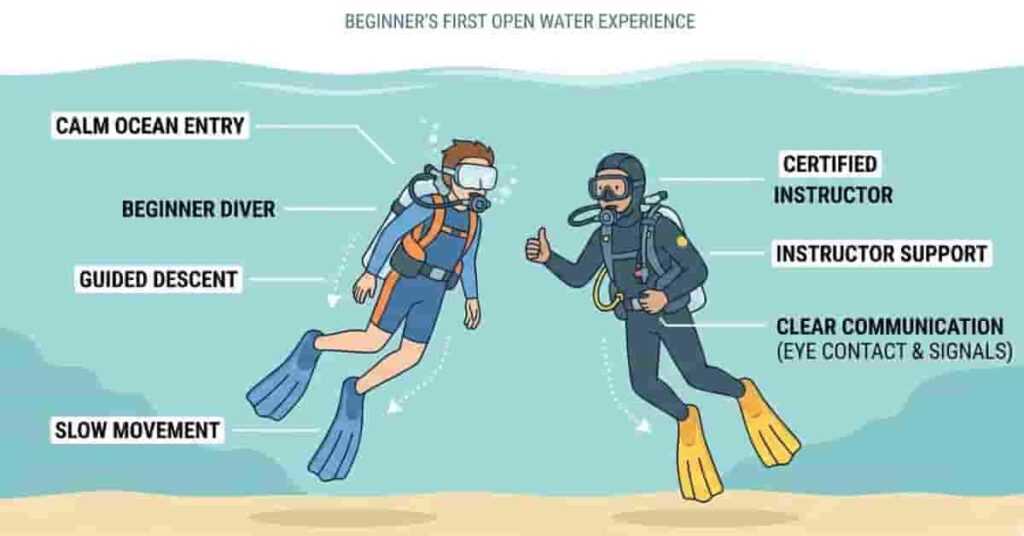
Many dive centers offer introductory scuba experiences for beginners. These programs provide basic instruction before a closely supervised dive.
The exact depth, location, equipment, and supervision depend on the program. Beginners should follow the instructor’s instructions and stay within the experience’s limits.
A try dive doesn’t replace a complete entry-level certification. If you want to dive independently, continue with a recognized Open Water course.
Ready to Learn the Training Process?
If your first scuba experience makes you want to dive regularly, the next step is proper training. Our upcoming guide, How to Train for Scuba Diving, will explain the certification process, course stages, skills, and preparation beginners need.
Takeaway: You may try scuba under professional supervision, but independent diving requires proper training and certification.
Choosing the Right Training Program
Choosing the right scuba training program can make your first diving experience much easier. Beginners should focus on quality instruction, practical training, and safety rather than price alone.
Start With an Open Water Course
An entry-level Open Water Diver course is the usual starting point for people who want to dive independently. These courses teach essential knowledge and practical skills through classroom or online learning, confined-water practice, and open-water dives.
You’ll learn important skills such as:
- Using and checking scuba equipment
- Controlling buoyancy
- Equalizing pressure
- Communicating underwater
- Managing breathing gas
- Planning recreational dives
- Responding to common problems
- Performing controlled ascents
Choose a course that gives you enough time to practice. A rushed course may leave you feeling uncertain about important skills.
PADI vs. SSI
PADI and SSI are two major scuba training organizations. Both offer structured entry-level programs for recreational divers.
The course provider matters, but the instructor can matter just as much. Look for an instructor who explains skills clearly and encourages questions.
Before enrolling, compare:
- Instructor experience
- Student-to-instructor ratio
- Training schedule
- Equipment condition
- Course requirements
- Total course cost
- Where you can use the certification
- Reviews from recent students
Local Dive School vs. International Agency
A dive school provides the actual instruction, while an agency develops the training system and certification standards.
You can complete training through a local dive center affiliated with an international agency. This gives you local instruction while earning a widely recognized certification.
A local school may offer convenient schedules and easier access to practice sessions. Ask about instructor qualifications, class sizes, equipment, and safety procedures before choosing.
Pro Tip: Don’t choose a course only because it’s the cheapest option. Choose an instructor and school that prioritize thorough skill development and safe diving habits.
Conclusion
Scuba diving can be an exciting experience, but proper preparation keeps beginners safer underwater. We covered training, certification requirements, common risks, and supervised options for first-time divers.
So, do you need training for scuba diving? Yes, if you want to dive independently and build reliable underwater skills. Training teaches you how to manage equipment, control buoyancy, equalize pressure, and respond to problems.
You may try scuba through a supervised resort or introductory dive without full certification. However, can you go scuba diving without training independently? You shouldn’t.
Ready to start diving the right way? Explore our upcoming guide, How to Train for Scuba Diving, for a step-by-step look at beginner certification and training.
Frequently Asked Questions
Independent scuba diving without proper training isn’t recommended. Divers need to understand buoyancy, pressure changes, equipment use, breathing gas management, and emergency procedures.
Beginners can sometimes try scuba through a supervised introductory or resort dive. A qualified professional provides basic instruction and closely supervises the experience.
This differs from diving independently without certification. If you want to dive regularly, complete a recognized Open Water certification course first.
The time varies depending on the training agency, course format, instructor, and your progress. Entry-level courses usually combine knowledge development, confined-water practice, and open-water training.
Don’t focus only on completing the course quickly. You should feel comfortable using your equipment, controlling buoyancy, equalizing pressure, communicating underwater, and handling basic problems.
If you need additional practice, a good instructor should give you time to develop your skills. Your goal should be confidence and competence, not simply finishing the course.
A supervised trial dive provides an introduction to scuba, but it usually doesn’t replace full Open Water certification.
These experiences teach basic skills and allow beginners to experience breathing underwater under professional supervision.
Some introductory programs may provide credit toward a later certification course. This depends on the training agency and program. Ask your dive center before booking if you plan to continue with certification.
A trial dive is best viewed as a safe introduction to scuba rather than a substitute for complete training.
You may be able to participate in a supervised introductory dive without holding a full scuba certification. However, you generally shouldn’t dive independently without proper training and certification.
Dive operators may require certification before allowing you to rent equipment or join certain dives. Additional qualifications may also apply to deeper, night, wreck, cave, or other specialized diving.
If you want to dive independently, an entry-level Open Water course is the appropriate starting point.
Yes. Strong swimming skills don’t replace scuba training. Swimming helps you move comfortably through water, but scuba requires additional skills and knowledge.
You’ll need to learn buoyancy control, equipment handling, pressure equalization, underwater communication, dive planning, and emergency procedures.
Snorkeling experience can help you feel comfortable in the water. However, it doesn’t prepare you for all the challenges involved in independent scuba diving.
Beginners should learn how scuba equipment works and how to perform basic equipment checks. They should also practice buoyancy control, breathing techniques, pressure equalization, and underwater communication.
Training should also cover emergency procedures and safe ascent techniques. These skills help divers respond calmly when something unexpected happens.
A recognized Open Water course provides a structured way to develop these skills under qualified instruction.
PADI and SSI both offer recognized recreational scuba training programs. Neither agency is automatically the best choice for every beginner.
The quality of your instructor and dive school matters greatly. Compare instructor experience, class size, equipment, training time, course requirements, and student reviews.
Choose a reputable program that gives you enough time to practice and understand essential diving skills.

Scuba Diving Researcher & Beginner Guide
Evan Calder is the creator of DiveBeginner, a website dedicated to helping beginners learn scuba diving simply and practically 🌊
He focuses on scuba fundamentals, beginner safety, and clear diving guidance. Evan has studied ocean and marine science through programs at the Scripps Institution of Oceanography, UC San Diego, a globally recognized leader in ocean research.
Instead of complex technical language, Evan provides easy-to-follow, beginner-friendly guides based on real-world research, helping first-time divers feel confident before their first dive 🤿
DiveBeginner reflects his passion for making scuba diving accessible, safe, and enjoyable for everyone.