Table of Contents
Introduction
How long does it really take to go from a complete beginner to a certified scuba diver?
If you’re planning your first scuba course in the USA, the timeline can seem confusing. Some dive shops offer accelerated courses, while others spread training across several days.
So, how long to be scuba certified depends on the course format, training schedule, and your learning pace. You’ll usually need to complete knowledge training, confined-water practice, and supervised open-water dives.
If you’re just starting your research, learn how to become scuba certified and what each stage of training involves.
This guide breaks down each part of the certification process in simple terms. You’ll learn how many days training may take and what can speed up or delay your certification.
We’ll also compare weekend courses with standard multi-day programs. You’ll discover how weather, scheduling, water conditions, and personal comfort can affect your timeline.
By the end, you’ll have a clear idea of what to expect before booking your scuba certification course.
Average Duration to Get Scuba Certified
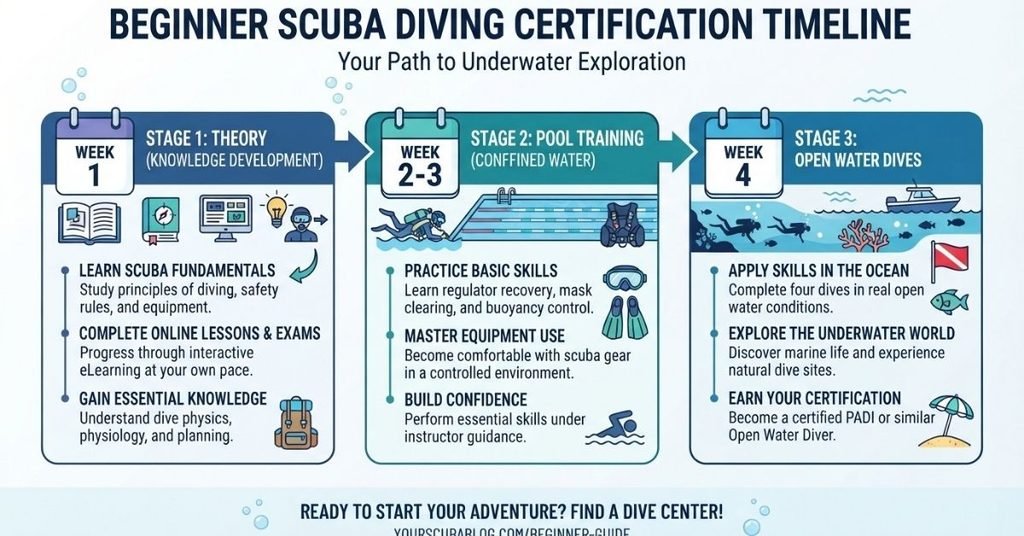
For most beginners, scuba certification takes several days of training rather than one single session. A common schedule may fit the practical training into 3–4 days, depending on the dive center and course format. The exact timeline can vary based on the certification agency, location, and your availability.
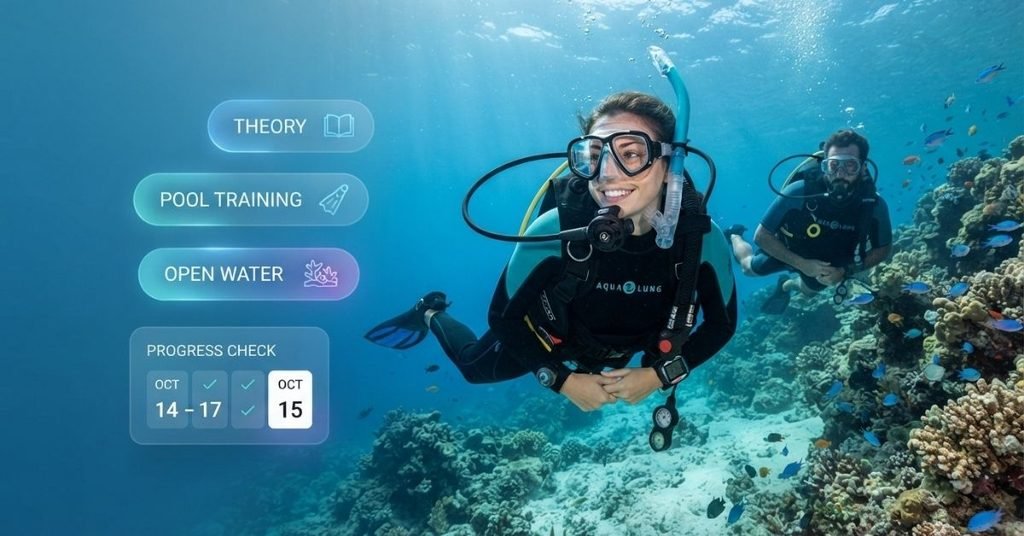
Your training usually includes three main parts: theory, confined-water practice, and open-water dives. You may complete the theory online before arriving at the dive shop. Pool sessions then help you learn essential skills before you practice them in open water.
So, how long does it take to get scuba diving certified? Your learning pace matters too. Some beginners feel comfortable with skills quickly, while others need extra practice before moving forward. Taking more time isn’t a problem if it helps you build confidence and control.
Pro Tip: Choose a course that gives you enough practice time. A faster schedule isn’t always better if you’re still learning important diving skills.
Step-by-Step Breakdown of Certification Components
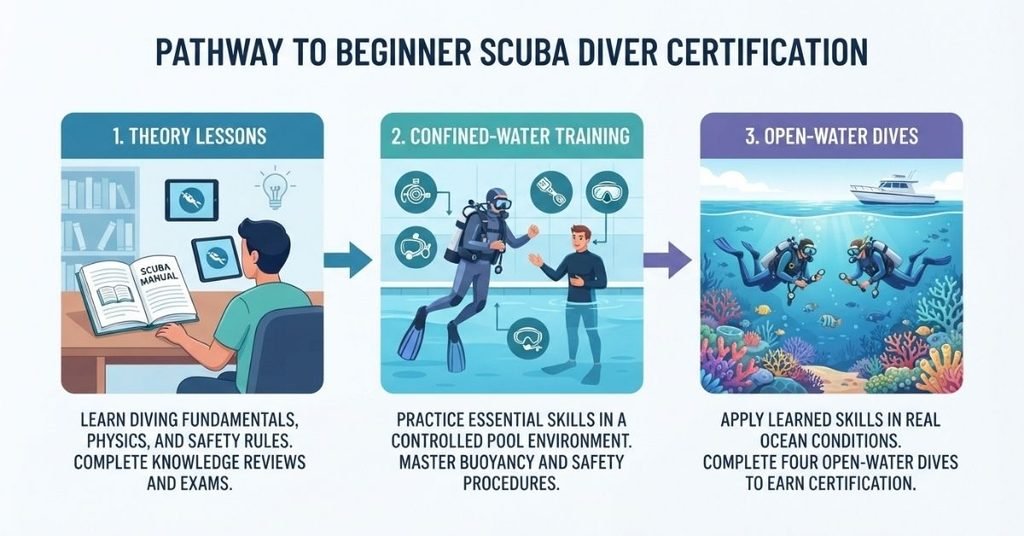
Scuba certification combines knowledge, hands-on practice, and real-world diving skills. Each stage prepares you for the next one, so rushing through training can make learning harder.
The exact schedule varies by certification agency and dive center. Some providers offer online learning, while others use classroom sessions or a combination of both.
Your timeline may depend on the course format, including whether you complete the knowledge portion through online scuba certification.
Theory Lessons
Theory training gives you the knowledge needed to dive safely and make good decisions underwater. You may complete it online at your own pace or attend instructor-led classroom sessions.
Lessons typically cover:
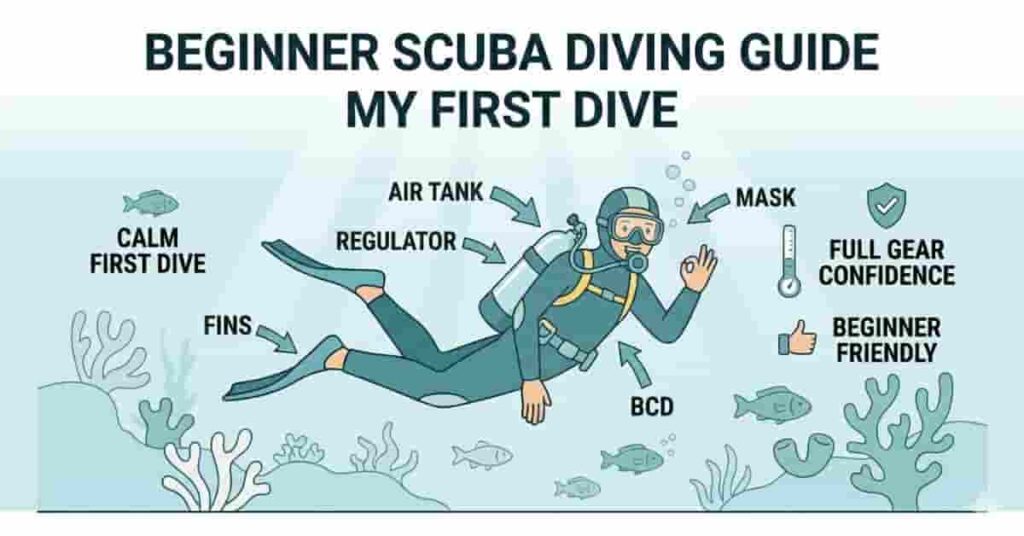
- Scuba equipment and how it works
- Basic dive planning and air management
- Underwater communication
- Diving safety and emergency procedures
- Pressure, buoyancy, and basic dive physics
- Recognizing and preventing common problems
Online learning can make scheduling easier because you can study before your practical sessions. In-person classes give you direct access to an instructor when questions come up.
Pro Tip: Study in shorter sessions instead of cramming everything into one sitting. Take notes on unfamiliar concepts and ask your instructor about anything unclear.
Confined-Water (Pool) Training
Confined-water training lets you practice scuba skills in a controlled environment before entering open water. A pool or similar protected area gives beginners time to build comfort and confidence.
You may practice skills such as:
- Putting on and removing scuba equipment
- Regulator recovery and clearing
- Mask clearing
- Buoyancy control
- Basic underwater communication
- Responding to simulated equipment problems
The required training time depends on the certification program and your progress. There isn’t one universal number of pool hours for every beginner course.
Your instructor may give you additional practice if a skill doesn’t feel comfortable yet. This can extend the schedule, but it helps you become better prepared for open-water training.
Open-Water Dives
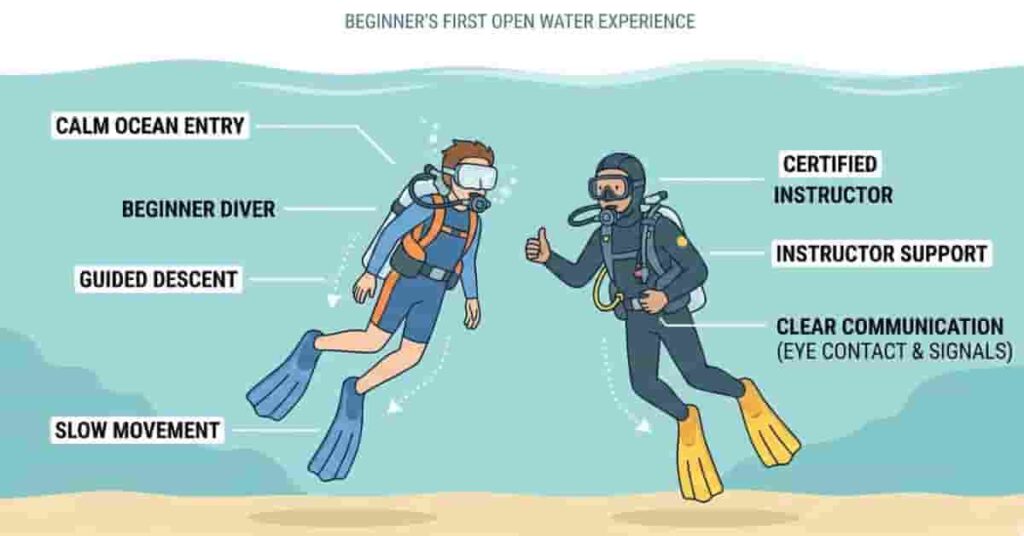
Open-water training puts your newly learned skills into a real diving environment. You complete supervised training dives and demonstrate the required skills under your instructor’s guidance.
Entry-level certification programs commonly require four open-water training dives, although requirements can vary by certification agency and course. These dives may take place across multiple days, depending on the provider’s schedule and local conditions.
Weather and water conditions can affect your training schedule. Poor visibility, strong currents, waves, or unsafe conditions may require a dive to move to another time.
Your instructor may also consider your comfort level and skill performance before progressing. If you need more practice, taking additional time can make your certification experience safer and more enjoyable.
Weekend Courses vs Full-Week Courses
A weekend scuba course can suit beginners with limited time, but it usually follows a faster training schedule. Some dive centers may organize practical training across two or three days, while others use longer schedules.
A full-week course gives you more flexibility between lessons and dives. You can review difficult skills, ask questions, and build confidence without packing every session into one weekend.
| Course Type | Main Advantage | Potential Challenge |
|---|---|---|
| Weekend or accelerated | Saves calendar time | Faster learning pace |
| Full-week | More relaxed schedule | Requires more time off |
| Flexible schedule | Easier to fit around life | May take longer overall |
For beginners, the best option depends on your learning style and availability. Choose a faster course if you feel comfortable learning under a tighter schedule. A longer course may work better if you prefer more time between training sessions.
Factors That Affect Certification Timeline
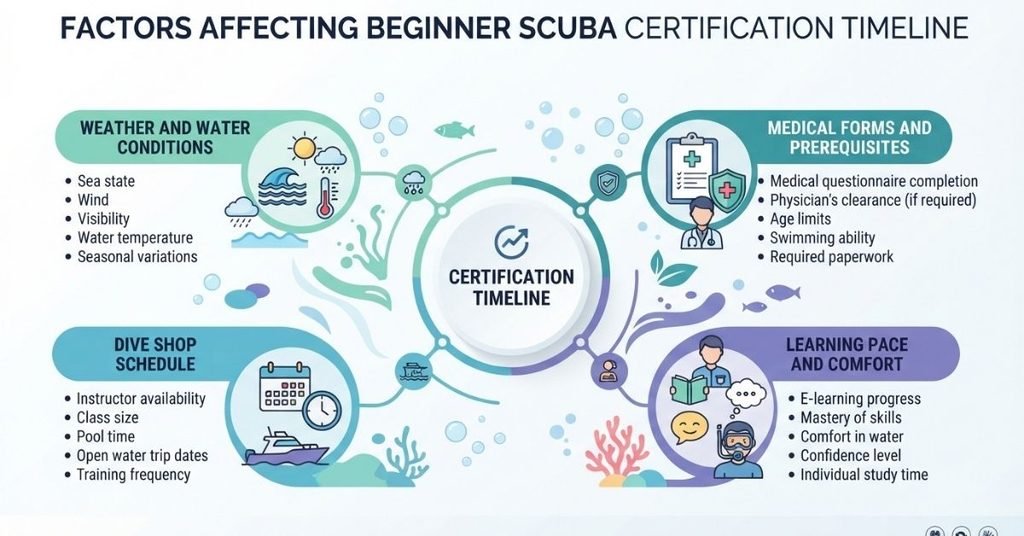
The number of calendar days can change even when you follow the same certification program. Several practical factors can affect when you complete your training.
Weather and Dive-Site Conditions
Weather can affect open-water training, especially when conditions become unsuitable for student divers. Waves, currents, visibility, and water conditions may influence scheduling.
Dive Shop Scheduling
Your dive center may have limited instructor availability or specific days for training dives. Popular locations can also have busy schedules during peak seasons.
Medical Forms and Prerequisites
Complete required forms before training whenever possible. Some answers on a diving medical questionnaire may require evaluation by an appropriate medical professional before you can continue.
Learning Pace and Comfort
Every beginner learns differently. You may need additional practice before demonstrating certain skills confidently. That’s normal and doesn’t mean you’re failing.
Referral Programs & Accelerated Options
A scuba referral program can make certification more flexible when you can’t complete every training session at one location. You may complete the knowledge development and confined-water training with one provider, then finish required open-water training with another participating provider.
This approach can help travelers complete part of their training before a vacation. However, it doesn’t automatically mean you’ll become certified faster. You still need to meet the applicable certification requirements.
Some dive centers also offer accelerated schedules. These programs compress training into fewer calendar days, but the exact structure varies by certification agency and provider.
Pro Tips
Before choosing a fast-track course, ask the dive center:
- Which certification agency provides the course?
- What must I complete before the practical sessions?
- How many training days are scheduled?
- What happens if weather delays an open-water dive?
- Can I complete part of the training elsewhere?
- Is additional practice available if I need it?
Choose the fastest schedule that still gives you enough time to learn and demonstrate the required skills. Speed should support your training, not replace it.
Conclusion
Scuba certification usually takes several days, depending on your course format, schedule, and learning pace. You’ll complete theory, confined-water practice, and supervised open-water training before earning your certification.
Understanding how long to be scuba certified helps you choose a course that fits your schedule and comfort level. Weekend and accelerated options may save calendar time, while longer courses can provide more practice.
Before booking your course, it’s also smart to check how much scuba certification costs in your area.
For beginners, the best timeline isn’t always the fastest one. Choose a program that gives you enough time to learn skills and feel confident underwater.
Ready to start? Explore our step-by-step scuba certification guide for a clearer look at the complete process. You can also share your certification experience or questions in the comments.
“`htmlFrequently Asked Questions
How long does it take to get scuba certified as a beginner?
For many beginners, the practical portion of scuba certification can fit into several days. Some dive centers offer accelerated schedules, while others spread training across a longer period. Your timeline depends on the certification agency, course format, instructor availability, weather, and your learning pace.
Can you get scuba certified in a weekend?
Yes, some dive centers offer accelerated or weekend certification schedules. However, the exact number of days depends on the course and certification provider. You may also need to complete online theory before the weekend begins. A shorter schedule can be convenient, but you still need enough time to demonstrate the required skills.
Are accelerated scuba certification courses safe?
An accelerated course can be safe when it follows the requirements of a recognized certification agency. However, faster training doesn’t suit every beginner. You should have enough time to understand the material, practice skills, and become comfortable in the water. Ask the dive center how the accelerated schedule works before booking.
What happens if I need more practice during scuba training?
Needing extra practice is normal for beginners. Your instructor may give you additional time to repeat a skill until you can perform it correctly. This can extend your certification timeline, but it can also improve your confidence and readiness for open-water diving.
What happens if weather delays my certification dives?
Poor weather or unsafe water conditions can delay open-water training. Dive centers may reschedule the affected dives when conditions improve. Ask your provider about its weather policy before starting the course. Building some flexibility into your schedule can help avoid travel or booking problems.
Can I complete scuba certification theory online?
Many certification programs offer online knowledge development, but available options depend on the certification agency and provider. Online learning can help you complete theory before your practical sessions. It also gives you more flexibility when planning your certification schedule.
How many open-water dives are required for scuba certification?
The required number depends on the certification agency and specific course. Many entry-level programs include multiple supervised open-water training dives. Check your chosen agency’s current course requirements before booking rather than relying on a universal number.
Can I complete part of my scuba certification somewhere else?
Yes, a referral arrangement can allow you to complete certain parts of training with one provider and finish remaining training elsewhere. This can be useful when you’re traveling or have limited time. Confirm that both providers accept the referral and follow the same certification agency’s requirements.
What can make scuba certification take longer?
Several factors can extend your certification timeline, including poor weather, water conditions, limited instructor availability, dive-site scheduling, medical clearance requirements, and additional skill practice. Your personal learning pace can also affect the timeline. Planning ahead can reduce avoidable delays.
Is a fast scuba certification course better for beginners?
Not necessarily. A fast course works well for beginners who can handle an intensive schedule and complete each skill confidently. A longer course may suit learners who prefer more time for practice and review. Choose the format that supports your learning rather than simply choosing the shortest timeline.
Do I need to be an experienced swimmer before getting scuba certified?
You don’t need previous scuba experience, but entry-level certification programs include water skills and swimming-related requirements. These requirements vary by certification agency and course. Check the specific prerequisites before enrolling so you know what your chosen program expects.
What happens if I don’t pass a scuba skills session?
If you don’t successfully demonstrate a required skill, your instructor can usually provide additional instruction and practice. You may then repeat the skill when you’re ready. The goal is to demonstrate the required abilities safely, not simply finish the course as quickly as possible.
How long does it take to get scuba diving certified if I learn slowly?
A slower learning pace may increase the number of training sessions you need. That’s completely fine if you need more time to understand the material or practice underwater skills. Your instructor can help identify areas that need more work and guide you through the next steps.
Can I get scuba certified faster by completing theory early?
Completing available theory work before practical training can make your schedule more efficient. However, it won’t remove the required practical training. You’ll still need to complete the applicable confined-water and open-water requirements for your certification program.

Scuba Diving Researcher & Beginner Guide
Evan Calder is the creator of DiveBeginner, a website dedicated to helping beginners learn scuba diving simply and practically 🌊
He focuses on scuba fundamentals, beginner safety, and clear diving guidance. Evan has studied ocean and marine science through programs at the Scripps Institution of Oceanography, UC San Diego, a globally recognized leader in ocean research.
Instead of complex technical language, Evan provides easy-to-follow, beginner-friendly guides based on real-world research, helping first-time divers feel confident before their first dive 🤿
DiveBeginner reflects his passion for making scuba diving accessible, safe, and enjoyable for everyone.