Table of Contents
Introduction
Have you ever wondered how people go from nervous beginners to confident scuba divers?
Learning to dive may seem complicated at first, especially if you have never used scuba gear. For beginners in the USA, getting properly trained is the best way to build skills and dive safely.
So, how do I become scuba certified without feeling overwhelmed? The process is simpler than it sounds. You usually choose a certification agency, complete your theory lessons, practice essential skills in confined water, and finish supervised open-water dives.
This guide explains each step in clear, beginner-friendly language. You’ll learn what training involves, what equipment you may need, and how certification works. We’ll also cover how long it takes to get scuba diving certified and what you can expect during the process.
By the end, you’ll understand the certification journey and know what to do before booking your first scuba course.
Step 1 – Choosing a Certification Agency
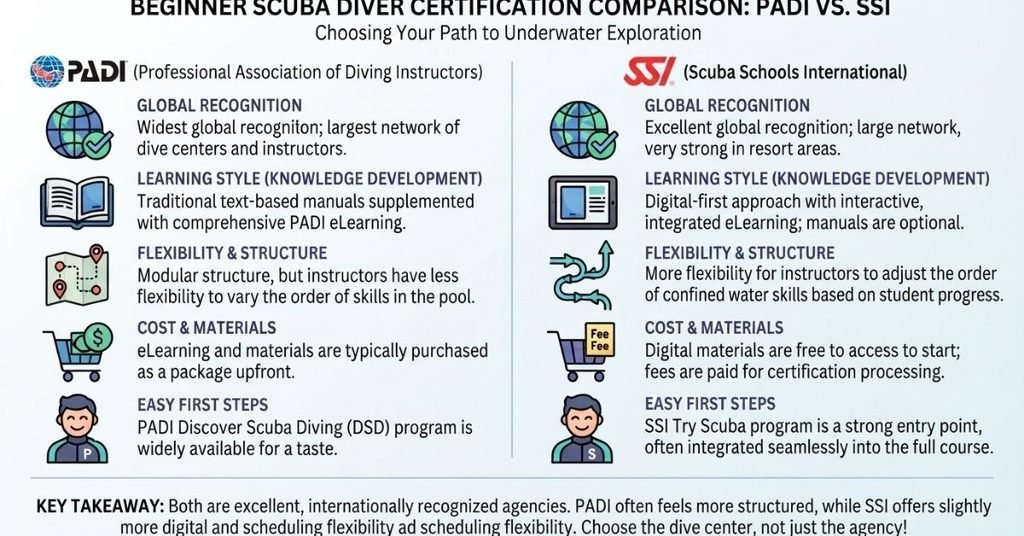
Before you start training, choose a scuba certification agency and a course that fits your goals. PADI and SSI are two popular options for beginner scuba training in the USA. Both offer entry-level programs that combine knowledge development, confined-water practice, and open-water training.
Course prices can vary based on the dive center, location, course format, and what the fee includes. Some programs may include equipment rental, while others charge separately. Always check the total price before enrolling.
Course structure can also differ. Some dive centers offer online learning, while others provide classroom instruction. Training schedules may range from several sessions to more intensive programs.
Recognition also matters when choosing a certification. Look for a well-established agency and a qualified instructor. Most importantly, choose a local dive center that provides clear training requirements and strong safety practices.
Pro Tip: Compare the full course package, not just the advertised starting price. Ask about equipment, pool sessions, open-water fees, and certification costs.
Step 2 – Online Theory Training Options
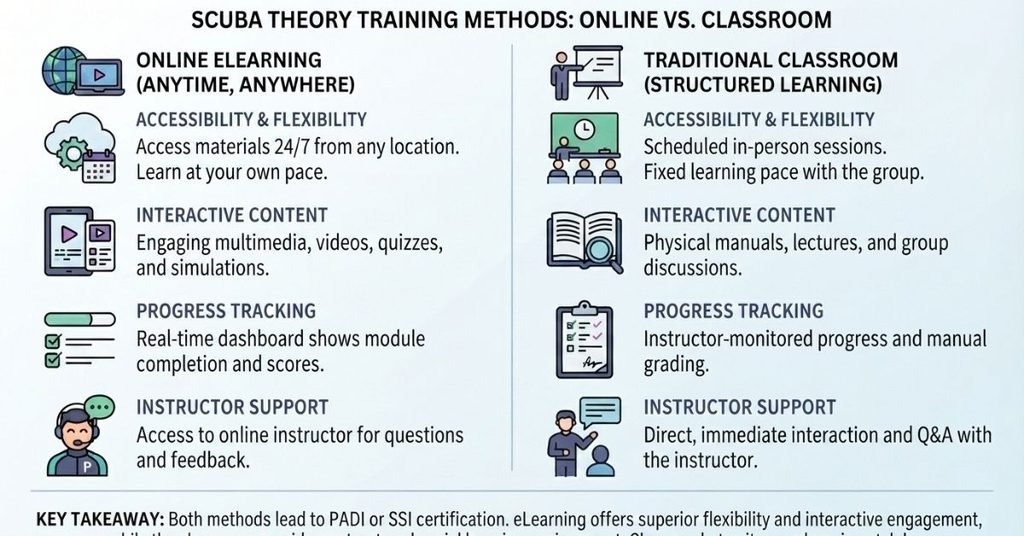
Many beginner scuba courses let you complete theory training online before entering the water. This format gives you flexibility and lets you study at your own pace. Some dive centers still offer traditional classroom sessions for students who prefer face-to-face instruction.
Theory training introduces important concepts before you begin practical diving. Lessons commonly cover scuba equipment, diving safety, underwater communication, basic skills, and responsible diving practices. You’ll also learn how pressure affects your body and equipment.
Online learning offers several advantages for busy beginners. You can study from home and review lessons when needed. It can also reduce classroom time before your practical sessions.
However, online training isn’t ideal for everyone. Some beginners learn better when they can ask an instructor questions immediately. A classroom course may provide more direct interaction and discussion.
Whichever format you choose, take the lessons seriously. Understanding the theory helps you make better decisions during your confined-water and open-water training.
Expert Tip: Don’t rush through online lessons just to reach the practical sessions. Pause when needed and ask your instructor about anything you don’t understand.
Step 3 – Confined Water Pool Sessions
After completing your theory training, you’ll practice scuba skills in confined water. Most beginners train in a swimming pool or another controlled environment. This setting lets you learn essential skills without the challenges of open water.
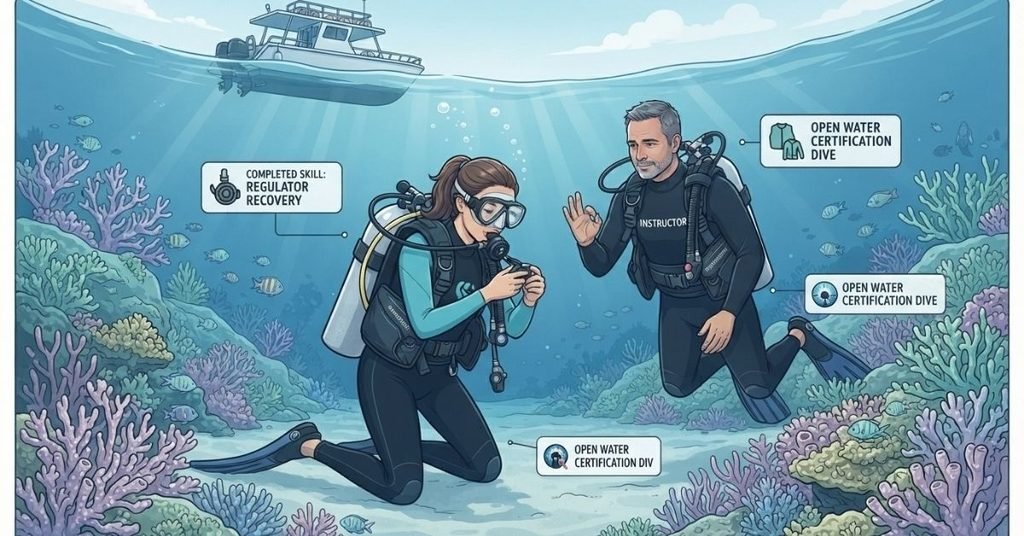
Your instructor will demonstrate each skill and guide you through the practice. You may learn how to control buoyancy, clear a partially flooded mask, and recover a regulator. You’ll also practice other basic skills required by your certification course.
Confined-water training helps you build comfort and control before your first open-water dives. You can focus on your breathing, equipment, and body position in a controlled setting.
Don’t worry if a skill feels difficult at first. Your instructor can explain it again and give you time to practice. Building confidence here makes your later open-water training more comfortable.
Pro Tip: Focus on mastering each skill rather than rushing through the session. Ask questions whenever something feels unclear.
Step 4 – Open Water Dives
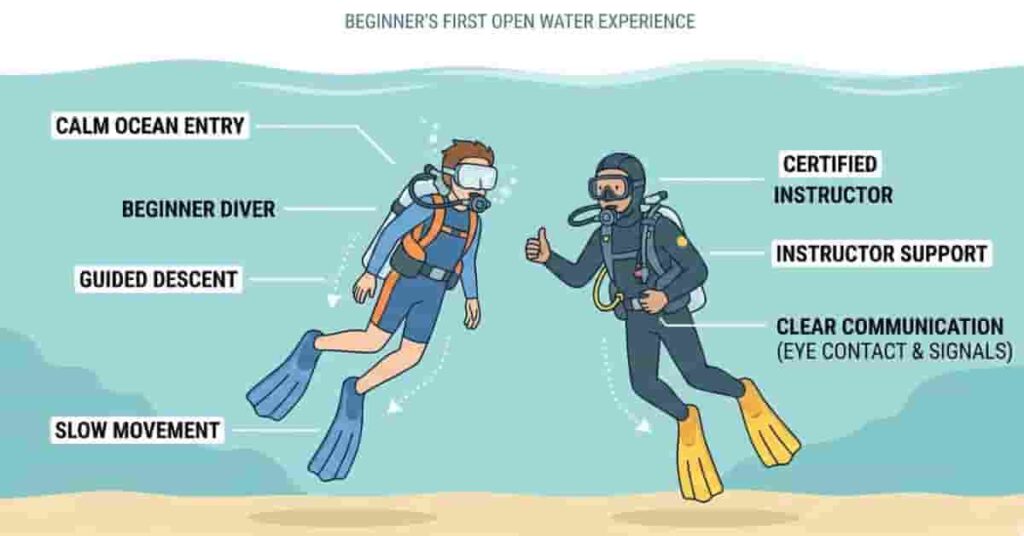
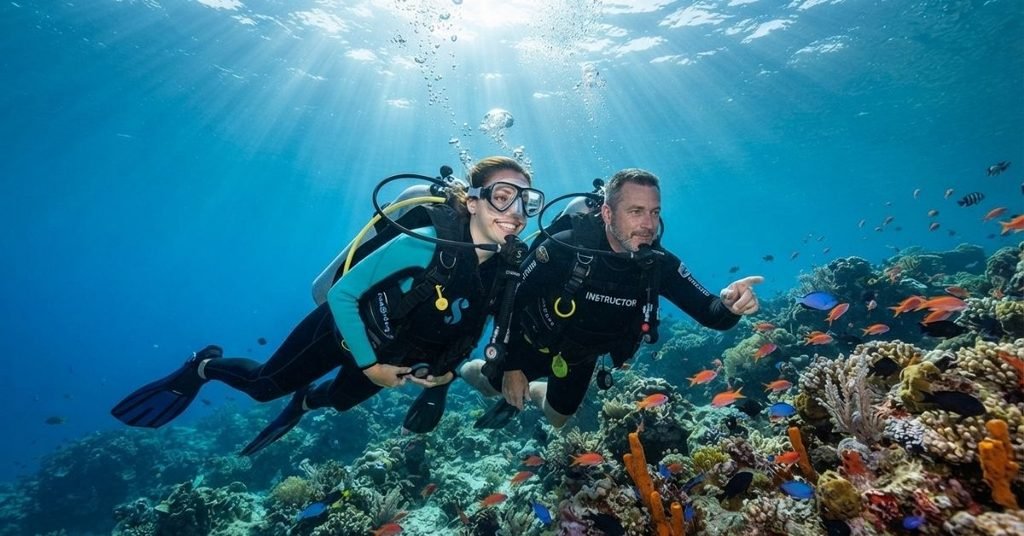
Once you’re comfortable with basic skills, you’ll move into open water with your instructor. These dives let you apply what you learned in a real diving environment.
Your certification agency determines the required training dives and skills. Requirements can vary by certification level and agency, so check your specific course before starting. Your instructor will supervise the required exercises and assess your skills during these dives.
Open-water training may take place in locations such as a lake, quarry, or ocean. The conditions depend on your local dive center and course requirements. Your instructor should brief you about depth, conditions, equipment, entry procedures, and safety before each dive.
The schedule also varies between courses. Some programs spread open-water training across multiple days, while accelerated courses may complete sessions over consecutive days.
Step 5 – Exams and Final Certification
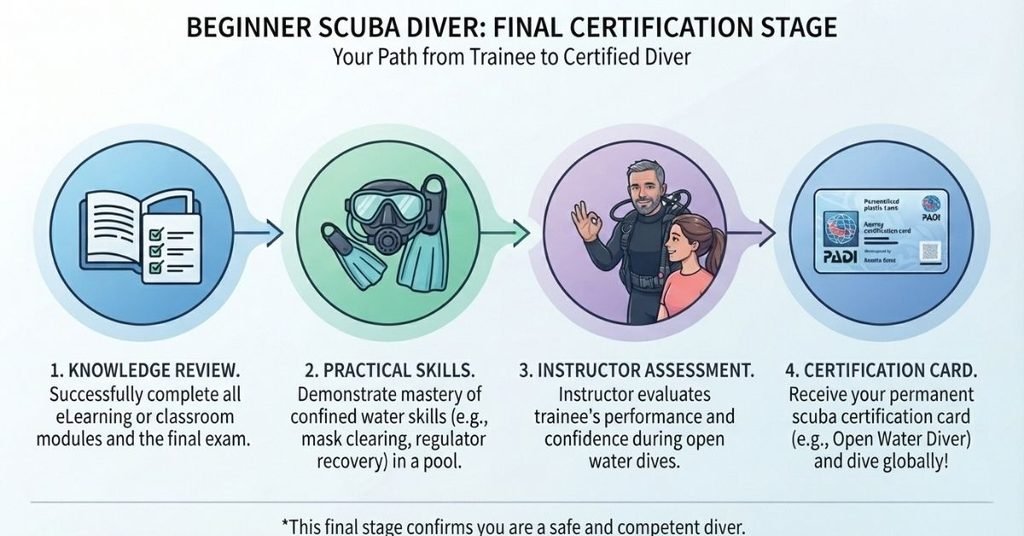
After completing your required training dives, you’ll finish the course assessments. Your instructor will review your knowledge and check the practical skills required for your certification level.
The knowledge portion may include questions about diving safety, equipment, pressure, communication, and basic procedures. You’ll also need to demonstrate the required skills during your practical training.
Once you meet all course requirements, your instructor can complete the certification process. Depending on the agency, you may receive a digital certification or a physical card. Your certification confirms that you completed the required entry-level training.
Keep your certification details accessible when planning future dives. Dive operators may ask for proof of certification before allowing you to join certain dives.
Average Timeline to Become Certified
The time needed to become a certified scuba diver depends on your course format, schedule, and training progress. Some beginners spread their training across several sessions, while others choose a more intensive schedule.
Before choosing a course, it’s also helpful to understand how much scuba certification costs and what the fees usually include.
A standard course may combine independent theory study, confined-water sessions, and open-water dives across multiple days. This format gives beginners more time between sessions to review skills and build confidence.
Accelerated courses can compress training into a shorter period. However, faster training doesn’t remove required skills or assessments. You still need to complete every requirement set by your certification agency and instructor.
Weekend courses can suit people with busy work or school schedules. Full-week courses may work better if you’re traveling to a dive destination or have several consecutive days available.
| Course Format | Best For |
|---|---|
| Standard schedule | Beginners who prefer more flexibility |
| Weekend format | Busy students and working adults |
| Accelerated course | Learners with several consecutive days |
| Full-week course | Travelers with a dedicated training period |
Equipment & Preparation Tips
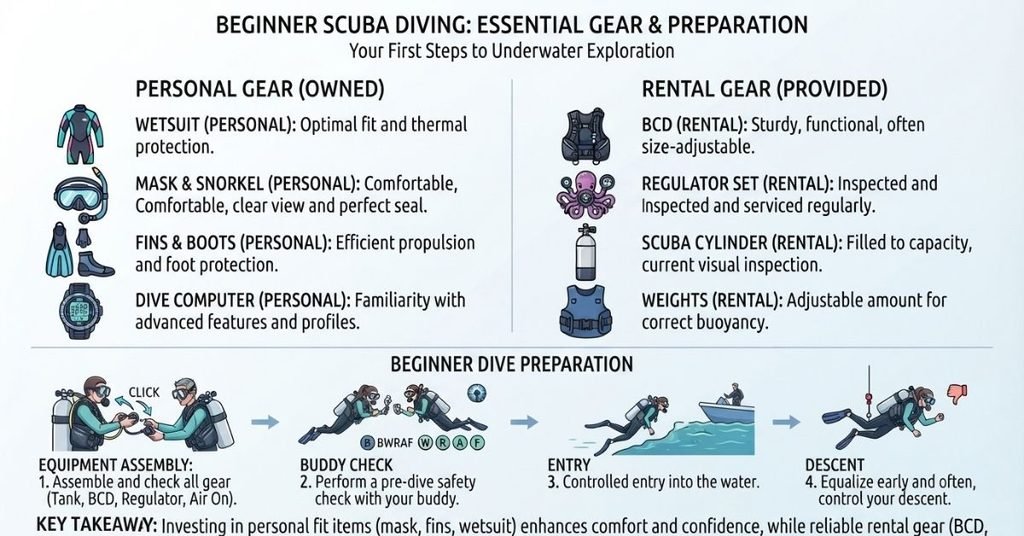
You don’t need to buy a full set of scuba equipment before starting your certification course. Most dive centers provide or rent major scuba equipment, although options vary by location and course.
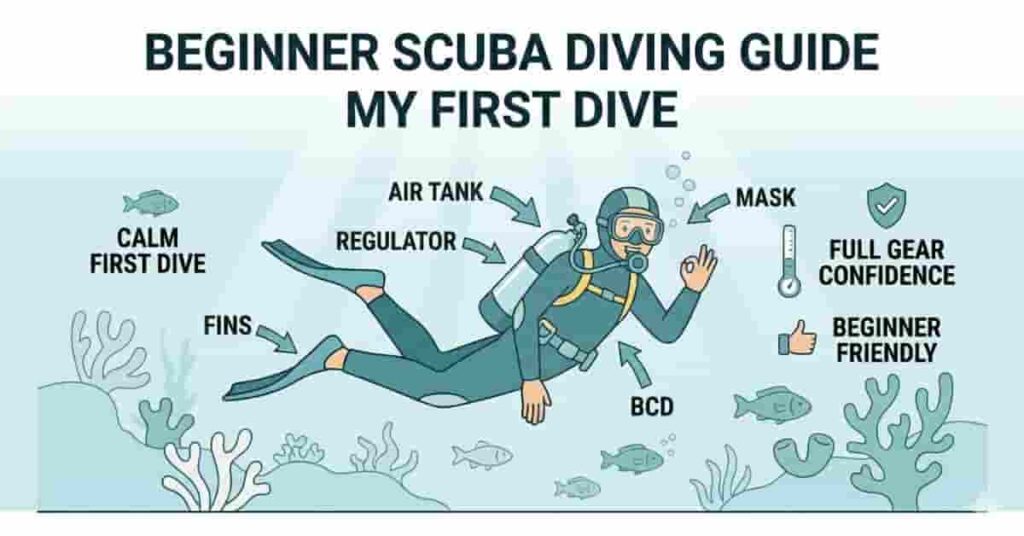
For personal gear, many beginners prefer owning a mask, fins, and snorkel. A properly fitting mask can improve comfort and help you focus during training. Wetsuits and other equipment can often be rented while you’re learning.
Before your first dive, make sure you understand your equipment and know how each item works. Follow your instructor’s guidance when assembling, checking, and using scuba gear.
Good preparation also includes being comfortable in the water and following your instructor’s fitness guidance. Complete any required medical questionnaire honestly. If you have concerns about whether you’re fit to dive, ask your instructor or a qualified medical professional.
Pro Tips
- Try your mask before buying it to check the fit.
- Ask what equipment your course fee includes.
- Arrive early enough to prepare without rushing.
- Review your theory lessons before your first dive.
- Follow your instructor’s instructions throughout training.
Common Mistakes for Beginners
Learning to scuba dive takes practice, so avoid treating certification like a race. Rushing through lessons can make important skills harder to understand and remember.
One common mistake involves skipping or rushing theory training. Your knowledge lessons explain important concepts about pressure, equipment, communication, and diving safety. Understanding these topics helps you make better decisions underwater.
Another mistake is treating confined-water sessions as optional practice. These sessions give you time to build essential skills before entering open water. Take them seriously and ask your instructor for additional practice when needed.
Ignoring safety procedures can create unnecessary risks. Always follow your instructor’s directions and complete the required equipment checks. Never hide discomfort, confusion, or problems during training.
Pro Tips
- Don’t rush to finish your certification.
- Ask questions when a skill doesn’t make sense.
- Practice difficult skills until you feel comfortable.
- Listen carefully during safety briefings.
- Communicate problems with your instructor immediately.
A patient approach helps you build stronger skills and greater confidence. Good training matters more than completing the course as quickly as possible.
Conclusion
Becoming a certified scuba diver follows a clear process when you take it one step at a time. You choose an agency, complete theory training, practice confined-water skills, and finish supervised open-water dives.
If you’re wondering, how do I become scuba certified, start by choosing a reputable course and qualified instructor. Take time to understand the lessons, practice your skills, and follow every safety requirement. The right training can help you become a confident and responsible diver.
Ready to start your scuba journey? Explore our related guides on scuba certification costs, timelines, age requirements, and certification rules. Share this guide with another beginner who’s considering scuba diving, or tell us about your certification experience in the comments.
Frequently Asked Questions
To become scuba certified, choose a recognized certification agency and enroll in an entry-level course. Complete the required theory training, confined-water skills, and supervised open-water dives. You must also meet your course’s knowledge and practical skill requirements before receiving certification.
The timeline depends on your course format, training schedule, and progress. Some beginners complete training over several sessions, while others choose weekend or accelerated programs. Your certification agency and dive center determine the required training and schedule.
Start by choosing a reputable dive center and an entry-level certification course. Complete the required knowledge development, confined-water training, and open-water dives. An instructor will evaluate your required skills before completing your certification.
No, you usually don’t need to purchase a complete scuba setup for certification. Many dive centers provide or rent equipment during training. Beginners often choose to buy personal items such as masks and fins because proper fit can improve comfort.
Some dive centers offer accelerated or weekend-based training schedules. However, you still need to complete all required theory, practical skills, and open-water training. Course availability and scheduling depend on the certification agency and local dive center.
Yes, scuba certification includes basic water skills. Exact requirements vary by certification agency and course. Your instructor can explain the swimming and water-comfort requirements before you enroll.
Scuba certification is achievable for many beginners who take their time and practice consistently. You’ll learn skills step by step under instructor supervision. Staying focused during theory and practical sessions can make the learning process easier.
After certification, you can use your credentials when booking appropriate recreational dives. Your certification level and experience determine which dives suit you. Continue building experience gradually and follow the requirements of dive operators and local conditions.

Scuba Diving Researcher & Beginner Guide
Evan Calder is the creator of DiveBeginner, a website dedicated to helping beginners learn scuba diving simply and practically 🌊
He focuses on scuba fundamentals, beginner safety, and clear diving guidance. Evan has studied ocean and marine science through programs at the Scripps Institution of Oceanography, UC San Diego, a globally recognized leader in ocean research.
Instead of complex technical language, Evan provides easy-to-follow, beginner-friendly guides based on real-world research, helping first-time divers feel confident before their first dive 🤿
DiveBeginner reflects his passion for making scuba diving accessible, safe, and enjoyable for everyone.