Introduction
Scuba diving opens the door to incredible underwater experiences, but can years of diving affect your health?
Many beginners worry about the long-term side effects of scuba diving before earning their first certification. It’s a reasonable question. While scuba diving is considered a safe recreational activity when practiced correctly, repeated exposure to pressure changes can affect the body in different ways over time. The level of risk often depends on factors such as dive frequency, depth, training, and overall health.
Understanding the potential health effects of scuba diving helps divers make informed decisions and build safer habits from the start. It’s also important to separate common myths from risks that diving medicine experts actually monitor.
In this guide, you’ll learn what research says about long-term diving safety, which health concerns deserve attention, and how to reduce potential risks. You’ll also discover why most recreational divers enjoy the sport for years while maintaining good health through proper training and safe diving practices.
Are There Long-Term Side Effects of Scuba Diving?
Quick Answer
For most people, the long-term side effects of scuba diving are minimal when they follow proper training, safety guidelines, and dive limits. Recreational diving has a strong safety record, and many divers enjoy the sport for decades without developing serious health problems.
Some long-term concerns may be linked to repeated episodes of decompression sickness and its lasting effects on the body.
That said, some scuba diving health effects may become more likely with frequent, deep, repetitive, or poorly planned dives. Divers who regularly exceed recommended limits or ignore safety procedures face a greater risk of pressure-related injuries and other complications.
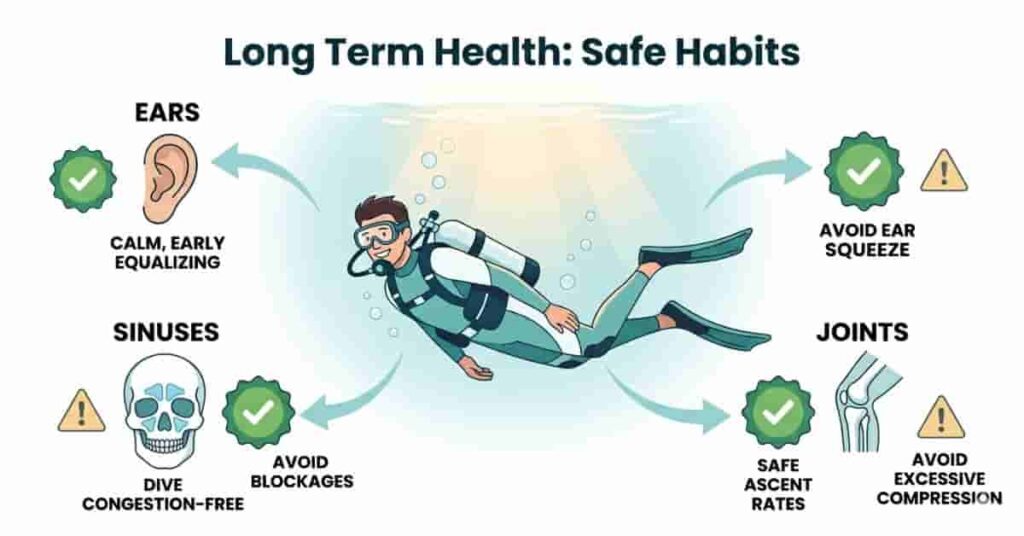
The most commonly discussed long-term concerns include ear and sinus problems, joint discomfort from repeated physical strain, and rare decompression-related conditions. Professional, technical, and commercial divers may face higher risks because they spend more time underwater and often dive at greater depths.
Current evidence suggests that safe diving habits play a major role in reducing long-term risks. Using proper ascent rates, performing safety stops, staying physically fit, and following certification guidelines can help protect your health over time.
Key Takeaways
- Most recreational divers do not experience significant long-term health problems.
- Risk increases with frequent, deep, repetitive, or unsafe diving practices.
- Ear issues, joint strain, and rare decompression-related complications are the main concerns.
- Professional and technical divers generally face greater exposure than casual recreational divers.
- Following established safety procedures greatly reduces potential long-term risks.
How Scuba Diving Affects the Body Over Time
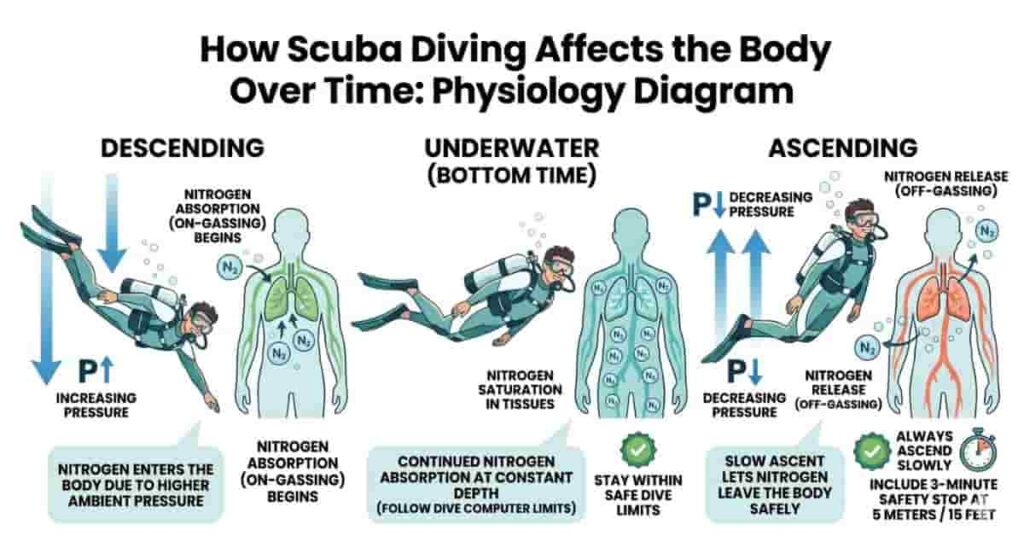
Scuba diving exposes the body to conditions that do not exist on land. Every dive involves changes in pressure, breathing compressed gas, and adapting to an underwater environment. For most recreational divers, these changes are temporary and well tolerated. However, understanding how the body responds over time can help divers make safer decisions and support long-term diving safety.
The effects of diving often depend on factors such as dive depth, dive frequency, ascent practices, and recovery time between dives. While occasional recreational dives usually pose little concern, repeated exposure may increase certain risks if divers ignore safety guidelines.
Pressure Changes and Human Physiology
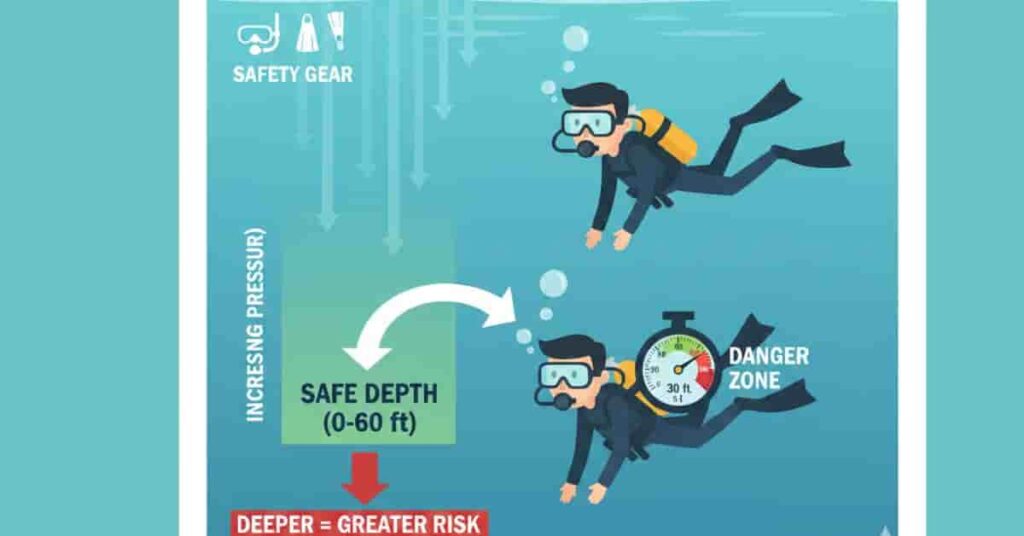
Water pressure increases as you descend. This pressure affects air-filled spaces in the body, including the ears, sinuses, and lungs. Divers equalize pressure during descent to avoid discomfort and injury.
As pressure increases, the body also absorbs more gases from the breathing tank. This process is a normal part of diving physiology. During ascent, those gases must be gradually released from the body. Ascending too quickly can interfere with this process and increase the risk of decompression-related problems.
Most divers experience no lasting effects when they follow proper procedures. Problems are more likely when dives exceed recommended limits or when safety stops are skipped.
Pro Tip
Equalize early and often during descent. Waiting until discomfort begins can increase the risk of pressure-related injuries.
Repeated Exposure to Underwater Environments
Each dive places temporary demands on the body. Over time, repeated exposure to pressure changes and gas absorption can create additional stress, especially for frequent divers.
The body usually recovers well after recreational dives. Recovery allows excess dissolved gases to leave the tissues and helps the body return to normal conditions. Divers who schedule many dives in a short period should pay close attention to hydration, rest, and dive planning.
The risks of repeated dives are generally higher when dives are deep, frequent, or closely spaced together. Proper recovery time helps reduce unnecessary strain and supports safer diving practices.
Expert Tip
Experienced instructors often recommend treating recovery as part of the dive itself. Good hydration and adequate rest can be just as important as your time underwater.
Why Dive Frequency Matters
Dive frequency plays a major role in how much exposure the body receives over time. Someone who dives a few weekends each year faces different conditions than a diver who spends several days underwater every month.
Occasional recreational divers typically have more recovery time between dives. Frequent divers may experience greater cumulative exposure to pressure changes and gas absorption. This does not mean that frequent diving is unsafe, but it highlights the importance of carefully following dive plans.
Divers who maintain conservative dive profiles, use dive computers, and respect surface intervals can significantly reduce potential risks. Safe habits become even more valuable as dive frequency increases.
Divers who frequently experience scuba diving breathing problems underwater should address them early to avoid ongoing issues.
Common Long-Term Health Effects Associated With Scuba Diving
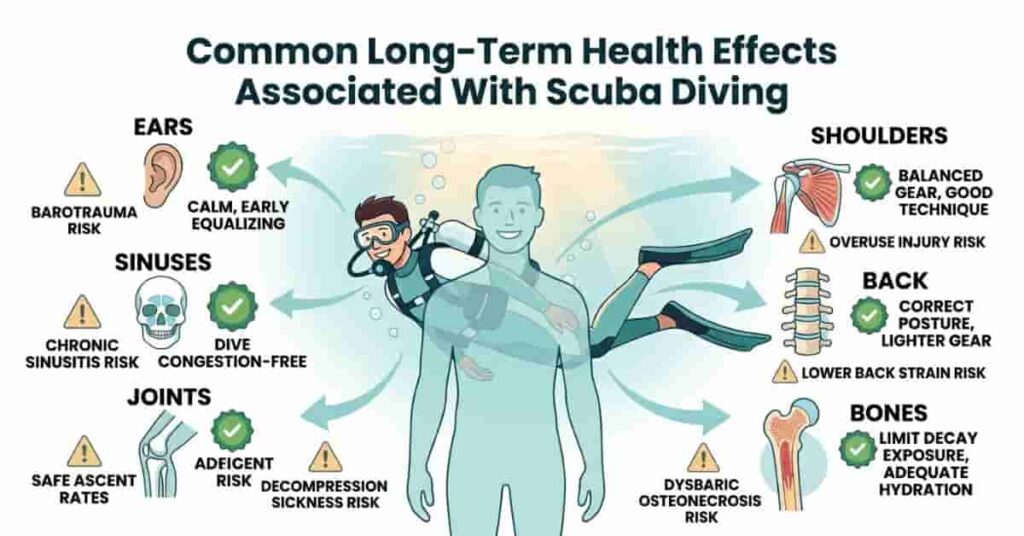
Most recreational divers never develop serious long-term health problems. However, certain scuba diving health effects can occur after years of diving, especially when divers have a history of injuries, poor diving habits, or frequent exposure to demanding dive conditions.
Many concerns are linked to pressure changes, physical strain, and repeated use of heavy equipment rather than the act of breathing underwater itself. Understanding these potential issues helps divers recognize early warning signs and take preventive steps.
Chronic Ear and Hearing Problems
The ears are among the most sensitive parts of the body during a dive. They must adjust to changing pressure during both descent and ascent. When equalization is not properly performed, barotrauma can develop.
A history of repeated ear barotrauma may increase the likelihood of ongoing ear discomfort or hearing-related concerns. Some divers report reduced hearing clarity, recurring ear infections, or difficulty equalizing after multiple injuries.
Eustachian tube dysfunction can also become a challenge for some divers. These small tubes help balance pressure between the middle ear and the environment. When they malfunction, divers may experience fullness, pressure, or discomfort during dives.
Persistent Sinus Problems
The sinuses contain air spaces that must also adjust to pressure changes underwater. When these spaces become blocked by allergies, congestion, or illness, pressure can build, leading to a condition known as sinus squeeze.
A single episode usually resolves without lasting effects. However, repeated sinus injuries may contribute to ongoing congestion, facial pressure, or discomfort during future dives.
Divers with chronic allergies or frequent sinus infections may notice pressure-related discomfort more often than others. Proper dive planning and avoiding dives when congested can help reduce these problems.
Joint and Musculoskeletal Stress
Not all chronic diving injuries come from being underwater. Carrying tanks, transporting gear, and repetitive lifting can strain the body over time.
Dive equipment can weigh more than many beginners expect. Repeated lifting and carrying may contribute to back pain, shoulder strain, neck tension, and joint discomfort.
The risk often increases for divers who perform frequent shore entries, carry equipment over long distances, or use poor lifting techniques. Maintaining good physical fitness and using proper body mechanics can help reduce wear and tear.
Bone Health and Dysbaric Osteonecrosis
Dysbaric osteonecrosis is a rare bone condition associated with repeated exposure to pressure changes. It occurs when areas of bone tissue lose blood supply and become damaged.
This condition is uncommon among recreational divers. It has been observed more often in commercial divers, saturation divers, and individuals with extensive exposure to high-pressure environments.
Researchers believe repeated decompression stress may play a role, although the condition remains relatively rare. Most recreational divers are unlikely to encounter this problem when following accepted diving practices.
Key Takeaways
- Ear and sinus problems are among the most common long-term concerns for divers.
- Repeated barotrauma may contribute to hearing and equalization difficulties.
- Chronic congestion can increase the risk of sinus-related discomfort.
- Heavy scuba equipment may lead to back, neck, and shoulder strain over time.
- Dysbaric osteonecrosis is rare and primarily affects divers with significant pressure exposure.
- Safe diving habits and proper equipment handling help reduce many potential risks.
Can Scuba Diving Affect the Brain?
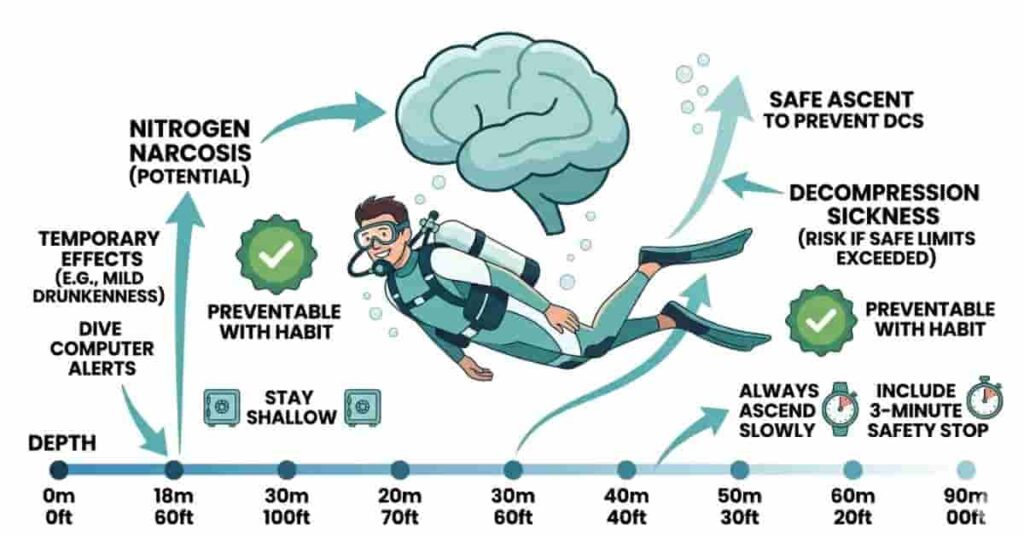
Many divers wonder whether spending years underwater can affect memory, focus, or overall brain function. This question often comes up when people learn about nitrogen narcosis and other pressure-related effects of diving.
Current evidence suggests that most recreational divers do not experience significant long-term neurological problems when they follow safe diving practices. However, researchers continue to study how repeated exposure to depth and pressure may affect divers over time. The level of exposure often plays an important role in evaluating potential effects on the scuba diving brain.
Nitrogen Narcosis Explained
Nitrogen narcosis occurs when increased pressure causes nitrogen to affect the nervous system during a dive. It typically becomes more noticeable at greater depths and can influence judgment, reaction time, concentration, and decision-making.
Many divers describe the feeling as similar to mild intoxication. Symptoms can include slowed thinking, overconfidence, confusion, or reduced awareness of surroundings. The severity varies from person to person and often depends on depth and individual sensitivity.
One important point is that nitrogen narcosis effects are usually temporary. Symptoms typically improve as a diver ascends to a shallower depth and pressure decreases.
Pro Tip
If you notice unusual confusion or poor judgment underwater, ascend gradually to a shallower depth while following safe diving procedures.
What Research Says About Long-Term Cognitive Effects
Researchers have examined whether repeated exposure to nitrogen and pressure changes could affect cognitive function over many years. So far, findings remain mixed, and evidence for permanent cognitive effects in recreational divers is limited.
Some studies have explored potential changes in attention, memory, or processing speed among highly exposed divers. However, researchers have not reached a clear consensus, especially among recreational divers.
Because scientific findings continue to evolve, it is important to rely on evidence-based information rather than assumptions. At present, there is no strong evidence showing that typical recreational diving causes widespread long-term cognitive impairment.
Expert Tip
Focus on dive planning, depth limits, and proper training. These factors help reduce unnecessary exposure and support safer diving experiences.
Recreational Divers vs Technical Divers
Exposure levels differ greatly between recreational and technical diving. Recreational divers usually stay within conservative depth limits and spend less time at significant depths.
Technical divers often perform deeper dives, longer bottom times, and more complex decompression profiles. As a result, they may experience greater cumulative exposure to pressure changes and nitrogen effects.
This difference helps explain why researchers often pay closer attention to professional and technical diving populations when studying potential neurological risks. In general, risks increase with deeper and more frequent exposure, while occasional recreational diving remains far less demanding on the body.
Oxygen Toxicity and Long-Term Exposure Risks
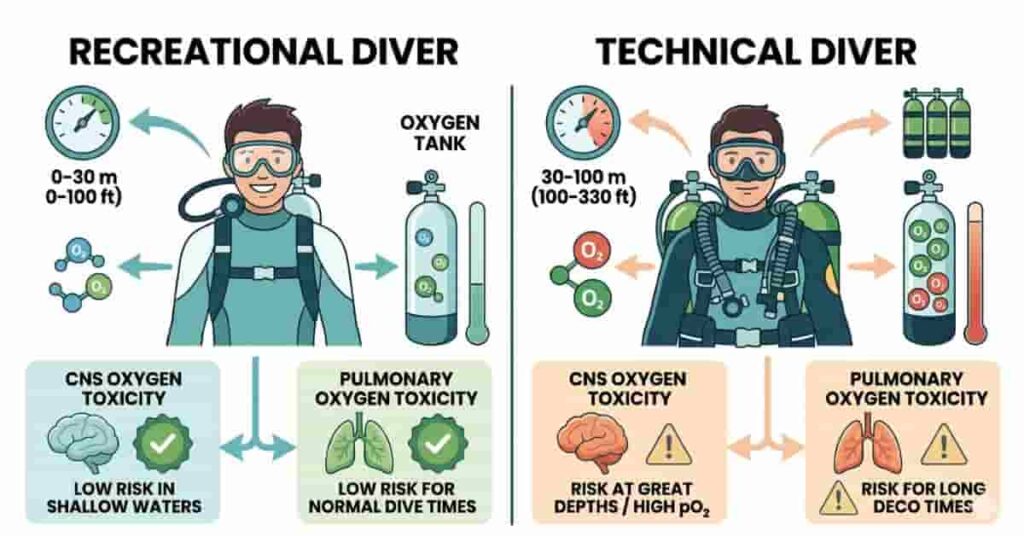
Oxygen is essential for life, but breathing oxygen at elevated pressures for extended periods can create health risks in certain diving situations. This condition is known as oxygen toxicity. While the topic may sound alarming, it is important to understand that oxygen toxicity concerns in scuba diving are primarily associated with specific types of diving rather than typical recreational dives.
Most recreational divers never experience oxygen toxicity because they stay within established depth limits and use standard breathing gases. The risk becomes more relevant during deep, technical, or extended dives that involve higher oxygen exposure.
What Is Oxygen Toxicity?
Oxygen toxicity occurs when the body is exposed to elevated oxygen levels for too long. Divers and diving professionals generally discuss two main forms of oxygen toxicity.
Central Nervous System (CNS) oxygen toxicity affects the brain and nervous system. Symptoms may include visual disturbances, muscle twitching, dizziness, confusion, or, in severe cases, seizures underwater.
Pulmonary oxygen toxicity affects the lungs. It is more commonly linked to prolonged oxygen exposure and may cause chest discomfort, coughing, or temporary breathing irritation.
Modern dive planning methods are designed to help divers stay within safe oxygen exposure limits and reduce the risks of oxygen exposure during scuba diving.
Pro Tip
Always follow the oxygen exposure limits recommended for your certification level and breathing gas mixture.
Who Is Most at Risk?
The highest risk is generally seen among divers who spend long periods breathing gas mixtures with elevated oxygen levels. This group often includes technical divers, rebreather divers, commercial divers, and individuals conducting complex decompression dives.
Risk can also increase when divers exceed recommended depth limits or ignore dive-planning guidelines. Longer exposure times and higher oxygen partial pressures increase the risk of oxygen-related complications.
For recreational divers following standard training practices, oxygen toxicity remains uncommon. Proper dive planning significantly reduces the likelihood of dangerous exposure levels.
Expert Tip
Technical divers carefully track oxygen exposure throughout every dive. Monitoring oxygen limits is a core part of advanced dive planning.
Recreational Diving vs Technical Diving Exposure
There is a significant difference between recreational and technical diving in terms of oxygen exposure. Recreational divers usually remain within conservative depth ranges and shorter dive durations. These limits help keep oxygen exposure well within accepted safety margins.
Technical divers often conduct deeper dives, longer bottom times, and decompression stops that may involve specialized gas mixtures with higher oxygen content. As a result, they face greater oxygen exposure and require more advanced planning.
This difference explains why most recreational divers face minimal risk from oxygen toxicity. When divers stay within certification limits, use appropriate equipment, and follow established safety procedures, oxygen-related complications remain rare.
Who Is Most at Risk of Long-Term Diving Problems?
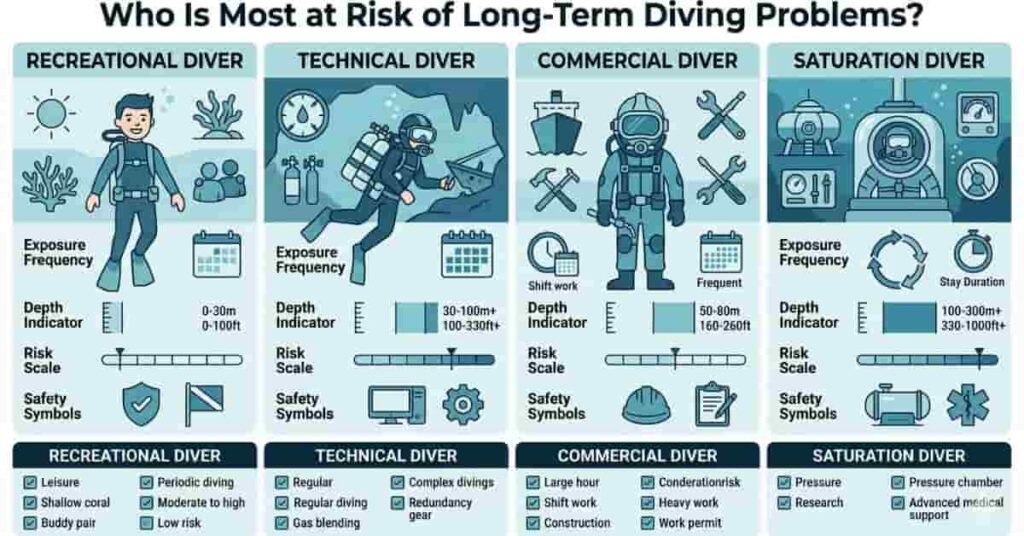
Not all divers face the same level of risk. The likelihood of developing long-term diving problems often depends on three key factors: how often someone dives, how deep they dive, and how closely they follow safe diving practices.
For most recreational divers, the risk of serious long-term health issues remains low. However, certain groups experience greater exposure to pressure changes, breathing gases, and demanding underwater conditions. Understanding these differences can help divers make informed decisions and support long-term safety.
Commercial Divers
Commercial divers often spend far more time underwater than recreational divers. Their work may involve construction, inspections, welding, or other underwater tasks performed on a regular schedule.
Because of their frequent exposure to pressure changes, commercial divers may be at higher risk of developing certain professional diver health concerns over time. Long working hours, repetitive dives, and physically demanding tasks can increase cumulative stress on the body.
Pro Tip
Professional divers should follow employer safety protocols and complete regular medical evaluations to monitor long-term health.
Saturation Divers
Saturation divers operate in some of the most demanding underwater environments. They live under pressure for extended periods and complete multiple deep-water tasks before returning to surface pressure.
This type of diving involves significantly greater exposure than standard recreational diving. As a result, researchers often study saturation divers when examining potential long-term pressure-related health effects.
Although saturation diving follows strict safety procedures, the unique environment places exceptional demands on the body.
Technical Divers
Technical divers frequently exceed recreational depth limits and may use specialized gas mixtures or decompression schedules. These dives often involve longer bottom times and more complex planning.
Because of these factors, technical diving risks are generally higher than those associated with standard recreational diving. Increased exposure to pressure and breathing gases may contribute to a greater cumulative health burden over time.
Proper training, conservative dive planning, and strict adherence to procedures are essential for reducing risk.
Expert Tip
Advanced certifications improve skills, but they do not eliminate risk. Conservative decision-making remains one of the best safety tools for technical divers.
Divers Who Skip Safety Procedures
Dive behavior matters just as much as depth and frequency. Divers who rush ascents, ignore safety stops, exceed certification limits, or dive while fatigued may increase their risk of future complications.
Many long-term concerns are linked to repeated unsafe practices rather than a single dive. Small mistakes repeated over time can lead to unnecessary exposure and increased health risks.
Following established safety procedures helps protect divers regardless of experience level.
Divers With Existing Medical Conditions
Certain medical conditions may make diving more challenging or increase the likelihood of complications. Conditions involving the lungs, heart, ears, or sinuses may affect how the body responds to pressure changes.
Divers with pre-existing health concerns should seek guidance from a qualified diving medicine professional before participating in regular diving activities. Individual risk levels can vary significantly depending on medical history and overall fitness.
Long-Term Effects of Decompression Stress
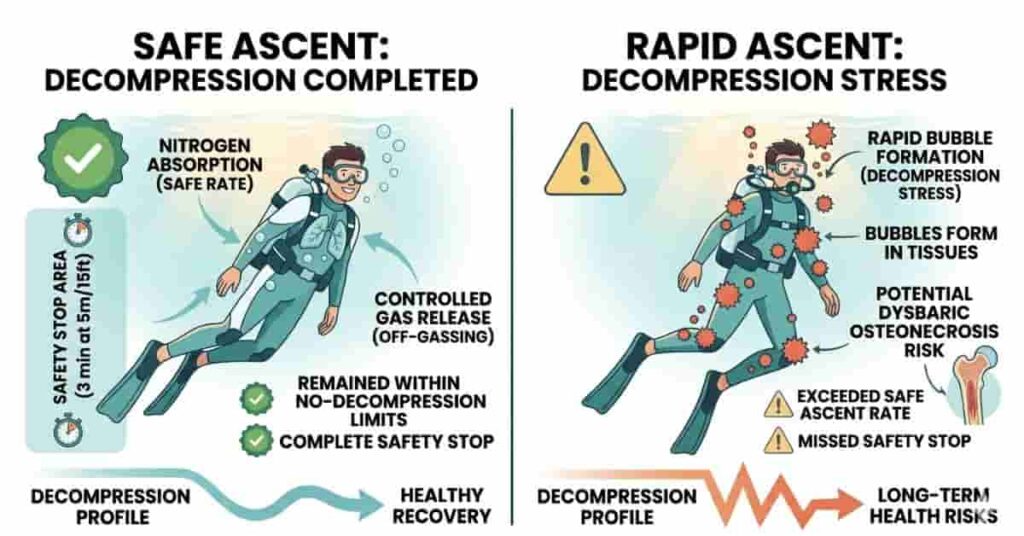
Every scuba dive involves absorbing and releasing gases as pressure changes underwater. When divers ascend correctly, the body usually removes these gases without problems. However, repeated exposure to decompression stress has led researchers to study whether it can contribute to long-term health concerns in some divers.
For most recreational divers, the body handles normal decompression well when safe diving practices are followed. Problems become more likely when divers ascend too quickly, exceed recommended limits, or perform frequent dives with insufficient recovery time. Understanding these risks of decompression sickness helps divers make safer decisions throughout their diving journey.
Repeated Microbubble Exposure
During ascent, tiny gas bubbles can form in the body as dissolved gases leave tissues. In most cases, these microbubbles are harmless and disappear naturally through normal circulation and breathing.
Researchers continue to study whether repeated exposure to microbubbles over many years may contribute to subtle vascular or physiological changes in highly exposed divers. Current evidence remains limited, particularly for recreational divers who follow conservative dive profiles.
The risk appears to increase with deeper dives, repetitive diving schedules, and poor ascent practices. This is one reason dive computers and safety stops play such an important role in modern diving.
Decompression Sickness History
Decompression sickness (DCS) occurs when gas bubbles form in the body, causing symptoms ranging from joint pain to neurological complications. Most cases are linked to rapid ascents, missed decompression stops, or dive profiles that exceed safe limits.
Divers with a history of DCS often receive medical evaluation before returning to diving. While many recover fully, severe cases may require additional monitoring depending on the symptoms and affected body systems.
A previous episode of DCS does not automatically lead to long-term health problems, but it highlights the importance of careful dive planning and risk management.
Expert Tip
If you’ve experienced decompression sickness before, discuss future dive plans with a diving medicine specialist before returning to regular diving.
Rare Long-Term Complications
Serious long-term complications from decompression stress are uncommon among recreational divers. However, researchers have investigated whether repeated decompression exposure could affect blood vessels, circulation, or other body systems in highly exposed diving populations.
Some studies have explored possible vascular effects associated with long-term pressure exposure, but findings remain mixed and are still being evaluated. Most recreational divers who follow established safety guidelines are considered low risk.
The most effective protection remains proper ascent rates, adequate surface intervals, and adherence to dive planning recommendations. These practices help minimize the risk of repeated diving and support long-term diving safety.
How to Reduce the Risk of Long-Term Side Effects
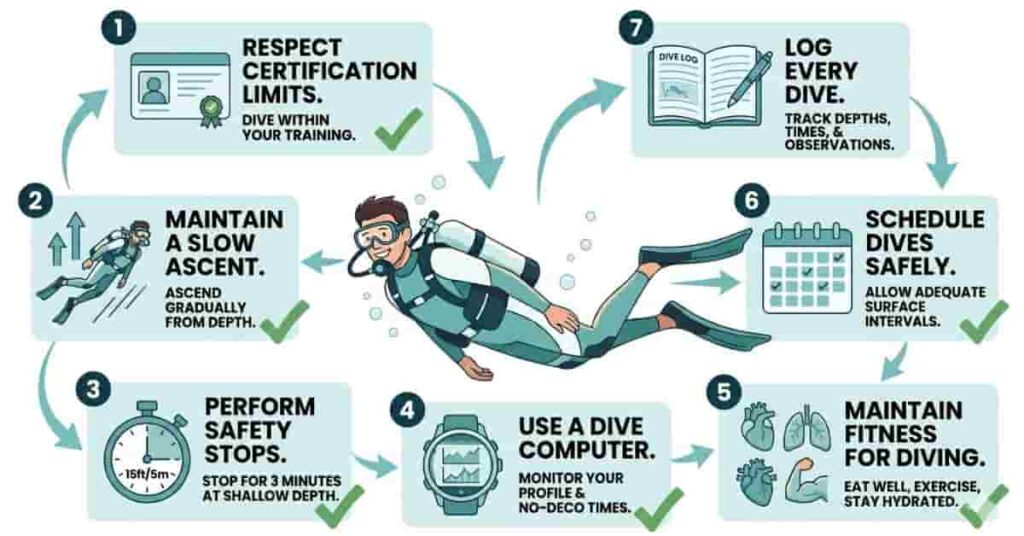
The good news is that most potential diving-related health issues are preventable. Following established safety practices can significantly reduce your risk and help you enjoy scuba diving for many years.
Long-term diving safety depends on more than a single dive. It comes from consistent habits, proper training, and responsible decision-making over time. Whether you’re new to diving or have dozens of dives logged, these beginner diver precautions can help protect your health and improve your overall diving experience.
Stay Within Certification Limits
Certification agencies set depth and training limits for a reason. These limits are designed to match your experience, skills, and knowledge level.
Going deeper or attempting dives beyond your training increases exposure to pressure-related risks and emergency situations. Staying within your certification level helps create a safer and more controlled diving environment.
Follow Safe Ascent Rates
Ascending too quickly is one of the most common factors linked to decompression-related problems. A slow ascent gives dissolved gases time to escape safely from the body.
Most dive computers monitor ascent speed and provide warnings if you rise too fast. Paying attention to these alerts can help reduce unnecessary decompression stress.
Perform Safety Stops
A safety stop is a short pause near the end of a dive, usually performed before surfacing. This extra time helps the body continue releasing dissolved gases.
Although safety stops do not guarantee protection from decompression sickness, they are considered a valuable best practice for recreational divers.
Use a Dive Computer
Dive computers track depth, time, ascent rates, and decompression information in real time. They provide important data that helps divers stay within safe limits.
Modern dive computers make dive planning easier and help reduce human error. They are one of the most effective tools available for improving dive safety.
Maintain Good Physical Fitness
Physical fitness supports safer diving in several ways. Strong cardiovascular health, flexibility, and endurance can improve comfort and reduce fatigue underwater.
Fit divers may also find it easier to manage equipment, respond to challenges, and recover between dives.
Avoid Excessive Dive Schedules
Back-to-back dives with little recovery time can increase physical stress and gas exposure. While repetitive diving is common, divers should respect recommended surface intervals and avoid pushing personal limits.
Adequate rest, hydration, and recovery are important parts of every safe dive schedule.
Keep Detailed Dive Logs
A dive log helps track dive depth, duration, conditions, equipment, and any unusual symptoms. Over time, these records can provide valuable insights into your diving habits and exposure history.
Detailed logs also help divers identify patterns and make informed decisions about future dives.
Lifestyle Habits That Support Diver Health
Safe diving starts long before you enter the water and continues after you leave it. Daily habits can influence how well your body handles physical activity, pressure changes, and recovery between dives.
While training and equipment are important, lifestyle choices also play a major role in long-term wellness. These diver health tips can help support your overall fitness, improve comfort underwater, and encourage better post-dive recovery throughout your diving journey.
Hydration Before and After Diving
Hydration is one of the simplest ways to support diving health. Diving can contribute to fluid loss through breathing compressed air, physical activity, and exposure to the sun and wind.
Drinking water before and after a dive helps support circulation and overall recovery. Mild dehydration may also increase fatigue, headaches, and discomfort after diving.
Make hydration part of your dive routine rather than waiting until you feel thirsty.
Quality Sleep and Recovery
A well-rested body performs better underwater. Sleep supports physical recovery, mental focus, and decision-making, all of which are important for diving safety.
Lack of sleep can increase fatigue and reduce concentration during dive planning and underwater activities. Divers who feel exhausted should consider postponing a dive until they are properly rested.
Pro Tip
Aim for a full night’s sleep before a diving day, especially when multiple dives are planned.
Proper Nutrition
Good nutrition provides the energy needed for diving and recovery. Balanced meals that include carbohydrates, protein, healthy fats, and essential nutrients help support overall performance.
Eating a heavy meal immediately before diving can cause discomfort, while skipping meals can leave divers feeling weak or tired. A moderate, balanced approach often works best.
Healthy eating habits also contribute to long-term fitness and cardiovascular health.
Annual Diving Medical Check-Ups
Regular medical evaluations can help identify health concerns before they affect diving safety. This is particularly important for older divers and frequent divers.
A healthcare professional familiar with diving medicine can assess cardiovascular health, lung function, hearing, and overall fitness for diving.
Routine check-ups support both short-term safety and long-term health.
Recognizing Early Warning Signs
Listening to your body is an important part of safe diving. Persistent ear pain, unusual fatigue, dizziness, breathing difficulties, hearing changes, or recurring joint discomfort should never be ignored.
Many diving-related problems respond better when addressed early. Seeking medical advice promptly can help prevent minor concerns from becoming larger issues.
When something feels unusual after a dive, it is always wise to take it seriously and seek professional guidance if symptoms continue.
Myths vs Facts About Long-Term Scuba Diving Effects
Scuba diving has been surrounded by myths for decades. Some concerns stem from real risks that have been exaggerated, while others stem from misunderstandings about how the body responds to diving.
Learning the difference between facts and fiction can help divers make informed decisions and avoid unnecessary fear. The following scuba health myths are among the most common questions beginners ask when researching long-term diving safety.
| Myth | Fact |
| Diving permanently damages lungs. | Most divers experience no permanent lung damage when they follow safe diving practices and avoid pressure-related injuries. |
| Every diver develops joint problems. | Joint issues are not inevitable. Risk varies based on exposure, physical fitness, equipment handling, and diving habits. |
| Nitrogen narcosis causes permanent brain damage. | Nitrogen narcosis effects are usually temporary. Evidence for permanent cognitive effects in recreational divers remains limited. |
| Frequent diving always causes health problems. | Many divers complete hundreds of dives safely. Proper training, recovery, and dive planning significantly reduce risks. |
| Diving becomes dangerous after a certain number of dives. | There is no specific dive count that automatically makes diving unsafe. Dive quality, depth, exposure, and safety practices matter far more. |
Many scuba diving misconceptions arise because people focus on rare incidents rather than typical diving experiences. While no activity is completely risk-free, recreational scuba diving has a strong safety record when divers follow training guidelines and established procedures.
The most effective way to reduce risk is not to avoid diving altogether. Instead, divers should focus on proper education, conservative dive planning, and healthy diving habits. These factors have a much greater impact on long-term outcomes than myths often suggest.
Expert Tip
When evaluating diving advice online, rely on information from certified instructors, diving medicine experts, and recognized diving organizations rather than personal opinions or unverified stories.
When Should Divers Seek Medical Advice?
Most minor discomfort after a dive improves quickly with rest and recovery. However, some symptoms should never be ignored. Recognizing potential warning signs early can help prevent complications and protect your long-term health.
Many diving-related issues are easier to evaluate and treat when addressed promptly. If symptoms persist, worsen, or appear unusual, seeking professional medical advice is the safest course of action.
Persistent Ear Pain
Mild ear pressure can occur during a dive, but ongoing pain is not normal. Persistent ear discomfort may indicate barotrauma, inflammation, or another pressure-related injury.
If ear pain continues after diving or becomes more severe, schedule a medical evaluation. Ignoring symptoms could lead to longer recovery times or additional complications.
Hearing Changes
Any noticeable change in hearing should be addressed. This may include muffled hearing, ringing in the ears, reduced hearing ability, or a feeling of fullness that does not improve.
Because hearing issues can result from pressure-related injuries, divers should seek medical advice if symptoms remain after a dive.
Joint Pain After Diving
Joint discomfort can occur for many reasons, including physical exertion and equipment handling. However, unexplained joint pain after diving may sometimes be associated with decompression-related issues.
Pain that appears soon after a dive, worsens over time, or occurs alongside other symptoms should be evaluated by a healthcare professional.
Neurological Symptoms
Neurological symptoms require immediate attention. These may include dizziness, numbness, tingling, weakness, confusion, balance problems, vision changes, or difficulty speaking.
Although these symptoms can have different causes, they may also indicate a serious diving-related condition that requires urgent medical assessment.
Pro Tip
Never assume neurological symptoms will disappear on their own. Seek professional medical help as soon as possible.
Unusual Fatigue
Feeling tired after a day of diving is common. However, severe or unusual fatigue that seems disproportionate to the level of activity may signal an underlying problem.
If exhaustion persists, occurs suddenly, or is accompanied by other symptoms, it should be evaluated by a medical professional.
Breathing Difficulties
Shortness of breath, chest discomfort, wheezing, or difficulty breathing after diving should never be ignored. These symptoms may indicate a respiratory issue that requires prompt medical attention.
Even if symptoms seem mild at first, they should be assessed if they continue or worsen.
Consult a Diving Medicine Physician
Not every healthcare provider has specialized training in diving-related conditions. When possible, divers should seek guidance from a diving medicine physician or another medical professional experienced in dive medicine.
These specialists understand the unique effects of pressure exposure, decompression stress, and diving physiology. Their expertise can help ensure an accurate evaluation and an appropriate treatment plan.
Understanding whether the bends can be fatal in severe cases helps highlight the importance of safe diving practices.
Conclusion
For most people, the long-term side effects of scuba diving are minimal when they follow proper training, dive within their limits, and use safe diving practices. We explored potential concerns such as ear issues, decompression stress, oxygen exposure, and physical strain, along with the steps divers can take to reduce those risks.
The good news is that most recreational divers can enjoy scuba diving for decades without serious long-term health problems. Long-term diving safety depends on consistent habits, proper recovery, regular health monitoring, and smart decision-making both in and out of the water.
The best approach is simple: stay informed, dive conservatively, and listen to your body. Awareness and prevention remain the strongest tools for protecting your health over time.
Have questions or personal diving experiences to share? Leave a comment below and explore our other scuba safety guides to continue learning and diving with confidence.

Scuba Diving Researcher & Beginner Guide
Evan Calder is the creator of DiveBeginner, a website dedicated to helping beginners learn scuba diving simply and practically 🌊
He focuses on scuba fundamentals, beginner safety, and clear diving guidance. Evan has studied ocean and marine science through programs at the Scripps Institution of Oceanography, UC San Diego, a globally recognized leader in ocean research.
Instead of complex technical language, Evan provides easy-to-follow, beginner-friendly guides based on real-world research, helping first-time divers feel confident before their first dive 🤿
DiveBeginner reflects his passion for making scuba diving accessible, safe, and enjoyable for everyone.