Introduction
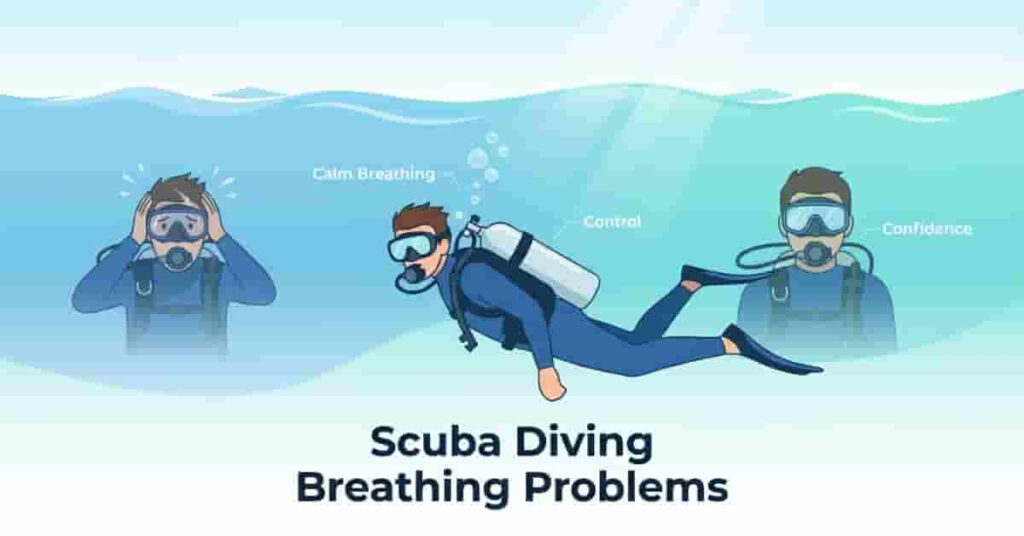
Scuba diving breathing problems can feel scary when you’re new to diving. Feeling like you can’t breathe underwater is one of the most common beginner scuba concerns. Many first-time divers worry that something is wrong when breathing feels unusual through a regulator.
In most cases, these breathing struggles are normal. They often come from anxiety, shallow breathing, or unfamiliar equipment rather than serious danger. Your body and mind are adjusting to a completely new environment.
Certified instructors from organizations like PADI and SSI often teach that calm, slow breaths and proper technique can solve many beginner breathing issues. Learning how your gear works and staying relaxed can make a huge difference.
This guide explains the most common causes of scuba breathing difficulty, practical solutions to improve comfort, prevention tips before your dive, and warning signs that may require immediate action. With the right training and preparation, most beginners can overcome breathing problems and enjoy safer, more confident dives.
Learning whether you can breathe through your nose while scuba diving can solve several beginner concerns.
Why Breathing Underwater Feels Difficult for Beginners
Breathing underwater feels difficult mainly because your body and mind are adjusting to a completely unfamiliar experience. For many beginners, scuba diving breathing problems start during the first few breaths through a regulator.
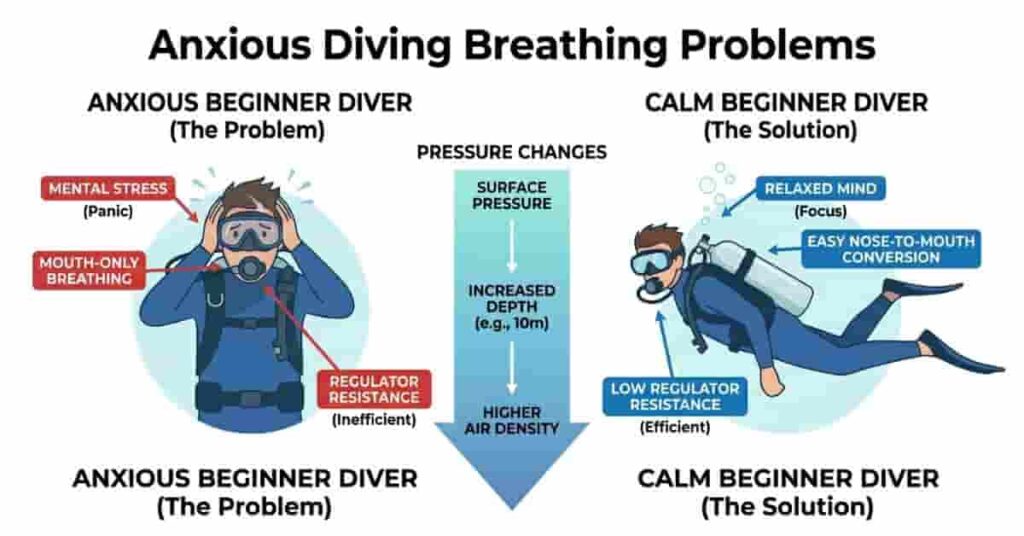
One common issue is regulator resistance. Unlike normal breathing on land, regulators require a slight effort to inhale and exhale. While modern gear is designed for safety, this added sensation can feel strange at first.
Mouth-only breathing also creates discomfort. New divers must keep their mouths on the regulator and avoid breathing through their nose. This can feel unnatural, especially for people accustomed to nasal breathing.
Changes in water pressure can exacerbate first-dive breathing issues. As you descend, your body experiences different sensations, including tighter breathing patterns due to nervousness or poor technique.
Mental stress is another major factor. Fear of being underwater, worrying about equipment, or overthinking each breath can trigger shallow breathing and panic. This often leads to shallow water breathing issues before divers even reach deeper depths.
The underwater environment itself can feel overwhelming. New sounds, limited communication, and unfamiliar movement can increase anxiety quickly.
Pro Tip:
Focus on slow, deep breaths and trust your equipment. Relaxation is one of the best tips for beginners to reduce breathing difficulties while scuba diving.
Key Takeaway:
Most beginner breathing struggles are caused by anxiety, unfamiliar sensations, and breathing technique—not equipment failure.
Most Common Scuba Diving Breathing Problems
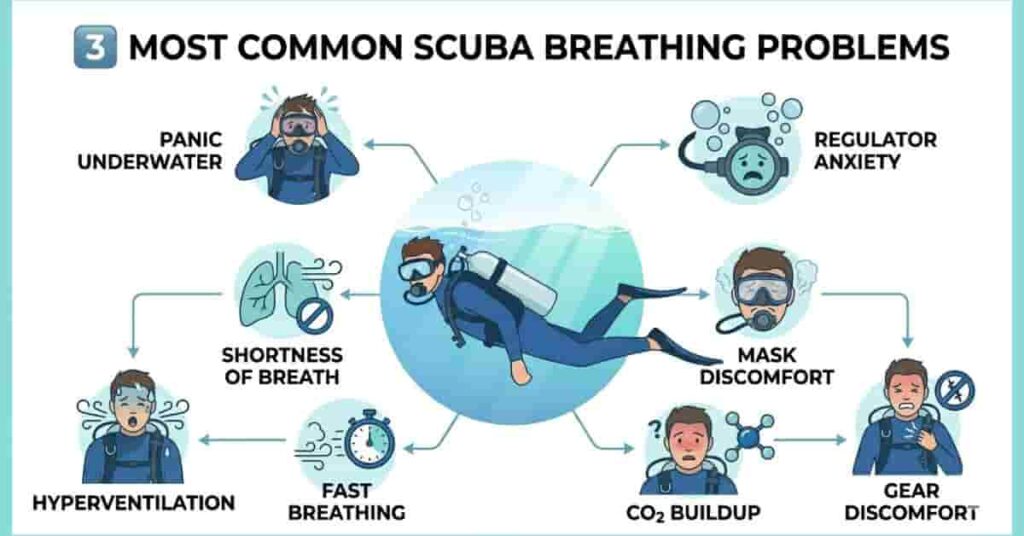
Beginners often experience several types of breathing problems during early scuba diving training dives. Understanding these symptoms can help you respond calmly and safely.
Shortness of Breath
Shortness of breath while scuba diving often happens when divers feel anxious or breathe too quickly. Many beginners mistake regulator resistance for a lack of air, even when their tank is full.
Panic Underwater
Panic underwater while breathing can trigger sudden fear, rapid breathing, and poor decision-making. This often starts from stress, unfamiliar sensations, or difficulty staying calm.
CO2 Buildup
CO2 buildup while diving can happen when divers take shallow, ineffective breaths. Poor gas exchange may lead to headaches, dizziness, confusion, or a feeling of air hunger.
Fast or Shallow Breathing
Rapid chest breathing is one of the most common mistakes that scuba beginners make. It increases anxiety, wastes air, and can worsen breathing discomfort.
Regulator Anxiety
Some divers feel nervous using a regulator, especially during their first dives. Mouthpiece discomfort or fear of equipment failure can create unnecessary breathing tension.
Mask Discomfort Affecting Breathing
A tight or leaking mask may increase stress and distract beginners from proper breathing patterns. Even small discomforts can make breathing feel harder.
Hyperventilation
Hyperventilation occurs when divers breathe too fast due to fear or overexertion. This can cause lightheadedness, panic, and a sense of reduced control underwater.
Poor breathing habits may also increase the risk of decompression sickness during scuba dives.
Main Causes of Scuba Diving Breathing Problems
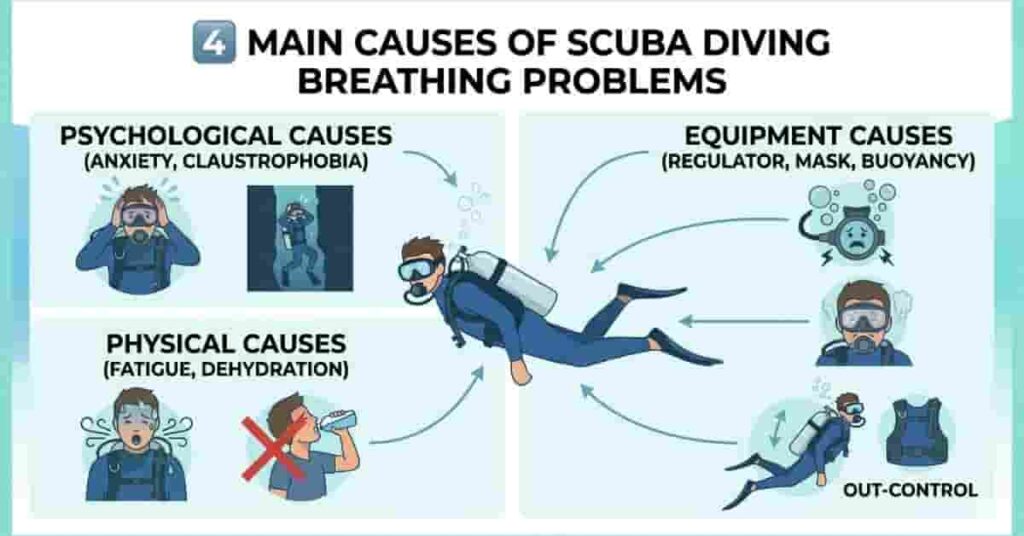
Scuba diving breathing problems usually come from psychological, physical, or equipment-related causes. For beginners, several factors often combine, making breathing feel harder than it actually is.
Psychological Causes
Anxiety is one of the biggest reasons new divers struggle underwater. Fear of deep water, equipment, or losing control can trigger shallow breathing and stress.
Claustrophobia may also affect some divers. Wearing a mask, regulator, and exposure suit can feel restrictive, especially during early dives.
A panic response can quickly worsen breathing problems. Once fear increases, divers often breathe faster, which can create a cycle of shortness of breath and rising anxiety.
Physical Causes
Fatigue makes breathing harder because your body needs more oxygen during physical exertion. Tired divers may feel out of breath faster.
Poor fitness can also contribute to breathing difficulty. Basic swimming strength and cardiovascular fitness contribute to underwater comfort.
Congestion from colds, allergies, or sinus issues may restrict airflow and increase discomfort.
Dehydration can reduce energy levels and increase physical stress, potentially worsening breathing patterns.
Equipment Causes
Poor regulator setup can create unnecessary resistance, leading beginners to think something is wrong with their air supply. Proper regulator anxiety solutions often include professional gear checks and practice sessions.
A tight mask can cause facial discomfort, distraction, or feelings of pressure.
Improper weighting is another common mistake that scuba breathing beginners make. Too much or too little weight can increase effort and breathing strain.
Rough water conditions, currents, or poor visibility can also raise stress levels and breathing demand.
Common Beginner Mistakes That Make Breathing Worse
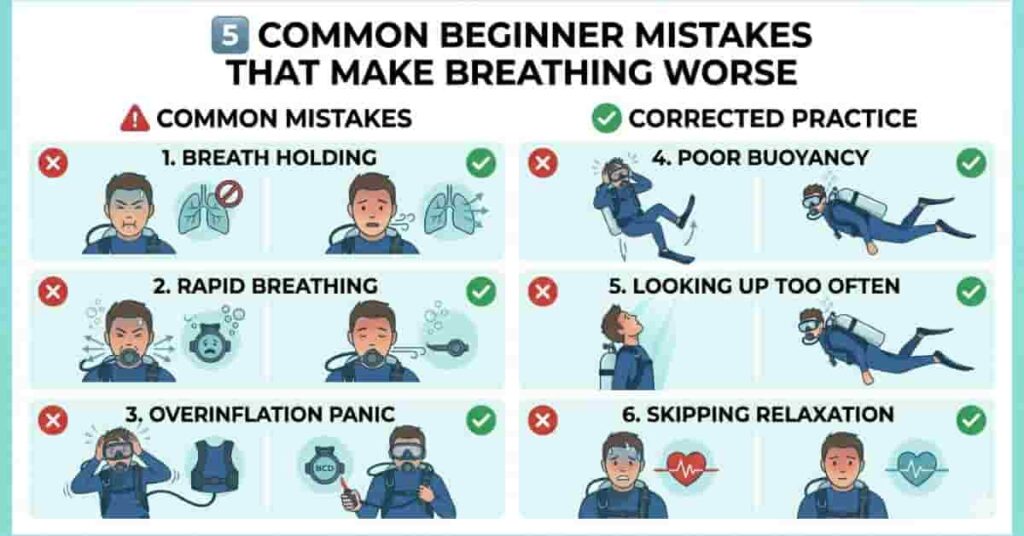
Many beginner divers make simple mistakes that can worsen breathing problems during scuba diving. These habits often create more stress, waste air, and make underwater breathing feel harder.
Breath Holding
Holding your breath is one of the most common dangerous mistakes scuba beginners make. It increases tension, disrupts normal gas exchange, and can create serious safety risks during ascent.
Rapid Chest Breathing
Fast, shallow chest breathing limits proper airflow and can raise CO2 levels. This often leads to shortness of breath and panic.
Overinflation Panic
Some new divers overuse their buoyancy control device (BCD) when they feel nervous. Sudden buoyancy changes can increase fear and breathing instability.
Looking Up Too Often
Constantly lifting your head may disrupt body position and create discomfort with your regulator. A stable, neutral posture supports smoother breathing.
Fighting Buoyancy
Struggling to stay balanced underwater quickly depletes energy. Poor buoyancy control increases physical effort, which in turn raises the breathing rate.
Skipping Pre-Dive Relaxation
Entering the water while tense can immediately trigger anxiety. Calm breathing exercises before diving can greatly improve comfort.
Pro Tip:
Before descending, practice slow breaths and focus on staying relaxed. Mental preparation is just as important as equipment checks.
Proven Solutions to Fix Breathing Problems Underwater
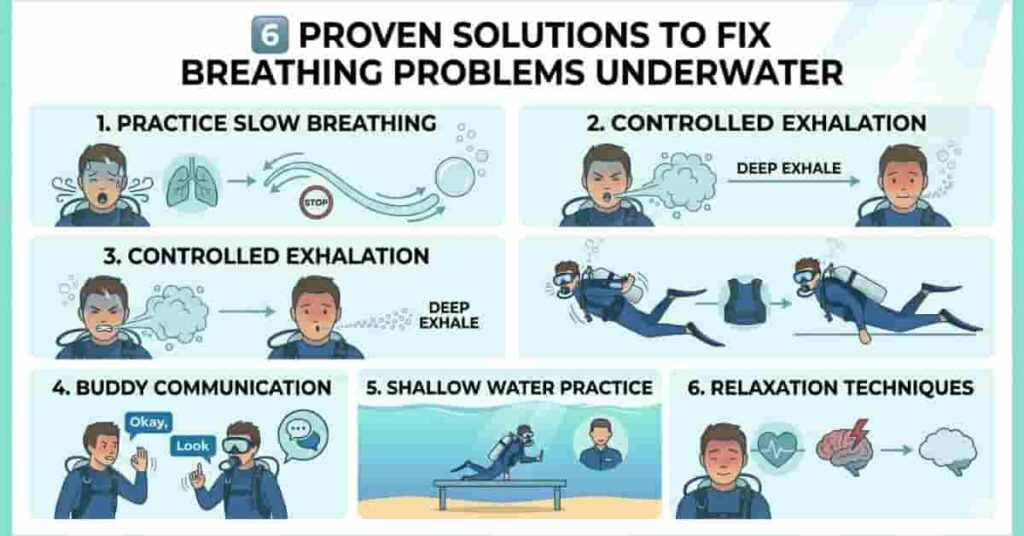
If you’re wondering how to fix breathing problems while scuba diving, the good news is that most beginner issues improve with simple techniques and practice. Staying calm and using proper breathing methods can make diving feel much easier.
Slow Deep Breathing
Take slow breaths from your diaphragm instead of quick chest breaths. Inhale steadily through your regulator, then exhale fully.
This improves air exchange, reduces anxiety, and lowers the risk of CO2 buildup.
Controlled Exhalation
Many beginners focus too much on inhaling and forget to exhale properly. Long, controlled exhalations help release carbon dioxide and keep breathing steady.
Proper Regulator Use
Keep a firm but relaxed seal around the regulator mouthpiece. Avoid biting too hard, as this can increase jaw tension.
Trust your equipment and remember that modern regulators are designed to deliver safe airflow.
Relaxation Techniques
If you feel stressed, pause and focus on your breathing rhythm. Relax your shoulders, slow your movements, and avoid overthinking each breath.
Buoyancy Control
Good buoyancy reduces physical strain and helps you stay calm. Practice maintaining neutral buoyancy so you don’t waste energy fighting your position.
Buddy Communication
Signal your dive buddy if you feel uncomfortable. A supportive buddy can help reduce panic and guide you through breathing adjustments.
Practice in Shallow Water
Confined water sessions allow beginners to build confidence in a controlled environment before deeper dives.
Pre-Dive Breathing Drills
Before entering the water:
- Take slow breaths
- Relax your body
- Visualize calm diving
- Review safety skills
When Breathing Problems Become Dangerous
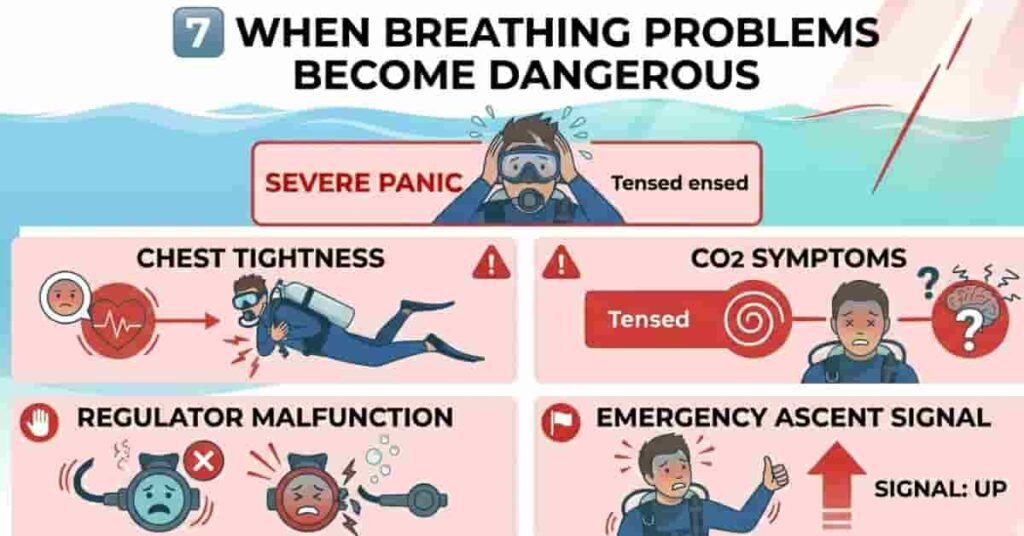
While most scuba diving breathing problems are manageable, some symptoms may signal serious danger and require immediate action. Beginners should know when discomfort becomes a safety emergency.
Severe panic can quickly lead to uncontrolled breathing, poor judgment, or unsafe movements. If fear becomes overwhelming, staying underwater may no longer be safe.
Chest tightness, sharp pain, or extreme shortness of breath should never be ignored. These symptoms may indicate physical strain, anxiety escalation, or other medical concerns.
Regulator malfunction is rare but serious. If your regulator feels blocked, delivers inconsistent airflow, or causes major breathing difficulty, use backup air procedures immediately.
Hypercapnia symptoms, caused by excess CO2, may include:
- Headache
- Confusion
- Dizziness
- Air hunger
- Rapid breathing
Dizziness or disorientation underwater can increase the risk of dangerous ascents or poor decision-making.
Emergency ascents carry their own risks, including lung overexpansion injuries if performed incorrectly. This is why proper training is essential.
Pro Tip:
If symptoms worsen, signal your buddy, stay as calm as possible, and perform a controlled, safe ascent.
Key Takeaway:
Always abort a dive safely if breathing problems escalate beyond normal beginner discomfort.
How to Prevent Scuba Breathing Problems Before Your Dive
Most scuba diving breathing problems can be avoided before you even enter the water. Good preparation reduces anxiety, improves comfort, and helps you stay in control from the start.
Equipment Checks
Always inspect your gear before diving. Make sure your regulator works smoothly, your mask fits properly, and your BCD is fully functional. Small issues can quickly turn into stress underwater.
Calm Mental Preparation
Take a few minutes before the dive to slow your breathing and relax. Visualize calm, steady breathing underwater. This helps reduce regulator anxiety and first-dive nervousness.
Proper Hydration
Drink enough water before diving. Dehydration can make you feel tired and increase breathing discomfort during physical activity.
Fitness Readiness
You don’t need extreme fitness, but basic stamina helps. Light swimming or cardio exercises can improve your breathing control underwater.
Confined Water Practice
Training in shallow pools or confined water builds confidence. It allows you to practice breathing techniques in a safe environment before open-water dives.
Instructor Communication
Always talk to your instructor about any fear or discomfort. Certified professionals can adjust your pace and guide you through scuba breathing difficulty tips.
Choosing Beginner-Friendly Conditions
Start your dives in calm, clear, shallow water. Avoid strong currents or low-visibility conditions during early training.
Conclusion
Scuba diving breathing problems are common for beginners and usually come from anxiety, technique issues, or unfamiliar equipment. In most cases, these challenges are manageable with the right training, practice, and controlled breathing.
With proper guidance, scuba diving breathing problems can be reduced through slow breathing, good buoyancy, and confidence in your equipment. Training from certified instructors also helps you build safe habits from the start.
Always remember that safety comes first underwater. Never ignore warning signs or push through discomfort.
Practice regularly, dive with certified instructors, and consider beginner refresher courses to strengthen your skills. If you’ve faced breathing issues while diving, share your experience or explore more beginner scuba guides on our site.

Scuba Diving Researcher & Beginner Guide
Evan Calder is the creator of DiveBeginner, a website dedicated to helping beginners learn scuba diving simply and practically 🌊
He focuses on scuba fundamentals, beginner safety, and clear diving guidance. Evan has studied ocean and marine science through programs at the Scripps Institution of Oceanography, UC San Diego, a globally recognized leader in ocean research.
Instead of complex technical language, Evan provides easy-to-follow, beginner-friendly guides based on real-world research, helping first-time divers feel confident before their first dive 🤿
DiveBeginner reflects his passion for making scuba diving accessible, safe, and enjoyable for everyone.