Table of Contents
Introduction
Have you ever imagined diving into Thailand’s clear tropical waters, only to arrive during rough seas?
Thailand is a favorite scuba diving destination for good reason. It offers colorful reefs, diverse marine life, and unforgettable underwater landscapes. For beginners from the USA, choosing the right season can make your first dive trip much easier.
The best time to scuba dive in Thailand depends on where you plan to dive. The Andaman Sea and Gulf of Thailand follow different seasonal patterns. Choosing the right months can improve visibility, sea conditions, and your chances of seeing marine life.
This guide breaks down Thailand’s diving seasons in simple terms. You’ll discover the best months for popular regions and dive sites. We’ll also cover water conditions, marine life, safety tips, and trip-planning advice.
Whether you’re planning your first Thailand dive trip or comparing destinations, this guide can help you choose the right time with confidence.
Understanding Thailand’s Dive Seasons
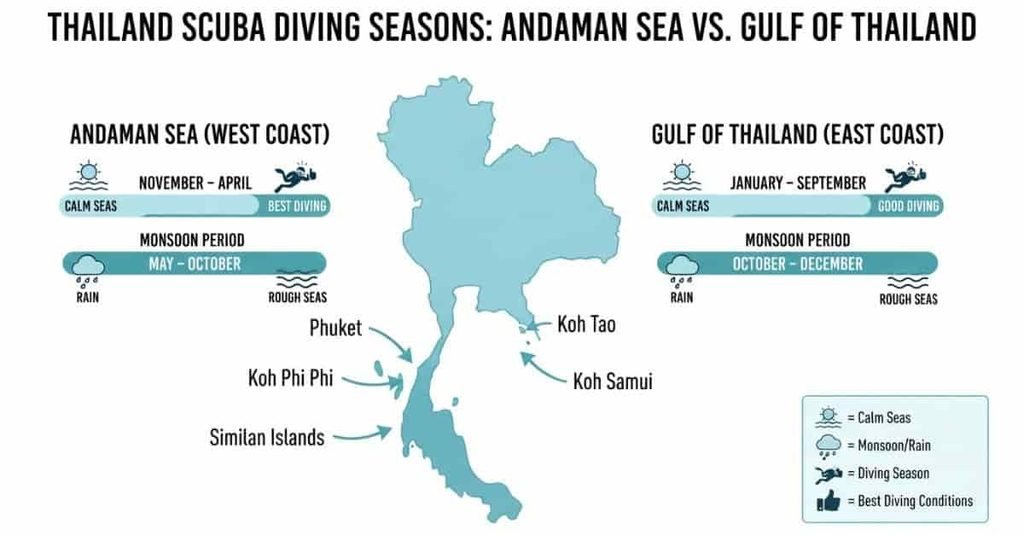
The best time to scuba dive in Thailand depends on which coast you plan to visit. Thailand has two main diving regions, and each follows a different monsoon pattern. Understanding these seasonal changes helps you choose better conditions for your trip.
If you’re comparing tropical dive destinations, you can also check our guide to the best time to scuba dive in Fiji.
Andaman Sea: West Coast
The Andaman coast includes popular destinations such as Phuket, Koh Phi Phi, the Similan Islands, and Richelieu Rock. The region generally has its more favorable diving period from November through April. These months often bring calmer seas and better diving conditions.
From May through October, the southwest monsoon can bring more rain, stronger winds, and rougher seas. Conditions can change quickly, so local forecasts still matter during the favorable season.
Gulf of Thailand: East Coast
The Gulf coast includes Koh Tao, Koh Samui, and popular sites such as Sail Rock. Its seasonal pattern differs from the Andaman coast. January through September generally offers the more favorable period for diving, while October through December brings the wetter season.
This difference gives divers more flexibility when planning a Thailand trip. If one coast has less favorable conditions, the other may offer a better diving window.
2️⃣ Best Months to Scuba Dive in Thailand
There isn’t one perfect month for every Thailand dive destination. The best choice depends on the coast, sea conditions, and marine life you want to see.
| Month | Best Region | Typical Conditions | Visibility | Recommended Dive Sites | Marine Life Highlights |
|---|---|---|---|---|---|
| January | Andaman | Calm and favorable | Often good | Similan, Richelieu, Phi Phi | Mantas, reef fish |
| February | Andaman | Excellent | Often excellent | Similan, Richelieu | Mantas, whale sharks |
| March | Both | Favorable | Good to excellent | Richelieu, Koh Tao | Whale sharks, reef life |
| April | Andaman | Warm and generally calm | Good | Similan, Richelieu, Phi Phi | Mantas, whale sharks |
| May | Gulf | Improving conditions | Often good | Koh Tao, Sail Rock | Reef fish, whale sharks |
| June | Gulf | Generally favorable | Good | Koh Tao, Sail Rock | Whale sharks, barracuda |
| July | Gulf | Favorable | Good | Koh Tao, Chumphon | Reef fish, turtles |
| August | Gulf | Often favorable | Good | Koh Tao, Sail Rock | Schools of fish |
| September | Gulf | Often favorable | Good | Koh Tao, Sail Rock | Whale sharks, reef life |
| October | Gulf | Variable | Variable | Koh Tao, Chumphon | Reef fish |
| November | Andaman | Season reopening | Improving | Phi Phi, Similan* | Reef fish, pelagics |
| December | Andaman | Calm and favorable | Often excellent | Similan, Richelieu, Phi Phi | Mantas, reef fish |
*Check current national park opening dates before planning a Similan trip. The park typically closes during the monsoon period.
For the Andaman Sea, January through April can offer some of the most appealing conditions. The Gulf becomes a stronger option during the middle of the year, especially from spring into early fall.
3️⃣ Top Dive Sites in Thailand
Thailand offers dive sites for beginners, experienced divers, and travelers seeking large marine encounters. Your ideal site depends on your certification, travel dates, and preferred underwater experience.
West Coast: Andaman Sea
Similan Islands are known for granite formations, coral reefs, and diverse marine life. The main diving season generally runs from late fall through spring. January through April can be particularly attractive for divers seeking favorable conditions.
Richelieu Rock is a standout site near the Surin Islands. It attracts dense schools of fish and offers opportunities for whale shark encounters. February through April can be a strong period for whale shark sightings, although encounters remain unpredictable.
Koh Phi Phi offers accessible reef and wall diving near a popular island destination. Its Andaman location makes the November-to-April period a useful starting point for planning.
For a very different diving experience, see our guide to the best time to scuba dive in the Galapagos.
East Coast: Gulf of Thailand
Koh Tao is popular with beginners and offers many dive sites around the island. March through September often provides favorable Gulf conditions.
Sail Rock and Chumphon Pinnacle offer deeper sites and larger schools of fish. They can suit certified divers looking for more advanced underwater experiences.
For a detailed trip, consider linking these sections to your individual Thailand dive site guides and related Thailand travel guides.
4️⃣ Marine Life Highlights by Season
Thailand’s warm tropical waters support a wide variety of marine life throughout the year. However, different seasons and locations can offer different opportunities for encounters.
Knowing the best time to scuba dive in Thailand helps you maximize your chances of seeing incredible marine life. Whale sharks and manta rays are among the most exciting encounters, but sightings depend on location, conditions, and natural behavior.
In the Andaman Sea, manta rays and whale sharks can appear around sites such as the Similan Islands and Richelieu Rock. The period from roughly February through April is often highlighted for pelagic encounters. However, no dive season guarantees sightings.
The Gulf of Thailand also offers opportunities to encounter whale sharks, especially around Koh Tao and nearby offshore sites. Reef fish, barracuda, turtles, and smaller reef creatures can appear throughout the year.
Marine life also changes with local conditions. Clearer water can make reef activity easier to observe, while nutrient-rich water may attract larger animals.
Expert tip: Choose your destination based on the marine life you hope to see. Then check recent local reports before booking your dives.
5️⃣ Water Conditions & Safety Tips
Thailand’s tropical waters stay warm enough for comfortable recreational diving during much of the year. Water temperatures commonly remain around the upper 20s°C (low 80s°F), though conditions vary by location and season.
Visibility can change considerably between dive sites and days. Some dives may offer excellent clarity, while plankton, currents, weather, and local conditions can reduce visibility. Rather than relying on a fixed range, check recent conditions with your dive operator.
Currents also vary between sites. Pinnacles, channels, and offshore sites can experience stronger water movement. Beginners should choose sites that match their training and comfort level.
The best time to scuba dive in Thailand can improve conditions, but good weather doesn’t replace safe diving practices. Always follow your guide’s briefing and stay within your certification limits.
Choose operators that use qualified instructors or divemasters and maintain appropriate safety equipment. Ask about emergency procedures, weather conditions, current strength, and planned maximum depth before entering the water.
Pro tip: Don’t chase marine life or exceed your limits for a better photo. A safe dive is always more valuable than a close encounter.
6️⃣ Recommended Dive Trip Planning Tips
Good planning can make a Thailand dive trip easier, especially for first-time visitors. Start by choosing your coast based on your travel dates and preferred dive sites.
Beginners should prioritize locations with suitable training sites and calmer conditions. Koh Tao is a popular choice for new divers because it offers many dive centers and accessible sites.
More experienced divers can consider offshore pinnacles, stronger-current sites, or liveaboard trips. These options can provide access to remote dive locations that day boats may not reach.
When choosing a dive operator, check their certifications, safety procedures, equipment, group sizes, and recent customer feedback. Don’t choose an operator based only on the lowest price.
Belize is another popular destination with distinct seasonal diving conditions, so check the best time to scuba dive in Belize before planning your trip.
Liveaboard or Day Trip?
A liveaboard makes sense when you want several days of diving and access to remote sites. It can work especially well for the Similan Islands and surrounding Andaman sites during their operating season.
Day trips offer more flexibility for travelers combining diving with sightseeing. They’re also useful for beginners who prefer shorter dive schedules.
Season matters too. Check weather forecasts, site access, and seasonal park closures before booking. For popular periods, reserve accommodation and diving early.
Pro tip: Build some flexibility into your schedule. Weather can change, and operators may adjust dive sites for safety.
Conclusion
Thailand offers excellent scuba diving across much of the year, but the ideal season depends on your destination. The Andaman Sea generally offers favorable diving conditions from November through April. The Gulf of Thailand can be a better choice from January through September.
Sites such as the Similan Islands, Richelieu Rock, and Koh Phi Phi stand out along the Andaman coast. In the Gulf, Koh Tao, Sail Rock, and Chumphon Pinnacle offer popular diving experiences.
Seasonal timing can also improve your chances of enjoying clear water and exciting marine life. However, weather, currents, and visibility can change quickly. Always check local conditions before diving.
By knowing the best time to scuba dive in Thailand, you can ensure a safe and unforgettable diving experience. Choose your coast carefully, match sites to your experience, and leave room for changing conditions.
Frequently Asked Questions
The best time depends on which coast you visit. The Andaman Sea generally offers favorable diving from November through April. The Gulf of Thailand is often a better choice from January through September. Always check local weather and sea conditions before diving.
There isn’t one perfect month for every location. February through April can be excellent for Andaman destinations. March through September can be good choices for Gulf destinations such as Koh Tao. Your preferred dive site should guide your travel dates.
The Similan Islands generally have their main diving season from late fall through spring. November through April is a useful planning window. Check current national park opening dates because access can change seasonally.
Koh Tao is generally a strong diving choice from January through September. Conditions can vary throughout this period. March through September can be particularly attractive for divers planning Gulf of Thailand trips.
Yes, but conditions vary by region and season. The Andaman Sea and Gulf of Thailand experience different monsoon patterns. Choosing the coast with better seasonal conditions can improve your overall diving experience.
Whale sharks can appear at several Thai dive sites, including Richelieu Rock and areas around Koh Tao. Sightings are more commonly associated with certain seasonal periods, but encounters remain unpredictable. No month guarantees a whale shark sighting.
Yes. Thailand offers many dive sites suitable for beginners, especially around Koh Tao and other established diving destinations. New divers should choose sites that match their certification and experience level.
Thailand’s tropical waters generally remain warm throughout the year. Temperatures commonly stay around the upper 20s°C, although local conditions vary. Many divers use a lightweight wetsuit for comfort and protection.
Visibility can be excellent, but it changes between locations and individual dive days. Weather, currents, plankton, and other local conditions can affect underwater clarity. Ask your local dive operator about recent visibility before diving.
Diving can still be possible during monsoon periods, but weather and sea conditions may become less predictable. Operators may change dive sites or cancel trips when conditions aren’t suitable. Always follow local safety advice and check forecasts.
Choose a liveaboard if you want multiple days of diving and access to remote sites. Day trips provide more flexibility and work well for beginners or travelers with shorter schedules. Your destination and experience should guide the choice.
Book earlier if you’re traveling during popular diving months or visiting famous sites. Liveaboards and well-rated operators can fill quickly. Leave some flexibility in your itinerary because weather can affect dive schedules.

Scuba Diving Researcher & Beginner Guide
Evan Calder is the creator of DiveBeginner, a website dedicated to helping beginners learn scuba diving simply and practically 🌊
He focuses on scuba fundamentals, beginner safety, and clear diving guidance. Evan has studied ocean and marine science through programs at the Scripps Institution of Oceanography, UC San Diego, a globally recognized leader in ocean research.
Instead of complex technical language, Evan provides easy-to-follow, beginner-friendly guides based on real-world research, helping first-time divers feel confident before their first dive 🤿
DiveBeginner reflects his passion for making scuba diving accessible, safe, and enjoyable for everyone.