Table of Contents
Introduction
Ready to explore the underwater world but unsure where to start?
Learning how to train for scuba diving can feel confusing when you are new to diving. You may wonder what happens during training and how long certification takes. For beginners in the USA, proper training builds confidence before you enter open water.
Scuba training is more than learning to breathe underwater. You will learn equipment basics, buoyancy control, dive planning, safety skills, and underwater communication. You will also practice essential skills in a controlled environment before making real dives.
This guide breaks the process into simple steps. You will learn what happens during theory lessons, pool training, and open-water dives. We will also explain how long scuba diving training usually takes and how to develop calm breathing habits.
By the end, you will understand what to expect from your first scuba course. You will also know how to prepare for training and become a safer, more confident beginner diver.
Step 1 – Choosing a Certification Agency
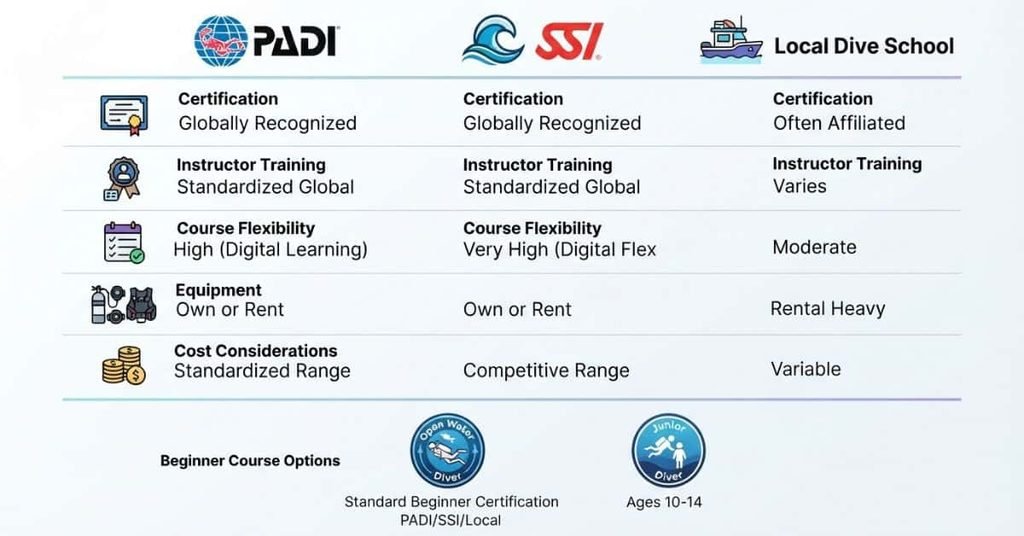
Choosing the right certification agency is your first major decision. For beginners in the USA, PADI and SSI are common choices, but local dive schools may offer other recognized agencies. The agency matters, but your instructor and dive center matter just as much.
Before starting your training, it helps to know how long scuba certification usually takes, since the timeline can vary by course and training schedule.
PADI and SSI both provide structured beginner training that combines knowledge development with practical diving skills. PADI’s Open Water course includes theory, confined-water training, and open-water dives. SSI also offers beginner certification programs through its dive centers and instructors.
Before enrolling, compare the complete course package rather than focusing only on the advertised price. Ask whether the fee includes equipment rental, training materials, pool sessions, certification fees, and open-water dives.
Your main options usually include:
- Open Water Diver: The standard entry-level certification for adults and eligible beginners.
- Junior programs: Designed for younger divers who meet the agency’s age requirements.
- Local dive schools: Useful if you prefer face-to-face instruction and flexible scheduling.
For example, PADI’s Junior Open Water Diver program starts at age 10, subject to its requirements. Requirements can differ between agencies, so confirm them before booking.
Pro Tip: Visit the dive center before enrolling if possible. Ask how instructors handle nervous beginners and what happens if you need extra practice.
Step 2 – Theory Training
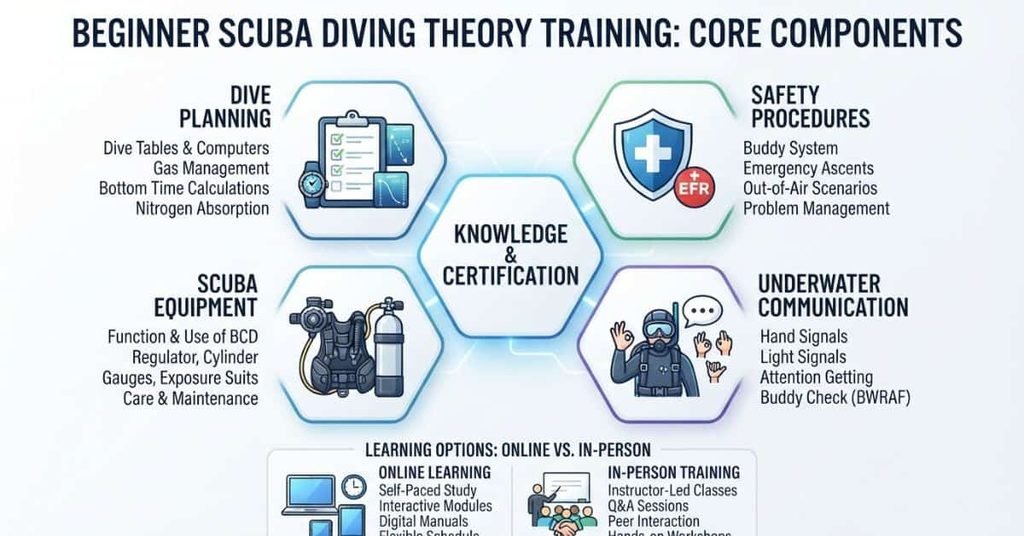
Theory training gives you the knowledge needed to make safer decisions underwater. You learn the basics before handling scuba equipment in the pool or open water.
Typical lessons cover dive planning, equipment, pressure, buoyancy, safety procedures, underwater communication, and emergency responses. PADI’s knowledge development also covers choosing suitable gear, planning dives, and using underwater signals.
You can usually complete theory through online learning, classroom sessions, or a combination. Online study works well if you have a busy schedule. PADI’s eLearning lets students complete the academic portion at their own pace before meeting their instructor.
In-person learning can suit beginners who prefer direct explanations and immediate feedback. It also gives you an opportunity to ask questions before entering the water.
How Much Time Does Theory Training Take?
There is no single timeline for every student. Your course schedule, learning pace, and training provider can affect the time required.
Some students complete online theory before their practical sessions. Others spread classroom lessons across several days or weeks.
Don’t rush this stage simply to reach the pool faster. Understanding pressure, equipment, and safety procedures will make your practical training easier.
Step 3 – Confined Water (Pool) Training
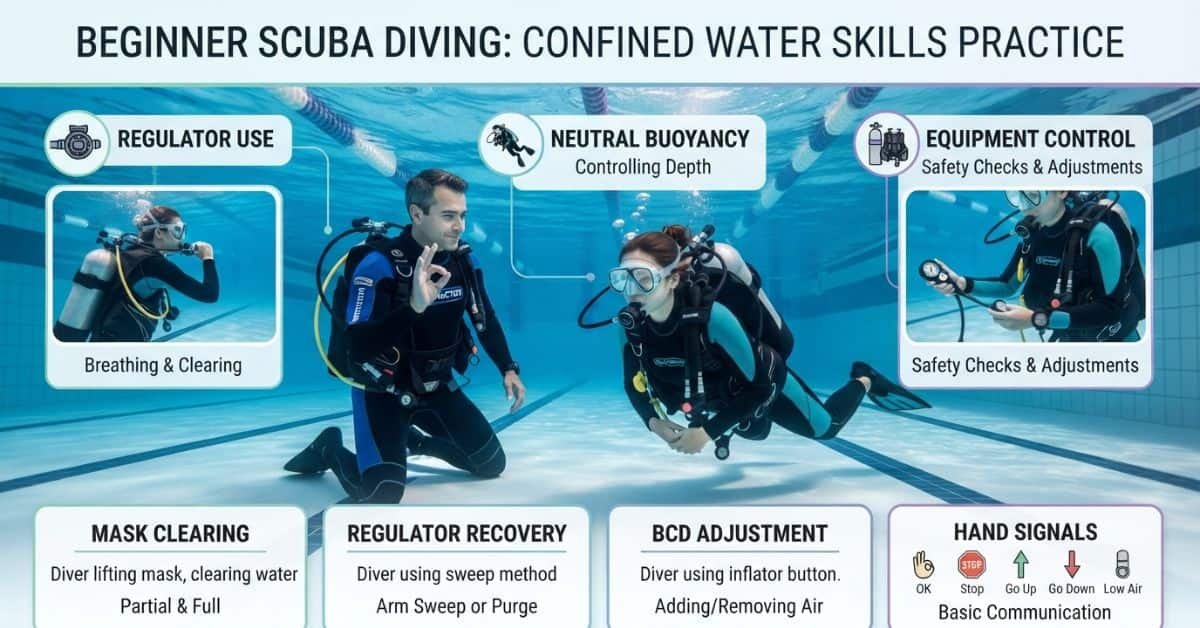
Confined-water training is where scuba skills start to feel natural. You usually practice in a pool or calm water before moving into open water.
Your instructor first explains each skill and demonstrates the correct technique. You then practice while wearing your scuba equipment under close supervision.
A major focus is learning to breathe underwater while staying relaxed. You should breathe continuously through your regulator and avoid holding your breath. DAN recommends regular breathing and staying within safe diving practices.
You will also practice buoyancy control, which helps you move efficiently and maintain your position underwater.
Common beginner exercises include:
- Breathing comfortably through the regulator
- Clearing a partially flooded mask
- Removing and replacing the regulator
- Using the BCD to adjust buoyancy
- Establishing neutral buoyancy
- Practicing basic underwater movement
- Communicating with hand signals
- Responding to basic equipment problems
- Practicing controlled ascents and descents
Don’t worry if a skill feels difficult at first. Repetition helps you become more comfortable and confident.
For more guidance, see our detailed guide on how to train scuba diving breathing for beginner-friendly breathing techniques and safety tips.
Pro Tip: Focus on relaxed breathing instead of trying to conserve air by taking unusually small breaths. Comfortable breathing supports better control and reduces unnecessary stress.
Step 4 – Open Water Dives
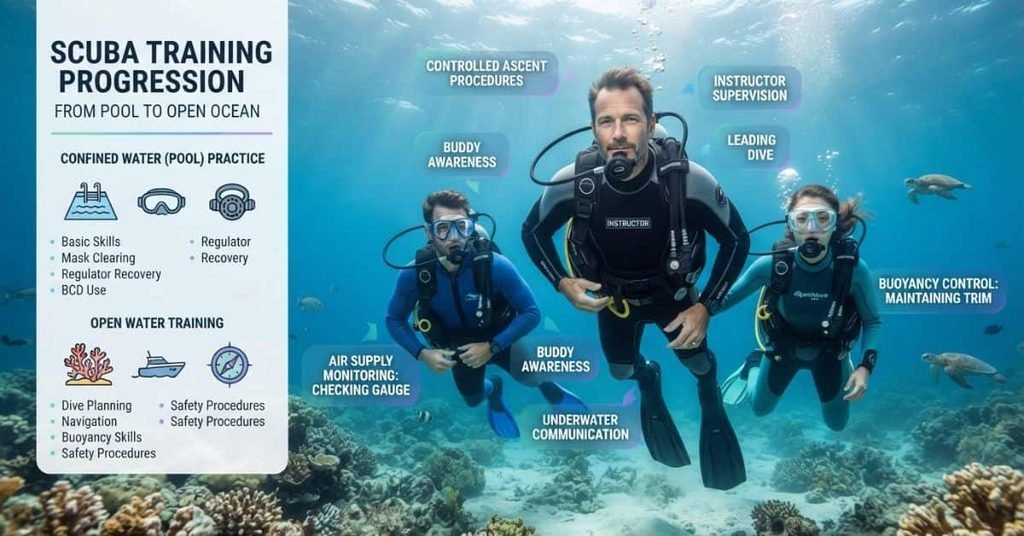
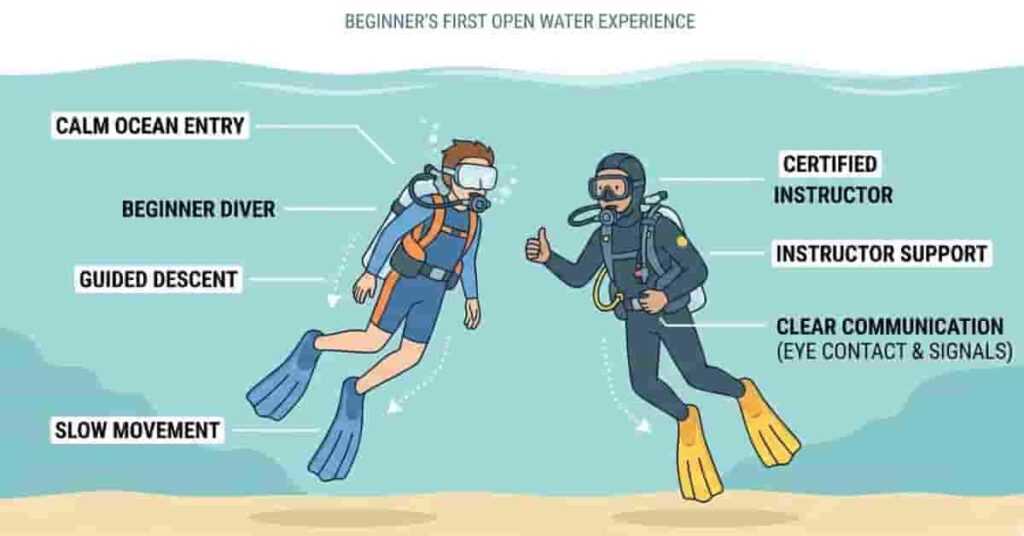
After completing your confined-water training, you move into real open-water conditions. This may include an ocean, lake, quarry, or another approved training site.
Open-water dives let you apply the skills you practiced in the pool. Your instructor watches your performance and helps you become comfortable in the new environment.
For example, the PADI Open Water Diver course includes four open-water training dives, generally completed over at least two days. Other agencies may use different course structures, so check your specific program.
Each dive can vary in duration based on your air supply, depth, conditions, and training requirements. Your instructor will establish the dive plan and explain what skills you need to complete.
During your open-water sessions, you may practice:
- Controlled descents and ascents
- Buoyancy control
- Underwater navigation
- Mask and regulator skills
- Air supply monitoring
- Buddy communication
- Emergency procedures
- Safe diving practices
Stay With Your Instructor and Buddy
Your instructor provides supervision throughout the required training dives. You should also stay with your assigned buddy and follow the planned dive limits.
DAN recommends diving with a buddy, completing pre-dive checks, monitoring your air supply, and staying within your training limits.
Don’t feel pressured to continue if you’re uncomfortable. Tell your instructor immediately if you feel anxious, cold, tired, or confused.
Takeaway: Open-water training turns your practiced skills into real-world diving experience. Focus on control, communication, and safety rather than completing dives quickly.
Step 5 – Certification Exams & Completion
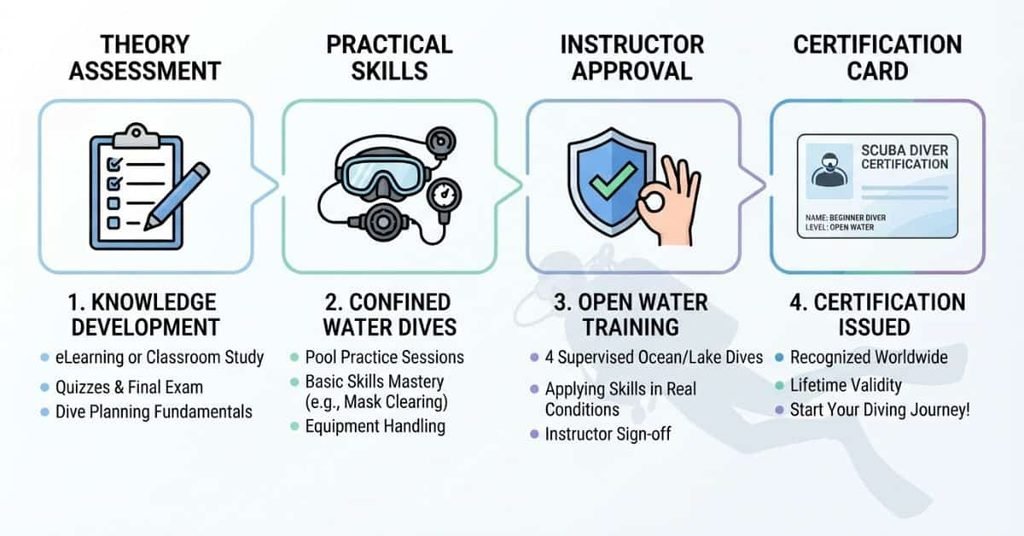
After your theory and water sessions, your instructor checks whether you can perform the required skills safely. Certification isn’t just about passing a test. You need to demonstrate practical skills and understand basic diving knowledge.
The total training process also comes with different costs, so you may want to see how much scuba certification typically costs before choosing a course.
During the practical assessment, you may need to demonstrate skills practiced in confined and open water. These can include buoyancy control, regulator recovery, mask-clearing techniques, equipment use, and safe ascent procedures. Your exact requirements depend on your certification agency and course.
You may also complete knowledge reviews or a written theory exam. The format varies between certification agencies and training providers. Ask your instructor what assessments your specific course requires.
Once you successfully complete every course requirement, your instructor submits your certification information. Your agency then provides proof of certification, which may include a physical or digital certification card.
Keep your certification information accessible when booking future dives. Dive operators may ask for proof of certification before allowing you to participate.
Takeaway: Certification confirms that you’ve completed the required training. Continue building experience gradually after certification rather than immediately attempting advanced dives.
Tips to Make Training Easier & Safer
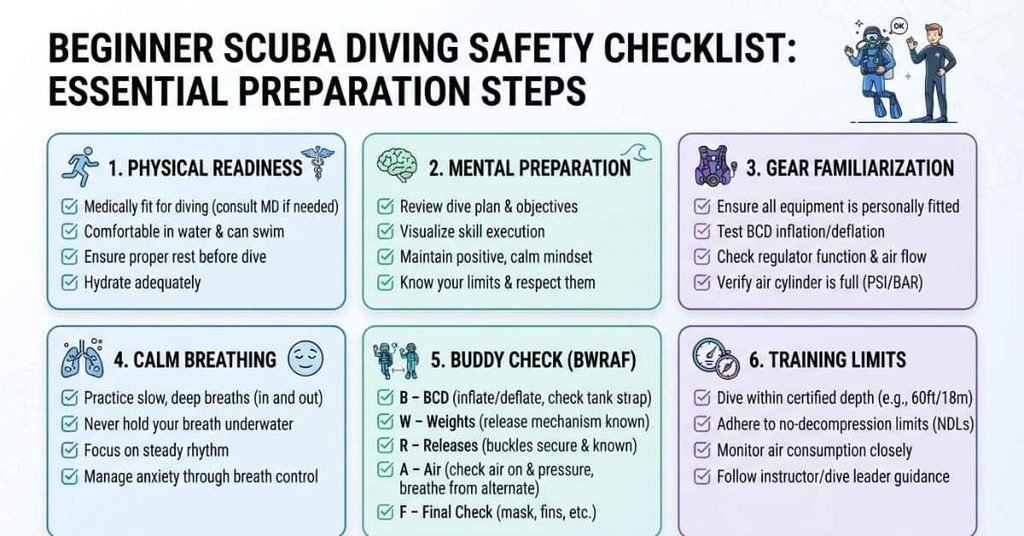
Good preparation can make your scuba training more comfortable. You don’t need to be an expert swimmer or athlete, but basic water confidence helps.
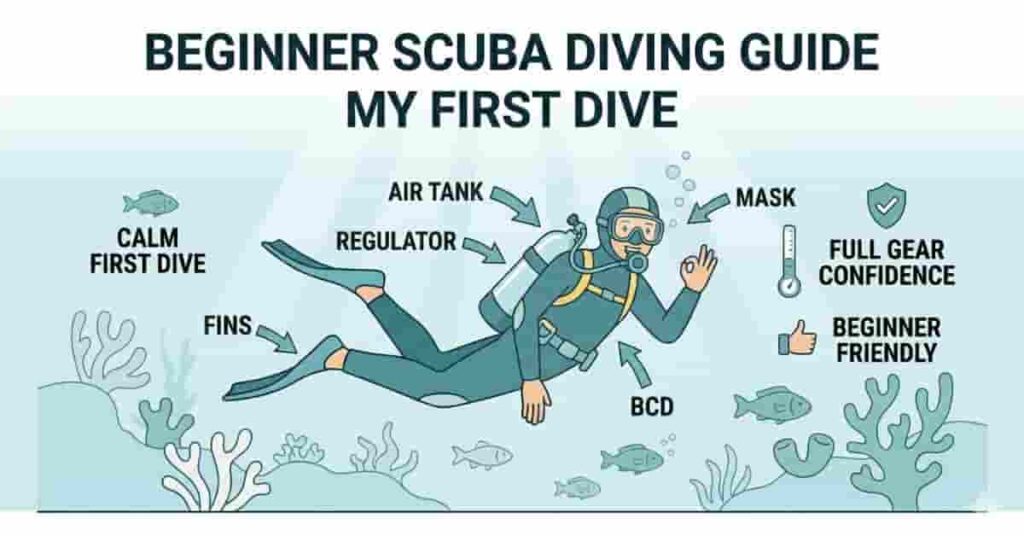
Before your first session, get familiar with the equipment you’ll use. Learn the purpose of your mask, fins, regulator, BCD, cylinder, weights, pressure gauge, and dive computer.
Understanding your gear can reduce confusion once you’re underwater. Ask your instructor to explain anything that feels unfamiliar.
Your mental preparation matters too. Some beginners feel nervous when they first breathe underwater. Tell your instructor about any concerns instead of hiding them.
Pro Tips for New Divers
- Practice calm breathing: Breathe normally through your regulator and never hold your breath.
- Ask questions: Speak up whenever you don’t understand a skill or instruction.
- Don’t rush: Repeat difficult skills until you feel comfortable performing them.
- Check your equipment: Complete your pre-dive checks with your buddy.
- Watch your air supply: Monitor your pressure gauge throughout the dive.
- Stay within your limits: Don’t attempt dives beyond your training or experience.
- Communicate early: Tell your instructor if you’re cold, tired, anxious, or uncomfortable.
DAN recommends staying within your training limits and following safe diving practices.
Conclusion
Learning how to train for scuba diving starts with choosing the right certification course. You then build knowledge, practice skills in confined water, and complete supervised open-water dives.
Age is another basic requirement to consider, so check how old you have to be to get scuba certified before enrolling in a course.
You also develop safe breathing habits, buoyancy control, equipment awareness, and buddy skills. Training may take several days or longer, depending on your course and schedule.
Don’t rush the process just to earn your certification faster. Focus on understanding each skill and becoming comfortable underwater.
If you’re ready to start, compare reputable dive schools and ask about their training requirements. You can also explore our other scuba diving guides for helpful beginner tips.
Have you started scuba training yet? Share your experience or questions in the comments, and help other new divers learn from your journey.
Frequently Asked Questions
A beginner scuba certification can take several days to a few weeks. The timeline depends on your certification agency, instructor, schedule, and location. Most courses include theory, confined-water practice, and open-water dives. Weather and water conditions can also affect the schedule. Don’t rush the process. Make sure you understand each skill before moving forward.
Yes, some dive centers offer intensive programs that combine multiple training sessions over a shorter period. These courses can suit beginners with limited schedules. However, faster training shouldn’t mean skipping practice or rushing skills. You still need to complete every required theory lesson, practical skill, and open-water dive.
Beginners should focus on calm, regular breathing through their regulator. Practice breathing normally without holding your breath or trying to use unusually small breaths. During confined-water training, work on staying relaxed while swimming and controlling your buoyancy.
You don’t need to be an advanced swimmer to begin scuba training. However, beginner certification courses typically include water-skill requirements. These may involve swimming, floating, or other basic water assessments. Requirements vary between agencies and courses, so check with your dive center before enrolling.
Yes, many beginners need time to become comfortable breathing underwater. Confined-water sessions provide a controlled environment for practicing with your regulator. Tell your instructor if you feel anxious or uncomfortable. A good instructor can slow down the training and give you additional practice before moving into open water.
Beginners typically learn the basic purpose and operation of their mask, fins, regulator, BCD, cylinder, weight system, and pressure gauge. Depending on the course, you may also use a dive computer. Understanding your gear can make training easier and improve your confidence.
Your first confined-water session usually focuses on equipment familiarization and basic underwater skills. You may practice breathing through your regulator, clearing your mask, controlling your buoyancy, and communicating with hand signals. Your instructor demonstrates each skill before you practice it.
The number of required open-water dives depends on your certification agency and specific course. For example, the PADI Open Water Diver course includes four open-water training dives. Other programs may use different requirements. Always confirm the exact number with your instructor before starting the course.
Certification allows you to participate in dives within the limits of your training and experience. However, newly certified divers should build experience gradually. Start with straightforward conditions and continue practicing your skills. Avoid challenging environments until you have the appropriate experience or additional training.
Most beginners can learn scuba diving with proper instruction and regular practice. The hardest part may be becoming comfortable with new equipment and underwater breathing. Good training breaks complex skills into manageable steps. Ask questions, practice patiently, and communicate with your instructor whenever something feels unclear.

Scuba Diving Researcher & Beginner Guide
Evan Calder is the creator of DiveBeginner, a website dedicated to helping beginners learn scuba diving simply and practically 🌊
He focuses on scuba fundamentals, beginner safety, and clear diving guidance. Evan has studied ocean and marine science through programs at the Scripps Institution of Oceanography, UC San Diego, a globally recognized leader in ocean research.
Instead of complex technical language, Evan provides easy-to-follow, beginner-friendly guides based on real-world research, helping first-time divers feel confident before their first dive 🤿
DiveBeginner reflects his passion for making scuba diving accessible, safe, and enjoyable for everyone.