Table of Contents
Introduction
A child can learn to scuba dive surprisingly young, but certification rules are not the same everywhere.
If you are wondering how old to be scuba certified, the answer depends on the certification agency and program. Beginners in the USA often see different age limits for junior and adult certifications. Dive conditions, supervision, and local operator rules can also affect where younger divers can go.
Getting certified is more than reaching a certain birthday. Young divers must also meet training, health, and safety requirements. Understanding these rules can help parents, teens, and new adult divers choose the right program.
In this guide, you’ll learn the current age requirements for scuba certification. We’ll compare PADI and SSI programs and explain junior versus adult certification. You’ll also learn how age can affect depth, supervision, and advanced diving options.
Once you meet the age requirements, the next step is learning how to become scuba certified through classroom, pool, and open-water training.
By the end, you’ll know what age you need to start scuba training and what restrictions may apply.
How Old Do You Have to Be to Get Scuba Certified?
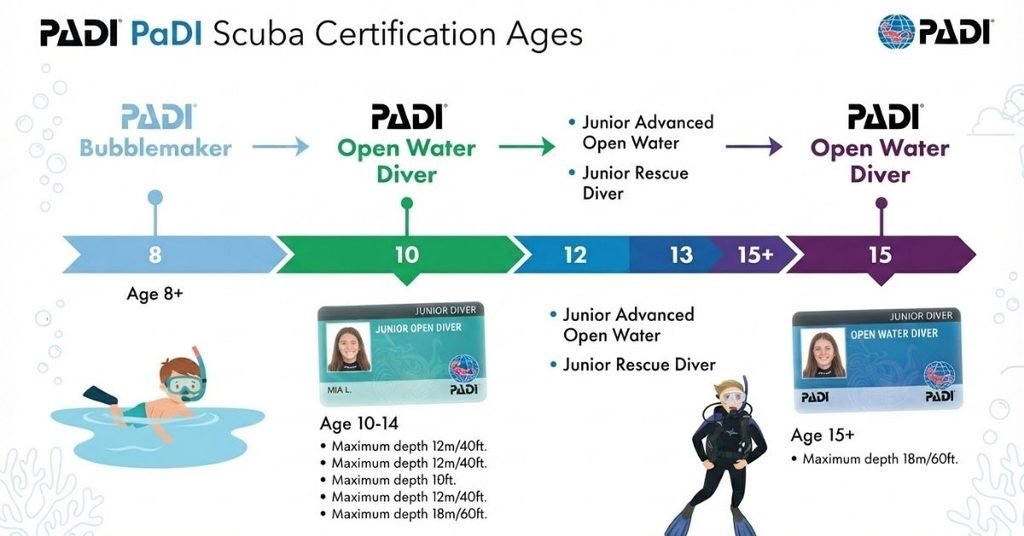
For most major recreational agencies, 10 is a common minimum age for scuba certification. However, younger divers usually receive a junior certification with extra limits. PADI and SSI both currently allow entry-level certification from age 10 in most programs.
Minimum Age for Scuba Certification
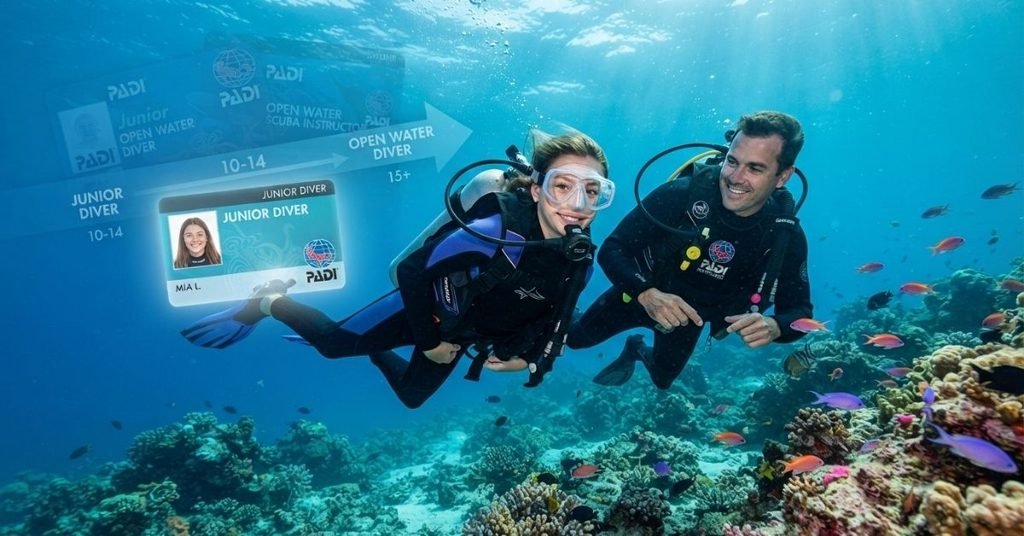
The minimum age depends on the certification agency and specific program. For example, PADI requires students to be at least 10 for its Junior Open Water Diver program. Students under 15 receive junior status, while those 15 and older can earn the standard Open Water Diver certification.
SSI also sets 10 as the minimum age for its Open Water Diver program. Students younger than 15 receive Junior Open Water Diver certification and follow additional supervision and depth requirements.
Age alone doesn’t determine how or where a young diver can dive. Certification level, training, experience, and environmental conditions all matter. Some dives may also require additional training or a more experienced buddy.
Junior vs. Adult Scuba Certification
Junior certifications let younger divers learn the same essential scuba skills while following additional safety limits. These limits can include maximum depth, buddy requirements, and closer supervision.
For example, PADI Junior Open Water Divers aged 10 or 11 must dive with a PADI Professional or certified parent or guardian. Their maximum depth is 12 meters (40 feet). Divers aged 12 to 14 can reach 18 meters (60 feet) with a certified adult.
SSI follows a similar approach. Divers under 15 receive Junior Open Water Diver certification and must dive with a certified adult or dive professional. SSI recommends an 18-meter (60-foot) limit for Junior Open Water Divers.
Adult Open Water certification generally provides fewer age-based restrictions. However, every diver must still stay within their training, experience, and certification limits.
Does Turning the Minimum Age Automatically Mean You Can Dive Anywhere?
No. Reaching the minimum certification age doesn’t automatically qualify you for every type of scuba dive.
Your certification determines the basic skills and depth limits you have earned. Advanced activities may require additional courses, experience, or specialty training.
Dive operators can also set their own requirements based on the location and conditions. Current, visibility, water temperature, boat access, and depth can affect whether a dive suits a particular diver.
Pro Tip: Treat your certification as a starting point, not a blanket permission for every dive. Always match the dive to your training, experience, and current ability.
How Old Do You Have to Be for PADI Scuba Certification?
If you’re asking how old do you have to be scuba certified, PADI currently allows scuba training from age 10 in most areas. Divers ages 10–14 earn the PADI Junior Open Water Diver certification, while divers aged 15 and older can earn the standard Open Water Diver certification.
PADI Junior Programs
PADI offers several youth programs before and during formal certification. Children as young as 8 can try programs such as Bubblemaker and Seal Team in controlled pool or confined-water settings. These programs help children become comfortable with scuba equipment without providing the same certification as Open Water Diver.
At age 10, a child can begin the PADI Junior Open Water Diver course. The course teaches the same core knowledge and skills as the adult Open Water program, but younger divers have extra limits.
For ages 10 and 11, PADI limits dives to 12 meters (40 feet). These divers must also dive with a PADI Professional or certified parent or guardian. Ages 12–14 can dive to 18 meters (60 feet) with a certified adult.
PADI Open Water Certification
The standard PADI Open Water Diver certification has a minimum age of 15. Students younger than 15 receive Junior Open Water Diver certification instead.
The difference isn’t simply about what students learn. Junior divers have age-based depth and buddy restrictions, while the standard certification removes those specific junior restrictions. However, divers still need to stay within their training and experience.
A 15-year-old doesn’t automatically qualify for advanced or specialized diving. Courses such as deep, wreck, or technical diving can have separate requirements.
What Happens When a Junior Diver Gets Older?
PADI Junior Open Water Divers don’t normally need to repeat the entire certification course when they turn 15. PADI states that junior divers become eligible for Open Water Diver status at 15 and can order a replacement card showing the updated certification.
This transition matters because the junior certification includes age-based restrictions. Once the diver reaches 15, the junior designation no longer applies under PADI’s standard rules.
How Old Do You Have to Be for SSI Scuba Certification?
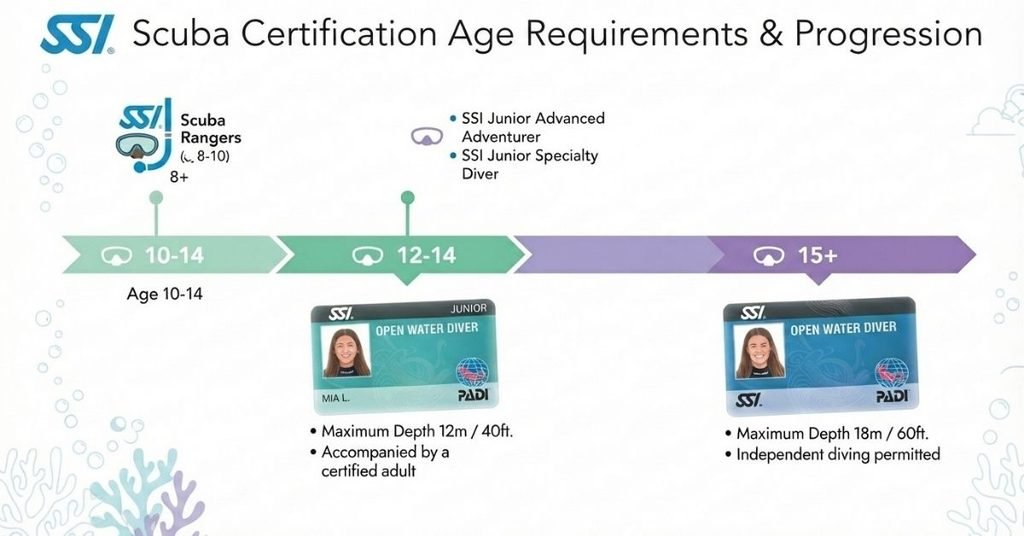
SSI also currently lists 10 years old as the minimum age for its Open Water Diver program. Students younger than 15 receive Junior Open Water Diver certification, while those 15 and older can hold the standard Open Water Diver certification.
SSI Youth Programs
SSI’s youth pathway allows children to learn scuba skills through age-appropriate training. The Open Water Diver program starts at age 10, with additional requirements for younger students.
SSI uses smaller student-to-instructor ratios for divers ages 10–14 during confined and open-water training. Students younger than 15 also receive junior certification and must dive under direct supervision of a dive professional or with a certified adult.
SSI also applies age-based depth recommendations. Divers aged 10 or 11 have a recommended maximum depth of 12 meters (40 feet) with a dive professional or certified adult. Junior Open Water Divers generally have an 18-meter (60-foot) recommended depth limit.
SSI Open Water Certification
SSI’s Open Water Diver program has a minimum age of 10. However, students under 15 receive the Junior Open Water Diver certification rather than the standard adult status.
The program prepares certified divers to dive with an equally or more qualified buddy in environments matching their training. Younger divers still have additional supervision requirements, so reaching the minimum certification age doesn’t remove those limits.
SSI’s current standards also state that the training center can complete the upgrade process when a junior diver turns 15.
PADI vs. SSI Age Requirements
PADI and SSI have very similar age structures for entry-level recreational scuba certification. Both currently allow Open Water training from age 10, with junior certification for divers younger than 15.
| Certification | PADI | SSI |
|---|---|---|
| Minimum age for Open Water training | 10 in most areas | 10 |
| Junior certification | Junior Open Water, ages 10–14 | Junior Open Water, under 15 |
| Standard Open Water status | 15+ | 15+ |
| Junior restrictions | Depth and buddy limits apply | Depth and supervision limits apply |
| Age 10–11 depth limit | 12 m / 40 ft | 12 m / 40 ft recommended |
| Junior Open Water depth | 18 m / 60 ft for ages 12–14 | 18 m / 60 ft recommended |
The details aren’t identical, especially around how each agency describes depth limits, supervision, and certification upgrades. Always check the current agency standards before enrolling or planning a dive.
What Is the Youngest Age to Get Scuba Certified?
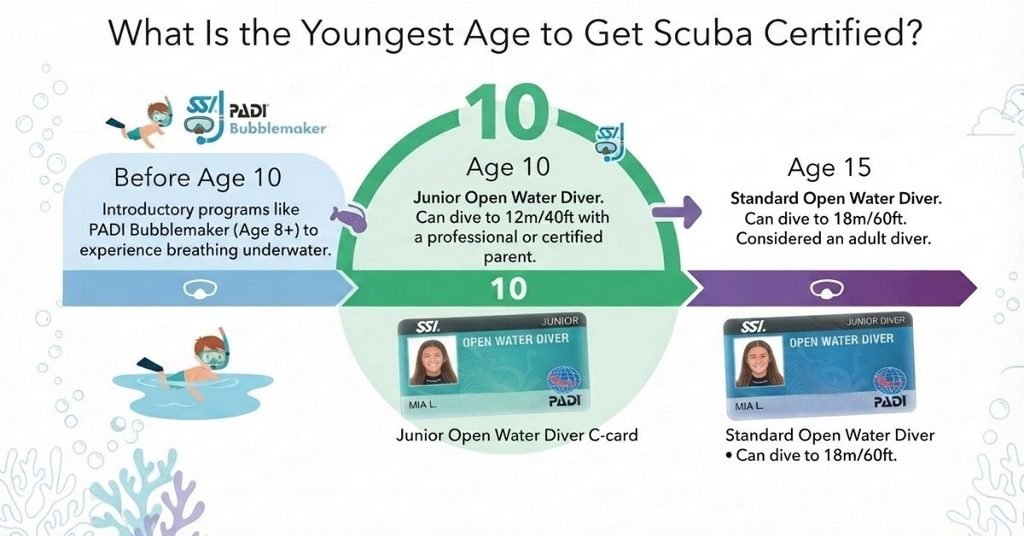
For major recreational agencies, 10 is currently the youngest common age to earn an entry-level scuba certification. PADI and SSI both offer Open Water pathways starting at age 10. Divers in this age group receive junior certification with additional restrictions.
If you’re comparing certification options, knowing how much scuba certification costs can help you plan your training budget.
However, learning basic scuba skills can start earlier than formal Open Water certification. Some youth programs introduce children to scuba equipment and breathing underwater in controlled, confined-water settings. These experiences focus on comfort and basic skills rather than full independent diving.
Younger divers also face extra limits because scuba requires judgment, equipment handling, and strict safety procedures. Depth, supervision, buddy requirements, and dive conditions can all affect what a young diver may do.
The minimum age should not automatically become the recommended age for every child. Parents should consider swimming ability, comfort in the water, maturity, physical readiness, and the child’s ability to follow instructions.
Takeaways:
- Age 10 is a common minimum for entry-level certification.
- Junior certification includes additional restrictions.
- Earlier youth programs may teach basic scuba skills without full certification.
- Readiness matters as much as reaching the minimum age.
Can Kids and Teenagers Get Scuba Certified?
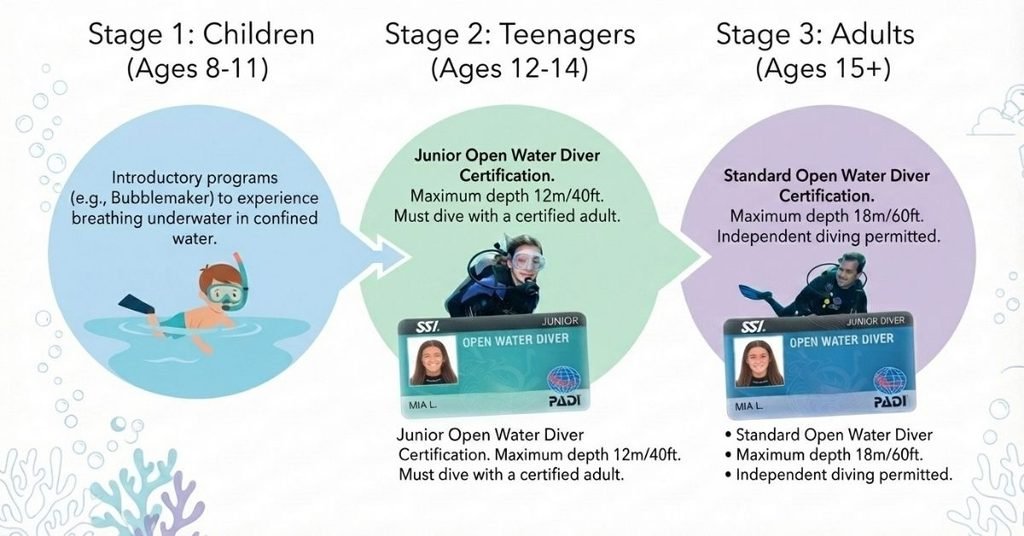
Yes, children and teenagers can earn scuba certifications through youth programs offered by major agencies. These programs adjust supervision, depth, and training requirements for younger divers.
Age is only one part of the process, so it’s also useful to understand how long scuba certification takes from start to finish.
Scuba Programs for Children
Youth scuba programs give children a controlled way to develop basic diving skills. Training usually starts with confined-water sessions before progressing to appropriate open-water experiences.
Instructors teach age-appropriate skills and closely monitor younger students. Children also need enough water confidence to manage equipment and respond correctly to instructions.
PADI and SSI both offer entry-level certification pathways from age 10. Younger students receive junior certification rather than the standard adult certification.
Parents should also choose a program that matches the child’s comfort and maturity. Reaching the minimum age does not mean every child is ready to scuba dive.
Scuba Certification for Teenagers
Teenagers can earn junior scuba certifications and gain more diving experience as they get older. PADI and SSI generally move divers into standard Open Water status at age 15.
Junior certification can include depth and supervision limits. These restrictions become less restrictive as the diver reaches the appropriate age and certification status.
Teenagers still need to follow their certification limits and training. Becoming eligible for adult certification doesn’t automatically qualify them for advanced diving.
As teenagers gain experience, they may choose additional training. Advanced, deep, wreck, and other specialty activities can have separate requirements.
Can a Minor Dive Without an Adult?
There isn’t one universal answer for every minor diver. The rules depend on the certification agency, the diver’s age, certification level, and the planned dive.
Dive operators may also apply their own policies. Local regulations, depth, water conditions, and the type of environment can affect supervision requirements.
Younger junior divers often need a certified adult or dive professional. Older teenagers may have greater independence under their agency’s rules, but they must still follow applicable restrictions.
Health and Medical Requirements for Young Divers
Age is only one part of scuba eligibility. Young divers also need appropriate physical ability, water confidence, and medical fitness for diving.
Medical Screening
Scuba training normally includes a medical questionnaire before or during enrollment. The answers help identify situations that may require additional medical evaluation.
Parents should answer every question accurately and discuss concerns with the appropriate medical professional. Never hide a health issue just to complete certification.
A medical evaluation may be required when the questionnaire identifies a condition that needs further assessment. The exact process depends on the agency, training center, and individual circumstances.
Physical Readiness
Young divers need enough physical ability to manage their equipment and follow instructions underwater. They should also feel comfortable swimming and remaining calm in the water.
Important readiness factors include:
- Comfortable swimming and floating
- Ability to handle scuba equipment
- Ability to follow instructions consistently
- Comfort breathing through scuba equipment
- Emotional maturity for underwater situations
A child who meets the minimum age may still benefit from waiting until they feel genuinely ready.
Why Safety Matters More for Younger Divers
Younger divers need environments that match their training and experience. Instructors and certified adults can provide closer supervision and help manage unexpected situations.
Buddy procedures remain essential. Young divers should also follow all depth limits and avoid conditions beyond their training.
Health and Medical Requirements for Young Divers
Age alone doesn’t determine whether someone is ready for scuba diving. Young divers also need appropriate medical fitness, physical ability, water confidence, and emotional readiness.
Medical Screening
Scuba certification programs commonly begin with a health questionnaire. It helps identify medical situations that may need further evaluation before diving.
Parents should answer every question honestly and provide accurate health information. Hiding a relevant condition can create unnecessary risks during training or diving.
If the questionnaire identifies a concern, the diver may need medical clearance before continuing. The exact requirements can vary by certification agency, training center, and individual circumstances.
A medical professional familiar with diving medicine can help determine whether someone is fit to dive. Parents should follow the agency’s current medical process rather than relying on general advice.
Physical Readiness
Young divers need enough physical ability to manage scuba equipment and respond to instructions underwater. They should also feel comfortable in the water.
Important signs of physical and emotional readiness include:
- Comfortable swimming and floating
- Ability to handle scuba equipment
- Ability to follow instructions consistently
- Comfort breathing through scuba equipment
- Enough maturity to stay calm underwater
Meeting the minimum age doesn’t automatically mean a child is ready for certification.
Why Safety Matters More for Younger Divers
Younger divers may need closer supervision and carefully selected diving environments. Instructors and certified adults can help them follow procedures and respond to problems.
Buddy procedures remain essential on every dive. Young divers must also follow their depth limits and stay within their training.
Calm water, good visibility, and suitable conditions can make early diving experiences more manageable. Dive operators may also set additional requirements for younger participants.
Are There Age Limits for Different Types of Scuba Diving?
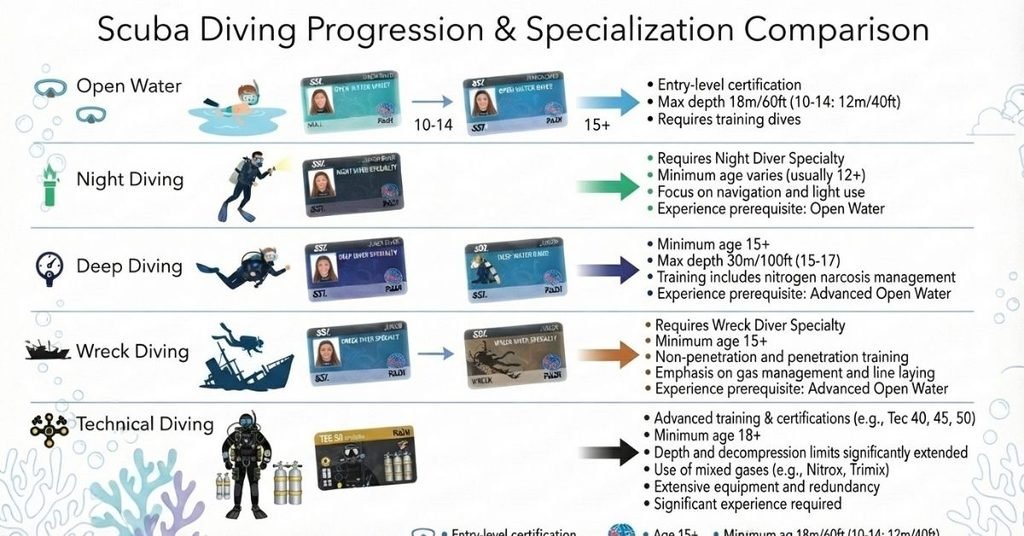
Getting scuba certified doesn’t mean you’re automatically qualified for every type of diving. Different activities can require additional training, experience, certification, or age eligibility.
Beginner/Open Water diving is the usual starting point for new divers. Junior divers may have additional depth and supervision restrictions.
Deeper diving requires appropriate training because greater depth introduces different risks and procedures. A basic Open Water certification doesn’t automatically qualify someone for deep dives.
Night diving can require specialty training or experience. Divers need to manage navigation, communication, and equipment differently after dark.
Wreck diving may require additional training, especially when a dive involves overhead environments. Divers should never enter enclosed wreck spaces without proper preparation.
Specialty courses can have their own prerequisites. The minimum age may also differ between programs and agencies.
Technical diving involves more advanced equipment, planning, and procedures. It typically requires substantial experience and specialized training.
Operator policies can add further restrictions. Dive sites may have their own rules based on depth, currents, conditions, boat procedures, or local regulations.
What Other Requirements Besides Age Do You Need for Scuba Certification?
Age is just one requirement for scuba certification. Beginners also need to complete the required training and demonstrate that they can perform essential diving skills safely.
Most entry-level programs involve several key components:
- Knowledge training: Learn basic diving principles, safety procedures, equipment, and planning.
- Confined-water skills: Practice essential scuba skills in a controlled environment.
- Open-water training: Demonstrate diving skills during supervised open-water sessions.
- Medical eligibility: Complete the required health screening and obtain clearance when necessary.
- Equipment familiarity: Learn how to use and manage essential scuba equipment.
- Instructor assessment: Demonstrate the required knowledge and practical diving skills.
The exact requirements depend on your certification agency and course. Training centers may also have additional policies for younger students.
If you’re new to scuba, our How to Get Scuba Certified: Step-by-Step Guide can explain the complete certification process, from choosing a course to completing your open-water training.
Conclusion
Scuba certification can start at a surprisingly young age, but age isn’t the only factor that matters. PADI and SSI offer junior pathways, while adult certification provides greater independence for eligible divers.
If you’re wondering how old to be scuba certified, 10 is a common minimum for entry-level certification. Younger divers still face supervision, depth, and environmental restrictions. Medical eligibility, physical readiness, training, and instructor assessment also play important roles.
Before enrolling, check the current requirements from your chosen certification agency and local dive operator. Choose a program that matches the diver’s age, experience, and comfort level.
Ready to start your scuba journey? Explore our scuba certification resources for helpful beginner guides, and share your diving questions or experiences in the comments.
Frequently Asked Questions About Scuba Certification Age
For major recreational agencies, 10 is a common minimum age for entry-level scuba certification. PADI and SSI both offer Open Water pathways for 10-year-olds. Younger divers receive junior certification with additional restrictions.
You can generally begin formal scuba certification at age 10 through major agencies. However, junior divers must follow specific supervision and depth requirements. The exact rules depend on the agency and program.
For major recreational agencies such as PADI and SSI, 10 is currently the common minimum age for entry-level Open Water certification. Some programs allow younger children to experience scuba skills without receiving full Open Water certification.
Yes. A 10-year-old can earn junior scuba certification through programs such as PADI Junior Open Water Diver or SSI Junior Open Water Diver. Additional supervision and depth restrictions apply to young divers.
Yes. Teenagers can earn junior scuba certification when they meet the program requirements. At age 15, PADI and SSI generally allow eligible junior divers to transition to standard Open Water certification.
Not always. Requirements depend on the diver’s age, certification, agency rules, dive operator, location, and diving conditions. Younger junior divers commonly require a certified adult or dive professional.
PADI and SSI have similar entry-level age requirements. Both commonly allow Open Water training from age 10 and use junior certification for younger divers. However, their specific supervision, depth, and upgrade rules can differ.
Yes. Younger divers may have depth and supervision restrictions. Advanced activities such as deep, wreck, night, and technical diving can require additional training, experience, or certification. Dive operators may also apply their own requirements.

Scuba Diving Researcher & Beginner Guide
Evan Calder is the creator of DiveBeginner, a website dedicated to helping beginners learn scuba diving simply and practically 🌊
He focuses on scuba fundamentals, beginner safety, and clear diving guidance. Evan has studied ocean and marine science through programs at the Scripps Institution of Oceanography, UC San Diego, a globally recognized leader in ocean research.
Instead of complex technical language, Evan provides easy-to-follow, beginner-friendly guides based on real-world research, helping first-time divers feel confident before their first dive 🤿
DiveBeginner reflects his passion for making scuba diving accessible, safe, and enjoyable for everyone.