Table of Contents
Introduction
What if choosing the wrong month could mean rough seas, lower visibility, or fewer marine life encounters?
Fiji is a dream destination for divers, especially if you love colorful reefs and tropical waters. However, diving conditions can change throughout the year. Knowing the best time to scuba dive can help beginners plan a safer and more enjoyable trip.
Fiji has distinct wet and dry seasons, and each brings different underwater experiences. Water temperature, visibility, currents, weather, and marine life can vary by month.
This guide breaks down Fiji’s dive seasons and the best months to visit. You’ll learn what conditions to expect and which marine life you may encounter. We’ll also cover top dive sites, safety tips, and practical itinerary ideas.
Whether you’re planning your first Fiji dive trip or comparing travel months, this guide makes timing easier. By the end, you’ll know the best time to scuba dive in Fiji for your goals and comfort level.
If Thailand is also on your travel list, compare the seasons in our guide to the best time to scuba dive in Thailand.
1️⃣ Understanding Fiji’s Dive Seasons
The best time to scuba dive in Fiji depends on the season you visit, your experience level, and what you want to see underwater. Fiji offers good diving throughout the year, but conditions shift between the wet and dry seasons.
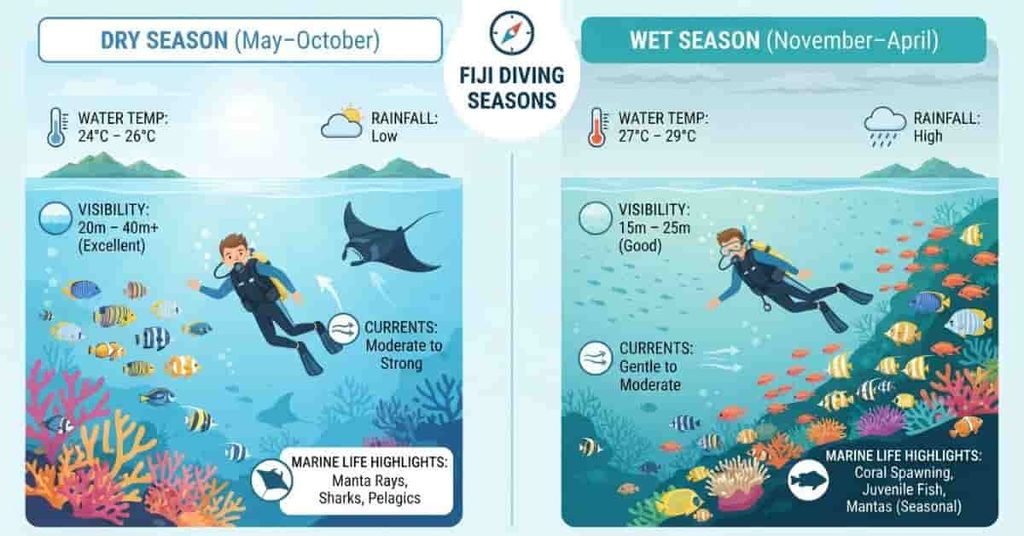
Fiji’s wet season runs from November through April. These months bring warmer temperatures, higher humidity, and more frequent rainfall. Increased plankton can reduce visibility at times, but it can also support rich marine life.
The dry season runs from May through October. Rainfall generally decreases, and diving conditions often become clearer. Tourism Fiji lists May through October as the period with excellent visibility and slightly cooler water.
Water temperatures remain warm in both seasons. Tourism Fiji gives typical diving temperatures of about 27–30°C (81–86°F) from May to October and 24–27°C (75–81°F) from November to April.
Currents also vary by dive site and tide. Some outer reef areas experience strong currents, making local knowledge especially important. Beginners should choose sites and conditions that match their certification and experience.
Dry Season: May–October
For many beginners, the dry season offers the easiest conditions to enjoy Fiji’s reefs. Rainfall tends to be lower, and visibility is often at its best during these months.
This season also brings excellent opportunities for larger marine life. Manta ray sightings become more likely from May through October, while shark encounters are often highlighted from June through September. Humpback whales may also pass through Fiji’s waters from July to October.
May and June can be especially appealing if you want a balance between improving visibility and seasonal marine life. July through October suits divers prioritizing clear water and manta encounters.
Expert tip: Beginners should ask local dive operators about current strength before booking specific reef sites. Fiji’s conditions can change by location and tide.
Wet Season: November–April
The wet season brings warmer water and more plankton-rich conditions. Visibility can become softer after rainfall, especially when runoff affects coastal areas. However, plankton supports a busy reef ecosystem and attracts filter-feeding marine life.
These months can suit divers who enjoy smaller reef creatures and vibrant underwater activity. Tourism Fiji highlights macro life, including nudibranchs, shrimps, and juvenile fish, during November through April.
Wet-season weather can also bring tropical storms. Divers should check local forecasts and follow operator advice before heading offshore. Conditions can differ greatly between Fiji’s islands and individual dive sites.
This season isn’t automatically a poor choice for scuba diving. Instead, it offers a different experience from the clearer, cooler months.
Expert tip: Build flexibility into your dive schedule during the wet season. A local operator can move dives when weather or sea conditions change.
2️⃣ Best Months to Scuba Dive in Fiji
The best time to scuba dive in Fiji depends on your priorities. May through October generally offers clearer conditions, while November through April brings warmer water and productive reef activity.
There is no single perfect month for every diver. If visibility is your priority, the dry season is usually the stronger choice. If you want warm water and macro life, the wet season can be rewarding.
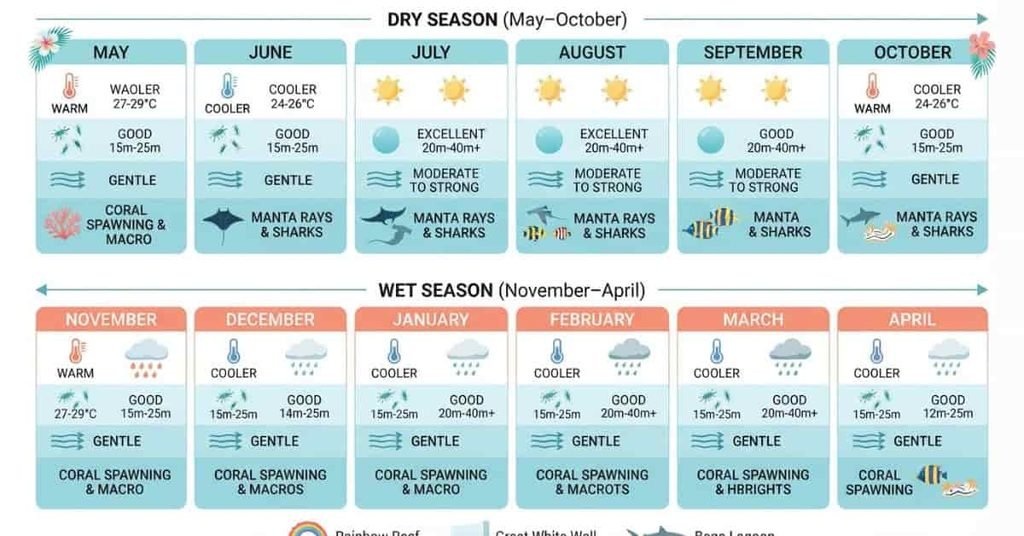
The table below provides a practical month-by-month overview. Temperature and visibility figures use broad seasonal ranges rather than unsupported monthly averages.
For another destination known for exceptional marine life, see our guide to the best time to scuba dive in the Galapagos.
| Month | Typical Water Temp* | Typical Visibility* | Currents | Marine Life Highlights | Recommended Areas |
|---|---|---|---|---|---|
| January | 24–27°C / 75–81°F | 15–25 m | Site and tide dependent | Macro life, reef fish | Rainbow Reef, Beqa Lagoon |
| February | 24–27°C / 75–81°F | 15–25 m | Site and tide dependent | Nudibranchs, shrimps, juvenile fish | Taveuni, Beqa Lagoon |
| March | 24–27°C / 75–81°F | 15–25 m | Site and tide dependent | Colorful reef activity | Rainbow Reef, Beqa Lagoon |
| April | 24–27°C / 75–81°F | 15–25 m | Can vary by site | Macro life, soft corals | Rainbow Reef, Beqa Lagoon |
| May | 27–30°C / 81–86°F | 20–40 m | Site and tide dependent | Mantas, soft corals | Yasawa Islands, Rainbow Reef |
| June | 27–30°C / 81–86°F | 20–40 m | Can be stronger at outer reefs | Mantas, sharks | Beqa Lagoon, Yasawa Islands |
| July | 27–30°C / 81–86°F | 20–40 m | Site and tide dependent | Mantas, sharks, soft corals | Rainbow Reef, Beqa Lagoon |
| August | 27–30°C / 81–86°F | 20–40 m | Site and tide dependent | Mantas, sharks, whales | Yasawa Islands, Beqa Lagoon |
| September | 27–30°C / 81–86°F | 20–40 m | Site and tide dependent | Mantas, sharks, humpbacks | Yasawa Islands, outer reefs |
| October | 27–30°C / 81–86°F | 20–40 m | Site and tide dependent | Mantas, humpbacks | Yasawa Islands, Rainbow Reef |
| November | 24–27°C / 75–81°F | 15–25 m | Site and weather dependent | Macro life, reef fish | Taveuni, Beqa Lagoon |
| December | 24–27°C / 75–81°F | 15–25 m | Site and weather dependent | Macro life, plankton-rich reefs | Rainbow Reef, Beqa Lagoon |
These are broad seasonal ranges from Tourism Fiji, not guaranteed monthly conditions. Actual conditions depend on location, weather, tides, rainfall, and currents.
Which Months Offer the Best Diving?
For clearer water and strong overall conditions, May through October is the best starting point. Tourism Fiji identifies this period as the dry season, with excellent visibility and favorable diving conditions.
For manta rays, May through October offers stronger chances at known seasonal locations. Shark encounters are particularly highlighted from June through September. Humpback whale encounters are possible from July through October, although wild sightings remain unpredictable.
April through July can also be attractive for soft coral enthusiasts. Nutrient-rich currents can encourage soft corals to open fully at famous reef sites.
If you’re searching for the best time to scuba dive Fiji, consider your main goal first. Clear visibility favors the dry season, while warmer water and macro life make the wet season appealing.
The best time of year to scuba dive in Fiji isn’t identical for every traveler. Your chosen island, dive site, experience level, and target species all matter.
Takeaways:
- May–October: Strong choice for visibility and manta encounters.
- June–September: Often favored for shark-diving conditions.
- July–October: Good period for possible humpback encounters.
- November–April: Warm water and productive reefs with more macro life.
- April–July: Particularly interesting for soft coral photography.
3️⃣ Marine Life & Dive Experiences by Month/Season
Fiji’s underwater world changes with the seasons, giving divers different reasons to visit throughout the year. Water temperature, plankton levels, currents, and weather can influence what you encounter.
During the warm season from November through April, divers can enjoy colorful reef fish, turtles, reef sharks, and smaller reef creatures. Plankton-rich water can support active marine ecosystems, although visibility may vary after rainfall.
The dry season from May through October often brings clearer water and excellent reef visibility. This period is especially appealing for divers hoping to encounter manta rays. Shark encounters are also highlighted during parts of the dry season. Humpback whales may pass through Fiji’s waters from July through October.
Knowing the best time of year to scuba dive in Fiji ensures you see the marine life you want, but wildlife sightings are never guaranteed. Local conditions and animal behavior can change daily.
Belize offers a different seasonal diving experience, so you may also want to check the best time to scuba dive in Belize.
Warm Season: November–April
Warm-season diving can be rewarding for photographers and divers who enjoy detailed reef exploration. Nudibranchs, shrimps, juvenile fish, and colorful reef species can make excellent subjects.
Turtles and reef sharks may also appear around suitable reef habitats. However, sightings depend on the dive site, weather, and natural animal behavior.
Pro tip: Ask your dive operator which sites have produced recent wildlife sightings. Local guides can help you choose dives based on current conditions.
Dry Season: May–October
The dry season is a strong choice for divers who prioritize visibility and larger marine encounters. Manta rays become a major attraction during this period at suitable locations.
Shark encounters are particularly highlighted from June through September. Humpback whales may also pass through Fiji between July and October.
Whale sharks can occur in Fiji, but sightings are less predictable. Don’t plan your entire trip around seeing one specific species.
4️⃣ Top Dive Sites in Fiji
Fiji has dive sites suited to different interests, from colorful soft corals to dramatic reef walls and shark encounters. Choosing the right site can be just as important as choosing the right month.
Three famous locations stand out for many visiting divers: Rainbow Reef, the Great White Wall, and Beqa Lagoon. Each offers a different underwater experience and may suit different experience levels.
Rainbow Reef
Rainbow Reef lies between Taveuni and Vanua Levu and is famous for colorful soft corals and diverse reef life. The Great White Wall is also part of this broader dive area.
May through October can be an excellent period for divers seeking clearer conditions. April through July can be particularly interesting for soft coral displays.
Beginners should ask local operators about current strength before choosing specific sites. Conditions can vary between individual reefs and tides.
Great White Wall
The Great White Wall is one of Fiji’s most recognizable underwater attractions. Its steep wall features striking white soft corals and dramatic underwater scenery.
The site is best suited to divers who meet its depth and current requirements. Local operators should confirm current conditions and suitability before the dive.
Best period: April through July can offer excellent soft coral activity, while the broader dry season can provide favorable visibility.
Beqa Lagoon
Beqa Lagoon, near Viti Levu, is well known for shark-diving experiences and diverse reef environments. It offers several sites with different depths and conditions.
June through September can be especially appealing for divers interested in shark encounters. However, operators control dive plans based on weather, currents, and diver experience.
5️⃣ Water Conditions, Visibility & Safety Tips
Water conditions can change quickly between Fiji’s islands and individual dive sites. Season alone doesn’t determine whether a particular dive will have calm water or strong currents.
From November through April, typical diving water temperatures are around 24–27°C (75–81°F). From May through October, typical temperatures rise to about 27–30°C (81–86°F) according to Tourism Fiji.
Visibility also varies with location, rainfall, plankton, tides, and weather. The dry season generally offers better visibility, but no month guarantees perfect underwater conditions.
Currents deserve special attention. Some Fiji reefs experience strong tidal currents, which can create excellent diving but require appropriate experience and planning.
Essential Safety Tips
Check currents before every dive. Ask your local dive operator about tide timing, entry points, and expected current strength.
Stay within your training and depth limits. Don’t attempt a challenging wall or current dive simply because it’s popular.
Plan proper surface intervals. Follow your dive computer or training agency’s recommendations before making another dive.
Listen to your guide. Local professionals understand site-specific hazards that visitors may not recognize.
Planning the best time to scuba dive in Fiji helps you dive safely and enjoyably, but good timing never replaces proper dive planning.
Expert tip: Build flexibility into your schedule. If weather or currents make a planned site unsuitable, let your operator recommend a safer alternative.
6️⃣ Recommended Itineraries by Month/Season
A good Fiji dive itinerary should match the season, your experience level, and the marine life you want to see. Avoid packing too many dives into a short trip. Leave room for weather changes, rest, and changing sea conditions.
For the dry season from May through October, prioritize reef visibility, soft corals, and seasonal manta or shark encounters. The wet season from November through April can suit divers interested in warm water, colorful reef life, and macro subjects.
3-Day Fiji Diving Itinerary
A three-day trip works well for beginners who want a focused diving experience without rushing.
Day 1: Start with two easier reef dives. Use these dives to adjust to local conditions and currents. Choose a site with suitable depth and conditions for your certification.
Day 2: Schedule your main wildlife-focused dives. During the dry season, ask about manta or shark sites. During the warm season, explore reefs known for smaller marine life.
Day 3: Choose one morning dive based on recent sightings and conditions. Keep the final afternoon free for relaxation and travel planning.
5-Day Fiji Diving Itinerary
Five days give you more flexibility and better opportunities to adapt to weather conditions.
Days 1–2: Begin with easier reef sites and colorful coral environments. Use these dives to understand local currents and visibility.
Days 3–4: Target your preferred marine life. Consider manta rays during the dry season or macro-focused reefs during warmer months.
Day 5: Save your final dives for the best available conditions. Let local guides recommend sites based on recent sightings.
Tips for Better Marine Life Encounters
Schedule wildlife-focused dives when local operators expect favorable conditions. Animals don’t follow a fixed schedule, so recent sightings matter more than guarantees.
Avoid planning every dive around one species. A flexible schedule lets you explore different reefs when conditions change.
Pro tip: Leave your most important wildlife dives for the middle of your trip. This gives you extra opportunities if weather or currents disrupt the first attempt.
Conclusion & Planning Tips
Fiji offers rewarding diving throughout the year, but each season brings different conditions and marine life. The dry season from May through October generally offers clearer visibility and great opportunities for mantas and sharks. The warmer months can bring productive reefs, colorful fish, turtles, and macro life.
The best time to scuba dive in Fiji depends on your preferred marine life, experience, and ideal water conditions. Rainbow Reef, the Great White Wall, and Beqa Lagoon each offer unique underwater experiences.
Plan your dives around seasonal highlights, but stay flexible with weather and currents. Local dive operators can recommend safer sites based on daily conditions.
By understanding the best time to scuba dive in Fiji, you can ensure an unforgettable underwater adventure.
Planning a Fiji dive trip? Share your preferred diving month or explore more scuba guides on our website.
Frequently Asked Questions
The best time to scuba dive in Fiji is generally May through October. This dry-season period often brings clearer visibility and favorable diving conditions. It also offers good opportunities for manta rays and seasonal shark encounters. However, Fiji remains a year-round diving destination, so the best month depends on your preferred marine life and conditions.
Yes, Fiji offers scuba diving throughout the year. The dry season from May to October usually provides clearer conditions, while November to April brings warmer water and productive reefs. Weather, visibility, and currents can vary by location. Check local conditions before each dive and follow your dive operator’s recommendations.
Visibility can vary between dive sites and weather conditions. However, the May to October dry season generally offers some of Fiji’s clearest diving conditions. Rainfall, plankton, currents, and tides can still affect visibility on individual days.
Manta rays are commonly highlighted as a seasonal attraction during May through October. Your chances depend on the specific location, weather, and animal behavior. Local dive operators can recommend sites based on recent manta activity and current conditions.
Shark encounters are particularly highlighted during June through September. Beqa Lagoon is one of Fiji’s well-known areas for shark-diving experiences. Sightings are never guaranteed, and divers should follow operator instructions and site-specific safety procedures.
Yes, beginners can enjoy Fiji’s diving, especially at sites with suitable depths and manageable conditions. Some reefs experience strong currents, so site selection matters. Certified beginners should choose dives that match their training and experience. A local dive guide can help identify appropriate sites.
Fiji’s diving water remains warm throughout the year. Typical temperatures are around 24–27°C (75–81°F) from November to April and 27–30°C (81–86°F) from May to October. Actual temperatures can vary by location and weather.
Popular Fiji dive sites include Rainbow Reef, the Great White Wall, and Beqa Lagoon. Rainbow Reef is known for colorful soft corals and diverse reef life. The Great White Wall offers dramatic underwater scenery. Beqa Lagoon is particularly known for shark-diving experiences.
The dry season is often the better choice if you prioritize visibility and calmer conditions. The wet season can still provide excellent diving, with warm water and productive reefs. Your ideal season depends on whether you prioritize visibility, specific marine life, or warmer water.
A 3-day trip can work for a focused diving experience, while five days provides more flexibility. A longer trip also gives you more opportunities to adjust your schedule around weather, currents, and marine-life sightings. Always include appropriate rest periods between dives and before flying.

Scuba Diving Researcher & Beginner Guide
Evan Calder is the creator of DiveBeginner, a website dedicated to helping beginners learn scuba diving simply and practically 🌊
He focuses on scuba fundamentals, beginner safety, and clear diving guidance. Evan has studied ocean and marine science through programs at the Scripps Institution of Oceanography, UC San Diego, a globally recognized leader in ocean research.
Instead of complex technical language, Evan provides easy-to-follow, beginner-friendly guides based on real-world research, helping first-time divers feel confident before their first dive 🤿
DiveBeginner reflects his passion for making scuba diving accessible, safe, and enjoyable for everyone.