Introduction
Have you ever switched from a lake dive to the ocean and wondered why you suddenly felt more buoyant?
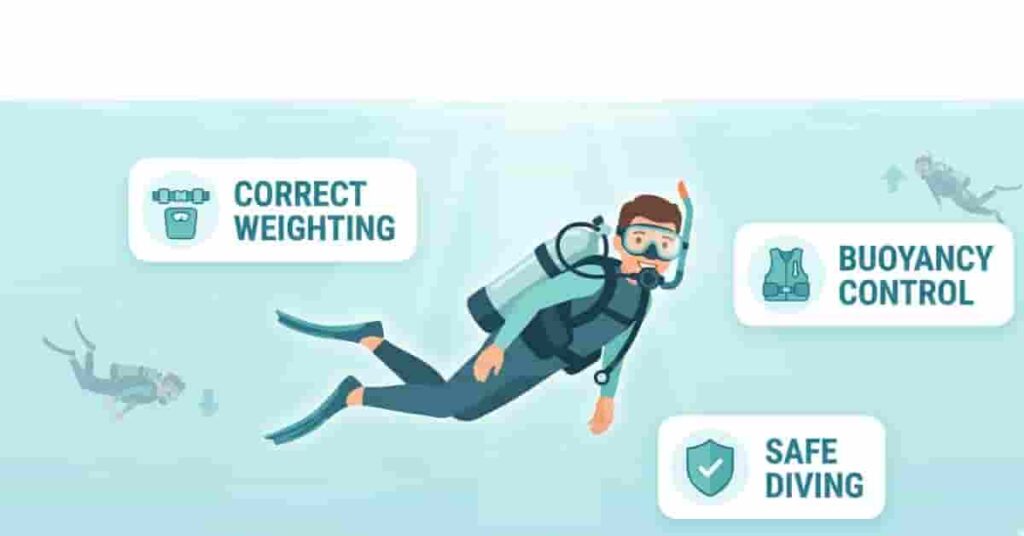
Many beginner divers discover that the same weight setup does not work everywhere. Water density changes between freshwater and saltwater, which affects how much lead you need to descend and maintain proper buoyancy. If you rely on the same setup for every dive, you may struggle with control, comfort, and air consumption.
A scuba ocean water weight calculator can help estimate the right adjustment, but understanding the reasons behind those changes is just as important. Whether you’re planning a tropical vacation, exploring local lakes, or moving between different dive environments, proper weighting plays a major role in safety and performance.
In this guide, you’ll learn how saltwater scuba weight requirements differ from freshwater scuba weighting, how ocean vs freshwater buoyancy affects your dive, and how to calculate the right amount of weight for any environment. By the end, you’ll know how to make accurate adjustments before every dive.
Still unsure how much weight you’ll need in saltwater versus freshwater? Use our Scuba Diving Weight Calculator below to get a quick starting estimate before your next dive trip.
Why Saltwater and Freshwater Affect Scuba Weight Differently
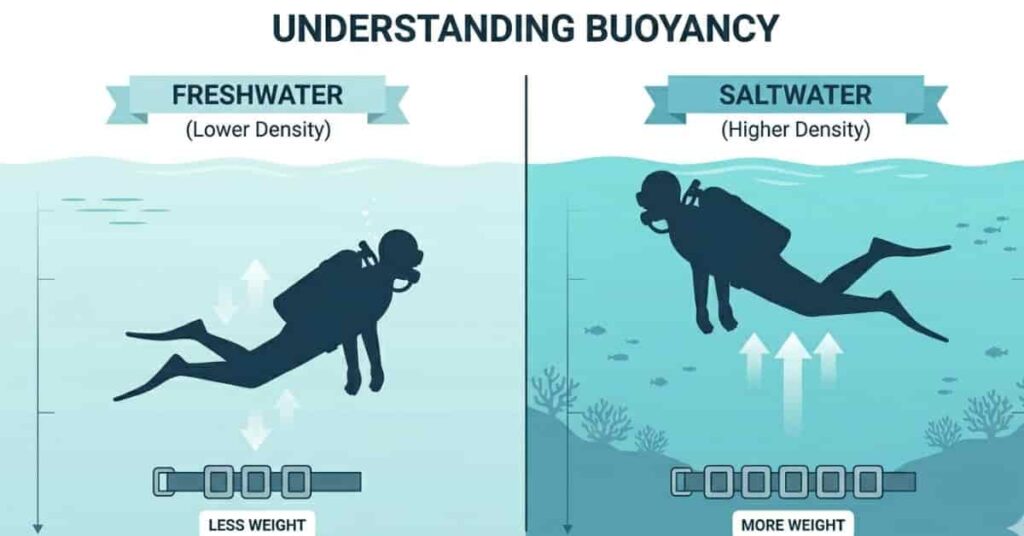
Understanding why saltwater and freshwater affect buoyancy is the first step toward accurate weighting. Many divers assume they can use the same amount of lead everywhere, but water conditions can change how your body and equipment float. Even a small difference in buoyancy can affect your comfort, trim, and air consumption underwater.
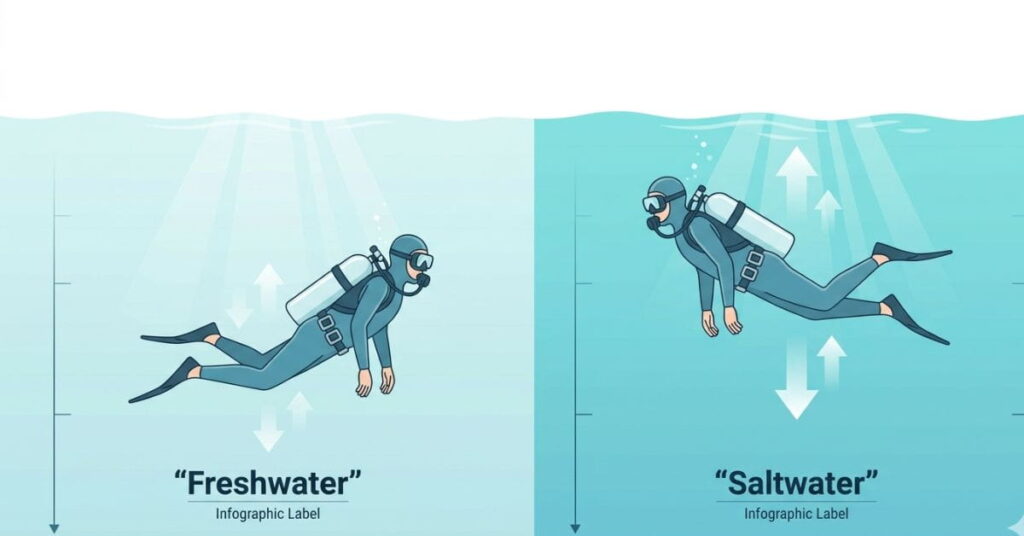
The main reason comes down to water density. Saltwater contains dissolved salts that make it denser than freshwater. Because denser water provides more upward force, divers float more easily in the ocean. This increased buoyancy usually means you need more weight when diving in saltwater than in lakes, quarries, or rivers.
The science behind this is called buoyancy. When you enter the water, your body and equipment displace a certain amount of water. The heavier the displaced water, the stronger the upward force acting on you. Since saltwater weighs more than the same volume of freshwater, it creates greater buoyancy.
Salt concentration also plays a role. Not all oceans have the same salinity level. Areas with higher salinity can make divers slightly more buoyant than those in regions with lower salinity. This is one reason experienced divers perform a buoyancy check whenever they visit a new destination.
Your equipment affects weighting as well. Wetsuits contain tiny air bubbles that increase flotation. Thicker wetsuits create more buoyancy and often require additional lead. Tanks, BCDs, and accessories can also change how much weight you need in different environments.
Expert Tip
Many divers keep a log of their weight setup for each location. Recording your freshwater and saltwater configurations makes future dive planning faster and more accurate.
How Much More Weight Do You Need in Saltwater?
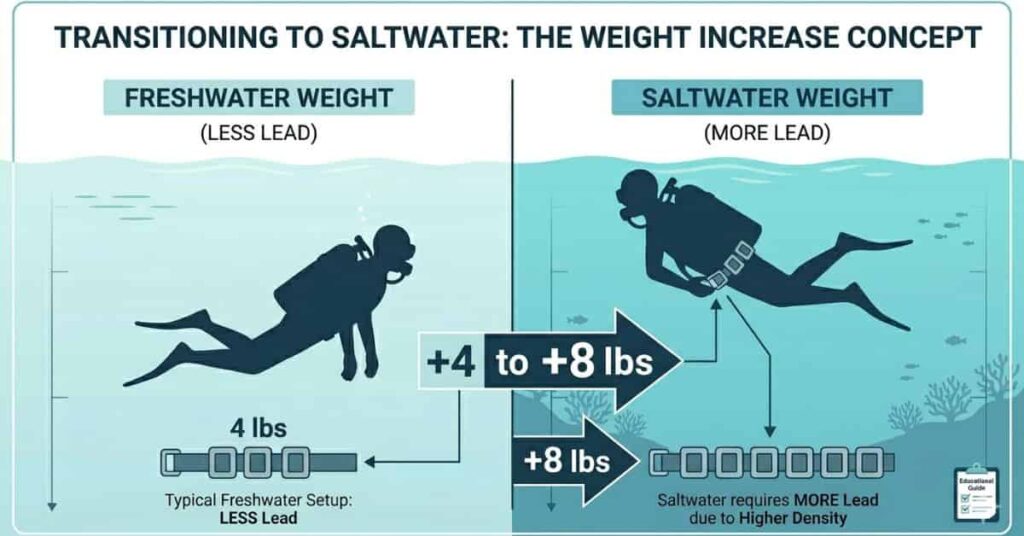
One of the most common questions new divers ask is how much extra weight is actually needed for saltwater diving. While there is no single answer for everyone, most divers require additional lead when moving from freshwater to saltwater because saltwater offers greater buoyancy.
A common rule of thumb is to add about 4–8 pounds (2–4 kg) of weight when switching from freshwater to typical ocean conditions. However, this is only a starting point. Your actual weighting depends on several factors, including body composition, equipment, exposure protection, and local water salinity.
Body size plays an important role. Larger divers displace more water and may need a greater adjustment than smaller divers. Two divers wearing the same gear can require different amounts of weight because muscle, body fat, and overall body volume affect buoyancy.
Exposure suits can create even bigger differences. A thin 3mm wetsuit adds less buoyancy than a thick 7mm wetsuit. Drysuits generally require the largest weight adjustments because they trap additional air and insulation. The more buoyant your exposure protection, the more lead you may need when diving in saltwater.
Tank type also affects weighting. Aluminium tanks become more buoyant as they empty, while steel tanks remain relatively negative throughout the dive. This difference can change the amount of weight needed for proper buoyancy control.
Here are some general starting points:
- Freshwater to tropical saltwater, 3mm wetsuit: often +2 to +4 pounds
- Freshwater to saltwater, 5mm wetsuit: often +4 to +6 pounds
- Freshwater to saltwater, 7mm wetsuit: often +6 to +10 pounds
- Drysuit diving: adjustments vary significantly based on the suit and undergarments
- Remember that these are estimates, not universal rules. The safest approach is to perform a buoyancy check at the beginning of your dive trip.
Practical Examples
Imagine a diver who uses 10 pounds of lead in a freshwater quarry while wearing a 3mm wetsuit. When travelling to the Caribbean, that diver might need around 12–14 pounds to maintain similar buoyancy.
Another diver wearing a 7mm wetsuit in a freshwater lake may use 18 pounds of lead. Moving to a saltwater environment could increase that requirement to roughly 24 pounds or more, depending on equipment and body composition.
These estimates provide a useful starting point, but every diver’s buoyancy is different. Try the Scuba Diving Weight Calculator below to calculate a more personalized weight adjustment based on your equipment and dive conditions.
Freshwater Diving Weight Basics
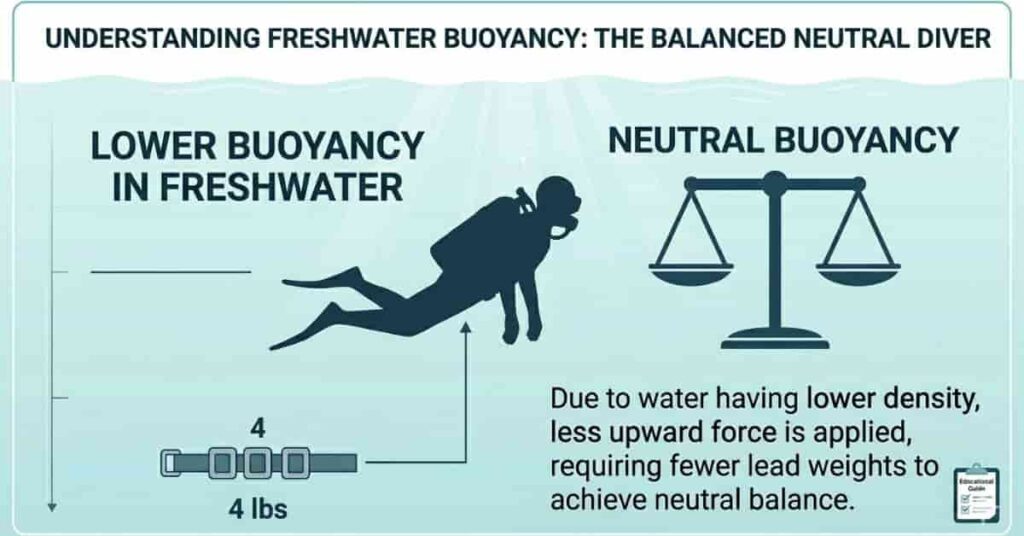
Freshwater diving usually requires less lead than saltwater diving. Because freshwater is less dense, it provides less buoyant force on your body and equipment. This difference is why many divers need to reduce their weight when moving from the ocean to a lake, quarry, or river.
The lower density of freshwater means you do not float as easily. As a result, you can often achieve proper buoyancy with fewer pounds of lead. Divers who use the same weight setup from a saltwater trip may find themselves overweighted in freshwater, making buoyancy control more difficult.
For many recreational divers, reducing weight by about 4–8 pounds (2–4 kg) when switching from saltwater to freshwater is a reasonable starting point. However, the exact adjustment varies based on body composition, wetsuit thickness, tank type, and other equipment. A buoyancy check remains the most reliable way to determine the correct amount of weight.
Freshwater scuba weighting can also vary by location. A calm inland lake may produce slightly different buoyancy characteristics than a deep quarry used for training. Water temperature matters as well. Cold freshwater environments often require thicker wetsuits or drysuits, which increase buoyancy and may offset some of the weight reduction gained from lower water density.
Many entry-level divers complete certification dives in freshwater quarries. When those divers later travel to ocean destinations, they are often surprised by how much more weight they need. Understanding this difference helps prevent frustration and improves confidence during the first few dives in a new environment.
Quarry and Lake Diving Considerations
Freshwater dive sites often have conditions that influence weighting decisions:
- Training quarries frequently involve thicker exposure protection.
- Cold lakes may require 5 mm, 7 mm, or drysuit setups.
- Visibility conditions can vary significantly by season.
- Different rental equipment may change buoyancy characteristics.
These factors can affect weighting just as much as the water type itself.
Expert Tip
If you primarily dive in freshwater, record your baseline weight with the tank nearly empty. This number becomes a useful reference point whenever you travel to saltwater destinations.
Step-by-Step Saltwater vs Freshwater Weight Adjustment Formula
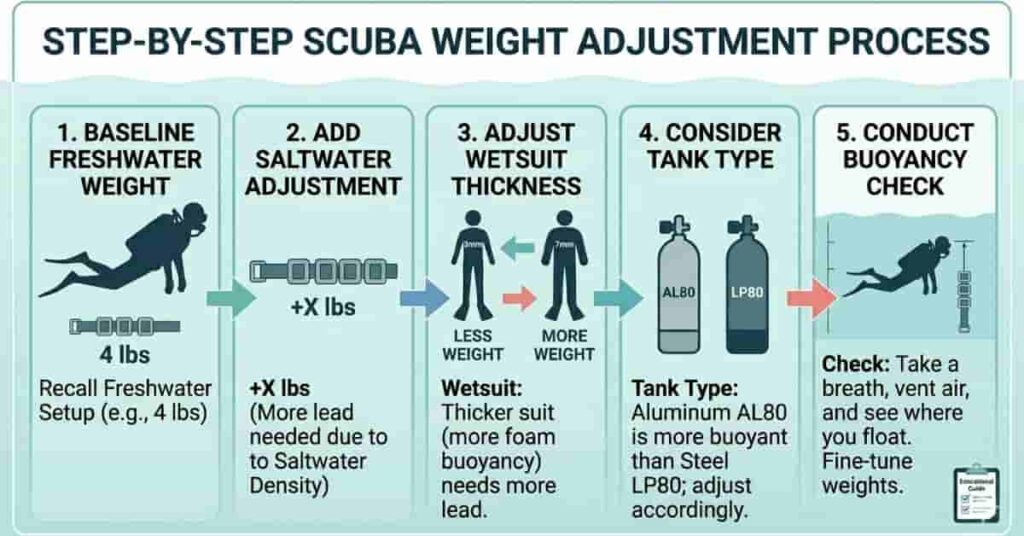
A simple weight adjustment formula can help you estimate how much lead you may need when moving between freshwater and saltwater environments. While no formula replaces an actual buoyancy check, it provides a reliable starting point and reduces guesswork before your dive.
Think of your freshwater setup as the baseline. From there, make small adjustments based on the environment, exposure protection, and equipment you plan to use.
Determine Your Baseline Freshwater Weight
Start with the amount of weight that allows you to maintain proper buoyancy in freshwater. Ideally, this should be a verified setup from previous dives rather than a rough estimate.
For example, if you normally use 10 pounds of lead in a freshwater quarry while wearing a 3mm wetsuit, that becomes your baseline reference point.
Add an Environmental Adjustment
Next, account for the change in water density. Saltwater creates more buoyancy, so most divers need additional weight.
A common starting adjustment is:
- Light exposure protection: add 2–4 pounds
- Moderate exposure protection: add 4–6 pounds
- Thick wetsuits or cold-water gear: add 6–10 pounds
These figures are estimates and should be fine-tuned through testing.
Adjust for Wetsuit Thickness
Wetsuits contain tiny air pockets that increase buoyancy. The thicker the suit, the more lead you may need.
As a general guideline:
- 3mm wetsuit: minimal adjustment
- 5mm wetsuit: moderate adjustment
- 7mm wetsuit: significant adjustment
- Drysuit: largest adjustment
If you’re upgrading from a thinner suit to a thicker one, expect your weight to increase even in the same type of water.
Account for Tank Type
Tank material affects buoyancy throughout the dive.
- Aluminium tanks become more buoyant as air is used.
- Steel tanks remain more negatively buoyant.
Divers switching between aluminium and steel tanks may need small weight adjustments to maintain proper trim and buoyancy control.
Confirm With a Buoyancy Check
No formula can account for every variable. Body composition, gear configuration, and local water conditions all affect buoyancy.
Before beginning your dive, perform a buoyancy check at the surface. With a nearly empty BCD and normal breathing, you should float at eye level while holding a normal breath. When you exhale, you should slowly descend.
This final check ensures your weighting is accurate and helps prevent buoyancy problems underwater.
Pro Tip
Create a dive log that includes location, water type, wetsuit thickness, tank type, and total weight used. After a few trips, you’ll have a personalised weighting guide that is often more accurate than any generic formula.
Typical Weight Adjustment Chart by Diver Type
The amount of weight needed when moving between freshwater and saltwater varies from diver to diver. Factors such as wetsuit thickness, body composition, equipment configuration, and local salinity all influence buoyancy. For that reason, no chart can provide an exact answer for every diver.
However, the following estimates offer a practical starting point for divers transitioning from freshwater to typical ocean conditions.
| Diver Type | Typical Saltwater Adjustment* |
|---|---|
| Tropical diver (rash guard or minimal exposure protection) | +2 to +4 lb |
| 3mm wetsuit diver | +2 to +4 lb |
| 5mm wetsuit diver | +4 to +6 lb |
| 7mm wetsuit diver | +6 to +10 lb |
| Drysuit diver | +8 lb or more depending on suit and undergarments |
*Values are general estimates and may vary based on body composition, equipment, and dive conditions.
Typical Freshwater to Saltwater Weight Adjustment
Estimated additional lead needed when moving from freshwater to typical ocean conditions.
| Saltwater Adjustment | Diver Type |
|---|---|
| 0 lb | Tropical diver |
| 3 lb | 3mm wetsuit diver |
| 6 lb | 5mm wetsuit diver |
| 9 lb | 7mm wetsuit diver |
| 12 lb | Drysuit diver |
Tropical Divers
Divers wearing only a rash guard or very thin exposure protection usually need the smallest adjustment. Because there is little additional buoyancy from clothing, most of the change comes from the increased density of saltwater itself.
3mm Wetsuit Divers
A 3mm wetsuit contains relatively little neoprene compared to thicker suits. Most divers find that adding a few pounds of lead is enough to compensate for the extra buoyancy experienced in the ocean.
5mm Wetsuit Divers
The 5mm wetsuit is common among recreational divers and often requires a noticeable increase in weighting when moving to saltwater. This thickness creates more buoyancy and usually demands additional lead for proper trim and descent.
7mm Wetsuit Divers
Cold-water divers wearing 7mm wetsuits often see larger weighting changes. The thicker neoprene contains more air, creating greater buoyancy that must be offset with extra lead.
Drysuit Divers
Drysuit weighting varies more than any other category. Suit design, undergarments, and personal preferences can significantly change buoyancy characteristics. Most drysuit divers require the largest weighting adjustments and should always perform a thorough buoyancy check after changing dive environments.
Common Mistakes Divers Make When Switching Water Types
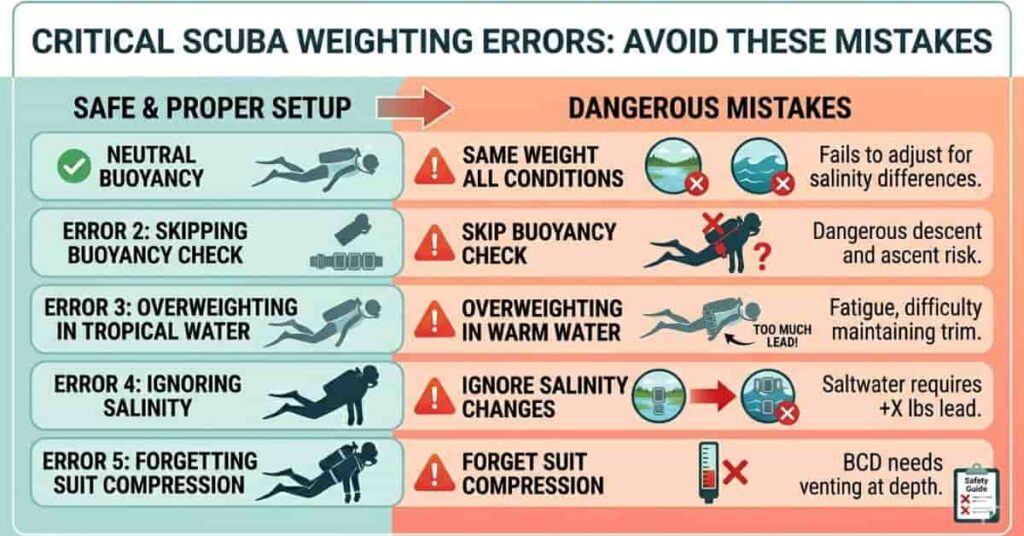
Changing from freshwater to saltwater, or vice versa, seems simple. However, many divers make small weighting mistakes that can affect buoyancy, comfort, and safety underwater. Understanding these common errors can help you avoid unnecessary adjustments during your dive trip.
Using the Same Weight Everywhere
One of the biggest mistakes is assuming the same weight setup works in every environment. A diver who is perfectly weighted in a freshwater quarry may become too buoyant in the ocean. Likewise, a diver weighted for saltwater may be overweighted in a lake.
Every environment has different buoyancy characteristics. That’s why experienced divers reassess their weighting whenever they change locations.
Ignoring Salinity Levels
Not all saltwater is the same. Ocean salinity varies from one region to another, which can slightly change buoyancy requirements.
For example, some areas of the Caribbean, Red Sea, and Mediterranean may feel different even when using the same equipment. While the differences are usually small, they can still affect fine-tuned buoyancy control.
Overweighting in Tropical Saltwater
Many divers add too much lead before a tropical vacation because they expect saltwater to make a huge difference. Excess weight can cause several problems:
- Poor trim and body position
- Increased air consumption
- More effort during the dive
- Frequent BCD adjustments
A small adjustment is often all that’s needed. Adding excessive weight usually creates more problems than it solves.
Forgetting Suit Compression
Wetsuits become less buoyant as depth increases because the neoprene compresses under pressure. New divers sometimes focus only on surface buoyancy and forget how their suit behaves underwater.
A diver who starts with too much weight may struggle to maintain neutral buoyancy during deeper portions of the dive. Understanding suit compression helps prevent the need for constant buoyancy corrections.
Skipping Buoyancy Checks
Even experienced divers occasionally skip buoyancy checks when they arrive at a familiar destination. This is one of the easiest mistakes to avoid.
A quick surface check takes only a few minutes and can reveal whether your weighting is correct. It also helps account for rental gear, different tanks, exposure protection, and local water conditions.
Mini Case Study
A lake diver who normally uses 12 pounds of lead in freshwater travelled to a tropical ocean destination and added 10 extra pounds without testing. During the first dive, the diver struggled to maintain neutral buoyancy and consumed air faster than expected. After a proper buoyancy check, removing several pounds resulted in a much more comfortable dive.
Regional Saltwater Variations (Not All Oceans Are Equal)
Many divers know that saltwater requires more weight than freshwater. What surprises some divers is that not all saltwater environments have the same buoyancy characteristics. Salinity levels vary around the world, which means your weighting needs can change slightly from one destination to another.
In most cases, these differences are small. However, experienced divers still perform a buoyancy check when visiting a new location because even minor salinity changes can affect comfort and trim underwater.
Red Sea
The Red Sea is known for having relatively high salinity compared to many popular dive destinations. Because the water is denser, divers often experience slightly greater buoyancy than they would in average ocean conditions.
If you’re diving the Red Sea for the first time, you may need a small increase in weight compared to destinations with lower salinity.
Caribbean
The Caribbean is one of the most popular regions for recreational diving. Its salinity levels are generally close to what many divers consider standard ocean conditions.
For most visitors, weighting adjustments made for typical saltwater diving work well throughout much of the Caribbean. A buoyancy check is still recommended, especially when using unfamiliar rental gear.
Pacific Ocean
The Pacific covers a vast area, so conditions vary significantly between locations. Tropical Pacific destinations often exhibit buoyancy characteristics similar to those of other ocean environments, while some coastal regions may differ due to local currents, rainfall, and water mixing.
Because conditions vary, divers should avoid assuming the same weighting setup will work perfectly across all Pacific dive sites.
Mediterranean Sea
The Mediterranean generally has higher salinity than many parts of the Atlantic Ocean. This increased salt concentration can create slightly greater buoyancy.
Divers travelling from freshwater environments may notice they need a bit more lead than expected, particularly when wearing thicker exposure protection.
The Dead Sea: An Extreme Example
The Dead Sea provides a dramatic example of how salinity affects buoyancy. Its salt concentration is far higher than that of normal oceans, making it incredibly easy to float on the surface.
While the Dead Sea is not a scuba diving destination, it clearly demonstrates the relationship between water density and buoyancy. The saltier the water, the stronger the upward force acting on your body.
Gear Factors That Influence Weighting in Different Water Types
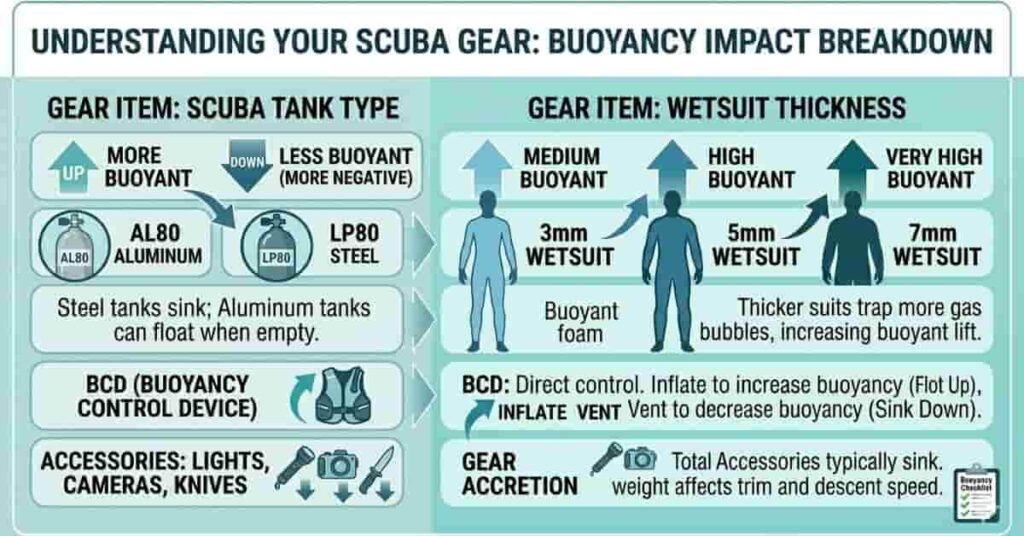
Water type is only one part of the weighting equation. Your equipment can have just as much impact on buoyancy as the difference between freshwater and saltwater. That’s why two divers in the same environment may require completely different amounts of lead.
Before adjusting your weight for a new dive location, consider how your gear affects buoyancy both at the surface and throughout the dive.
Aluminum Tanks
Aluminium tanks are popular at many tropical dive destinations. One important characteristic of these tanks is that they become more buoyant as air is consumed.
A diver who is perfectly weighted at the start of a dive may become slightly more buoyant near the end. This is why buoyancy checks should account for a nearly empty tank rather than a full one.
When switching from freshwater to saltwater with an aluminium tank, some divers may need additional lead to compensate for both environmental buoyancy and tank behaviour.
Steel Tanks
Steel tanks remain more negatively buoyant throughout the dive. Because they naturally sink more than aluminium tanks, divers often require less lead when using them.
If you normally dive with steel tanks and switch to aluminium rental tanks during a vacation, your weighting needs may change even if everything else stays the same.
BCD Lift and Design
Your buoyancy compensator device (BCD) also influences weighting and trim. While a BCD does not directly determine how much lead you need, different designs distribute buoyancy differently in the water.
Jacket-style BCDs, back-inflate models, and travel BCDs can each feel different underwater. Some divers find they need small adjustments when changing BCD styles, especially when travelling.
Exposure Protection
Exposure protection is one of the biggest factors affecting buoyancy.
General trends include:
- Rash guard or dive skin: minimal buoyancy
- 3mm wetsuit: low buoyancy increase
- 5mm wetsuit: moderate buoyancy increase
- 7mm wetsuit: significant buoyancy increase
- Drysuit: highest buoyancy increase
The thicker the neoprene, the more lead is usually required. This effect becomes even more noticeable in saltwater environments.
Accessories and Extra Equipment
Small accessories may not seem important, but their combined effect can influence buoyancy.
Examples include:
- Dive lights
- Reels and SMBs
- Camera systems
- Metal clips and hardware
- Backup equipment
A large underwater camera setup may reduce the amount of lead needed, while highly buoyant accessories could have the opposite effect.
Saltwater vs Freshwater Weight Belt Distribution Tips
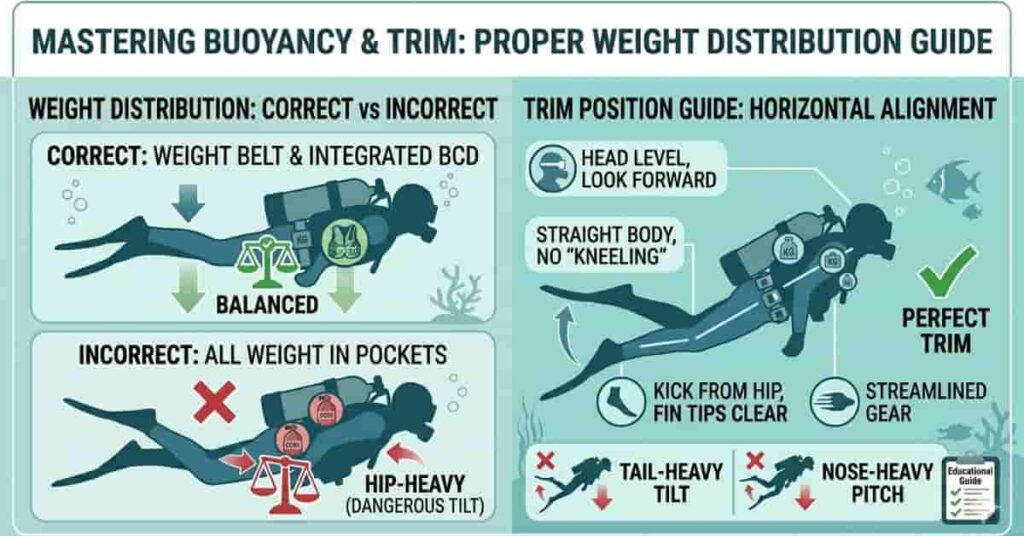
Having the right amount of weight is important, but where you place it matters just as much. Poor weight distribution can affect trim, comfort, and buoyancy control, even if the total amount of lead is correct.
When moving between freshwater and saltwater environments, many divers focus on adding or removing weight but forget to adjust its distribution. A balanced setup helps you maintain a streamlined position and reduces effort throughout the dive.
Belt Balance Matters
Traditional weight belts remain a popular option for many divers. The key is distributing weight evenly around your waist rather than concentrating it in one area.
Balanced weight placement helps:
- Improve underwater stability
- Reduce unwanted rolling
- Create a more comfortable fit
- Support better trim
If you add extra lead for saltwater diving, spread the weight evenly whenever possible rather than stacking multiple weights on one side.
Integrated Weight Systems
Many modern BCDs use integrated weight pockets instead of traditional belts. These systems can improve comfort by distributing weight more naturally across the body.
Integrated systems also reduce pressure on the lower back and hips, which some divers appreciate during longer dives or when carrying additional weight in saltwater.
However, adding too much weight to integrated pockets can sometimes affect trim. Make sure the weight remains balanced on both sides of the BCD.
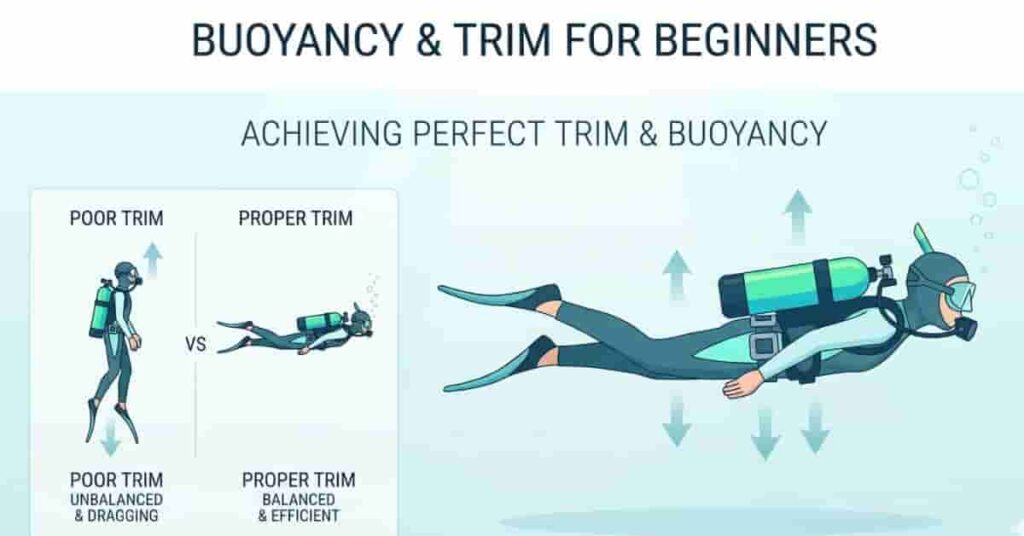
Consider Your Trim Position
Trim refers to your body position in the water. Ideally, you want to remain as horizontal as possible while swimming.
Poor weight placement can cause:
- Feet to sink
- Head to rise
- Constant finning to maintain position
- Increased air consumption
If your feet consistently drop, shifting some weight higher on your body may help. If your upper body sinks, adjusting weight placement toward the waist or hips may improve balance.
Small changes often produce noticeable improvements.
Comfort Changes Between Environments
Saltwater diving frequently requires additional lead. Even a few extra pounds can make a weight belt feel different than it does in freshwater.
Before entering the water, check that:
- The belt feels secure but not restrictive
- Weight pockets are properly locked
- Nothing shifts while walking
- Quick-release systems remain easy to access
Comfort is more than convenience. A secure and comfortable setup allows you to focus on the dive instead of constantly adjusting equipment.
Travel Diving Tips for Accurate Weight Adjustment
Travel diving introduces new variables that can affect buoyancy and weighting. Even experienced divers often need small adjustments when visiting a new destination. Different equipment, water conditions, and exposure protection can all change how much lead you need.
A little preparation before your trip can help you avoid buoyancy problems and enjoy more comfortable dives from day one.
Rental Gear Can Change Everything
Many travelling divers use rental equipment instead of their personal setup. While convenient, rental gear may have different buoyancy characteristics than the equipment you use at home.
Common differences include:
- Aluminum instead of steel tanks
- Different BCD models
- Alternate weight systems
- Varying wetsuit brands and thicknesses
Even if the specifications look similar, equipment can feel different in the water. Treat every rental setup as a new configuration and perform a buoyancy check before your first dive.
Listen to Local Dive Guides
Local dive professionals work with visiting divers every day. They often know how much additional weight most guests need based on local water conditions and common equipment setups.
Their recommendations should not replace a buoyancy check, but they can provide a useful starting point and help you avoid major weighting errors.
If you’re unsure how much extra weight you need for saltwater diving, local guides are usually among the best sources of practical advice.
Log Your Weight Setups
One of the easiest ways to improve future dive trips is to keep detailed records.
Consider logging:
- Dive location
- Water type
- Wetsuit thickness
- Tank type
- Total weight used
- Notes about buoyancy performance
After several trips, you’ll have a personalised reference guide that makes future weighting adjustments much faster and more accurate.
Prepare Before You Arrive
Researching your destination can save time and frustration. Learn whether you’ll be diving in freshwater or saltwater, which forms of exposure protection are commonly used, and what equipment is available from local operators.
Creating a rough weighting plan before arrival gives you a starting point that you can refine during your buoyancy check.
Mini Case Study
A diver from a freshwater quarry regularly logged weight configurations after each trip. Before a Caribbean vacation, the diver reviewed previous records from a similar destination and started with nearly the correct amount of lead on the first dive. Only a minor adjustment was needed after the buoyancy check.
Manual Calculation vs Scuba Weight Calculator Tools
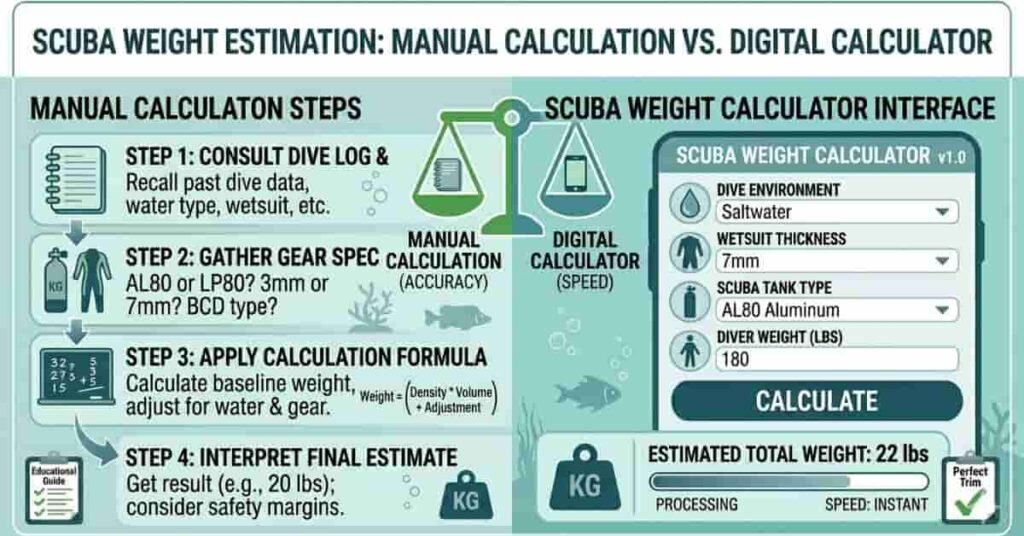
When planning a dive in a new environment, many divers wonder whether to use a manual formula or a scuba ocean-water weight calculator. The truth is that both methods can be useful. Each has strengths and limitations, and the best results usually come from combining the two approaches.
Now that you understand the formula, you can speed up the process with our Scuba Diving Weight Calculator. Simply enter your dive details to generate a recommended starting weight for your next freshwater or saltwater dive.
A calculator can provide a quick estimate, while manual calculations help you understand why adjustments are needed in the first place.
Environmental Calculators
Online scuba weighting calculators are designed to estimate buoyancy changes based on factors such as:
- Freshwater or saltwater conditions
- Body weight
- Wetsuit thickness
- Tank type
- Exposure protection
These tools can save time and give divers a reasonable starting point before a trip. They are especially helpful for beginners who have limited experience switching between dive environments.
However, calculators cannot account for every variable. Personal buoyancy characteristics, equipment configuration, and local water conditions can produce results that differ from the estimate.
Manual Weighting Formulas
Manual calculations rely on a baseline weighting setup and a series of adjustments.
A simple process looks like this:
- Start with your proven freshwater weight.
- Add weight for saltwater conditions.
- Adjust for wetsuit thickness.
- Consider tank material and equipment changes.
- Verify the result with a buoyancy check.
This method requires more thought but helps divers understand the factors that influence buoyancy. Over time, many experienced divers become very accurate at estimating weighting needs using personal dive logs and previous experience.
Which Method Is Better?
Neither method is perfect on its own.
Calculators offer convenience and speed, while manual calculations provide a deeper understanding of buoyancy. Divers who rely entirely on a calculator may overlook important equipment changes. Divers who rely only on estimates may make incorrect assumptions when visiting unfamiliar destinations.
The most reliable approach combines both methods.
Best Practice: Use Both Together
A smart workflow looks like this:
- Use a scuba weight calculator to create an initial estimate.
- Compare the estimate with your dive log records.
- Adjust for equipment differences.
- Consider local water conditions.
- Complete a buoyancy check before diving.
Conclusion
This process minimises guesswork and improves confidence when transitioning between freshwater and saltwater environments.
Understanding the differences in buoyancy between saltwater and freshwater is essential for safe and comfortable diving. As you’ve seen, water density, exposure protection, equipment choices, and local conditions all influence how much weight you need underwater.
A scuba ocean water weight calculator can provide a helpful starting estimate, but it should never replace a proper buoyancy check. Whether you’re adjusting your saltwater scuba weight for a tropical vacation or fine-tuning your freshwater scuba weighting in a local lake, accurate weighting improves control, comfort, and air efficiency.
Most importantly, never assume the same setup will work everywhere. Small adjustments can make a big difference in your diving experience and overall safety.
Before your next dive, take a minute to use our Scuba Diving Weight Calculator. It’s a simple way to estimate your starting weight and make smoother adjustments when diving in new environments.
Have a favourite weighting tip or a story about switching dive environments? Share your experience in the comments and help other divers learn from your journey. You can also explore our other scuba diving guides for more buoyancy and safety tips.

Scuba Diving Researcher & Beginner Guide
Evan Calder is the creator of DiveBeginner, a website dedicated to helping beginners learn scuba diving simply and practically 🌊
He focuses on scuba fundamentals, beginner safety, and clear diving guidance. Evan has studied ocean and marine science through programs at the Scripps Institution of Oceanography, UC San Diego, a globally recognized leader in ocean research.
Instead of complex technical language, Evan provides easy-to-follow, beginner-friendly guides based on real-world research, helping first-time divers feel confident before their first dive 🤿
DiveBeginner reflects his passion for making scuba diving accessible, safe, and enjoyable for everyone.