Table of Contents
Introduction
Unsure how much scuba weight you need? You’re not alone—every diver can learn and improve.
Getting your scuba diving weight right is crucial for safe diving because it helps you achieve neutral buoyancy. This allows you to move effortlessly underwater, conserve air, and stay comfortable throughout the dive. For beginners in the USA, proper weighting helps prevent rapid sinking, reduces fatigue, and improves control. Too much weight increases effort and discomfort, while too little makes descent and stability challenging.
The right scuba weight calculation improves comfort, enhances safety, reduces air consumption, and gives you more precise control during your dive. Guessing or copying others can lead to issues because each diver needs a setup tailored to their body, equipment, and diving conditions.
This guide teaches you how to manually calculate scuba weight in easy steps. You will understand key factors that affect buoyancy and learn to fine-tune your setup for real dive conditions. For quick estimates, use the Main Scuba Weight Calculator Tool as a helpful backup while building your experience.
What Is Scuba Weighting and Why Does It Matter
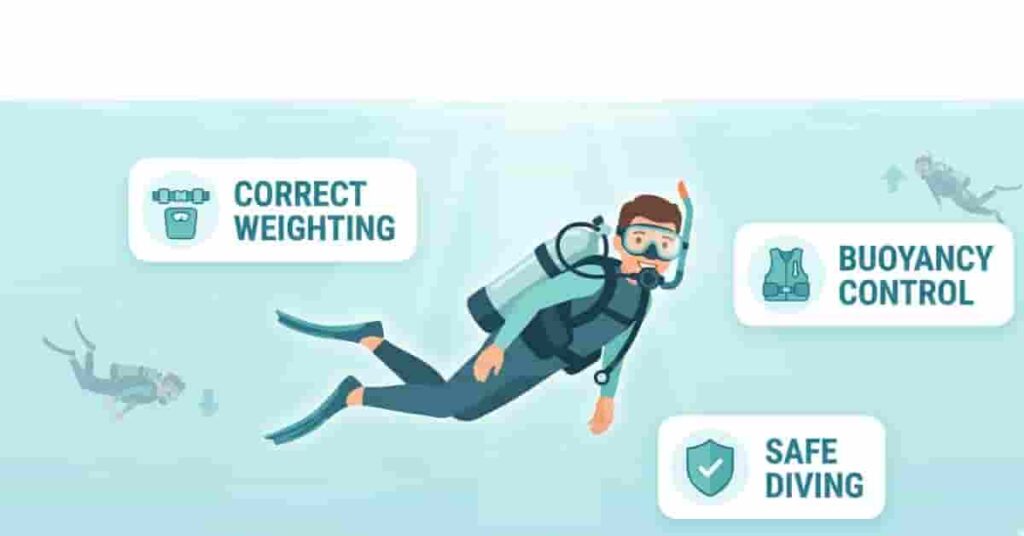
Scuba weighting refers to the amount of lead a diver uses to stay balanced underwater. It helps you control whether you float, sink, or stay steady at a certain depth. In simple terms, it is the system that keeps you stable while diving.
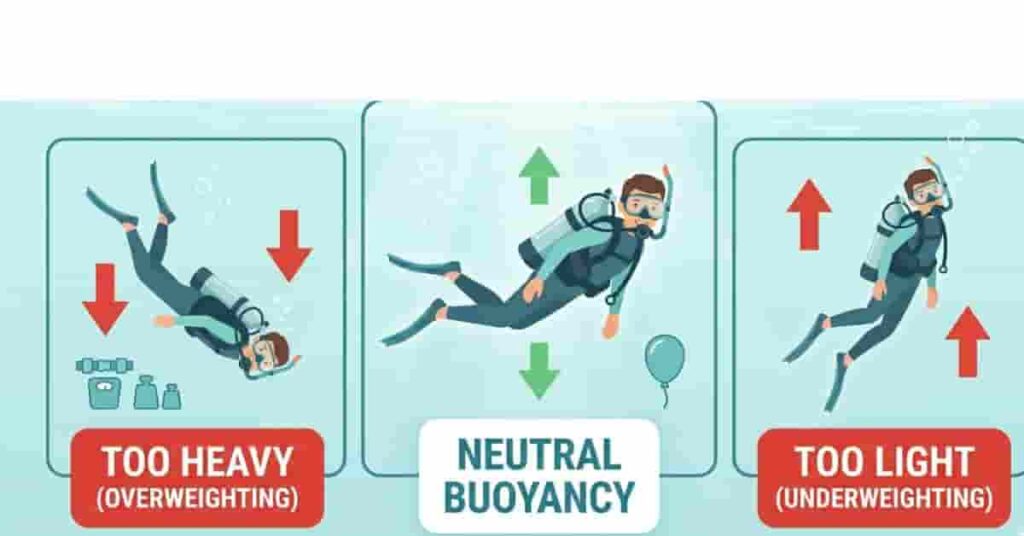
The main goal of scuba weighting is to achieve neutral buoyancy, which means you neither float up nor sink down when you are underwater. Neutral buoyancy refers to the state where the upward and downward forces on a diver are equal. You can think of it as finding the “perfect balance point” in the water. At this point, you can hover easily without constant kicking or effort. This makes diving safer, smoother, and less tiring, especially for beginners.
Lead weights play a key role in this balance. When you descend, weights help you overcome natural buoyancy from your body, wetsuit, and air in your BCD. Without enough weight, it becomes difficult to go down. During ascent, proper weighting helps you rise slowly and safely rather than shooting up too quickly. This control is very important for avoiding pressure-related injuries.
When you balance yourself properly with weights, you move more naturally and use less energy underwater. Good scuba weighting improves air consumption and dive comfort. That’s why you must understand scuba weight calculation before every dive, especially if you’re a new diver learning control and stability.
Why Proper Scuba Weighting Is Critical for Safety
Proper scuba weighting is not just about comfort. It directly affects your safety, control, and performance underwater. Even a small mistake in scuba weight calculation can make your dive harder and riskier, especially for beginners.
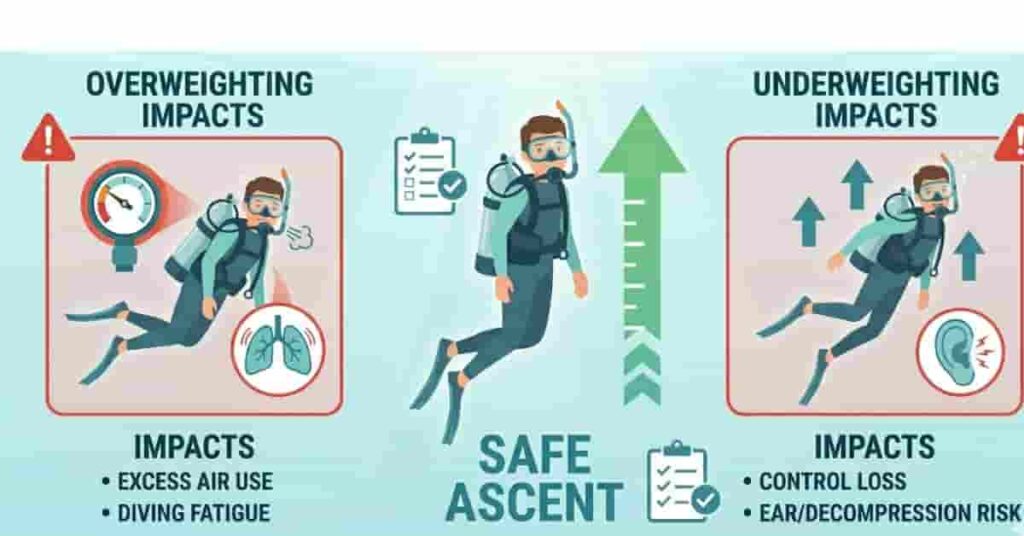
One major impact is air consumption. If you are overweight, you sink faster and need to use more air to maintain your position. This increases breathing rate and shortens your dive time. Underweight divers also waste energy fighting buoyancy, leading to faster air consumption.
Buoyancy control becomes difficult when your weight is not correct. You may struggle to stay stable at a depth or find yourself constantly adjusting your BCD. This makes it harder to enjoy the dive and focus on the surroundings.
Emergency ascent safety is another critical factor. Too much weight can make it harder to ascend smoothly if something goes wrong. Controlled ascent is essential to avoid lung over-expansion injuries and other risks.
Incorrect weighting also causes dive fatigue and energy loss. You kick more, move less efficiently, and feel tired underwater more quickly. This reduces both safety and enjoyment.
Finally, proper weighting is essential during a safety stop. You need to stay stable at shallow depth, neither sinking nor floating. A good balance helps you hold a position easily and complete your stop safely.
Try our Scuba Weight Calculator Tool to get a quick and accurate starting estimate before your next dive.
Factors That Affect How Much Weight You Need
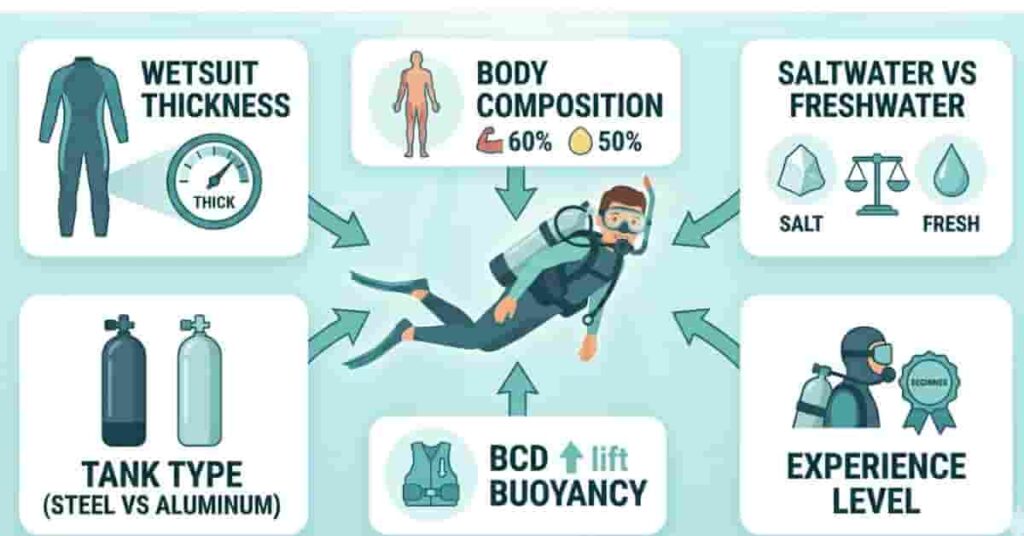
Several factors decide how much weight you need for scuba diving. There is no single fixed number because every diver and dive condition is different. Understanding these factors helps you calculate scuba weight more accurately and safely.
Body weight and body composition
Your body type affects buoyancy. Muscle is denser and sinks more easily, while body fat floats more. This means two divers with the same body weight may need different scuba weights. Beginners often overlook this difference, which leads to incorrect weight choices.
Wetsuit thickness (major factor)
A wetsuit traps air, increasing buoyancy. Thicker wetsuits provide more insulation but also require more weight to compensate. For example, a 5mm wetsuit needs more lead than a 3mm suit. This is one of the biggest factors in scuba weight calculation.
Saltwater vs freshwater
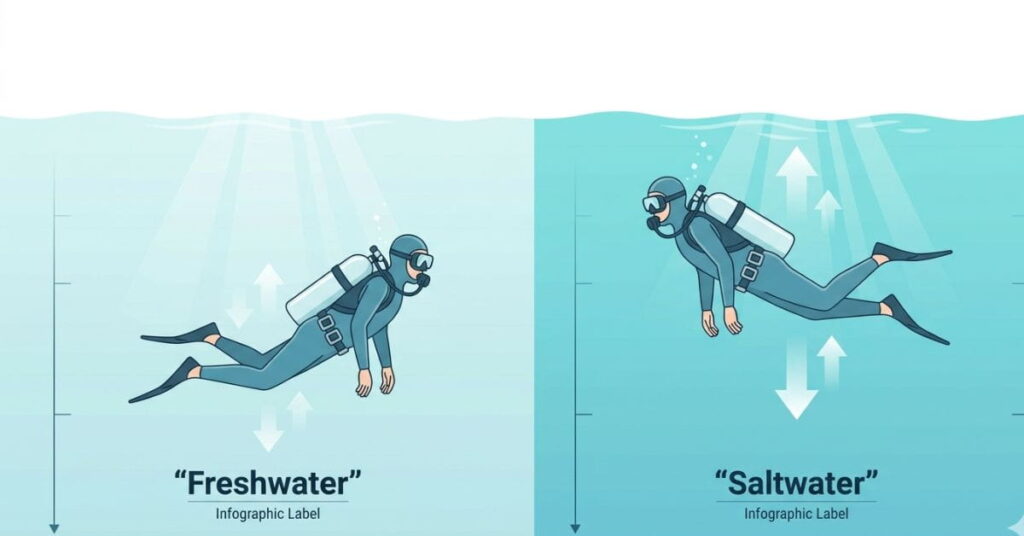
Saltwater is denser than freshwater, so it makes you float more. That means you usually need more weight in the ocean. Freshwater dives, such as in lakes, require less lead.
Tank type (aluminum vs steel)
Aluminum tanks become more buoyant as air is used, while steel tanks stay negatively buoyant. This difference affects how much weight you carry.
BCD buoyancy characteristics
Different BCDs have different buoyancy levels. Some hold more air and may require slight weight adjustments for proper balance.
Experience level and breathing control
New divers often need more weight because they breathe less efficiently. Experienced divers use air better and can reduce their weight over time.
Beginner Rule of Thumb for Scuba Weight (Starting Point)
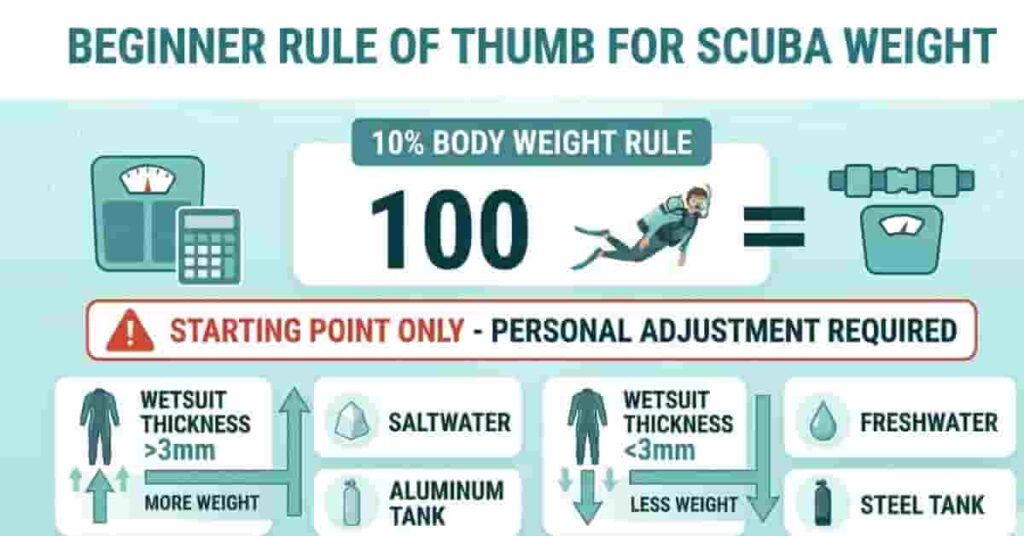
A common starting point for scuba diving weight is the 10% body weight rule. This means you take about 10% of your body weight in lead as an initial estimate. For example, a 70 kg diver might start with around 7 kg of weight. This rule is simple and helps beginners get a quick starting point before fine-tuning in the water.
However, this rule is not fully accurate on its own. It does not consider important factors like wetsuit thickness, tank type, or whether you are diving in saltwater or freshwater. It also ignores differences in personal buoyancy, which vary from diver to diver. Because of this, relying solely on the 10% rule can lead to over- or underweighting.
The rule works best as a rough starting estimate, especially for first-time divers in warm water with light gear. It becomes less reliable in cold water, thick wetsuits, or when using different tank materials. In these conditions, adjustments are always necessary.
When asking how much weight I need for scuba diving, the correct answer is never a fixed number. Instead, start with the rule of thumb and adjust based on actual conditions during a proper buoyancy check. Small adjustments are normal and expected until you find your ideal balance underwater.
Step-by-Step Manual Scuba Weight Calculation Method
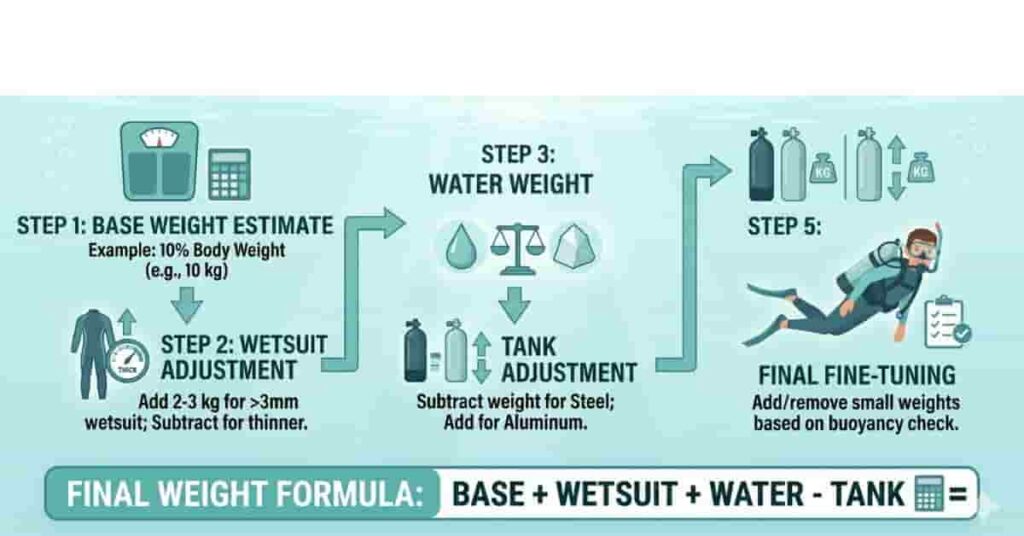
Calculating scuba weight manually gives you better control and understanding of your buoyancy. Instead of guessing, you follow a simple step-by-step method to estimate your ideal weight. This helps you adjust based on real dive conditions and improves safety and comfort underwater.
Step 1 — Estimate Base Body Weight Factor
Start with a basic estimate based on your body weight and the common 10% rule. This gives you a rough base to work from before adjustments. It is not final, but it helps set an initial reference.
Step 2 — Add Wetsuit Buoyancy Adjustment
Next, adjust for your wetsuit thickness. Thicker wetsuits trap more air and increase buoyancy, so they require more lead. A 3mm suit needs less adjustment than a 5mm or 7mm suit.
Step 3 — Adjust for Saltwater or Freshwater
Water type affects buoyancy. Saltwater makes you more buoyant, so you need extra weight. Freshwater reduces buoyancy, so you usually need less of it.
Step 4 — Add Tank Buoyancy Compensation
Your tank type also matters. Aluminum tanks become more buoyant as air is used, while steel tanks stay heavier. Adjust your weight based on your equipment choice.
Step 5 — Fine-Tune Based on Dive Conditions
Finally, fine-tune your setup during a buoyancy check. Make small adjustments until you can hover comfortably at eye level without sinking or floating.
💡 Final Formula:
Final Weight = Base + Suit Adjustment + Water Adjustment + Tank Adjustment
This method gives you a practical way to calculate scuba weight more accurately than guesswork alone.
How to Perform a Proper Buoyancy Check (Essential Step)
A buoyancy check helps you confirm if your scuba weight is correct before the dive. This step is essential for safety, comfort, and proper scuba weight calculation. Even small adjustments here can make a big difference underwater.
Surface float test
Start in chest-deep water with your BCD fully deflated. Hold a normal breathing position and observe your float level. You should float at the surface without struggling to stay up or sink. If you sink, you are likely overweight. If you float too high, you may be underweighted.
Breathing cycle test
Take slow, normal breaths while floating. Your body should move slightly up and down with breathing. This small movement shows you are close to neutral buoyancy. If the movement is too strong, your weight needs to be adjusted.
Eye-level water line method
In a relaxed position, the waterline should sit around your eye level when you are holding a normal breath. This is a simple visual indicator used by many divers to confirm proper weighting.
Empty BCD test at safety stop depth
Descend to about 3–5 meters with an almost empty BCD. You should be able to hover easily without sinking or rising. This simulates your safety stop condition and confirms your final weighting balance.
A proper buoyancy check ensures your scuba weight is safe and correctly adjusted before the dive begins.
How Much Weight Do Beginners Actually Need? (Real-World Ranges)
Beginner divers often ask how much weight they actually need before their first dive. The truth is, there is no fixed number. Scuba weight depends on your body, gear, and water conditions. However, real-world ranges can help you understand what most beginners typically use.
In warm water diving, beginners often need less weight because thin wetsuits and tropical conditions create less buoyancy. Many divers fall into a lower weight range, but the exact amount still varies based on body type and equipment setup. Warm water is usually more forgiving, which makes it easier to fine-tune buoyancy.
In cold water diving, beginners usually need more weight. Thick wetsuits or drysuits trap more air, significantly increasing buoyancy. This means extra lead is needed to stay stable and descend comfortably. Cold-water dives also require more precise adjustment because gear differences are more noticeable.
There are also general differences among divers, including differences in male and female body composition. These are not strict rules, but muscle density and body fat distribution can affect buoyancy. That is why two divers of the same weight may still need different scuba weights.
These ranges differ because every diver is unique. Wetsuit thickness, tank type, water salinity, and experience level all change the final requirement. This is why scuba weight calculation should always be adjusted through a buoyancy check rather than relying on a fixed number.
Common Mistakes When Calculating Scuba Weight
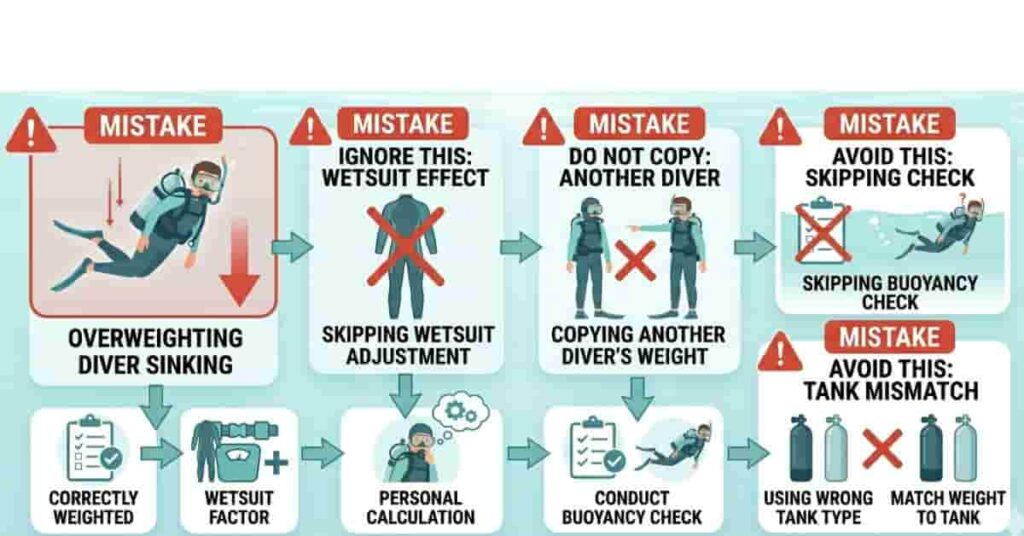
Many beginner divers struggle with scuba weight calculations because they rely on habits rather than proper checks. These mistakes can affect buoyancy, safety, and overall dive comfort. Understanding them helps you avoid problems before they happen.
Overweighting for “safety.”
One of the most common mistakes is adding extra weight for safety. Many beginners think that more weight keeps them stable, but it actually has the opposite effect. Overweighting makes you sink too fast, increases air use, and makes buoyancy control harder. It also puts more strain on your body during the dive.
Ignoring wetsuit buoyancy
Wetsuits trap air and increase buoyancy, especially thicker ones. Beginners often ignore this factor and underestimate the amount of adjustment needed. This leads to poor underwater balance and constant corrections while diving.
Copying another diver’s setup
Every diver has a different body type, gear setup, and experience level. Copying someone else’s weight setup rarely works. What is right for one diver may be completely wrong for another.
Skipping buoyancy check
Skipping a proper buoyancy check is a serious mistake. Without testing in real water conditions, you cannot confirm if your scuba weight is correct. This often leads to over- or underweighting during the dive.
Not adjusting for tank changes.
Different tanks affect buoyancy differently. Aluminum and steel tanks behave in opposite ways as air is used. Failing to adjust for this can impact your stability, especially during the final part of the dive.
Saltwater vs Freshwater Weight Differences Explained
Saltwater and freshwater affect your scuba weight more than most beginners expect. The main reason is water density. Saltwater is denser than freshwater, which makes your body naturally float more in the ocean. This means you need extra lead weight to achieve neutral buoyancy compared to lake or pool diving.
Because saltwater provides more buoyancy, divers must add additional weight to sink and stay stable underwater. Freshwater is less dense, so you naturally float less and usually need less weight. This difference is small in theory but becomes very noticeable during real dives, especially for beginners still learning control.
The adjustment logic is simple. If you switch from freshwater to saltwater, you gain a slight amount of weight. If you move from saltwater to freshwater, you reduce it. These adjustments are not fixed numbers, so they should always be fine-tuned using a buoyancy check before diving.
Travel diving makes this even more important. Many divers travel between lakes, quarries, and ocean sites. Each environment changes how your gear behaves in the water. A setup that works perfectly in freshwater may feel completely off in saltwater conditions. That is why recalculating scuba weight is essential whenever your dive location changes.
Weight Belt vs Integrated Weights – What’s Better?
Choosing between a weight belt and integrated weights affects comfort, control, and safety during scuba diving. Both systems work well, but they suit different diving styles and experience levels. Understanding the difference helps you improve scuba weight distribution and overall stability underwater.
Comfort comparison
A weight belt sits around your waist and can feel heavy if not balanced properly. It is simple and widely used, but beginners may find it less comfortable on longer dives. Integrated weights are built into the BCD, which spreads weight more evenly across the body. This often feels more natural and reduces pressure on the lower back.
Trim and balance
Trim refers to how balanced you are in the water. Integrated weights usually improve trim by distributing weight closer to your center of buoyancy. Weight belts can still work well, but poor placement may cause you to tilt forward or backward if not adjusted properly.
Emergency ditching
Both systems allow quick weight release in an emergency, but weight belts are often faster to remove. Integrated systems require releasing specific pockets, which may take slightly more practice. This underscores the importance of proper training for safety in both setups.
Beginner recommendations
Beginners often start with integrated weights because they improve stability and comfort. However, many experienced divers still prefer weight belts for flexibility and simplicity.
When Should You Recalculate Your Scuba Weight?
Scuba weight is not something you set once and forget. Your ideal weight can change over time due to gear, body changes, and dive conditions. Recalculating helps you stay safe, maintain neutral buoyancy, and improve overall control underwater.
New wetsuit
Switching to a new wetsuit is one of the biggest reasons to recalculate. Thicker suits increase buoyancy, while thinner suits reduce it. Even a small change in thickness can affect how much lead you need.
Weight loss/gain
Your body composition directly affects buoyancy. If you gain or lose weight, your scuba weight needs may change as well. Even moderate changes can impact balance underwater.
New dive location
Different environments, such as oceans, lakes, or quarries, affect buoyancy. Saltwater makes you float more, while freshwater reduces buoyancy. When you change dive locations, always reassess your setup.
Tank or gear changes
Switching from aluminum to steel tanks or changing your BCD can alter how you float. Each piece of gear has its own buoyancy characteristics, so adjustments are necessary when equipment changes.
Skill improvement over time
As your diving skills improve, your breathing becomes more controlled and efficient. This often reduces the amount of weight you need. Experienced divers usually dive with less lead than beginners.
Rechecking your scuba weight regularly helps you maintain better control, enjoy smoother dives, and stay safer in all conditions.
Manual Calculation vs Scuba Weight Calculator Tools
Choosing between manual scuba weight calculation and using a scuba weight calculator depends on your experience and diving goals. Both methods are useful, but they serve different purposes in achieving safe, accurate buoyancy control.
Pros of the manual method (understanding)
Manual calculation helps you understand how scuba weight actually works. You learn how factors like wetsuit thickness, tank type, and water conditions affect buoyancy. This knowledge is important because it allows you to make smart adjustments underwater instead of relying on guesswork. It also builds long-term diving confidence, especially for beginners who want to improve skills beyond basic setups.
Pros of calculator tools (speed & accuracy)
A scuba weight calculator is fast and convenient. It gives you a quick estimate based on standard inputs like body weight, exposure suit, and dive environment. This is useful when you want a starting point before a dive or when switching gears. It reduces errors and saves time, especially for new divers who are still learning.
Best practice: combine both
The best approach is to use both methods together. Start with a scuba weight calculator to get a baseline, then refine it using manual understanding and a proper buoyancy check. This combination delivers both speed and accuracy, enabling safer, more controlled dives.
👉 Try the Scuba Weight Calculator Tool to quickly estimate your ideal weight, then fine-tune it using the manual steps in this guide for the most accurate result.
Pro Tips for Perfect Buoyancy Control
Good buoyancy control comes from practice, not guesswork. Once you understand scuba weight calculation, small habits can make a big difference in your comfort and safety underwater. These pro tips help you fine-tune your balance and improve control on every dive.
Keep a dive log for weights.
Always record your scuba weight after each dive. Note the location, wetsuit thickness, tank type, and water conditions. Over time, this log helps you spot patterns and quickly find your ideal setup without having to start from scratch each time.
Start slightly lighter, adjust gradually.
It is better to start slightly underweighted than overweighted. Extra weight reduces control and increases air use. Start light, then add small adjustments until you achieve neutral buoyancy during your dive.
Make small 1–2 lb adjustments only.
Never make large changes at once. Even a 1–2 lb can significantly affect your balance underwater. Small adjustments help you find the perfect scuba weight without overcorrecting your setup.
Practice buoyancy in shallow water
Shallow water is the best place to improve control. Practice hovering, breathing slowly, and staying stable without kicking. This helps you understand how your body reacts to small weight changes and builds long-term diving confidence.
Example Scuba Weight Calculations (Real Scenarios)
Understanding real examples makes scuba weight calculation much easier. Every diver has different conditions, so these scenarios show how factors like water temperature, wetsuit thickness, and tank type affect your final weight setup.
Warm water tropical diver example
A beginner diving in warm tropical water usually wears a thin 3mm wetsuit or sometimes just a rash guard. Because the suit adds minimal buoyancy, less weight is needed. Saltwater still adds natural buoyancy, but the overall setup stays light and easy to manage. This is the most forgiving environment for learning neutral buoyancy.
Cold water thick wetsuit diver example
Cold-water diving requires more weight due to thicker wetsuits, such as 5mm or 7mm suits. These suits trap more air, significantly increasing buoyancy. Divers in these conditions need extra lead to descend properly and maintain control. This setup also requires careful fine-tuning during buoyancy checks to avoid over-weighting.
Steel tank advanced diver example.
Advanced divers using steel tanks often need less lead because steel tanks are negatively buoyant. As air is used during the dive, buoyancy changes, so proper adjustment is important. Experienced divers rely on fine control and often reduce total weight compared to aluminum tank setups.
📊 Example Scuba Weight Comparison Table
| Tropical Beginner | 3mm suit | Aluminum | Saltwater | Low weight |
| Cold Water Diver | 5–7mm suit | Aluminum | Fresh/Salt | Medium–High weight |
| Advanced Diver | 3–5mm suit | Steel | Saltwater | Lower weight needed |
These examples show that scuba weight is never fixed. Each setup changes your buoyancy, so small adjustments are always necessary before diving.
Conclusion
In this guide, you learned how scuba weight affects buoyancy, safety, and dive control. We covered manual methods, key factors, and real examples to help beginners understand proper setup. You also saw how small adjustments can improve comfort and safety underwater.
Understanding how to calculate scuba weight manually gives you better control and confidence on every dive. A scuba weight calculator can help you get a quick starting point, but it should never replace real knowledge and buoyancy checks. Both methods work best when used together for accurate results.
Keep practicing and adjusting your setup as you gain experience. Small improvements lead to safer and smoother dives over time.
👉 Try the Scuba Weight Calculator Tool to get a fast estimate, then fine-tune it using the steps in this guide. Share your experience or questions in the comments to help other beginner divers improve, too.

Scuba Diving Researcher & Beginner Guide
Evan Calder is the creator of DiveBeginner, a website dedicated to helping beginners learn scuba diving simply and practically 🌊
He focuses on scuba fundamentals, beginner safety, and clear diving guidance. Evan has studied ocean and marine science through programs at the Scripps Institution of Oceanography, UC San Diego, a globally recognized leader in ocean research.
Instead of complex technical language, Evan provides easy-to-follow, beginner-friendly guides based on real-world research, helping first-time divers feel confident before their first dive 🤿
DiveBeginner reflects his passion for making scuba diving accessible, safe, and enjoyable for everyone.