Introduction
Could the bends really kill a scuba diver, or is it mostly a diving myth? Many beginners ask this question before their first open-water dive. The good news is that serious cases of decompression sickness are rare in recreational scuba diving. Modern training, safe ascent practices, and dive computers greatly reduce the risks of the bends for most divers in the USA.
Still, understanding decompression sickness matters. Nitrogen bubbles can form in the body when divers ascend too quickly. In difficult situations, decompression sickness can become fatal if divers ignore symptoms or delay treatment. That sounds scary, but proper scuba diving safety habits make a huge difference.
Trusted organizations like PADI and DAN provide clear safety guidelines to help divers stay protected underwater.
This guide explains the symptoms, fatal risks, emergency response steps, and beginner-friendly prevention tips. You’ll also learn how divers safely avoid decompression sickness during recreational dives.
To understand this condition better, learn how decompression sickness develops after a dive.
What Is Decompression Sickness?
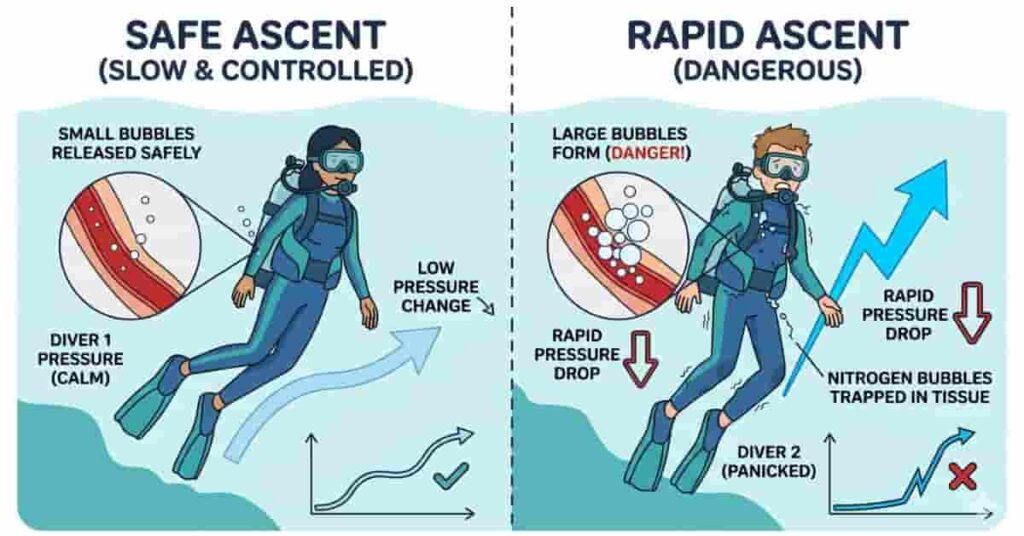
Decompression sickness, often called “the bends,” happens when nitrogen bubbles form inside the body after a dive. This condition develops when a diver ascends too quickly, and the pressure changes too fast underwater. Many beginners wonder what causes the bends, especially during recreational scuba dives.
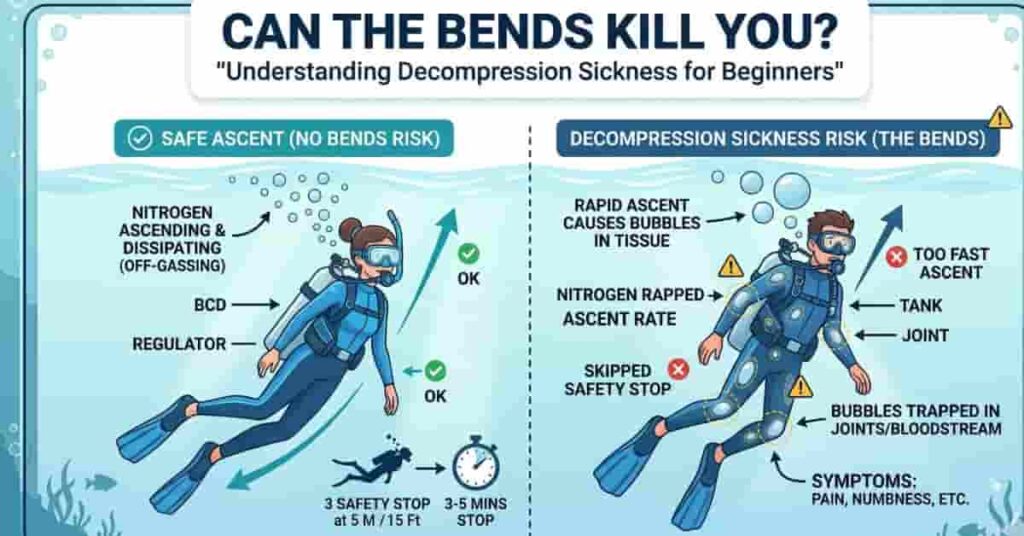
When divers breathe compressed air underwater, the body absorbs extra nitrogen because of the increased pressure at depth. The deeper and longer the dive, the more nitrogen enters body tissues. During a slow ascent, the body safely releases this nitrogen through breathing.
Problems start when divers rise too fast. Rapid ascents do not give the body enough time to properly remove nitrogen. Instead, bubbles can form in the bloodstream and tissues. These bubbles may cause pain, dizziness, numbness, or more serious complications.
Mild scuba diving decompression sickness often causes joint pain, fatigue, or skin irritation. Severe cases can affect the brain, lungs, or spinal cord. In rare situations, severe decompression sickness becomes life-threatening without quick treatment.
Recreational divers usually face lower risks because they follow depth limits and safety procedures. Technical divers often spend longer periods at deeper depths, which increases decompression stress on the body.
Modern scuba training teaches divers how to avoid decompression sickness through safe ascent rates and safety stops. Dive computers also help monitor depth and ascent speed during dives.
Pro Tip
Always ascend slowly, even during shallow dives. A controlled ascent is one of the best ways to prevent nitrogen bubbles from forming.
Key Takeaways
- Decompression sickness happens when nitrogen bubbles form after a rapid ascent.
- The bends can range from mild joint pain to severe neurological problems.
- Slow ascents help the body safely release nitrogen.
- Recreational divers face lower risks when following proper dive safety practices.
- Dive computers and safety stops greatly reduce DCS risk.
What Are the Risks of the Bends?
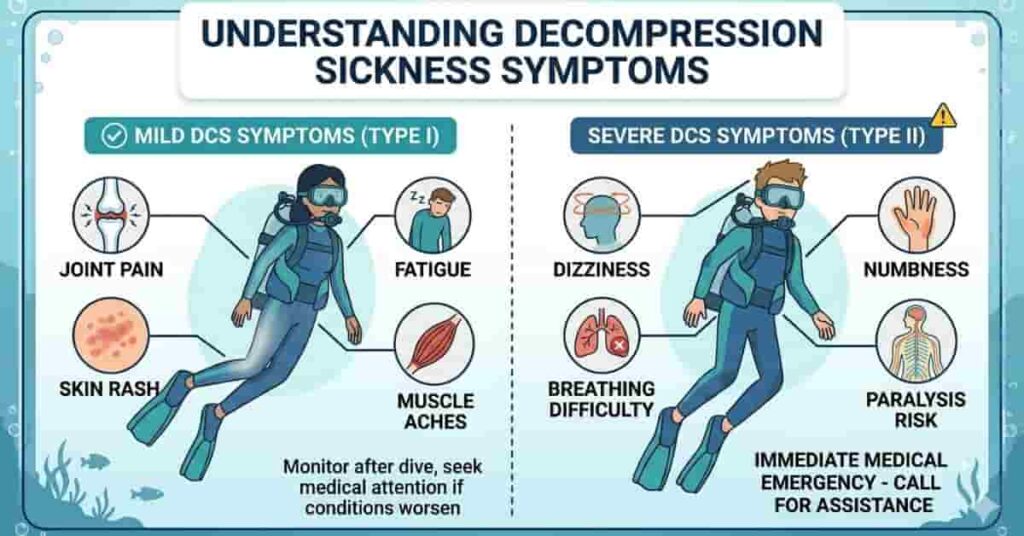
The risks of the bends can range from mild discomfort to serious medical emergencies. Symptoms depend on how many nitrogen bubbles form in the body and where they travel. Some divers notice problems shortly after surfacing, while others develop symptoms several hours later.
Mild decompression sickness symptoms often affect the joints, muscles, and skin. Many divers describe deep joint pain in the shoulders, elbows, or knees. Fatigue is also common after a problematic dive. Some people develop itchy skin, a rash, or unusual muscle aches that do not improve with rest.
More serious cases can affect the nervous system and lungs. Severe decompression sickness may cause numbness, dizziness, or difficulty walking. Some divers experience breathing problems or chest pain if bubbles affect circulation. In rare situations, paralysis or unconsciousness can occur without emergency treatment.
Several factors increase the risk of the bends. Rapid ascents are among the biggest causes because the body cannot safely release nitrogen. Deep dives also increase nitrogen absorption due to higher underwater pressure. Repeated dives in a single day may increase decompression stress, especially with short surface intervals.
Dehydration can reduce circulation efficiency, potentially increasing DCS risk. Poor dive planning also creates problems for beginners. Exceeding depth limits, skipping safety stops, or ignoring dive computer warnings can all increase the chance of severe decompression sickness.
How Common Is Fatal Decompression Sickness?
Many beginners worry that fatal cases of decompression sickness happen often. In reality, fatal DCS is rare in recreational scuba diving. Most recreational divers never experience severe symptoms when following safe diving practices.
Serious cases usually involve ignored warning signs, unsafe ascent speeds, or dives beyond training limits. Delayed treatment can also make symptoms much worse. Modern scuba education, improved dive planning, and reliable dive computers have significantly reduced serious injuries over the years.
Organizations like PADI and DAN teach divers how to recognize symptoms early and respond safely.
Pro Tip
Never ignore unusual pain or dizziness after a dive. Early treatment often prevents severe complications from worsening.
Following proper ascent procedures can help prevent many long-term side effects associated with scuba diving.
When Decompression Sickness Becomes Dangerous
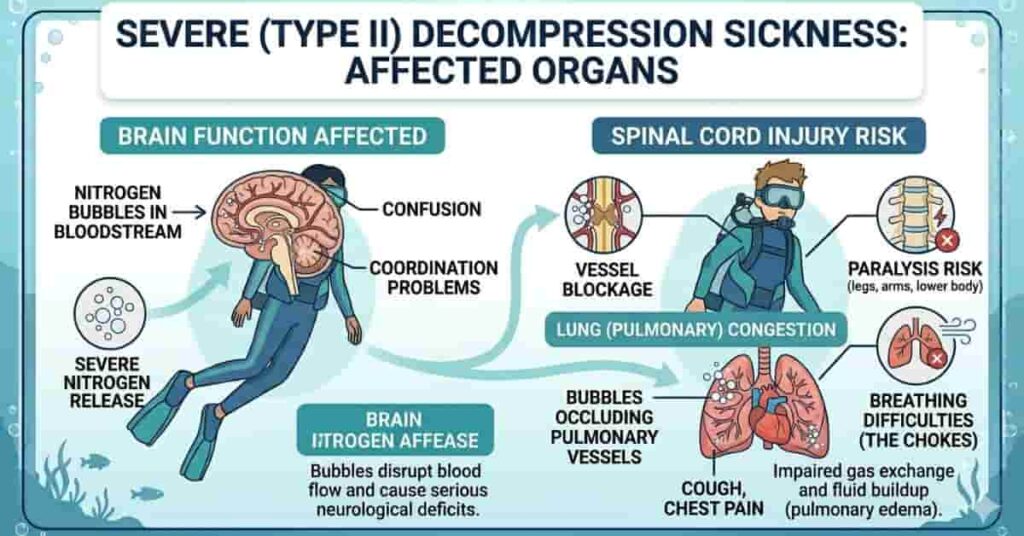
Most cases of decompression sickness stay mild when divers seek treatment early. However, severe decompression sickness can become dangerous if nitrogen bubbles affect critical organs. This is why divers should never ignore unusual symptoms after surfacing.
Neurological DCS affects the brain and nervous system. Divers may feel confused, dizzy, or unable to focus clearly. Some people lose coordination or struggle to walk normally. In serious cases, symptoms may resemble a stroke, including weakness on one side of the body or difficulty speaking.
Spinal cord decompression sickness is another serious condition. Nitrogen bubbles can interrupt nerve signals and damage sensitive tissues. Divers may experience numbness, tingling, or weakness in the legs. Without fast treatment, paralysis or long-term nerve damage can occur.
Cardiopulmonary DCS affects the lungs and circulation. This form can cause chest pain, breathing difficulty, or severe fatigue. Some divers feel short of breath even while resting. Dangerous diving emergencies may develop if bubbles block blood flow or reduce oxygen delivery in the body.
Immediate treatment matters because symptoms can worsen quickly. Delayed medical care increases the risk of permanent complications. Hyperbaric oxygen therapy is most effective when treatment begins early.
Some fatal decompression sickness cases involve divers who ignored early warning signs after a rapid ascent. In other situations, divers delayed seeking medical help because symptoms first seemed mild. There have also been emergencies where poor dive planning or panic during ascent increased decompression stress dramatically.
Modern scuba training helps divers recognize symptoms before they become life-threatening. Recreational divers who follow safety procedures rarely experience severe outcomes.
Expert Tip
If symptoms appear after diving, contact DAN or emergency medical services immediately. Early action can prevent serious complications.
Early Warning Signs Beginners Should Never Ignore
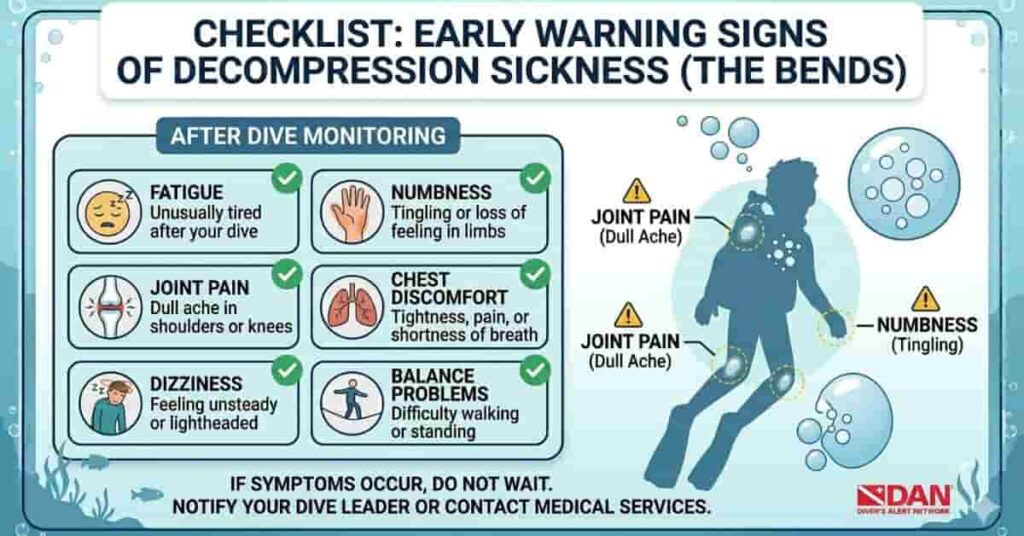
Many beginners expect decompression sickness symptoms to appear immediately after a dive. However, bend symptoms can develop slowly and may seem mild at first. Some divers notice problems within minutes, while others experience DCS symptoms several hours after diving.
Recognizing the early signs of decompression sickness is extremely important. Quick treatment often prevents symptoms from worsening. Even mild discomfort after diving should never be ignored, especially after a deep or rapid ascent.
Common Early Signs of Decompression Sickness
- Unusual fatigue after diving
- Persistent joint pain
- Muscle aches or weakness
- Tingling or numbness
- Dizziness or lightheadedness
- Balance or coordination problems
- Shortness of breath
- Chest discomfort
- Skin rash or itching
- Confusion or trouble focusing.
Some symptoms may appear mild at first. A diver might only feel tired or slightly dizzy after surfacing. In other cases, symptoms worsen gradually over several hours. This delay often causes beginners to underestimate the seriousness of the condition.
Joint pain remains one of the most common bends symptoms in recreational diving. Neurological symptoms, such as numbness or balance problems, usually require urgent medical attention. Breathing difficulty or chest pain should always be treated as a diving emergency.
Important Note
Signs of decompression sickness can appear:
- Immediately after a dive
- Several hours later
- After repeated dives in one day
Because symptoms vary between divers, it is safest to seek medical advice whenever unusual symptoms develop after scuba diving.
Emergency Response & Treatment for the Bends
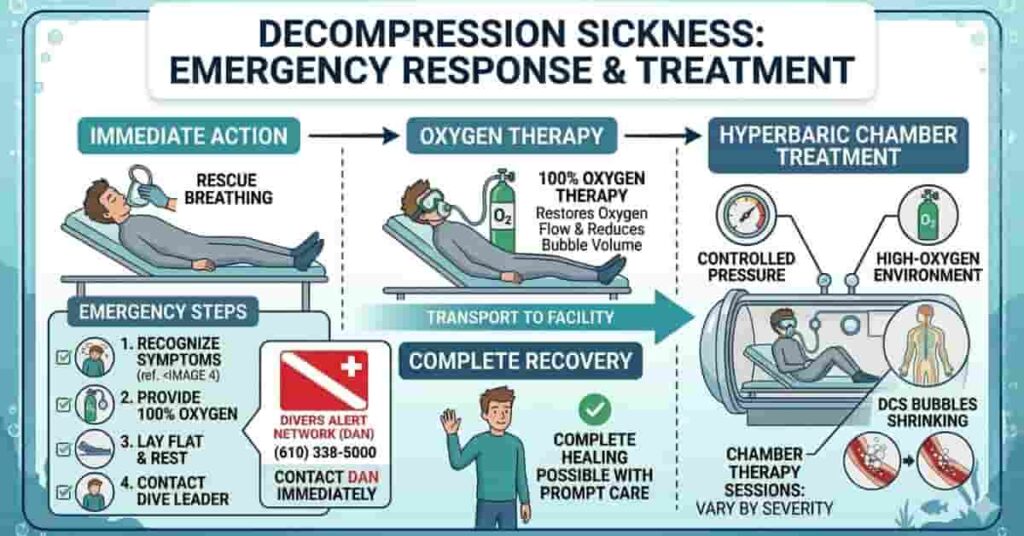
Fast action is critical during diving emergencies involving decompression sickness. Early treatment greatly improves recovery and reduces the risk of long-term complications. Even mild symptoms should be taken seriously after a scuba dive.
What To Do Immediately
If you suspect decompression sickness, stop diving immediately. Do not enter the water again until a medical professional clears you to dive safely.
Follow these emergency steps as quickly as possible:
- Seek emergency medical help.
- Contact DAN for diving medical guidance.
- Administer oxygen if properly trained.
- Keep the diver hydrated.
- Monitor symptoms closely
- Avoid flying or traveling to high altitudes.
- Keep the diver resting comfortably.
Oxygen plays an important role in emergency treatment for decompression sickness. It helps improve oxygen delivery while reducing nitrogen levels in the body. Many dive boats and training centers carry emergency oxygen kits for this reason.
One common mistake is ignoring symptoms and hoping they will go away. Some divers feel mild pain at first, then develop serious symptoms later. Never use a “wait and see” approach if symptoms worsen after diving.
How Hyperbaric Oxygen Therapy Works
Doctors often treat severe decompression sickness with hyperbaric chamber treatment. This therapy uses a recompression chamber to safely increase pressure around the diver’s body.
Inside the chamber, the diver breathes pure oxygen under controlled pressure. This process helps shrink nitrogen bubbles and improves circulation to damaged tissues. Treatment also increases oxygen delivery to the brain, nerves, and organs affected by DCS.
Many divers recover fully when they receive early hyperbaric oxygen therapy. Recovery depends on symptom severity and the speed with which treatment begins. Delayed care increases the risk of permanent nerve damage or other serious complications.
Modern dive medicine and emergency response systems have greatly improved survival and recovery outcomes for recreational divers.
Pro Tip
Always know the nearest emergency contact and hyperbaric facility before diving. Smart dive planning includes emergency preparation.
Why Recreational Divers Rarely Experience Fatal DCS
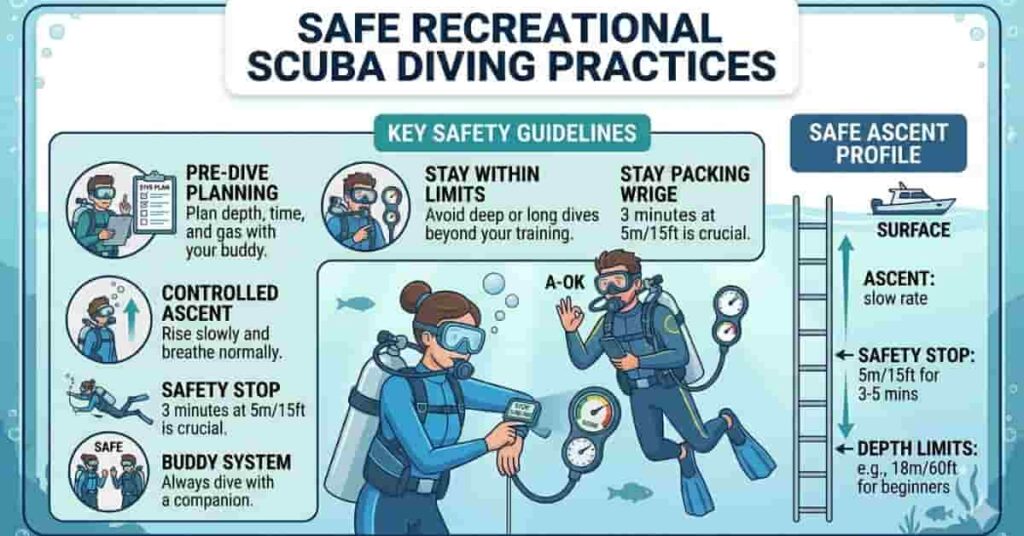
Many beginners worry about fatal diving accidents after learning about decompression sickness. The good news is that most recreational divers never experience serious DCS when following safe practices. Modern scuba diving safety standards have made recreational diving much safer than many people realize.
One major reason is improved scuba education. Beginner divers learn safe ascent techniques, dive planning, and emergency procedures during certification courses. Training organizations like PADI and DAN teach divers how to reduce decompression stress before they enter open water.
Modern dive computers also play a huge role in safe recreational diving. These devices track depth, dive time, ascent speed, and safety stop recommendations in real time. Many computers alert divers when they ascend too quickly or approach no-decompression limits. This technology helps beginners make safer decisions underwater.
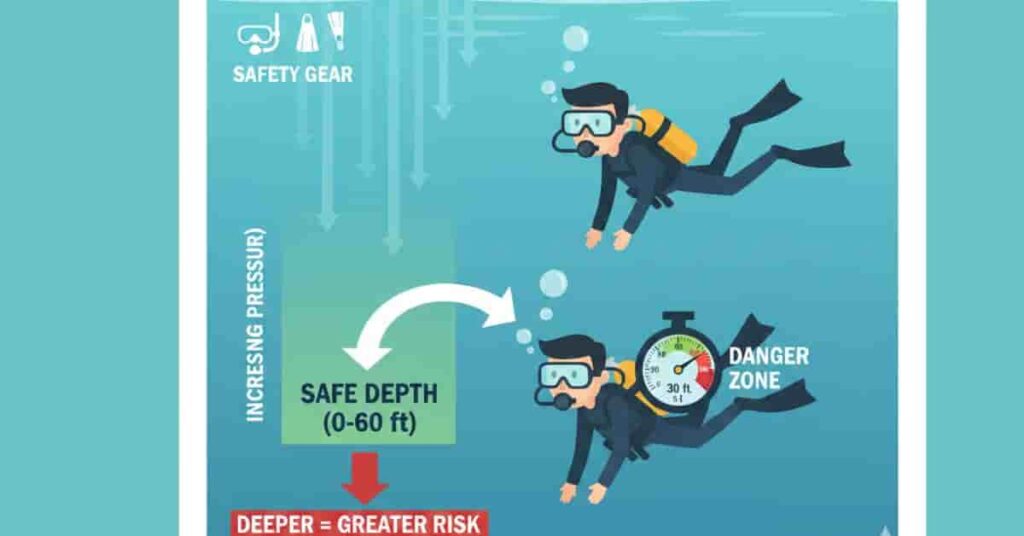
Recreational divers also follow conservative depth limits. Most beginner dives stay within controlled depth ranges that reduce decompression risk. Technical divers often go much deeper and stay underwater longer, significantly increasing nitrogen exposure.
Safety stops provide another important layer of protection. Divers usually pause near the surface for several minutes before fully ascending. This extra time helps the body release nitrogen more safely and lowers DCS risk.
Instructor supervision also improves beginner scuba safety. New divers practice buoyancy control, safe ascents, and emergency procedures with trained professionals before diving independently.
Careful dive planning further reduces problems. Responsible divers avoid rushing ascents, monitor air supply closely, and stay hydrated before diving. These simple habits greatly lower the chances of severe decompression sickness.
While no sport is completely risk-free, recreational scuba diving has a strong safety record when divers follow proper training and guidelines.
Expert Tip
Always dive within your certification level and comfort zone. Conservative diving habits help beginners build skills safely over time.
Beginner Scuba Risk Management Tips
Good diving habits greatly reduce the risk of decompression sickness. Most beginner scuba risk management starts before entering the water. Simple preparation steps can improve safety, comfort, and confidence during every dive.
Before Diving
Proper preparation helps your body handle pressure changes more safely underwater.
Follow these scuba diving safety tips before each dive:
- Stay hydrated throughout the day.
- Avoid alcohol before diving.
- Get enough sleep the night before
- Review your dive plan carefully.
- Check your gear before entering the water.
Dehydration and fatigue may increase decompression stress. Tired divers also make more mistakes underwater. Reviewing the dive plan helps beginners understand depth limits, ascent procedures, and emergency steps before the dive begins.
During Diving
Safe underwater habits are among the best ways to prevent decompression sickness.
Important diving practices include:
- Ascend slowly at all times.
- Monitor your air supply regularly.
- Stay within training and depth limits.
- Perform safety stops before surfacing.
- Stay calm and avoid rushing underwater.
Rapid ascents remain one of the biggest causes of decompression sickness. A slow, controlled ascent gives the body more time to safely release nitrogen. Safety stops near the surface provide extra protection, especially after deeper dives.
Monitoring your dive computer also helps track depth, bottom time, and ascent speed. Many beginners rely on instructors at first, but learning to read your own dive data is an important skill.
After Diving
Scuba safety continues even after leaving the water.
After diving:
- Avoid flying too soon after dives.
- Watch for unusual symptoms.
- Rest and rehydrate properly.
- Report concerning symptoms immediately
Some DCS symptoms appear hours after diving. Paying attention to your body helps catch problems early.
Beginner Training Tips
Strong training habits improve long-term diver safety.
Beginners should:
- Dive with certified instructors.
- Use a reliable dive computer.
- Practice buoyancy control regularly.
- Log dives to track experience and conditions.
Dive logs help beginners learn from each dive and recognize patterns over time. Experienced divers often review old dive logs to improve future planning.
Can You Recover Fully From the Bends?
Many beginners ask, “Can you survive the bends?” In many cases, the answer is yes. A large number of divers recover fully from decompression sickness when they receive treatment early. Fast medical care often prevents symptoms from becoming permanent.
Recovery from decompression sickness depends on several important factors. The severity of symptoms plays a major role. Mild cases involving joint pain or fatigue usually improve more quickly than those involving neurological or spinal cord injuries.
Treatment speed also matters. Divers who receive oxygen and hyperbaric therapy quickly often have better outcomes. Delayed treatment allows nitrogen bubbles to continue damaging tissues and nerves. This increases the risk of long-term effects of DCS.
The affected organs can also influence recovery time. Some divers recover within days after mild symptoms. Others may need weeks or months of rehabilitation if the nervous system or lungs were affected.
Severe decompression sickness sometimes causes lasting complications, especially when treatment is delayed. Possible long-term effects may include:
- chronic joint pain
- nerve damage
- weakness or numbness
- balance problems
- memory or concentration difficulties
These serious outcomes are much less common in recreational divers who follow safe diving practices and seek immediate treatment.
Prompt medical attention greatly improves the chances of recovery. This is why divers should never ignore symptoms after a dive, even if they seem minor at first. Early recognition and proper care remain the best protection against permanent injury.
Modern scuba training and emergency response systems have also improved recovery outcomes over the years. Recreational divers who dive conservatively and follow safety guidelines rarely experience severe long-term complications.
Expert Tip
Report unusual symptoms immediately after diving, even if they seem mild. Early treatment often leads to faster and more complete recovery.
Conclusion
Understanding whether the bends kill you helps beginner divers separate real risks from common diving fears. We covered what decompression sickness is, warning signs to watch for, emergency treatment, and simple ways to stay safe underwater.
Some divers first notice symptoms that resemble common scuba diving breathing problems and discomfort underwater.
While the bends can be serious and occasionally fatal, proper training and safe diving practices make severe cases rare in recreational scuba diving. Safe ascent habits, safety stops, dive planning, and symptom awareness greatly reduce the risk of severe decompression sickness.
Modern scuba education and dive computers have also improved scuba diving safety for beginners across the USA. The key is diving conservatively and never ignoring unusual symptoms after a dive.
Want to learn more about decompression sickness prevention and beginner scuba safety? Explore our related scuba safety guides and share this article with new divers who may find it helpful.

Scuba Diving Researcher & Beginner Guide
Evan Calder is the creator of DiveBeginner, a website dedicated to helping beginners learn scuba diving simply and practically 🌊
He focuses on scuba fundamentals, beginner safety, and clear diving guidance. Evan has studied ocean and marine science through programs at the Scripps Institution of Oceanography, UC San Diego, a globally recognized leader in ocean research.
Instead of complex technical language, Evan provides easy-to-follow, beginner-friendly guides based on real-world research, helping first-time divers feel confident before their first dive 🤿
DiveBeginner reflects his passion for making scuba diving accessible, safe, and enjoyable for everyone.