Introduction
You must never hold your breath while scuba diving.
Beginners in the USA often ask this before their first dive. This practice poses a significant safety risk underwater. Even a brief breath hold during ascent can cause serious lung injury due to expanding air.
Never hold your breath while scuba diving. This is the foremost rule in every scuba training course and applies to all divers. Comprehending this rule is essential for safety and confidence underwater.
This guide provides precise information on physiological changes underwater, the rationale behind this rule, and methods to avoid mistakes such as holding your breath. You will be equipped to dive safely with confidence and knowledge.
Learning how to breathe correctly while scuba diving helps beginners stay calm, avoid panic, and maintain safe air control underwater.
Why You Can’t Hold Your Breath While Scuba Diving
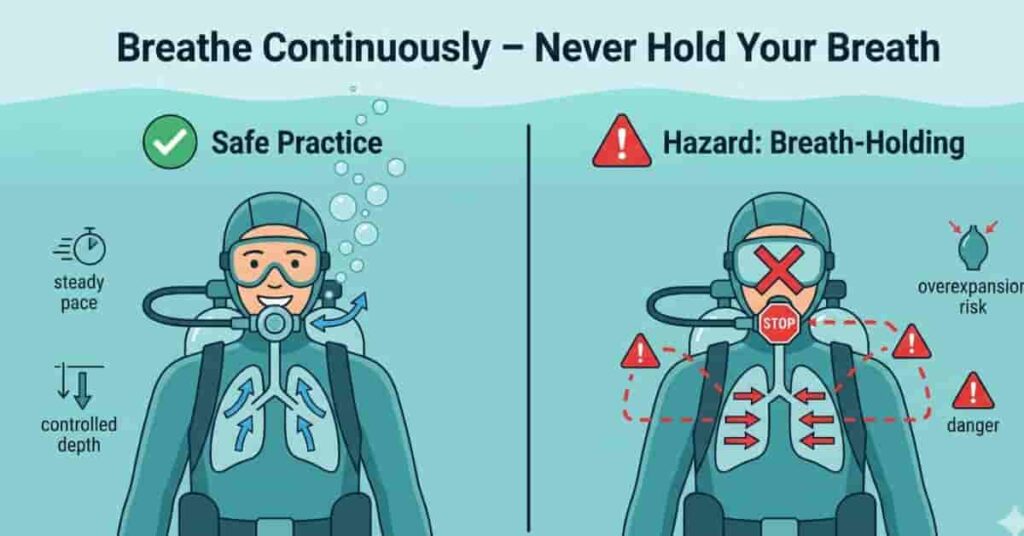
The essential scuba diving rule: always breathe, never hold your breath.
Training agencies like PADI and SSI build this rule into all entry-level courses. It’s not just advice—it’s a strict safety standard. When divers ask why they can’t hold their breath while scuba diving, the answer comes down to basic science.
This rule is based on fundamental gas laws taught in every Open Water Diver course. As you move underwater, changes in pressure affect the air in your lungs. If you hold your breath, that air can expand in dangerous ways.
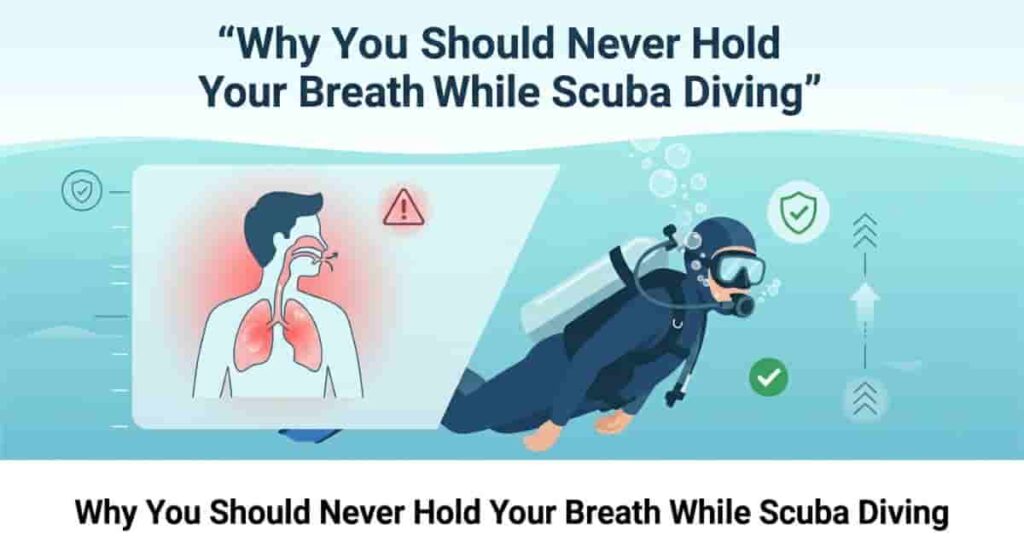
During ascent, the surrounding water pressure decreases, causing the air in your lungs to expand. If you don’t exhale, the expanding air can put excess pressure on your lungs, potentially causing injury. That’s why relaxed, continuous breathing is a requirement for safety.
Pro Tips
- Keep a slow, steady breathing rhythm at all times.
- Never pause your breath, even for a second, during ascent.
- Stay calm and focus on smooth, natural breathing underwater.
Takeaways
- Always breathe—never hold your breath underwater.
- Major training groups worldwide require this rule.
- Continuous breathing keeps you safe and protects your lungs.
What Happens Inside Your Body
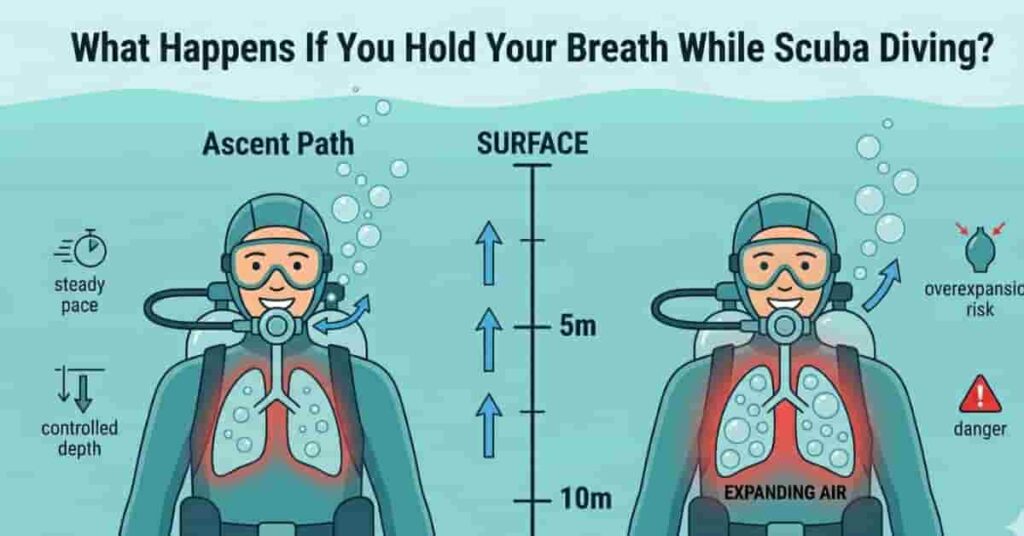
If you’re wondering what happens if you hold your breath while scuba diving, the answer lies in how your body reacts to pressure changes underwater. Your lungs hold air that expands and contracts as you move. When you hold your breath, that natural process gets blocked.
Even small changes in depth can affect the air in your lungs. This is why controlled, steady breathing is essential on every dive. Let’s break down what actually happens inside your body.
Air Expands as You Ascend (Boyle’s Law)
As you descend underwater, the pressure increases, compressing the air in your lungs. As you ascend, the opposite happens—the air expands. This is explained by Boyle’s Law in simple terms.
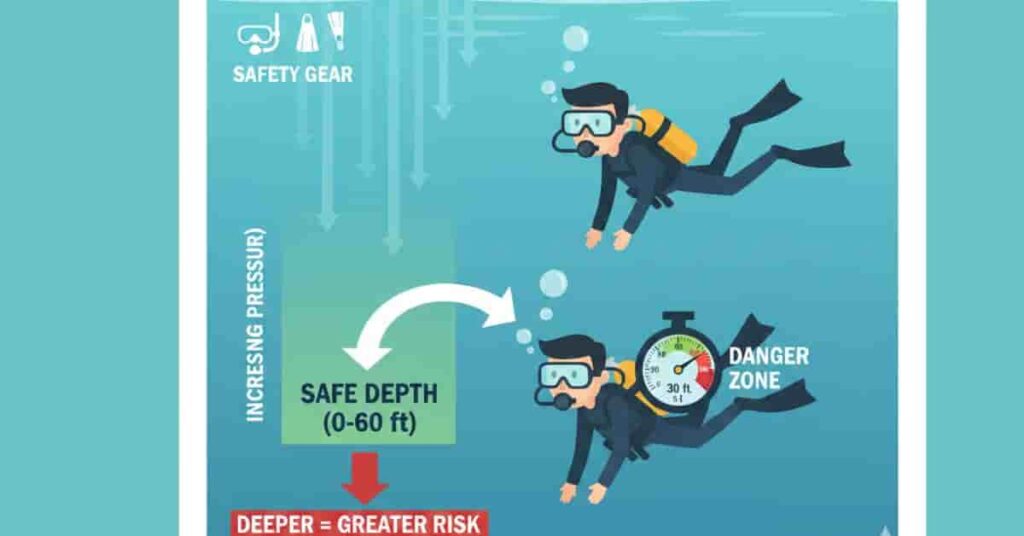
For example, at 10 meters (33 feet), the air in your lungs is compressed to about half its surface volume. As you rise back up, that air expands again. If you keep breathing normally, your body safely releases the expanding air.
The problem starts when you hold your breath. The expanding air has nowhere to go, so pressure builds inside your lungs. Even a small ascent can cause this pressure to rise quickly, which is why continuous breathing is critical.
Lung Overexpansion Injury (Pulmonary Barotrauma)
When pressure builds inside the lungs, it can lead to a condition called pulmonary barotrauma. This happens when the tiny air sacs in your lungs, called alveoli, stretch too far and rupture.
Once this occurs, air can escape into areas where it shouldn’t be, like the chest cavity. This can affect breathing and cause serious complications if not treated quickly.
Many beginners think this only happens at great depths, but that’s not true. Lung overexpansion injuries can occur even in shallow water if you hold your breath during ascent. That’s why the rule applies at all depths, not just deep dives.
Air Embolism Risk (Serious but Preventable)
One of the most serious risks is an air embolism. This happens when air bubbles enter the bloodstream after lung damage. These bubbles can travel through the body and block blood flow.
If they reach the brain, they can cause life-threatening complications. While this sounds serious, it’s also highly preventable with proper breathing habits.
The key takeaway is simple: keep breathing continuously and never hold your breath. This allows your body to safely manage pressure changes, keeping your dive controlled and safe.
Pro Tips
- Exhale gently as you ascend, even during small depth changes.
- Avoid rapid ascents; move slowly and stay aware of your breathing.
- Practice calm breathing patterns before and during your dive.
Understanding your scuba diving breathing equipment for beginners, including tanks and regulators, makes this critical safety rule much easier to follow.
Even a Brief Breath Hold Can Be Dangerous
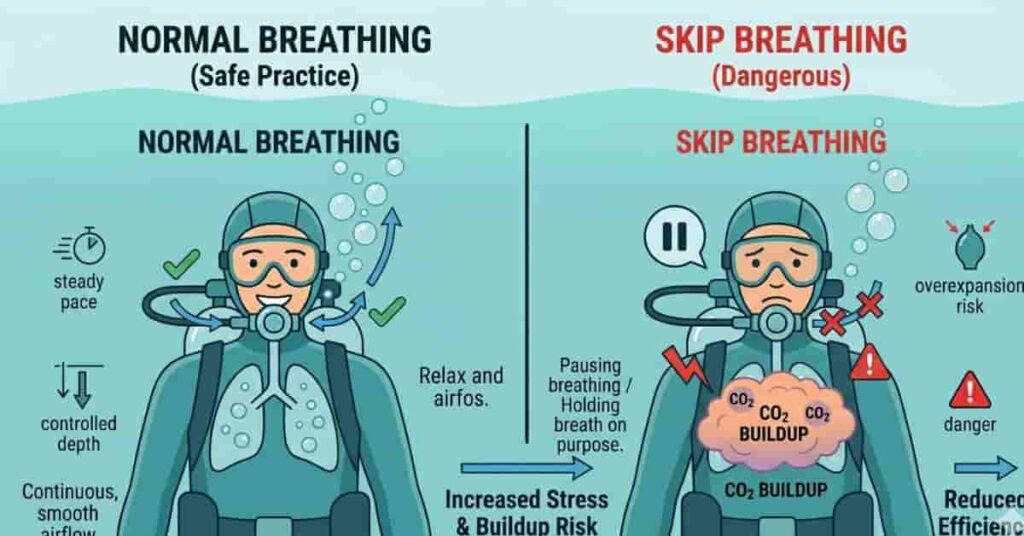
You don’t need to hold your breath for long to create a problem underwater. Even a short pause can increase pressure inside your lungs. This is a key reason why you can’t hold your breath while scuba diving—the risk starts faster than most beginners expect.
Imagine you rise just a few feet during an ascent. That small movement can cause the air in your lungs to expand quickly. If you’re not exhaling, that expanding air has nowhere to go. Even a 1–2 second breath hold can be enough to create unsafe pressure.
There’s also a mental side to this. Many divers don’t realize they’re holding their breath. It often happens during stress, task overload, or sudden movement. You might focus on your gear or surroundings and pause your breathing without noticing.
This is why awareness matters as much as technique. Staying calm and keeping a steady breathing rhythm helps prevent these small but risky moments. Safe diving isn’t about big mistakes—it’s about avoiding tiny ones that add up.
Understanding Skip Breathing
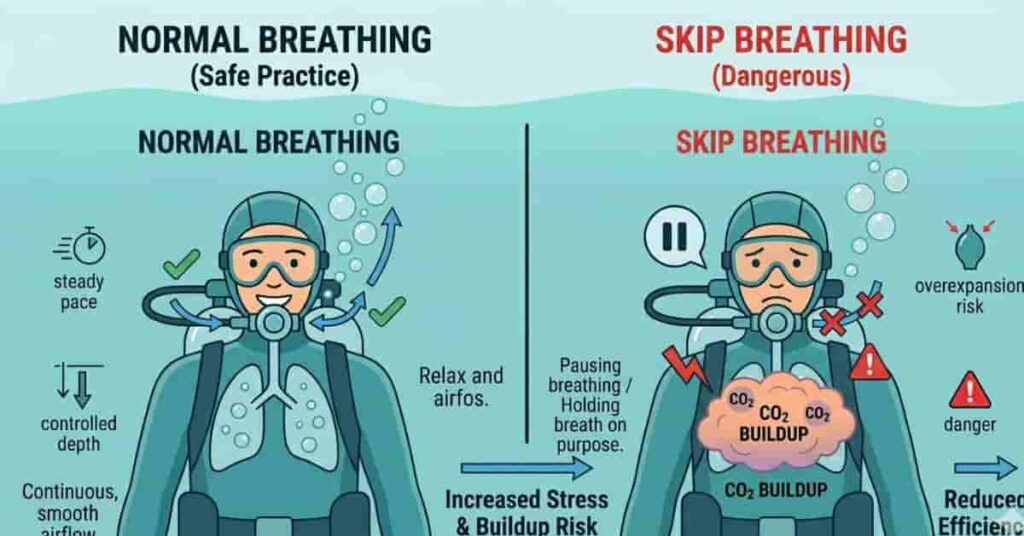
Skip breathing scuba refers to the habit of pausing between breaths to “save air.” Some divers try this to make their tank last longer. It may sound smart, but it’s actually unsafe and ineffective.
Beginners often pick up this idea from other divers or online tips. The logic seems simple: breathe less, use less air. But your body doesn’t work that way underwater. In reality, skip breathing does not conserve air in any meaningful way.
Instead, it disrupts your natural breathing rhythm. When you pause your breath, carbon dioxide (CO₂) starts to build up in your body. This can make you feel uncomfortable and stressed.
Risks of Skip Breathing
The biggest problem with skip breathing scuba is its impact on your body and mind. As CO₂ levels rise, your urge to breathe increases. This can lead to:
- Dizziness or lightheadedness
- A feeling of air hunger
- Increased stress and panic
- Faster, uncontrolled breathing
These effects can make you use more air, not less. It can also break your focus and reduce your control underwater. Over time, this creates unsafe breathing patterns that are hard to manage.
The safest approach is simple: breathe slowly, deeply, and continuously. A relaxed breathing rhythm helps your body stay balanced and keeps your dive calm and controlled.
Common Situations Where Divers Accidentally Hold Their Breath
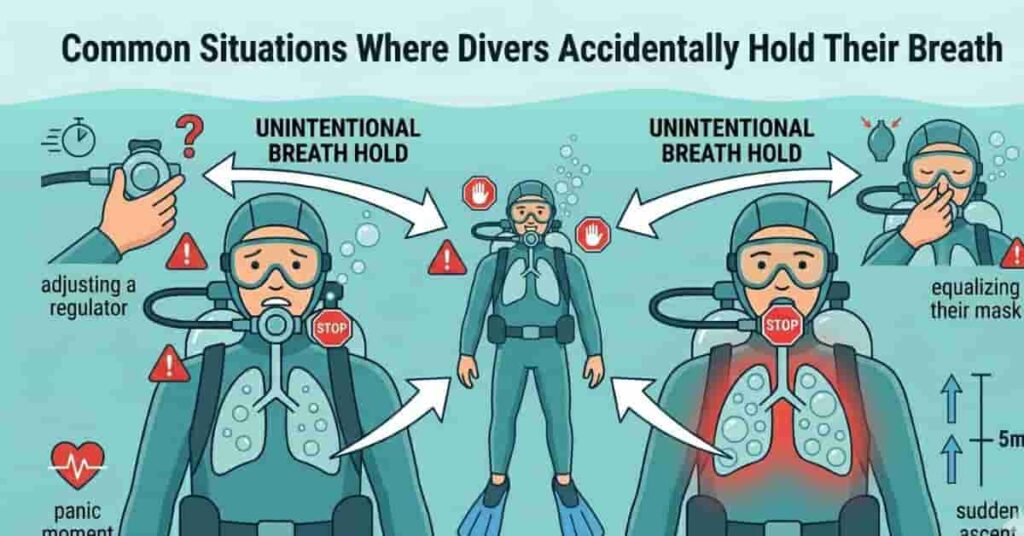
Most divers don’t plan to hold their breath. It often happens in small, stressful moments underwater. Knowing these situations helps you stay aware and prevent mistakes.
Panic or anxiety is the most common trigger. When something feels wrong, your body may tense up and pause breathing. This can happen even on easy dives.
Another moment is when you remove or adjust your regulator. Some beginners instinctively hold their breath during this step. The same goes for equalizing your mask or clearing water.
Task overload can also play a role. When you focus on multiple things—buoyancy, gear, and surroundings—you may forget your breathing rhythm. Even a brief lapse can matter.
Sudden ascent moments are especially risky. If you rise unexpectedly and hold your breath, pressure can build quickly in your lungs.
The key is simple: awareness = prevention. When you recognize these situations, you can stay calm and keep breathing steadily.
Does This Rule Apply at the Surface?
Many beginners wonder whether this rule applies only underwater. The short answer is: it depends on the situation. When you’re at the surface without scuba gear, like snorkeling or swimming, holding your breath is generally safe for short periods.
However, things change once you’re using scuba equipment. Even near the surface, your lungs contain compressed air from the tank. This means pressure changes still affect your body. So the rule—never hold your breath—still applies when diving with scuba gear.
The key risk comes during ascent. Any upward movement underwater, even a few feet, causes the air in your lungs to expand. If you hold your breath during this time, pressure can build quickly and become dangerous.
This is why divers are trained to breathe continuously at all times, not just at deeper depths. Understanding this clears up a common beginner mistake and helps you stay safe in every diving situation.
Pro Tips
- Treat every dive the same, even in shallow water.
- Keep breathing steadily, whether deep or shallow.
- Don’t switch habits between snorkeling and scuba diving.
Practical Prevention Tips
The best way to stay safe underwater is to build strong breathing habits before and during your dive. If you understand why you can’t hold your breath while scuba diving, prevention becomes much easier.
Start with slow, continuous breathing. Keep your breath calm and steady, rather than short or rushed. This helps your body stay relaxed and reduces the chance of accidental breath holding.
Never rush your ascent. Rising too quickly increases the risk of pressure changes in your lungs. Always move slowly and follow your training guidelines.
Maintain neutral buoyancy so you don’t float up or sink unexpectedly. Good buoyancy control keeps your movement stable and reduces panic situations underwater.
Stay relaxed and aware throughout the dive. Most breath-holding mistakes happen when divers feel stressed or distracted. Focus on your breathing first, everything else second.
Before your dive, practice your breathing rhythm on the surface. This helps your body adapt and makes it easier to maintain control underwater.
If you want to improve further, you can explore our breathing techniques guide and beginner scuba safety guide for more detailed training tips.
Pro Tips
- Practice slow breathing before every dive.
- Keep your ascent controlled and unhurried.
- Build buoyancy skills to reduce stress underwater.
Takeaways
- Controlled breathing prevents most dive-related mistakes.
- Buoyancy and calm movement reduce the risk of panic.
- Preparation on land improves safety underwater.
What Certified Instructors Teach About Breath Control
Certified instructors treat breath control as one of the most important scuba skills. It’s not just a rule you memorize—it’s a habit you build through training and repetition. This is why can’t you hold your breath while scuba diving is always explained early in every course.
Training programs from agencies like PADI and SSI include hands-on drills to build safe breathing habits. Students practice controlled ascents, rising slowly while focusing on a steady exhalation. This helps them feel how even small pressure changes affect their lungs.
Instructors also use simple breathing exercises during confined water training. These exercises help beginners stay calm, avoid panic, and maintain a natural breathing rhythm underwater. The goal is to make continuous breathing feel automatic, even in stressful situations.
One important real-world insight instructors often share is this: students are surprised by how little ascent is needed to feel air expansion. Even a small upward movement can create noticeable pressure changes if breathing is not controlled.
This is why training focuses on practice rather than just theory. Divers don’t just hear the rule—they experience it in a safe environment until it becomes second nature.
Conclusion
In this article, we explained why holding your breath underwater is extremely dangerous for scuba divers. You also learned how expanding air affects your lungs and why proper breathing keeps you safe. We also covered common mistakes and safe diving habits for beginners.
The simple truth is that why can’t you hold your breath while scuba diving comes down to pressure changes that can quickly harm your lungs. Even a small mistake during ascent can lead to serious risks, but it is completely avoidable with the right training and awareness.
Always follow proper scuba training and build strong breathing habits before every dive. You can explore our breathing guide, equipment guide, and beginner safety guide for more helpful tips.
If this helped you, share it with other new divers or leave a comment with your experience. Safe diving starts with smart awareness.
Many new divers feel nervous, so these first-time scuba diving anxiety tips can help you build confidence before your first underwater experience.

Scuba Diving Researcher & Beginner Guide
Evan Calder is the creator of DiveBeginner, a website dedicated to helping beginners learn scuba diving simply and practically 🌊
He focuses on scuba fundamentals, beginner safety, and clear diving guidance. Evan has studied ocean and marine science through programs at the Scripps Institution of Oceanography, UC San Diego, a globally recognized leader in ocean research.
Instead of complex technical language, Evan provides easy-to-follow, beginner-friendly guides based on real-world research, helping first-time divers feel confident before their first dive 🤿
DiveBeginner reflects his passion for making scuba diving accessible, safe, and enjoyable for everyone.