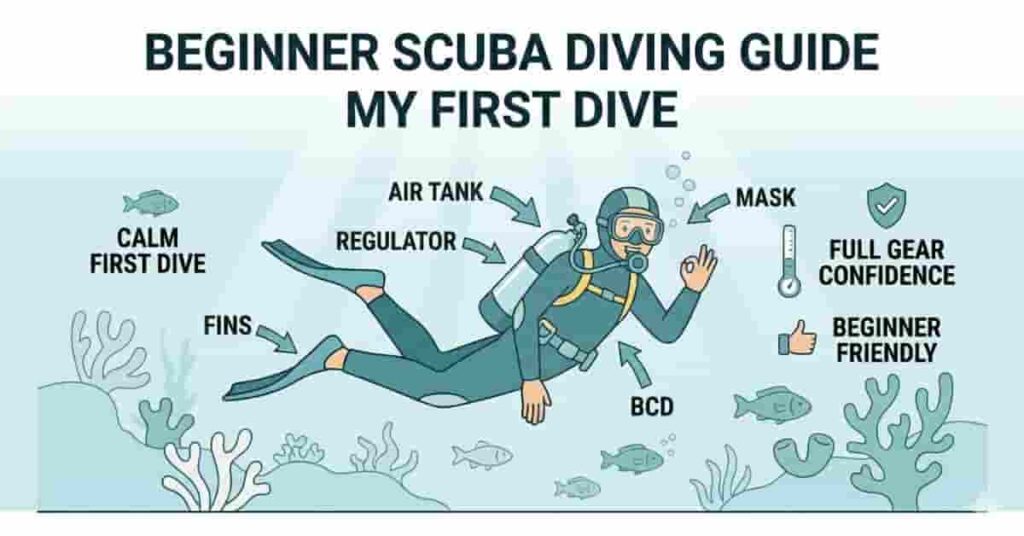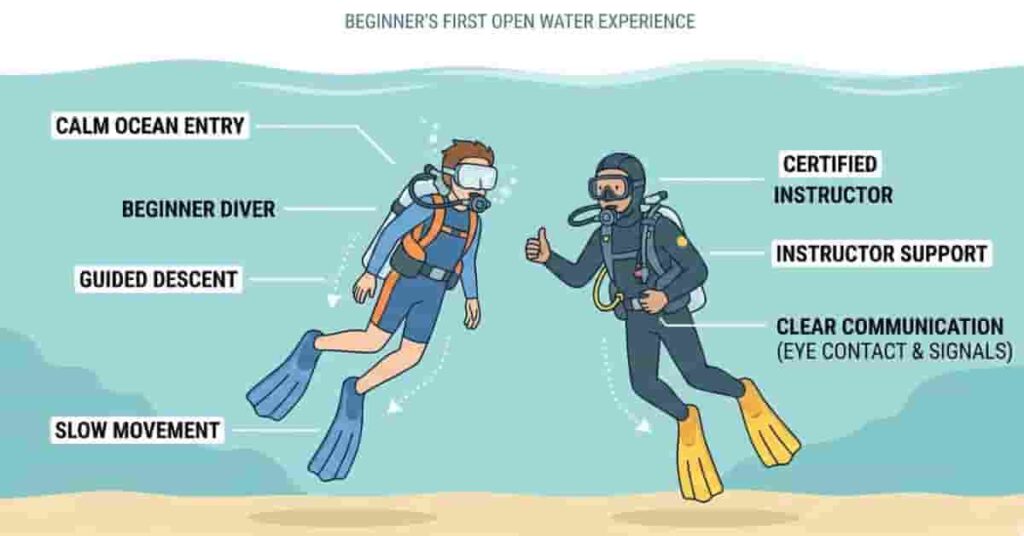
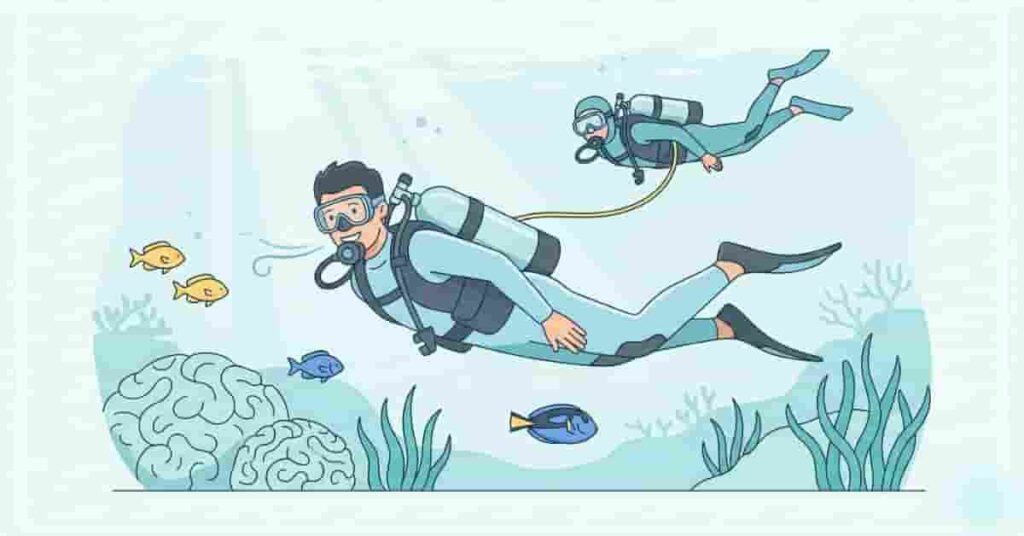
Introduction
Nervous about your first scuba dive? You’re not alone.
Many beginners in the USA feel real fear before going underwater. Thoughts about breathing, panic, or making mistakes can be overwhelming, along with worries about side effects like ear pain or nausea. This first dive fear is especially common when everything is new and unfamiliar.
The truth is, most of this anxiety comes from not knowing what to expect. With the right guidance, these fears become much easier to manage. That’s where Overcoming Fear & Anxiety on Your First Scuba Dive becomes so important for new divers.
In this guide, you’ll learn how to stay calm, avoid common mistakes, and handle anxiety step by step. You’ll also find simple tips and real-life examples to boost your confidence before you even enter the water. Dive into the guide now and take the first step toward a fearless underwater adventure!
For an overview of what to expect, check out our complete beginner’s guide to first-time scuba diving.
Common Fears for First-Time Divers
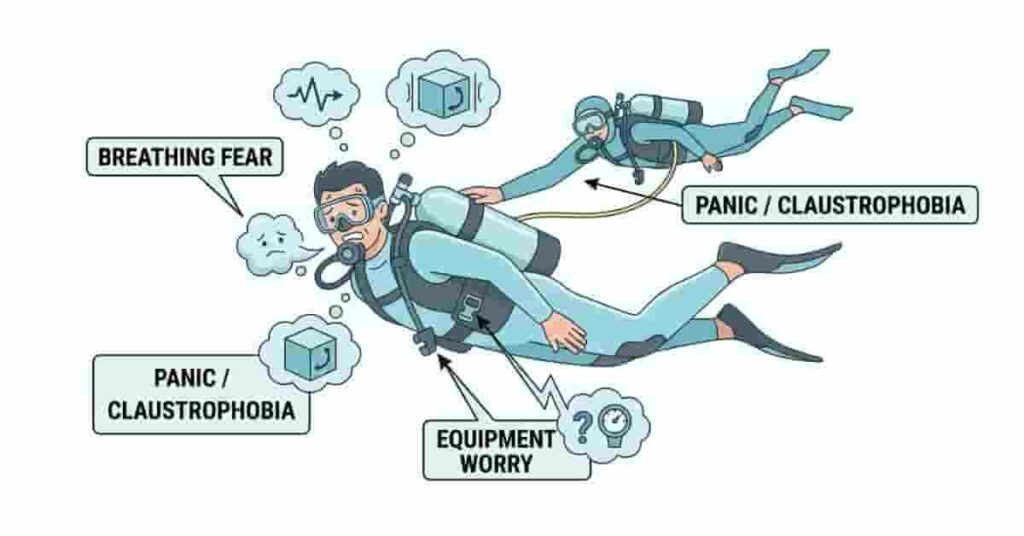
Many beginners feel nervous before their first dive, which is completely normal. Most fears come from the unknown. Once you recognise them, they’re easier to manage.
Fear of Breathing Underwater
The biggest first dive fear is simple—breathing underwater feels unnatural. Your mind may wander, “What if I can’t breathe?”
Scuba gear delivers air with every breath. The regulator works on demand, so you get air when you inhale. It may feel strange at first.
Give yourself time to adjust. Take slow, deep breaths and focus on relaxing your body. Within minutes, most beginners feel comfortable and in control.
Panic or Claustrophobia
Some divers experience first-time scuba diving panic, especially when wearing a mask and gear. The feeling of being underwater can trigger mild claustrophobia.
This usually happens when breathing becomes fast or shallow. Your body reacts, even if there’s no real danger.
To stay calm:
- Breathe slowly and steadily.
- Focus on your instructor or surroundings.
- Use simple hand signals if you feel uneasy.
Remember, you’re never alone underwater. A trained instructor or buddy is always close by to support and help if you need it.
Fear of Equipment Failure or Getting Lost
Another common worry is gear failure or getting lost underwater. While it sounds scary, it’s very unlikely during a guided beginner dive.
Before entering the water, instructors carefully check all equipment. You’ll also learn basic safety rules and stay close to your group at all times.
Trust your training and follow instructions. These fears fade once you see how safe the environment is.
Takeaways
- First dive fear is normal and often comes from unfamiliar experiences.
- Breathing issues usually disappear with slow, steady breaths.
- Panic can be managed with simple techniques and support.
- Equipment and navigation risks are low in beginner dives.
Anxiety & How to Manage It
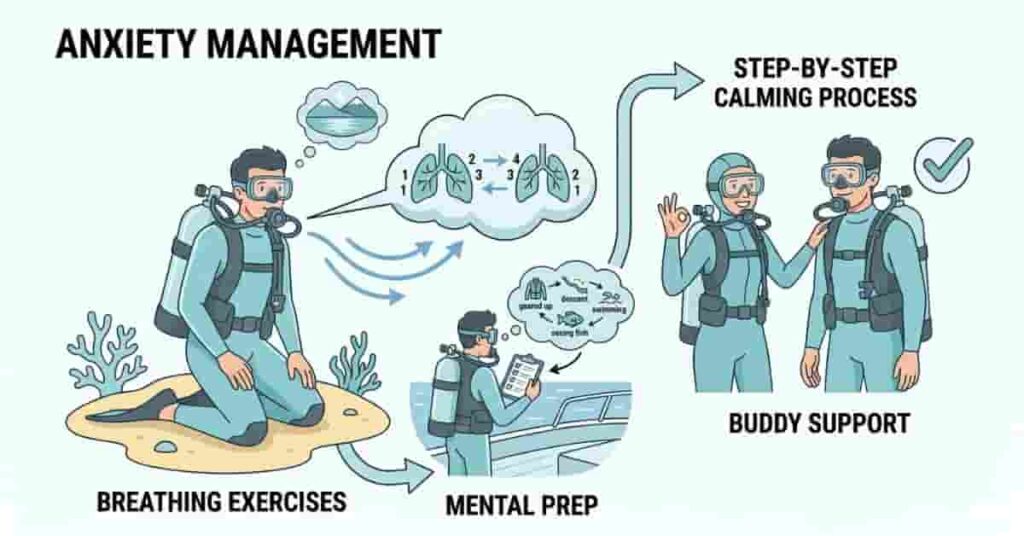
Feeling nervous before your first dive is completely normal. First-time scuba-diving anxiety often stems from uncertainty, not real danger. The good news? You can manage it with simple, proven techniques.
Mental Preparation Techniques
Your mindset shapes your experience underwater. Expecting fear leads to tension, but mental preparation helps you stay relaxed.
Start by learning what to expect during the dive. Knowing each step reduces surprises. You can also visualise a calm, smooth dive before entering the water.
Remind yourself: you’re trained, guided, and safe. This simple shift builds confidence quickly.
Breathing Exercises
Fast breathing can trigger anxiety, especially underwater. That’s why controlled breathing is one of the best ways to stay calm.
Try this before and during your dive:
- Inhale slowly through your mouth for 4 seconds.
- Exhale gently for 6 seconds.
- Keep your breathing steady and relaxed.
Slow breathing tells your body that everything is okay. It also helps you conserve air and stay in control.
Buddy System & Instructor Support
You’re never alone during a beginner dive—buddies and instructors support you throughout.
If you feel anxious, you can signal your instructor immediately. They’re trained to help you calm down and regain control.
Staying close to your buddy also builds confidence. Just knowing someone is there can instantly reduce stress.
Pro Tips
- Practice breathing exercises before entering the water.
- Talk to your instructor about any fears in advance.
- Keep eye contact with your buddy for reassurance.
- Focus on small steps instead of the whole dive.
Takeaways
- First-time scuba diving anxiety is common and manageable.
- Mental preparation reduces fear before the dive.
- Controlled breathing keeps you calm underwater.
- Support from your buddy and instructor boosts confidence.
Common Mistakes Beginners Make
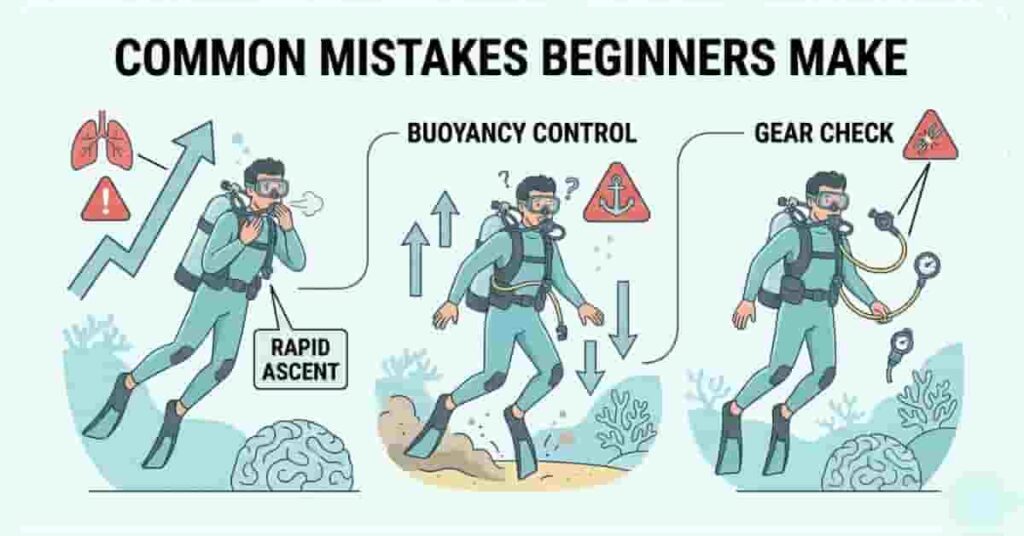
Your first dive is exciting, but small mistakes can impact comfort and safety. Most first dive errors stem from nerves or inexperience. Fortunately, you can avoid them with awareness and practice.
Rapid Ascent or Ignoring Equalisation
One common mistake is ascending too quickly. This can put pressure on your body and cause discomfort. Always move slowly and keep up with your instructor’s pace.
Another issue is skipping ear equalisation. As you descend, pressure builds in your ears. If you ignore it, you may feel pain or discomfort.
- You can also learn preparation tips to prevent common mistakes before your first dive.
To avoid this:
- Equalise early and often.
- Descend slowly
- Never rush to the surface.
Poor Buoyancy Control
Many beginners struggle with buoyancy, often floating up or sinking uncontrollably.
This usually results from poor breathing technique or overusing your BCD. Rapid breathing can make you rise, while panic leads to unstable movement.
Stay relaxed and breathe slowly to control your position. With practice, movements become smooth and natural.
Not Checking Equipment
Skipping gear checks is another common error. Beginners may depend on instructors and forget to double-check equipment.
Instructors inspect everything, but learn your basics. A quick check boosts confidence and avoids problems.
Make sure:
- Your mask fits properly.
- Your regulator works smoothly.
- Your tank is secure
Pro Tips
- Always follow “slow and steady” underwater.
- Practice equalisation before you feel pressure
- Use breathing, not force, to control buoyancy.
- Do a quick personal gear check every time?
Side Effects & How to Avoid Them
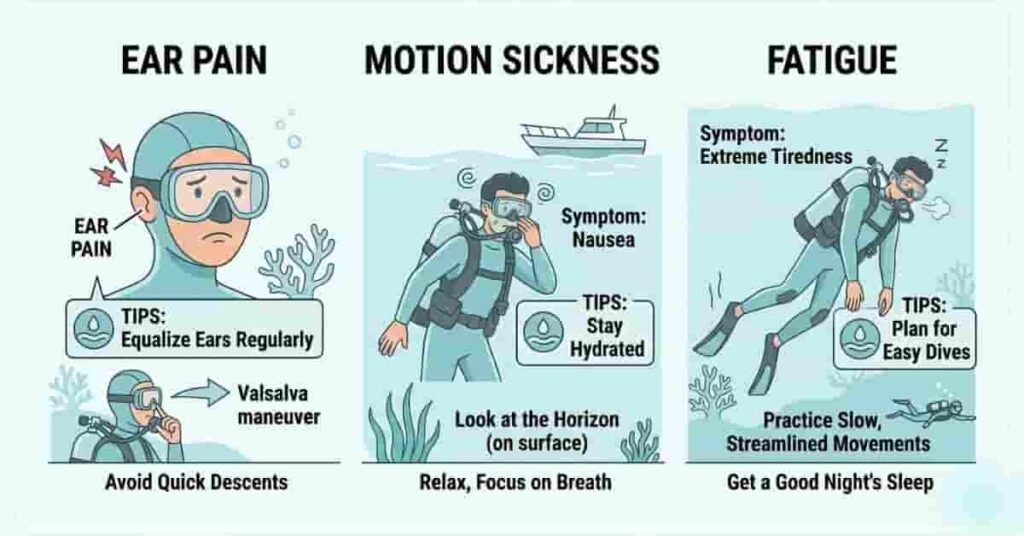
Some beginners notice mild discomfort during or after their first dive. These side effects of first-time scuba diving are usually minor and easy to manage with the right steps.
Ear Pain or Barotrauma
Ear discomfort is the most common issue. It happens when pressure builds as you descend.
You can prevent this by equalising early and often. Gently pinch your nose and blow, or swallow to balance pressure. Never ignore pain—pause your descent and signal your instructor.
Motion Sickness or Nausea
Boat movement or waves can cause nausea before or after the dive. This can make your experience less enjoyable if not managed.
To reduce this:
- Avoid heavy meals before diving.
- Stay hydrated
- Focus on the horizon while on the boat.
If needed, speak to your instructor about motion sickness options.
Fatigue or Minor Panic
Feeling tired after your first dive is normal as your body adjusts to new movements and breathing.
Brief moments of panic underwater also occur, but usually pass quickly with calm breathing.
Stay relaxed, move slowly, and take breaks when needed. Always communicate with your buddy or instructor if something feels off.
Pro Tips
- Equalise before discomfort starts.
- Rest well before your dive day.
- Keep your breathing slow and steady.
- Speak up early if you feel uneasy.
Takeaways
- Most side effects of first-time scuba diving are mild and temporary.
- Ear pain can be avoided with proper equalisation.
- Nausea is manageable with simple precautions.
- Fatigue and panic improve with rest and calm breathing.
Real-Life Examples: How Beginners Overcame Fear
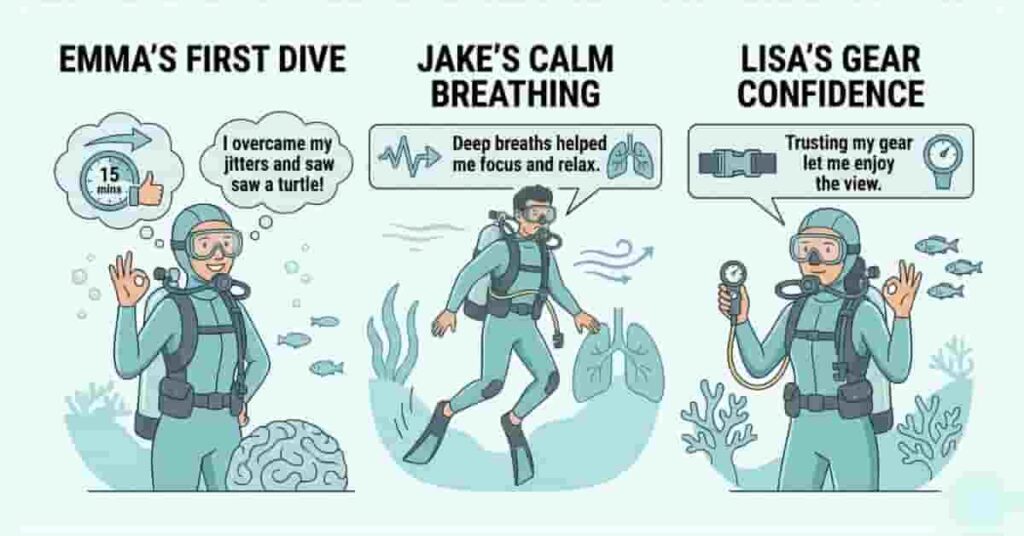
Emma, a first-time diver from Florida, almost cancelled her dive due to strong nerves. Her biggest fear was breathing underwater. During training, she focused on slow breaths and stayed close to her instructor. Within minutes underwater, her fear faded, and she began to enjoy the experience.
Reading real beginner stories and lessons learned can give you confidence underwater.
Jake from California faced intense first-time scuba diving anxiety before his dive. He worried about panic and losing control. His instructor guided him through simple breathing exercises and reminded him to take things slowly. Jake signalled once when he felt uneasy, paused, and regained calm. By the end of the dive, he felt confident and proud.
Another beginner, Lisa, struggled with first dive fear related to the equipment. She thought something might go wrong underwater. After a full gear check and clear instructions, she felt reassured. Staying close to her buddy helped her relax and focus on the moment.
These stories show an inspiring truth: fear is natural, but it’s temporary. With encouragement and the right mindset, beginners quickly transform anxiety into excitement and confidence. Anyone can succeed with the right support.
Takeaways
- Most beginners feel fear before their first dive.
- Instructor support helps reduce anxiety quickly.
- Simple breathing and pausing can stop panic.
- Confidence grows naturally during the dive.
Conclusion
Your first dive can seem daunting, but most fears are easier to manage than expected. With the right mindset, simple breathing, and proper guidance, beginners quickly gain confidence underwater.
Overcoming Fear & Anxiety on Your First Scuba Dive comes down to preparation, support, and taking things step by step. When you stay calm, trust your training, and rely on your buddy, even strong first-time scuba diving anxiety becomes manageable. Avoiding common first dive mistakes also helps you feel more in control.
Ready to dive in? Download our beginner scuba diving guide now and check off each essential tip for a confident start. Tried diving before? Share your biggest challenge or favourite moment in the comments below!

Scuba Diving Researcher & Beginner Guide
Evan Calder is the creator of DiveBeginner, a website dedicated to helping beginners learn scuba diving simply and practically 🌊
He focuses on scuba fundamentals, beginner safety, and clear diving guidance. Evan has studied ocean and marine science through programs at the Scripps Institution of Oceanography, UC San Diego, a globally recognized leader in ocean research.
Instead of complex technical language, Evan provides easy-to-follow, beginner-friendly guides based on real-world research, helping first-time divers feel confident before their first dive 🤿
DiveBeginner reflects his passion for making scuba diving accessible, safe, and enjoyable for everyone.