Introduction
What happens if you surface too quickly after an amazing dive?
Decompression sickness, often called “the bends,” can affect any scuba diver when trapped nitrogen bubbles form in the body. While rare with proper training, this serious condition can become dangerous without quick action. For beginner divers in the USA, understanding scuba diving decompression sickness is essential to staying safe underwater.
Trusted organizations such as PADI, DAN (Divers Alert Network), and hyperbaric medicine experts emphasize the importance of prevention, early symptom recognition, and proper dive planning. The good news is that most cases are preventable with safe diving habits.
This guide will explain decompression sickness symptoms, common causes, prevention tips, and emergency treatment in simple terms. By learning the basics now, you can dive with greater confidence and reduce your risk every time you enter the water.
Many prevention techniques start with understanding proper underwater breathing while scuba diving.
What Is Decompression Sickness in Scuba Diving?
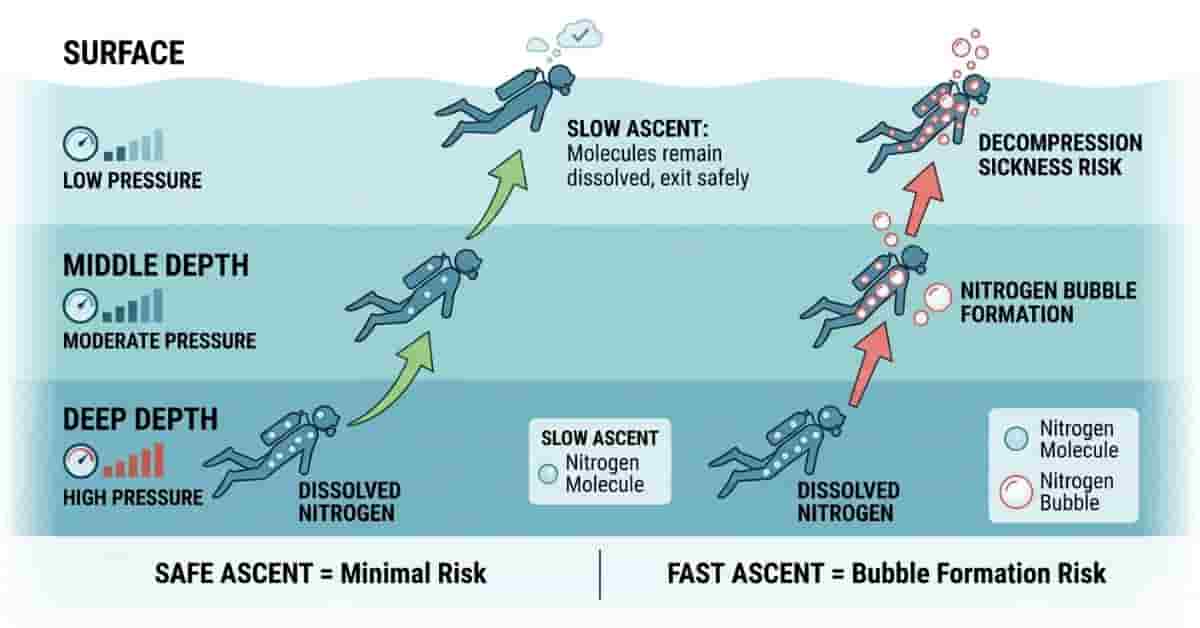
Decompression sickness happens when dissolved nitrogen forms bubbles inside your body after a dive. Divers often call this condition “the bends.” It occurs when you ascend too quickly, and your body cannot safely release the nitrogen it has built up.
When you dive underwater, increased pressure causes your body tissues to absorb more nitrogen from the air you breathe. This process is normal during scuba diving. As long as you follow safe ascent guidelines, your body slowly removes that nitrogen through breathing.
How Pressure Affects Your Body Underwater
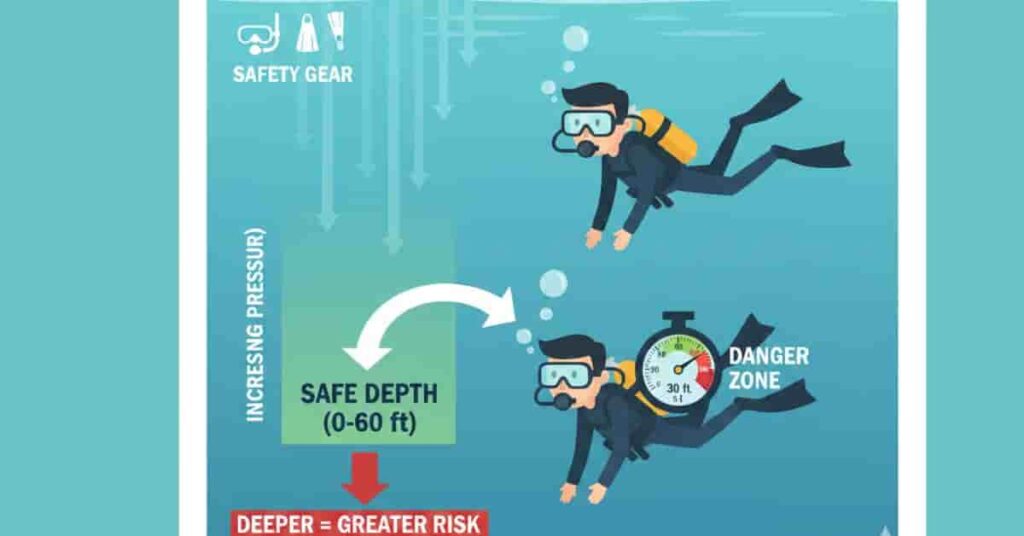
The deeper you dive, the greater the surrounding pressure becomes. Higher pressure pushes more nitrogen into your bloodstream and tissues. This is why deeper or longer dives increase the risk of decompression sickness in scuba diving.
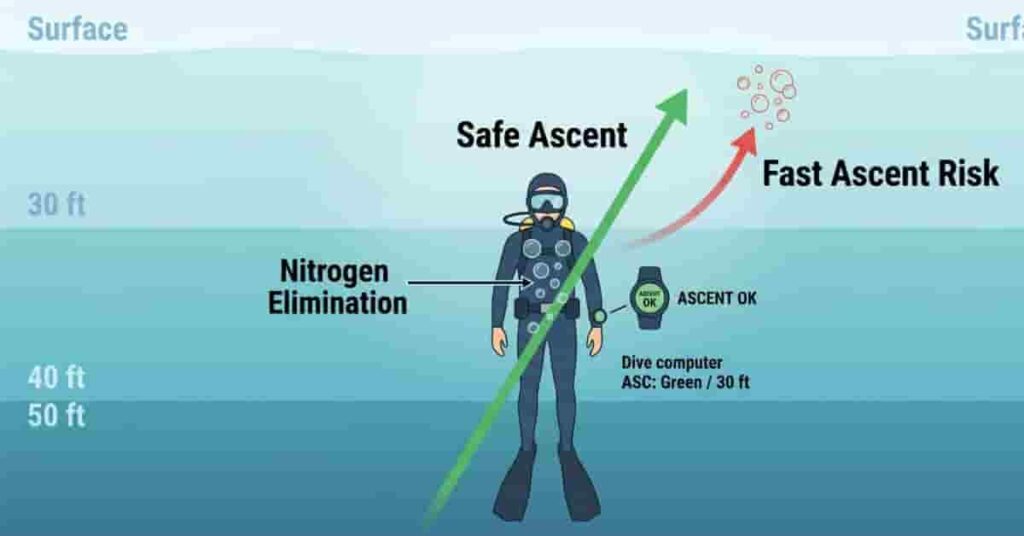
During a slow ascent, nitrogen is gradually lost from your body. This process is called off-gassing. It usually goes smoothly when divers follow dive tables, safety stops, or dive computer guidance.
Why Nitrogen Bubbles Form
If you rise too fast, pressure drops too quickly. Nitrogen can then form bubbles in your blood and tissues, much like opening a shaken soda bottle too fast. Those bubbles may cause pain, block blood flow, and damage nerves or organs.
This dangerous bubble formation is what separates normal off-gassing from decompression sickness.
Understanding the bends in scuba diving helps beginners make safer choices and avoid one of diving’s most serious risks.
Common Symptoms of Decompression Sickness
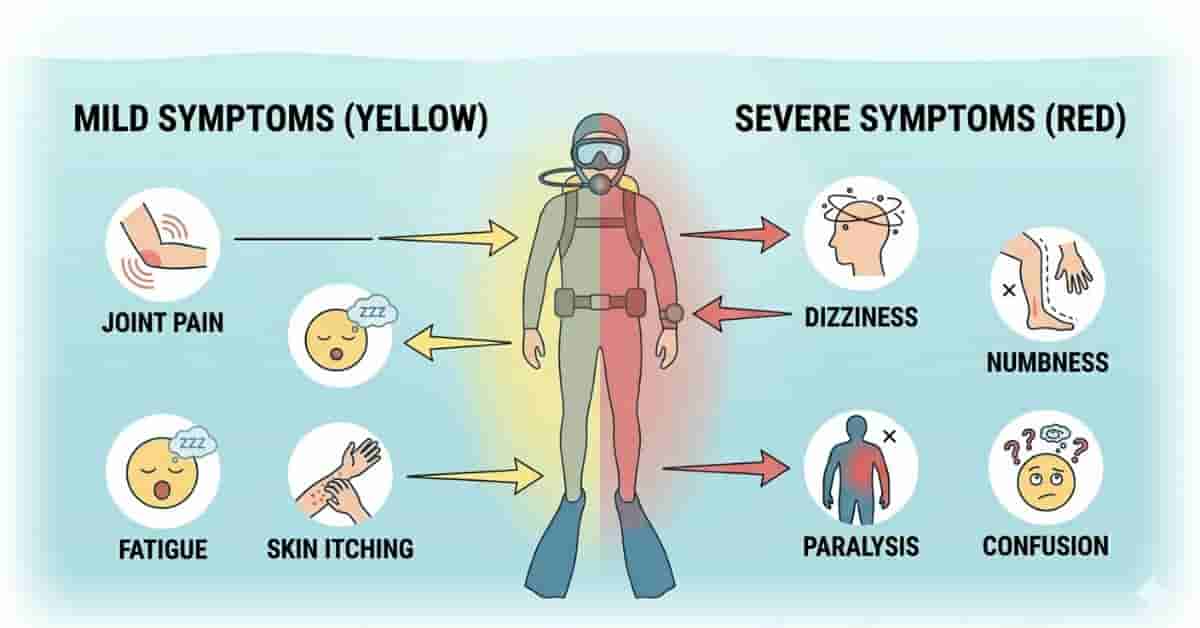
Decompression sickness symptoms can range from mild discomfort to life-threatening medical emergencies. Some signs appear soon after a dive, while others may take several hours to develop. This delay can make symptoms easy for beginners to overlook.
Recognizing early warning signs promptly can reduce the risk of serious long-term effects of scuba diving.
Early Warning Signs
Mild symptoms often affect the joints, skin, or overall energy levels. These may include:
- Joint or muscle pain, especially in the shoulders, elbows, or knees
- Unusual fatigue or weakness
- Skin itching
- Red or blotchy rash
- Mild swelling
- General discomfort
Many divers describe joint pain as a deep ache, which is why decompression sickness earned the nickname “the bends.”
These early symptoms should never be ignored. Even mild signs can worsen without treatment.
Severe Neurological Symptoms
Serious decompression sickness can affect the nervous system, lungs, and brain. Severe symptoms may include:
- Dizziness or balance problems
- Numbness or tingling
- Shortness of breath
- Chest pain
- Confusion
- Vision changes
- Paralysis
- Loss of consciousness
These symptoms require immediate emergency care. Hyperbaric oxygen treatment is often necessary to prevent permanent injury.
Pro Tip
If you notice any unusual symptoms after diving, contact DAN or emergency medical professionals right away. Early treatment greatly improves recovery outcomes.
Key Takeaway
Decompression sickness symptoms can start mildly but become severe quickly. Any post-dive pain, fatigue, or neurological issues should be treated as a potential medical emergency.
Divers often ask whether the bends can become life-threatening and when emergency treatment is required.
What Causes the Bends in Scuba Diving?
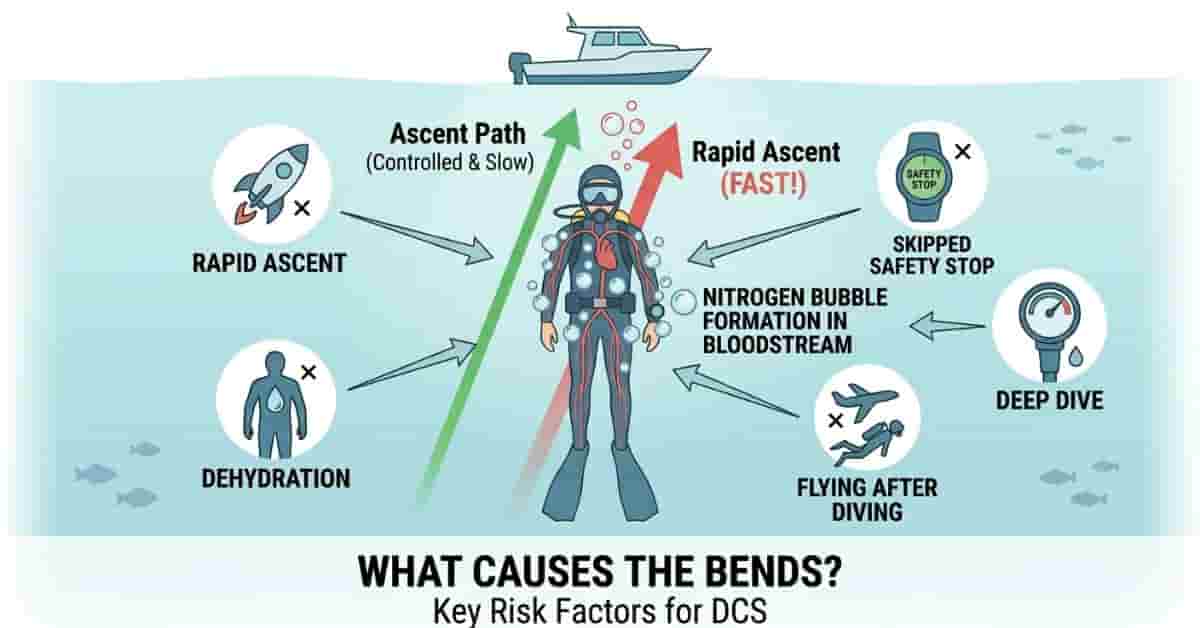
The bends in scuba diving occur when excess nitrogen leaves the body too quickly, forming dangerous bubbles. While decompression sickness can often be prevented, certain mistakes and personal factors raise the risk significantly.
Most cases happen because divers do not manage pressure changes safely.
Top Beginner Mistakes
Rapid ascent is one of the leading causes of scuba diving decompression sickness. If you ascend faster than the recommended rate, your body cannot properly release nitrogen.
Common beginner mistakes include:
- Ascending too quickly
- Skipping safety stops
- Deep dives without proper planning
- Multiple dives within short time periods
- Poor use of dive tables or dive computers
- Flying too soon after diving
Flying shortly after a dive exposes the body to lower cabin pressure, which can increase the formation of nitrogen bubbles.
Poor dive planning often combines several of these risks, making prevention harder.
Individual Risk Factors
Some personal factors may also increase decompression sickness risk, even when following safe practices.
These include:
- Dehydration
- Alcohol consumption before or after diving
- Older age
- Obesity
- Poor physical fitness
- Certain medical conditions
Dehydration can reduce circulation, making nitrogen elimination less efficient. Alcohol may also impair judgment and increase unsafe decisions underwater.
Mini Safety Fact
According to diving safety experts, controlled ascent rate scuba diving practices and proper hydration are among the most effective ways to lower DCS risk.
Key Takeaway
The bends usually result from unsafe ascent or poor planning, but personal health factors also play a role. Safe diving habits greatly reduce the risk of serious complications, including rare cases in which untreated DCS can become life-threatening.
How to Prevent Decompression Sickness as a Beginner Diver
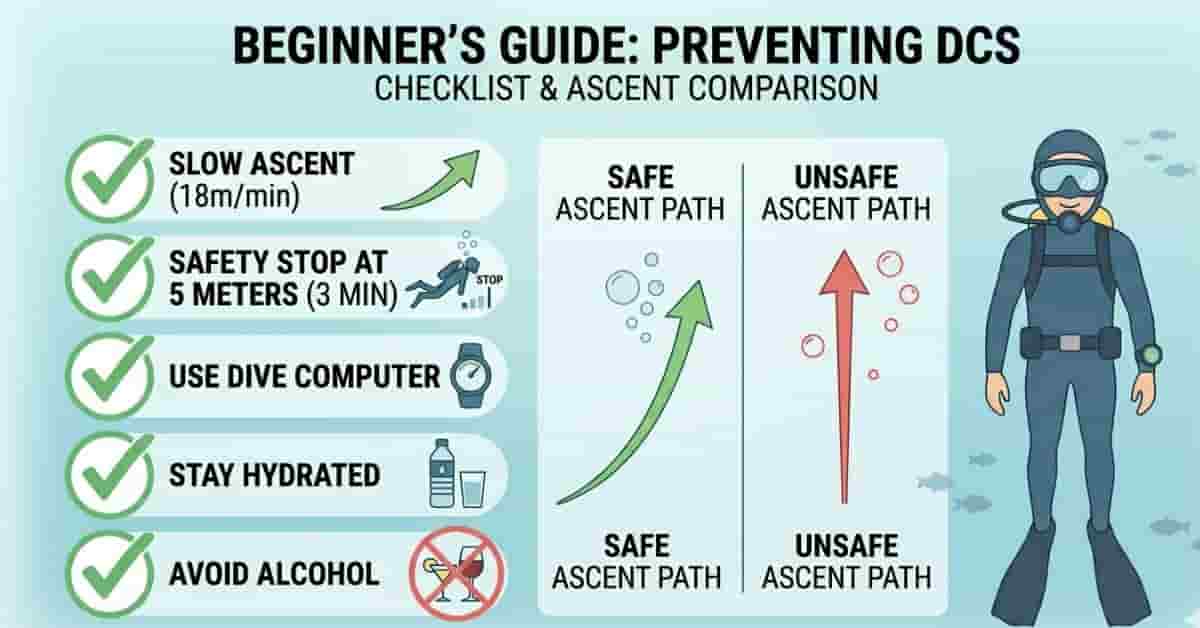
Learning how to avoid the bends starts with safe habits on every dive. Decompression sickness is largely preventable when beginner divers follow proper training and dive planning.
The goal is simple: allow your body enough time to release nitrogen safely.
Essential Prevention Tips for Beginners
To reduce your risk of scuba diving decompression sickness:
- Ascend slowly, no faster than 18 meters (60 feet) per minute.
- Always perform a scuba safety stop, usually for 3–5 minutes at 15 feet.
- Use a reliable dive computer.
- Follow the dive tables carefully.
- Stay well hydrated before and after diving.
- Avoid alcohol before diving.
- Rest properly between repetitive dives.
- Stay within your certification and experience limits.
- Dive with trained professionals or instructors.
Slow ascents and safety stops are critical because they allow gradual off-gassing. Skipping them can sharply increase nitrogen bubble formation.
Dive computers make monitoring depth, ascent rate, and no-decompression limits much easier, especially for beginners.
Pro Tip
Never push your depth or bottom time beyond your training level. Conservative diving reduces risk and builds confidence.
Why You Should Wait Before Flying After Scuba Diving
Flying after scuba diving too soon can increase the risk of decompression sickness due to reduced cabin pressure.
Most experts, including DAN, recommend waiting:
- At least 18 hours after multiple dives
- Up to 24 hours after deep or repetitive dives
Airplane cabins create lower pressure than sea level, which may trigger additional nitrogen bubble formation even after a safe dive.
Planning travel carefully is an important part of beginner dive safety.
Key Takeaway
The best prevention strategy combines slow ascents, safety stops, proper hydration, and conservative dive planning. Safe habits dramatically reduce the risk of decompression sickness and make every dive safer.
Decompression Sickness Treatment & Emergency Response 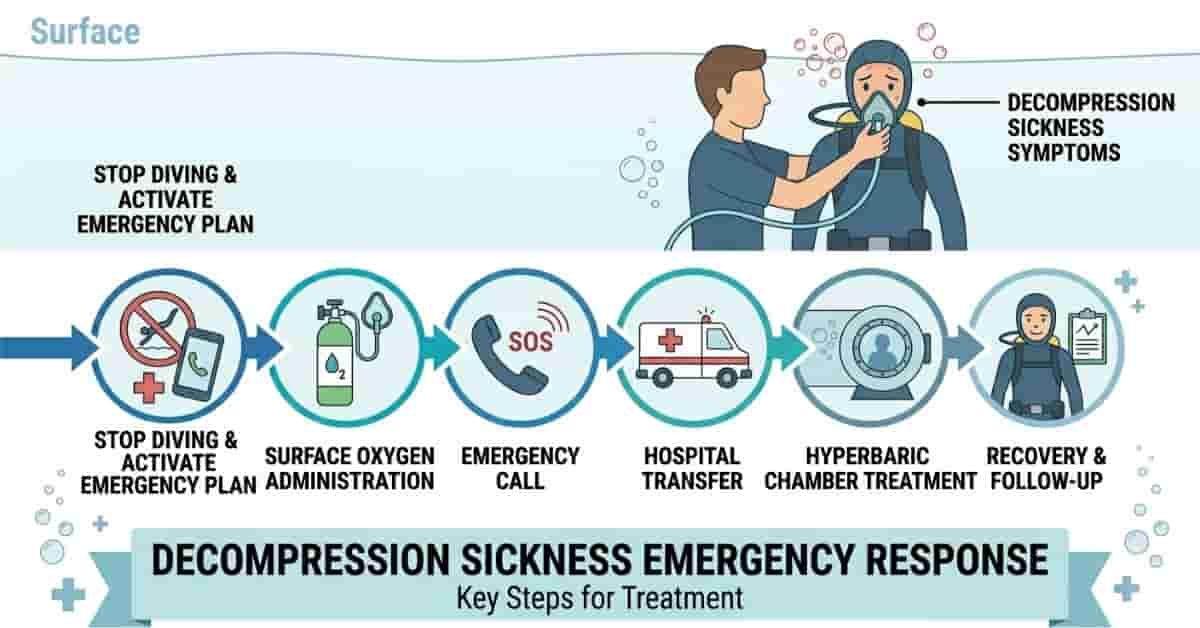
Fast action is critical if decompression sickness is suspected. Early decompression sickness treatment can greatly improve recovery and reduce the risk of permanent injury.
Never ignore symptoms after a dive, even if they seem mild at first.
Immediate Emergency Steps
If a diver shows possible symptoms of the bends:
- Stop diving immediately
- Administer 100% oxygen if available.
- Keep the person hydrated if conscious.
- Lay the diver flat and keep them comfortable.
- Monitor breathing and responsiveness.
- Seek emergency medical help right away.
- Contact the DAN hotline or local emergency services.
Oxygen is one of the most important first-aid tools because it helps reduce nitrogen levels and supports damaged tissues.
Medical Treatment Options
Most confirmed cases require hyperbaric oxygen therapy inside a recompression chamber.
This treatment works by:
- Increasing surrounding pressure
- Shrinking nitrogen bubbles
- Delivering oxygen to injured tissues
- Supporting safer nitrogen elimination
Hyperbaric specialists closely monitor patients during treatment to assess neurological function, breathing, and circulation.
Some divers need multiple sessions depending on symptom severity.
Expert Tip
Always know the nearest hyperbaric treatment center before diving, especially when traveling to remote locations.
Can Decompression Sickness Cause Long-Term Damage?
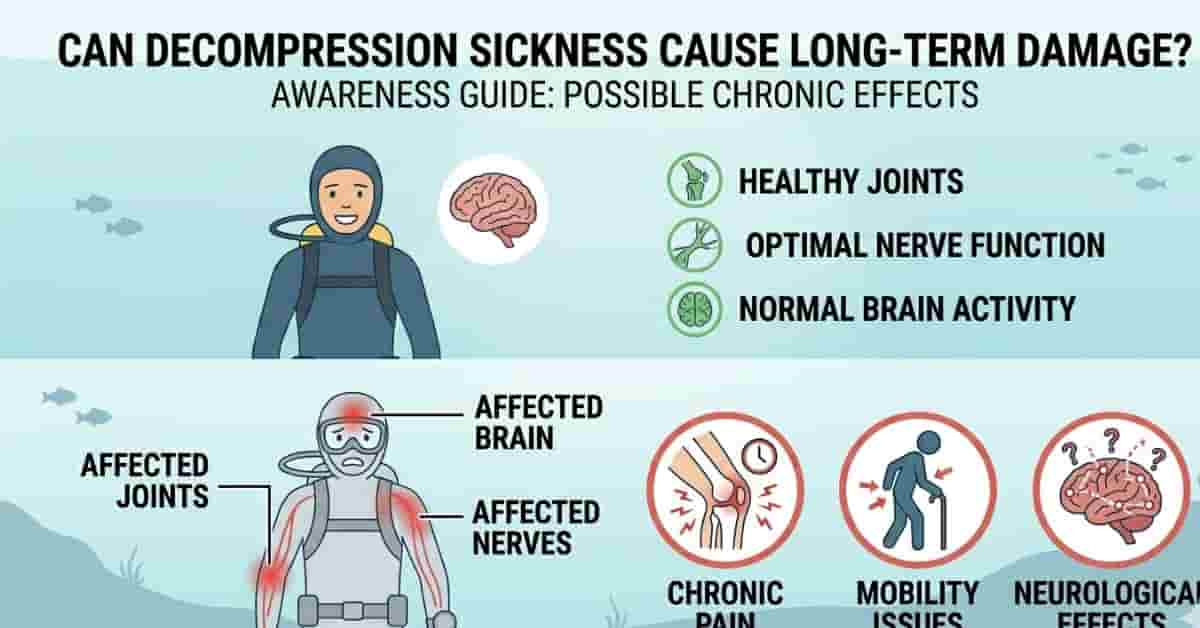
Yes, decompression sickness can cause lasting health problems if treatment is delayed or symptoms are severe. While many divers recover fully with prompt care, untreated cases may lead to serious long-term effects on scuba diving.
The severity often depends on how quickly medical treatment begins.
Possible Long-Term Complications
Some divers may experience:
- Chronic joint pain
- Permanent nerve damage
- Mobility issues
- Muscle weakness
- Balance problems
- Cognitive or memory difficulties
- Lung damage in severe cases
Repeated or severe neurological decompression sickness can sometimes lead to lifelong disability.
Joint damage is especially common in untreated cases, which may affect daily movement and quality of life.
Rare but Serious Outcomes
Although uncommon, severe decompression sickness can become fatal if major organs or the nervous system are affected.
This is why early recognition and emergency treatment are so important.
Mini Expert Insight
Hyperbaric medicine specialists consistently emphasize that faster treatment often leads to better recovery and fewer long-term complications.
Repeated cases may contribute to possible long-term side effects of scuba diving later in life.
Conclusion
This guide explained what decompression sickness is, how it happens, and how to prevent it safely. You also learned how to spot early symptoms and respond quickly in emergencies. Understanding decompression sickness is key to safer and more confident diving.
Decompression sickness is preventable when divers follow proper training, slow ascent rates, and safety stops. Simple habits like good hydration and dive planning can make a big difference in reducing risk.
If you want to stay safe underwater, always follow trusted guidelines from experts like PADI and DAN. Learn the signs, respect your limits, and never ignore post-dive symptoms.
Want to dive smarter? Share this guide with fellow beginners or explore more scuba safety tips on our site.

Scuba Diving Researcher & Beginner Guide
Evan Calder is the creator of DiveBeginner, a website dedicated to helping beginners learn scuba diving simply and practically 🌊
He focuses on scuba fundamentals, beginner safety, and clear diving guidance. Evan has studied ocean and marine science through programs at the Scripps Institution of Oceanography, UC San Diego, a globally recognized leader in ocean research.
Instead of complex technical language, Evan provides easy-to-follow, beginner-friendly guides based on real-world research, helping first-time divers feel confident before their first dive 🤿
DiveBeginner reflects his passion for making scuba diving accessible, safe, and enjoyable for everyone.