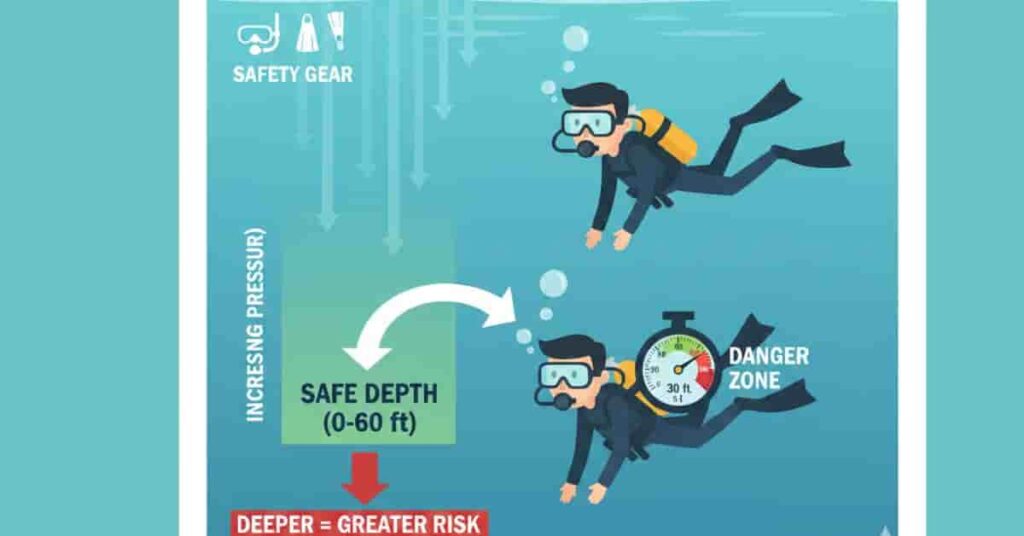
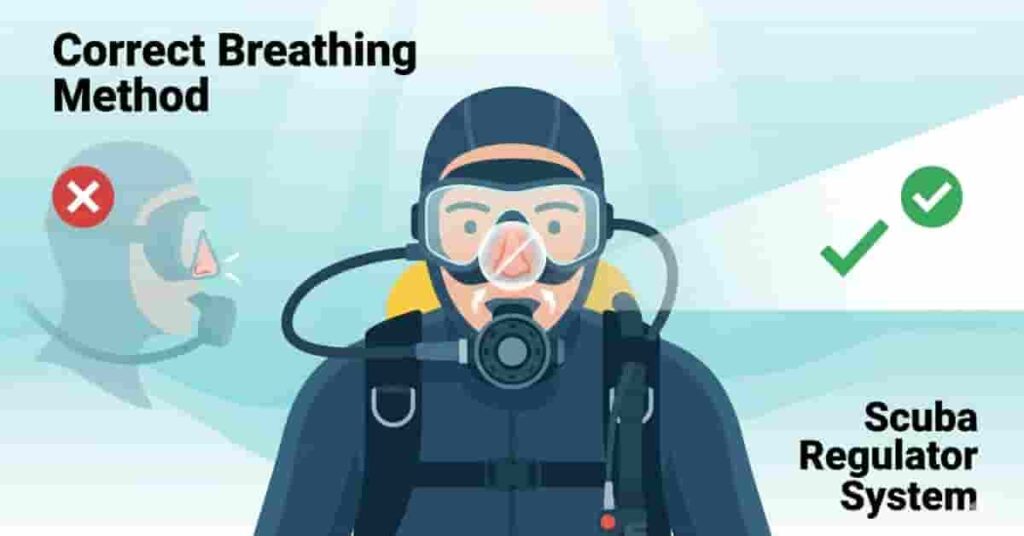
Introduction
Many first-time divers instinctively try to breathe through their nose underwater—and immediately panic when they can’t. This moment often raises a big question: can you breathe through your nose while scuba diving?
For beginners in the USA, this confusion is very common during their first dive experiences. On land, nose breathing feels natural and automatic, so switching to underwater breathing feels strange at first. Many new divers also worry they are doing something wrong when, in fact, it comes down to equipment design and safety rules.
In this guide, we will clearly explain why nose breathing does not work underwater with scuba gear. You will also learn what scuba equipment actually allows, and the safe breathing method used by certified divers. We follow training standards set by trusted organizations like PADI and SSI, so you get accurate, beginner-friendly information.
By the end, you will understand how breathing works underwater and feel more confident before your dive. If you are just starting out, this will help you avoid common mistakes and build comfort quickly. You can also explore our guide on “How to Breathe While Scuba Diving (Beginner Guide)” for deeper practice tips.
Understanding how scuba divers actually breathe underwater helps eliminate many beginner mistakes.
Why Beginners Naturally Try Nose Breathing
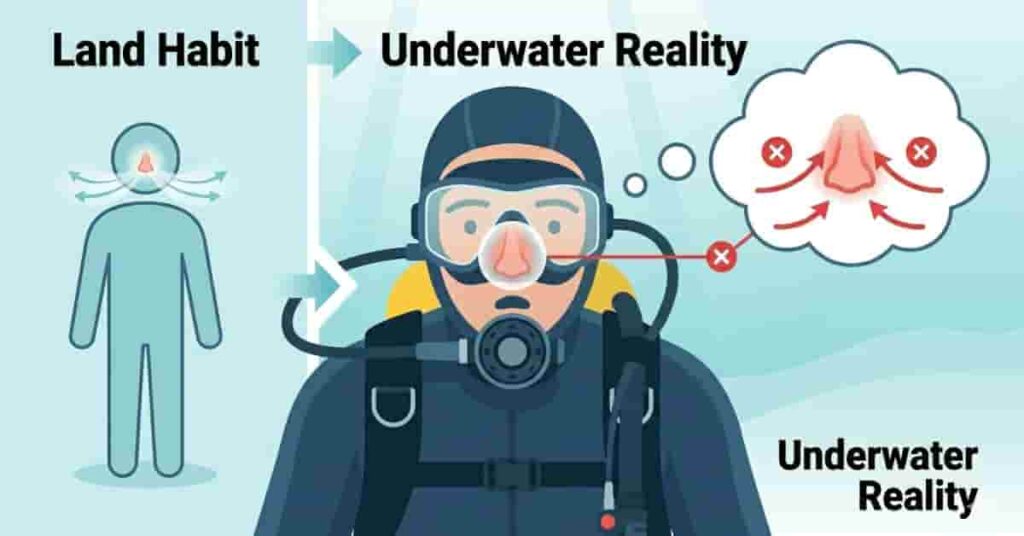
Beginners often try to breathe through their nose underwater because it feels natural. On land, your body automatically uses nose breathing without you having to think about it. This habit stays strong even in very different environments, like scuba diving. That’s why many first-time divers feel confused in the water.
Another reason is the panic reflex. When beginners go underwater for the first time, everything feels new and slightly stressful. In that moment, the brain tries to use normal breathing patterns, even though scuba gear changes how breathing works. This can create quick anxiety if they cannot breathe through the nose.
Many people also misunderstand how scuba equipment functions. They expect underwater breathing to feel like normal breathing, just in a different setting. In reality, scuba systems are designed differently for safety and control.
There is also a gap between comfort expectations and reality. Beginners assume breathing will feel familiar, but it takes a short adjustment period. With the right beginner scuba breathing tips and an understanding of nose vs. mouth breathing scuba basics, this confusion quickly disappears and becomes natural underwater.
How Scuba Diving Equipment Works
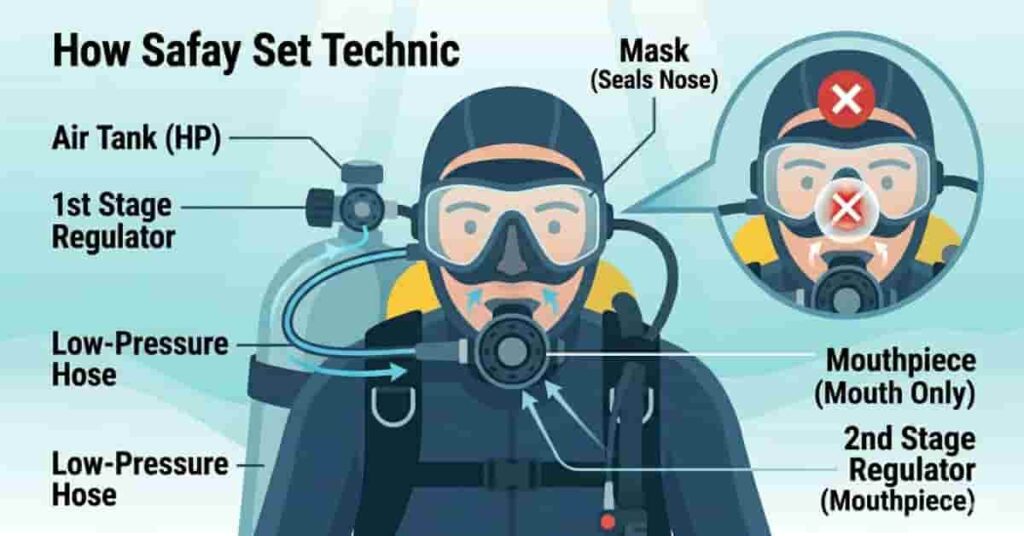
Scuba diving equipment is designed to help you breathe underwater safely and steadily. The key part is the regulator system, which connects your tank to your mouth. It reduces high-pressure air from the tank into breathable air you can use comfortably underwater.
The air is delivered only through the mouthpiece. This is because the regulator is built to respond to your inhale and exhale through your mouth. It gives you air only when you need it, helping you manage pressure and air use efficiently. This design keeps breathing predictable and safe at different depths.
Pressure control is a major part of the system. As you go deeper, water pressure increases. The regulator automatically adjusts this pressure so the air you breathe always feels normal. Without this system, breathing underwater would feel extremely difficult and unsafe.
Your nose stays inside the mask, but it is not connected to the airflow system. The mask protects only your eyes and lets you see clearly underwater. This is where many beginners get confused about nose-breathing scuba mask expectations. The mask does not provide air, so it cannot support breathing through your nose.
If you try to breathe through your nose underwater, nothing comes through. The mask blocks water, but it does not supply air. That is why proper training focuses on mouth breathing only and ignores how to breathe through the nose underwater.
Incorrect breathing techniques can sometimes lead to scuba diving breathing problems and panic underwater.
Is Nose Breathing Allowed in Scuba Diving?
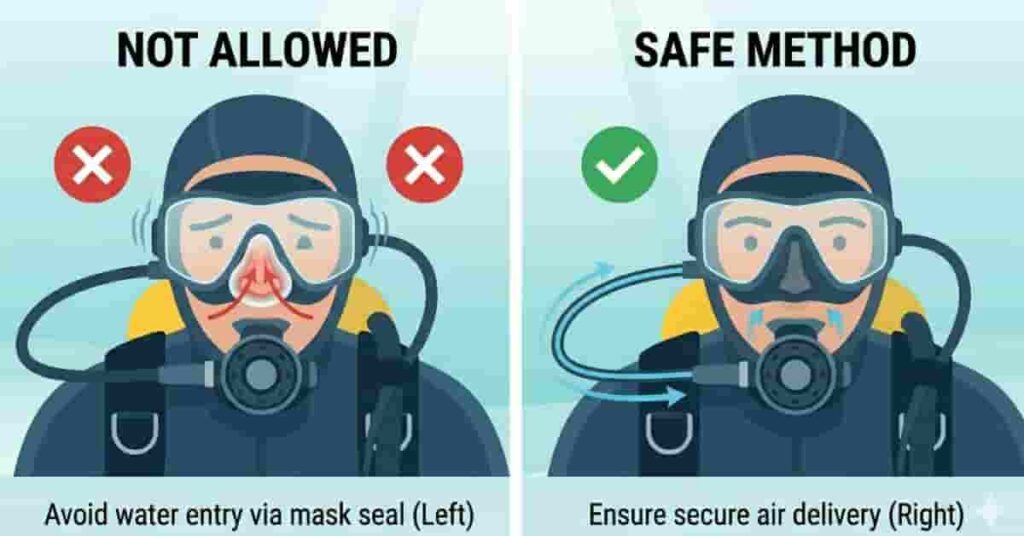
The simple answer is no. You cannot breathe through your nose while scuba diving with standard equipment. The system is designed so that all air comes through the regulator mouthpiece. Your nose stays inside the mask, but it does not receive air.
There are important safety reasons for this setup. First, mask flooding becomes a risk if you try to breathe through your nose. Water can easily enter the mask, causing panic and disrupting your dive. Second, you lose proper air control. The regulator is built for mouth breathing, so using your nose breaks the natural airflow system.
Another key reason is regulator dependency. Scuba diving relies on controlled air delivery from your tank through the regulator. This system is tested to work only with mouth breathing techniques. Changing that process can create unsafe situations underwater.
Professional training agencies like PADI and SSI clearly teach that divers must always breathe through the mouthpiece. This standard exists to keep divers safe and calm at all depths.
If you are new, it is normal to wonder about whether nose breathing is allowed in scuba diving. But the correct answer always comes back to safety-first training rules.
Mouth vs Nose Breathing in Scuba Diving
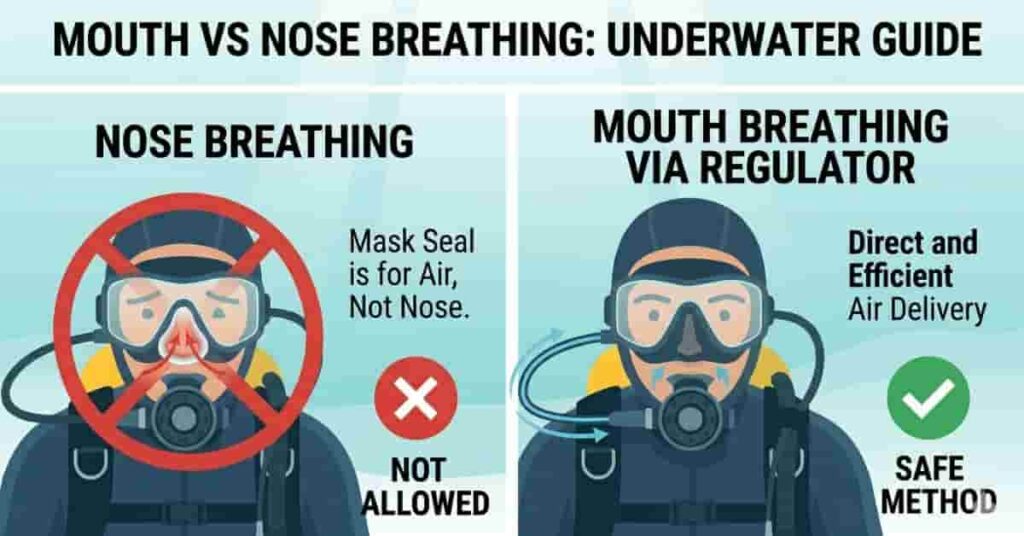
In scuba diving, mouth breathing is the standard method used by all certified divers. This is not a preference but a safety requirement built into scuba systems. Your regulator delivers air only through the mouthpiece, so your breathing naturally shifts to your mouth once you start diving.
Mouth breathing offers several clear benefits underwater. It provides controlled air intake, helping you stay calm and manage your air supply efficiently. It also makes regulator use easier since the system is designed to respond to mouth inhaling and exhaling. Another major benefit is better buoyancy control, because steady breathing helps you maintain stable movement underwater.
Nose breathing, on the other hand, does not work in scuba diving. It is not connected to the air supply system and can create confusion or discomfort for beginners. This is why divers are trained to avoid it completely.
Here is a simple comparison to understand nose vs mouth breathing scuba practice:
- Nose breathing (unsafe underwater): Not supported by the equipment; no airflow from the regulator; can cause mask discomfort and confusion.
- Mouth breathing (standard scuba practice): Direct airflow from regulator, controlled breathing, safe and efficient underwater.
At first, mouth breathing may feel unnatural, especially for beginners used to nose breathing on land. But with practice, it becomes automatic. What feels strange at first quickly becomes a smooth, natural habit underwater.
Professional Authority Insight: What Training Agencies Say
Professional diving organizations are very clear about how breathing should work underwater. The main rule is simple: divers must always breathe through the regulator using their mouth, never through the nose.
According to PADI training standards, beginners are taught from the first lesson to rely entirely on mouth breathing. This helps build safe habits early and reduces panic underwater. Instructors also emphasize that the regulator should stay in the mouth at all times while diving.
SSI follows the same approach. Their training programs focus on controlled breathing techniques that keep divers calm, efficient, and safe at different depths. Nose breathing is not part of any standard scuba training because it does not connect to the air delivery system.
Instructors also strongly advise never removing the regulator underwater unless in a controlled training exercise. This rule is essential for safety and air control. It ensures divers always have a reliable air source.
These organizations emphasize mouth breathing from day one because it builds consistency, reduces risk, and helps beginners adapt quickly to underwater conditions.
Beginner Tips: How to Get Comfortable With Scuba Breathing
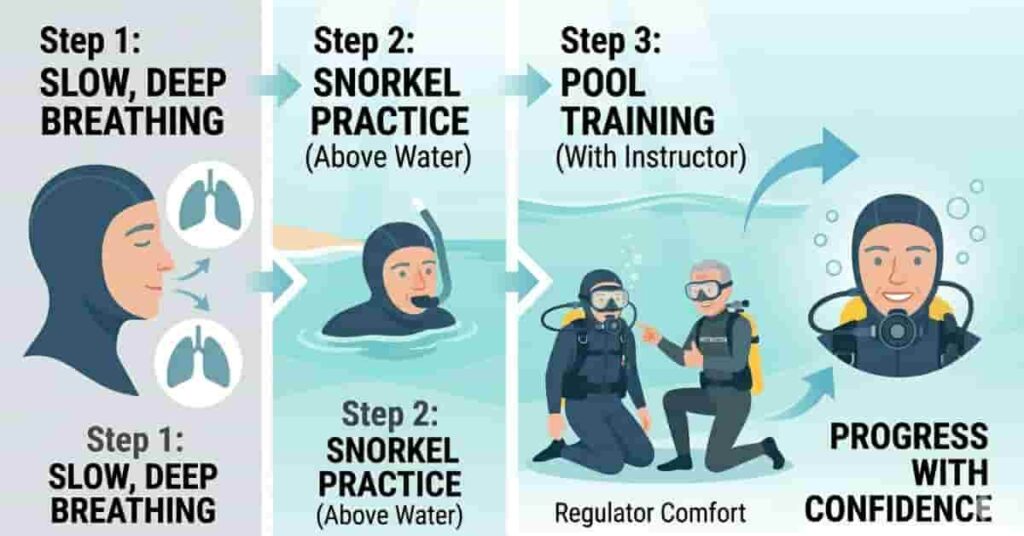
Getting comfortable with scuba breathing takes a little practice, but it becomes easy quickly. The key is to stay relaxed and focus on slow, deep breaths. Short, rapid breathing can make you feel stressed and use air more quickly. A steady rhythm helps you stay calm underwater and enjoy the dive.
One of the most important safety rules is to never hold your breath. This is critical in scuba diving because holding your breath can cause lung injuries due to pressure changes. Always keep breathing slowly and continuously through your regulator.
A great way to prepare is to practice with a snorkel first. It helps you get used to breathing in a controlled way while keeping your face submerged. This builds confidence before you use full scuba gear.
You can also try dry-land regulator breathing practice during training sessions. Many instructors allow beginners to breathe through the regulator while sitting in shallow water or a pool. This helps your brain adjust to mouth breathing in a safe environment.
Calm breathing also reduces air consumption. The more relaxed you are, the slower you use air from your tank. This means longer, more enjoyable dives without stress.
These beginner scuba breathing tips help you build confidence step by step. With practice, breathing through a regulator becomes natural and automatic.
Myth vs Fact: Nose Breathing in Scuba Diving
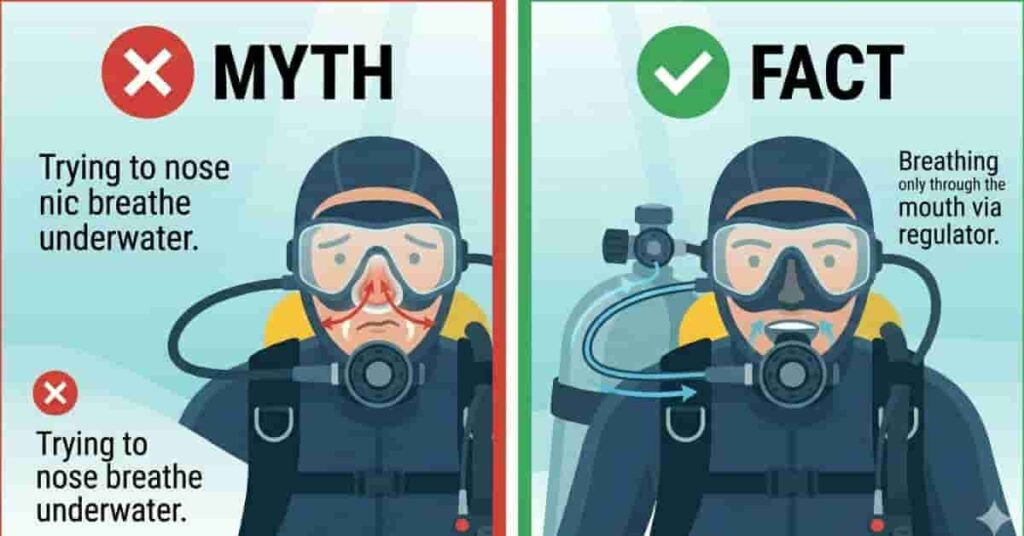
Many beginners hear conflicting information about underwater breathing, which can create confusion. Let’s clear it up with simple facts so you understand what is true and what is not.
Myth: You can switch between nose and mouth breathing underwater.
Fact: Air always comes from the regulator mouthpiece. You cannot breathe through your nose while diving because the air supply is not connected to it.
Myth: The scuba mask allows breathing underwater.
Fact: The mask only helps you see clearly underwater. It does not supply air, so it cannot support breathing in any way.
Myth: Experienced divers sometimes use nose breathing.
Fact: All certified divers follow the same system. Even professionals always use mouth breathing because it is part of standard scuba safety training.
This section helps clarify confusion around nose vs. mouth breathing in scuba practices and reinforces correct technique. Once beginners understand these basics, they feel more confident and less anxious underwater.
Proper breathing habits also play a role in reducing the risk of decompression sickness after diving.
Conclusion
In this guide, we explained why beginners often struggle with underwater breathing and how scuba systems actually work. We also clarified the key question: Can you breathe through your nose when scuba diving? The simple answer is no, because scuba gear is designed for mouth breathing only.
Nose breathing is not possible underwater with standard equipment, but mouth breathing is safe, controlled, and used by all certified divers. At first, it may feel unusual, especially for beginners used to breathing through the nose on land. With practice, it quickly becomes natural and comfortable underwater.
The important thing is to stay calm, follow proper techniques, and trust your training. Beginner scuba breathing tips can help you build confidence before your first dive.
If you are planning your first dive, explore our “Beginner Scuba Diving Checklist” to prepare the right way. Share your questions or experiences in the comments and continue learning before your next underwater adventure.

Scuba Diving Researcher & Beginner Guide
Evan Calder is the creator of DiveBeginner, a website dedicated to helping beginners learn scuba diving simply and practically 🌊
He focuses on scuba fundamentals, beginner safety, and clear diving guidance. Evan has studied ocean and marine science through programs at the Scripps Institution of Oceanography, UC San Diego, a globally recognized leader in ocean research.
Instead of complex technical language, Evan provides easy-to-follow, beginner-friendly guides based on real-world research, helping first-time divers feel confident before their first dive 🤿
DiveBeginner reflects his passion for making scuba diving accessible, safe, and enjoyable for everyone.