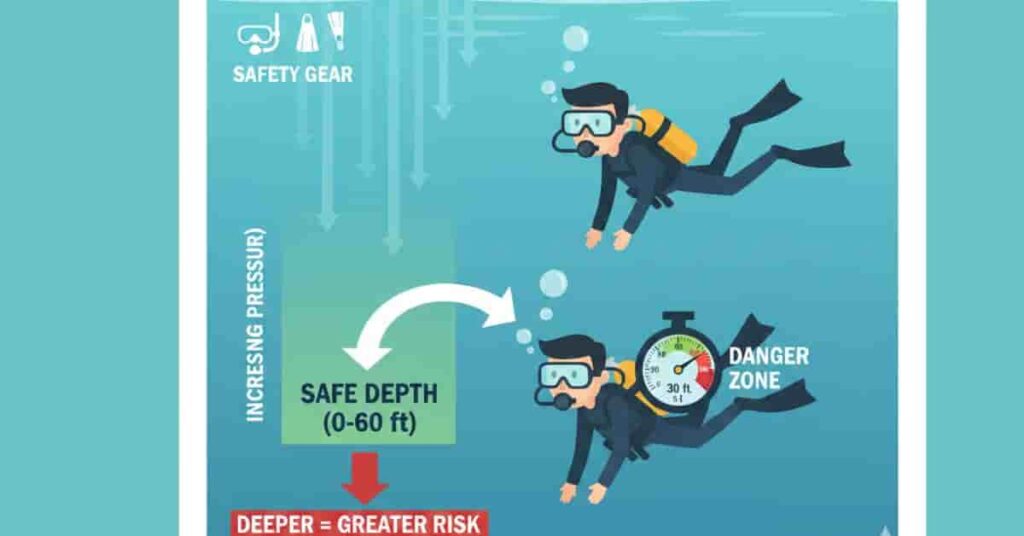
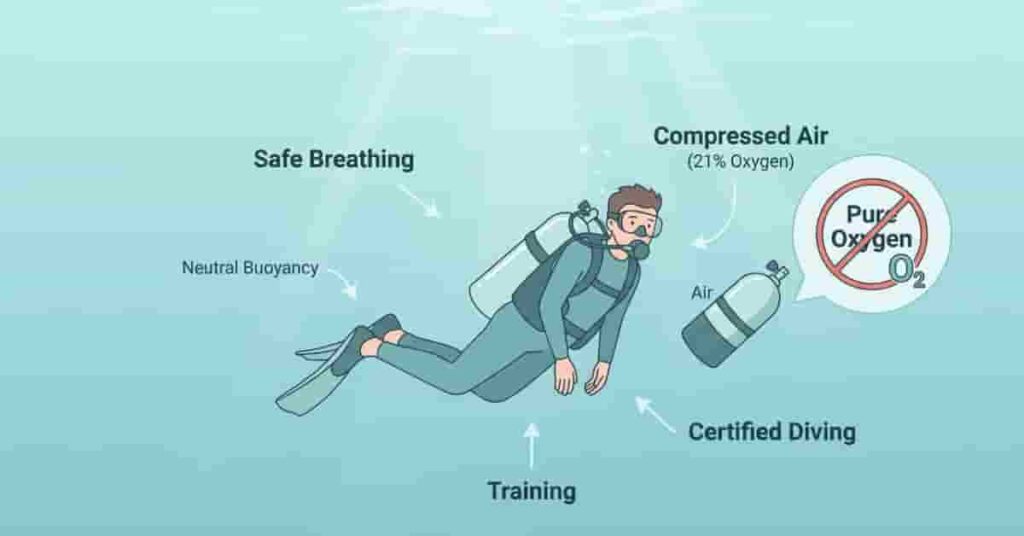
Introduction
One of the biggest beginner myths in diving is that scuba tanks contain pure oxygen—many first-time divers assume this, but breathing 100% oxygen underwater at recreational depths can actually be dangerous.
This confusion often comes from movies, social media, or mixing up scuba gear with medical oxygen tanks. Additionally, snorkeling can also add to the misunderstanding, since many new divers don’t yet know how scuba breathing systems work.
In reality, most recreational scuba divers breathe compressed air, which contains about 21% oxygen and 78% nitrogen. Therefore, this mix is much safer for standard dives than pure oxygen.
For this reason, understanding what’s inside your tank is essential for safe diving. Trusted organizations like PADI, SSI, and Divers Alert Network stress proper gas knowledge as a core part of dive safety.
With this context, this guide explains what gases scuba divers actually use, why pure oxygen can be dangerous underwater, and the safe breathing habits every beginner should know before diving.
Many breathing misconceptions are covered in our guide to how scuba divers breathe through a regulator underwater.
Why Many Beginners Think Scuba Divers Breathe Pure Oxygen
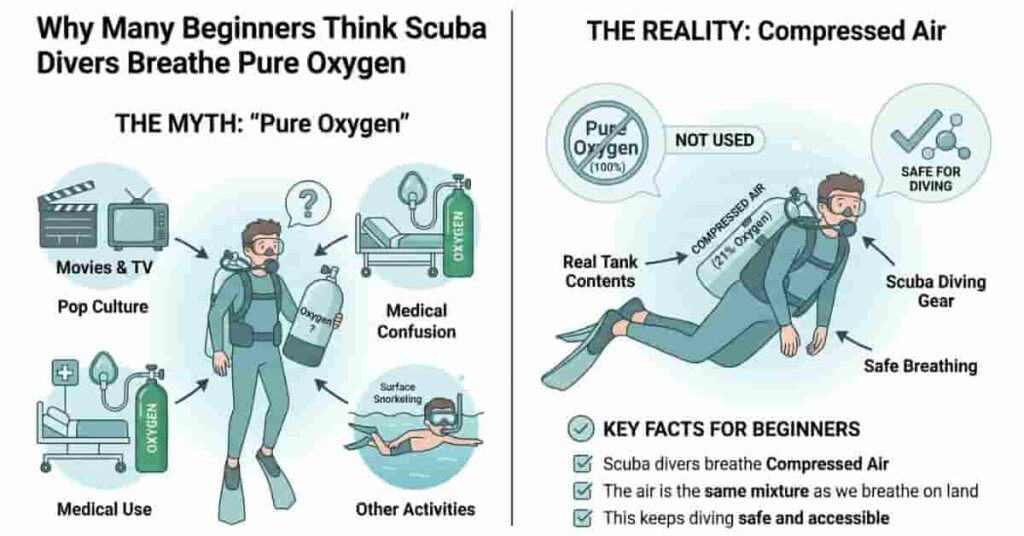
The myth that scuba divers breathe pure oxygen is surprisingly common, especially among new divers. Many beginners first learn about diving through movies or TV shows, where scuba tanks are often shown as simple oxygen supplies. These scenes rarely explain the real science behind breathing underwater.
Medical oxygen tanks compound misconceptions. Because hospitals and emergency responders use oxygen tanks, people often presume scuba tanks operate identically. In truth, recreational divers rely on meticulously calibrated gas blends, not pure oxygen.
Snorkeling can create more misunderstandings. New water enthusiasts may think all underwater breathing equipment works the same way, even though snorkeling and scuba use very different systems.
Absence of formal training is a key factor. Until divers enroll in courses from organizations like PADI or SSI, many depend on misinformation instead of an accurate understanding.
Common Beginner Misunderstandings:
- Scuba tanks are filled with pure oxygen.
- More oxygen automatically means safer diving.
- All scuba tanks contain identical gas mixtures.
These beginner scuba breathing misconceptions pose genuine safety risks, reinforcing the importance of thorough training before your initial dive.
Understanding your breathing gas can help prevent common scuba diving breathing problems for beginners.
What Gas Do Scuba Divers Actually Breathe in Their Tanks?
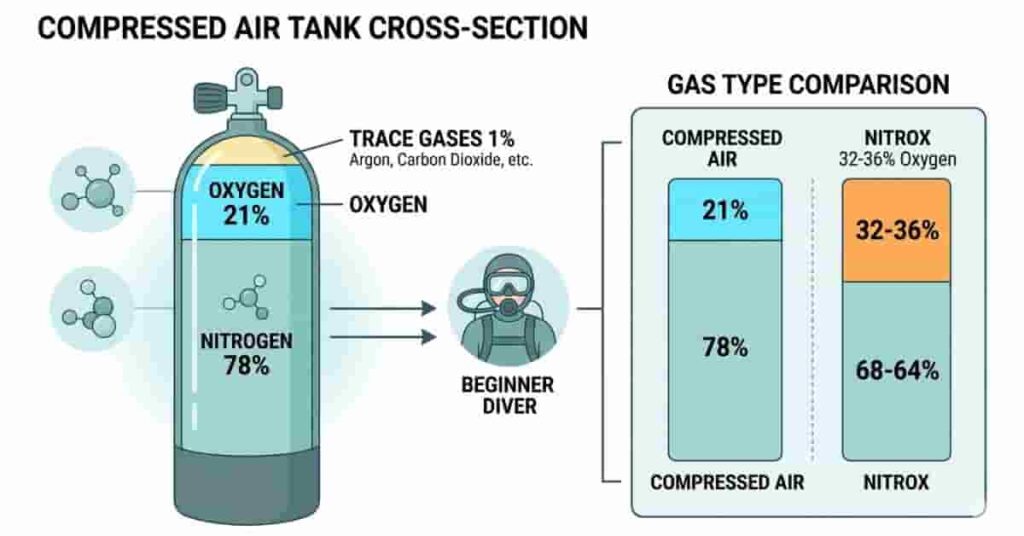
If you’re wondering what gas scuba divers breathe, the answer is usually much simpler than many beginners expect. Most recreational scuba tanks contain compressed air, not pure oxygen.
Standard scuba air closely matches the air you breathe on land. The typical oxygen content in scuba tanks includes:
- Nitrogen: about 78%
- Oxygen: about 21%
- Trace gases: about 1%
This balanced mix is safe for most beginner and recreational dives when used within proper depth limits.
Some certified divers also use Enriched Air Nitrox, also known as Nitrox. This gas blend contains a higher oxygen content, typically 32% to 36%, and lower nitrogen levels. Less nitrogen can help extend no-decompression limits and may reduce nitrogen absorption during certain dives.
However, Nitrox requires special training. Higher oxygen levels can increase the risk of oxygen toxicity at greater depths, so divers must understand safe operating limits before using them.
Pro Tip:
Always confirm your tank’s gas mix before diving, especially when using Nitrox or specialty blends.
Gas mixtures can vary based on:
- Dive depth
- Training level
- Technical vs recreational diving
- Decompression requirements
This is why understanding what gases are safe for scuba is an essential part of dive certification.
| Compressed Air | 21% | Recreational diving | Basic certification |
| Nitrox | 32–36% | Extended bottom time | Nitrox certification |
Knowing your breathing gas helps you dive safer, smarter, and with more confidence.
Why Pure Oxygen is Dangerous for Scuba Diving
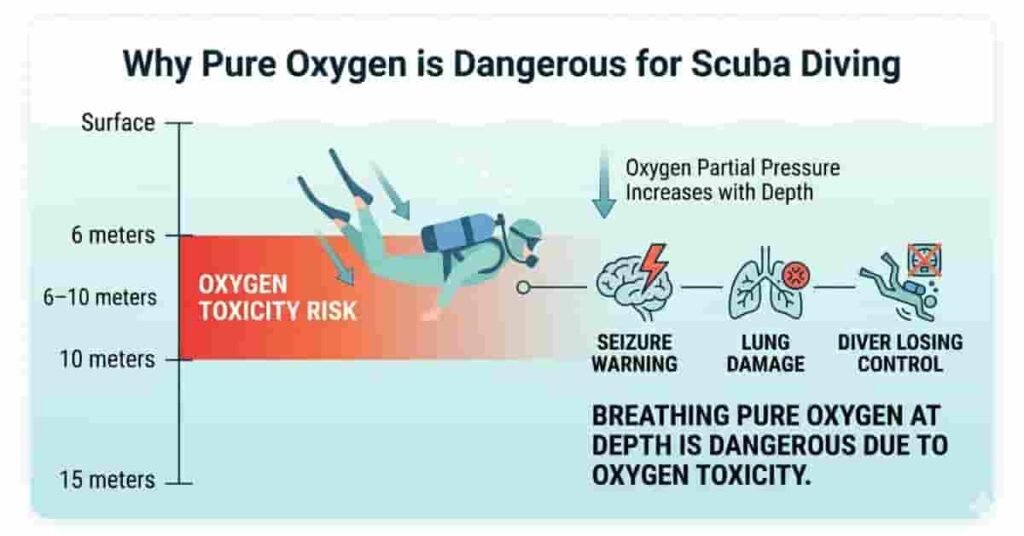
Many beginners ask, ” Can scuba divers breathe 100% oxygen underwater. While oxygen keeps us alive, too much of it under pressure can quickly become dangerous during a dive.
The main risk is oxygen toxicity, which scuba diving professionals carefully avoid. As divers descend, water pressure increases. This raises the partial pressure of oxygen, meaning your body absorbs more oxygen than it safely can handle.
At depths as shallow as 6–10 meters (20–33 feet), breathing pure oxygen may already create serious risks.
Major Types of Oxygen Toxicity:
- CNS (Central Nervous System) toxicity: Can trigger seizures or convulsions underwater
- Pulmonary oxygen toxicity: Can damage lung tissue during prolonged exposure
A seizure underwater can cause:
- Loss of regulator
- Drowning
- Panic
- Serious injury or death
Why Depth Matters:
The deeper you go, the greater the oxygen pressure becomes. Even safe gases can become hazardous if oxygen levels exceed recommended exposure limits.
Organizations such as Divers Alert Network, the National Oceanic and Atmospheric Administration, and PADI follow strict oxygen exposure guidelines to reduce these dangers.
Key Risks of Pure Oxygen Diving:
- Convulsions
- Drowning
- Lung damage
- Visual disturbances
- Loss of consciousness
When Is Pure Oxygen Actually Used in Diving?
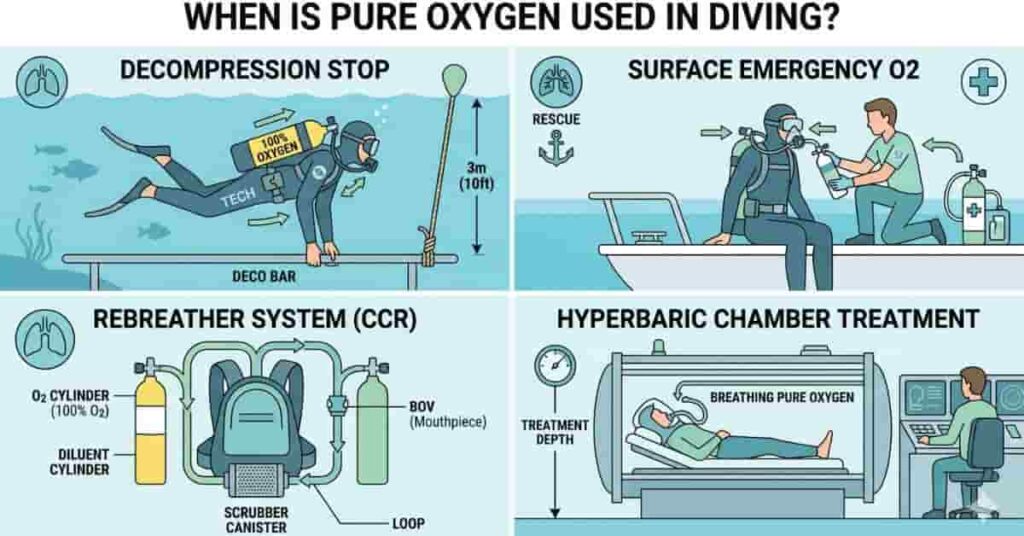
While recreational divers do not use pure oxygen for normal dives, it does play an important role in specialized diving situations. These uses are carefully controlled and handled by trained professionals.
One common use is during technical diving decompression stops. Advanced divers may breathe high-oxygen mixes or pure oxygen at shallow depths to more efficiently remove excess nitrogen from the body.
Pure oxygen is also widely used in emergency first aid. If a diver shows signs of decompression sickness or lung overexpansion injuries, surface oxygen support can improve outcomes while waiting for medical care.
Some advanced rebreather systems also use oxygen to manage breathing gas mixtures. These systems continuously adjust gas levels and require extensive certification.
Hyperbaric chambers use pure oxygen under medical supervision to treat serious dive injuries, including decompression sickness.
Understanding your breathing gas can help prevent common scuba diving breathing problems for beginners.
Pro Tip:
Never attempt to use pure oxygen underwater without proper technical training.
Common Myths About Scuba Breathing
Scuba diving myths can confuse beginners and create unsafe assumptions. Learning the facts helps new divers stay safer and make better decisions underwater.
Myth 1: “Scuba divers breathe pure oxygen.”
Fact: Recreational divers usually breathe compressed air or certified gas blends, such as Nitrox. Pure oxygen can be dangerous at many depths due to oxygen toxicity.
Myth 2: “Divers can stay underwater indefinitely.”
Fact: Air supply, depth, and no-decompression limits all restrict dive time. Divers must carefully monitor their tank pressure and bottom time.
Myth 3: “All scuba tanks are identical.”
Fact: Tanks can contain different gas mixtures depending on dive type, certification, and depth requirements. Technical divers may use specialized blends.
Myth 4: “Breathing faster gives you more oxygen.”
Fact: Rapid breathing wastes air faster and can increase anxiety. Slow, steady breaths improve gas efficiency and safety.
Takeaway:
Believing common scuba myths can lead to poor decisions underwater. Proper education from certified instructors helps replace misinformation with real safety knowledge.
Safe Breathing Tips for Beginner Scuba Divers
Good breathing habits are among the most important aspects of beginner scuba breathing safety. You don’t need advanced skills to improve your air control. You just need consistency, calmness, and awareness underwater.
Start by breathing slowly and continuously. Keep each breath steady and relaxed. This helps you use air efficiently and stay calm during the dive. Fast or shallow breathing makes you inhale air much more quickly, which can increase stress.
Never hold your breath while diving. This is a strict safety rule in scuba diving. Holding your breath can cause lung injuries because pressure changes underwater affect your lungs in ways you don’t feel immediately.
Monitor your air supply regularly. Check your pressure gauge often so you always know how much air you have left. This simple habit prevents panic situations.
Before every dive, perform proper safety checks. Make sure your equipment works correctly, and your tank is filled with the correct gas mix.
Staying calm is another key skill. Slow breathing naturally reduces air consumption, helping you enjoy longer dives. Panic or excitement usually leads to faster breathing and shorter dive time.
Also, always ask your instructor about your tank and breathing setup. Understanding your gas mix builds confidence and improves safety.
Safe gas management is also important for reducing risks associated with decompression sickness and diving safety.
Conclusion
This article explained what scuba divers really breathe underwater and cleared a common beginner myth. We also covered why pure oxygen is not used in recreational diving and how safe breathing habits improve dive safety.
In reality, the misconception that scuba divers breathe pure oxygen is a misconception for beginners. Most divers use compressed air, while Nitrox and oxygen-based systems require special training. Proper breathing control is far more important than the type of gas for new divers.
Always focus on safe diving habits and trust certified training from professionals.
If you found this guide helpful, share it with other beginner divers. You can also explore more scuba safety guides on our website to build your confidence underwater.

Scuba Diving Researcher & Beginner Guide
Evan Calder is the creator of DiveBeginner, a website dedicated to helping beginners learn scuba diving simply and practically 🌊
He focuses on scuba fundamentals, beginner safety, and clear diving guidance. Evan has studied ocean and marine science through programs at the Scripps Institution of Oceanography, UC San Diego, a globally recognized leader in ocean research.
Instead of complex technical language, Evan provides easy-to-follow, beginner-friendly guides based on real-world research, helping first-time divers feel confident before their first dive 🤿
DiveBeginner reflects his passion for making scuba diving accessible, safe, and enjoyable for everyone.