Introduction
Many new divers wonder how scuba divers breathe safely underwater. The answer is straightforward. Divers depend on a scuba breathing apparatus, an engineered system that delivers air during underwater exploration.
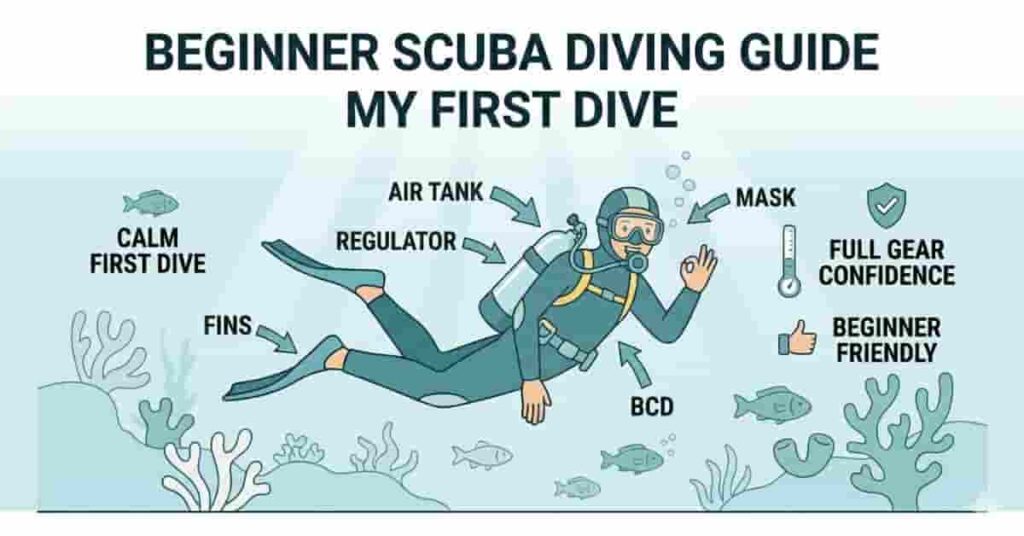
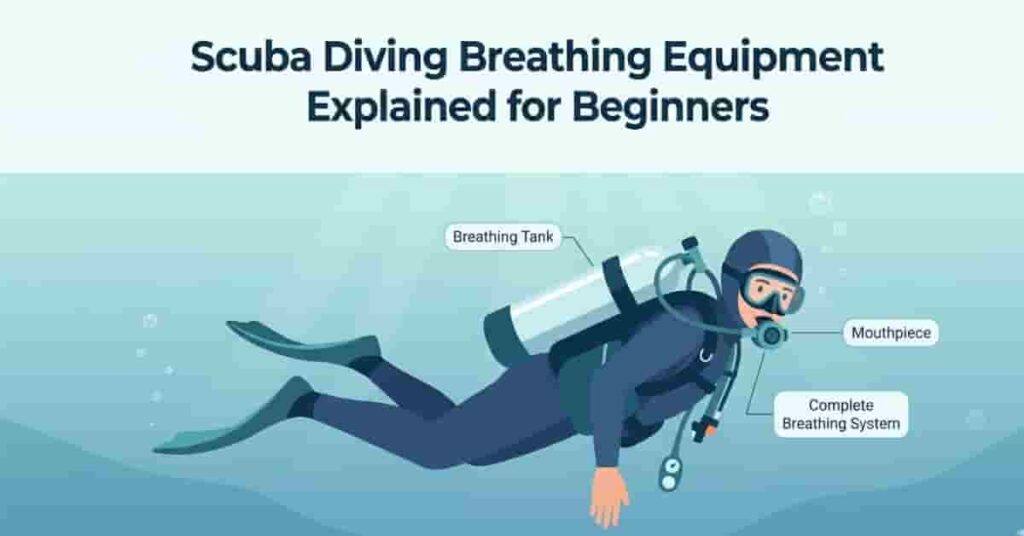
Scuba diving breathing equipment consists of a tank, regulator, and mouthpiece, functioning together to supply breathable air. This system enables divers to carry their air supply, ensuring safe, controlled underwater breathing. Though the gear might appear intricate, each component serves a distinct purpose meant for beginner safety.
Learning how scuba equipment functions can lessen anxiety and build confidence before your first dive. With proper instruction, underwater breathing feels natural and comfortable. This guide describes each component in clear language, so beginners can understand how scuba gear operates and why it’s trusted globally.
Before your first dive, understanding how to breathe properly while scuba diving can help you use your regulator more confidently and stay relaxed underwater.
What Is a Scuba Breathing Apparatus?
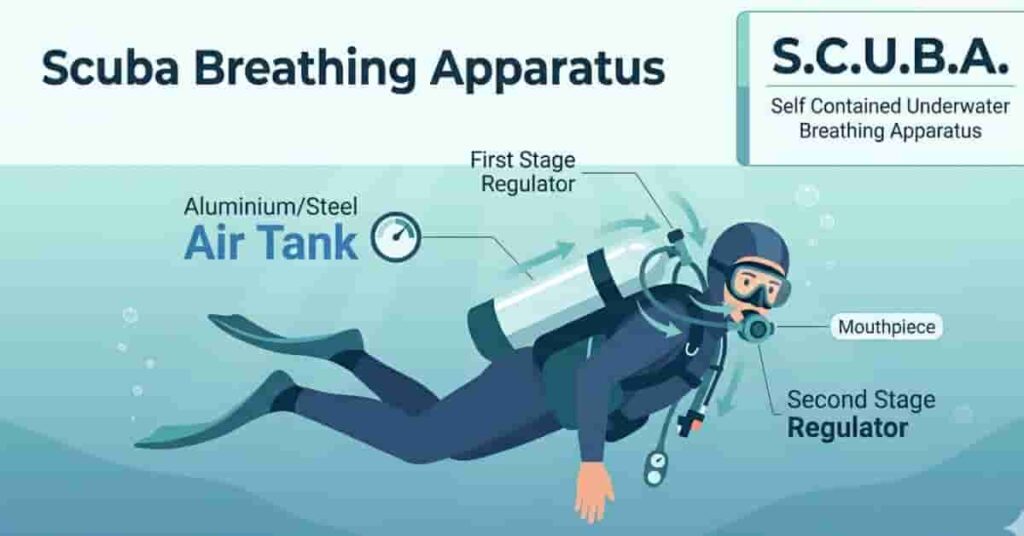
A scuba breathing apparatus is the complete system divers use to breathe underwater safely. SCUBA stands for Self-Contained Underwater Breathing Apparatus. This means the diver carries their own air supply rather than relying on surface-supplied air.
The scuba self-contained breathing apparatus usually includes an air tank (a pressurized container that stores breathable air), a regulator (a device that lowers the high pressure of the air in the tank to a safe level for breathing), a mouthpiece (the part divers place in their mouths to inhale air), and safety backup systems (such as alternate air sources or emergency valves). Together, these parts deliver breathable compressed air underwater. The regulator reduces high tank pressure, so breathing feels natural and controlled.
Unlike surface-supplied diving systems, scuba equipment allows divers to move freely underwater. There are no hoses linking them to a boat or shore. This autonomy makes scuba diving adaptable for recreational, instructional, and underwater research purposes.
Scuba breathing apparatuses are engineered specifically for efficient underwater respiration. They enable divers to inhale easily and exhale as bubbles. Modern units also feature gauges and backup air sources for enhanced safety.
For beginners, understanding this system can reduce intimidation. Though the apparatus appears complex, it is designed for reliability and safety when operated with appropriate certification.
Takeaways:
- SCUBA means Self-Contained Underwater Breathing Apparatus
- Divers carry their own breathable air supply.
- No surface connection is required.
- Equipment is designed for safe underwater breathing.
Why Beginners Often Confuse Scuba with Snorkeling
Many beginners assume scuba diving and snorkeling use similar breathing systems, but they work very differently. Snorkelers breathe through a simple tube while staying near the water’s surface. Their air comes directly from the water’s surface.
Scuba divers use a full scuba breathing apparatus, which is a set of equipment including tanks that supply compressed air underwater. This allows them to dive deeper and stay submerged much longer. The regulator system, a device that adjusts air pressure for safe breathing, enables underwater breathing, even at depth.
Snorkeling requires minimal equipment, such as a mask and snorkel. Scuba diving requires breathing equipment, including a mask, a tank, a regulator (which controls air pressure), advanced safety systems, and emergency backups. Because both activities use masks and breathing gear, beginners often confuse them at first.
Knowing the differences helps new divers choose the correct training and gear. Scuba provides greater underwater access but needs certification and safety skills.
Pro Tip:
For long dives, snorkeling gear is insufficient. Proper scuba certification is essential.
Main Parts of Scuba Diving Breathing Equipment
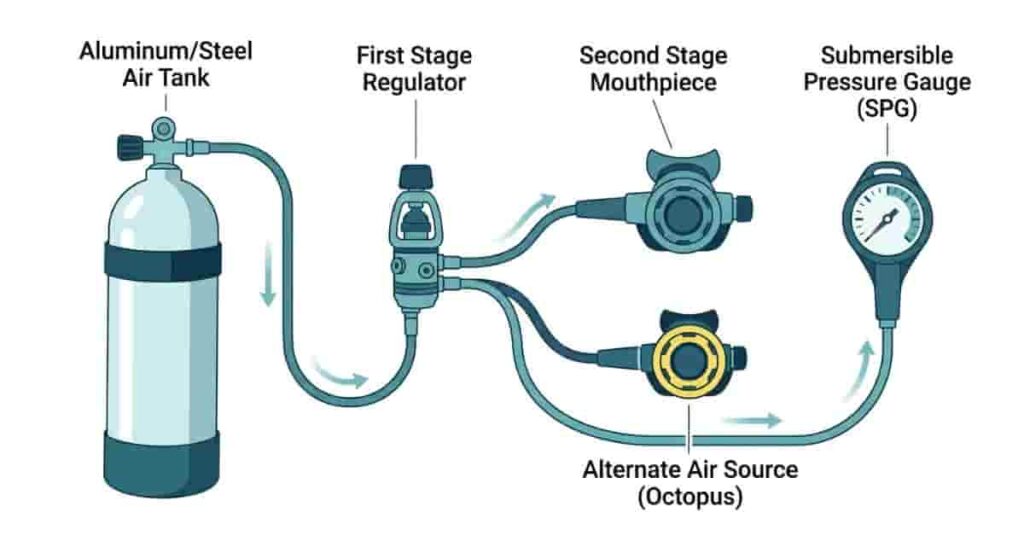
Scuba diving breathing equipment includes several key parts that work together to keep divers breathing safely underwater. Each piece has a specific job, and understanding these basics helps beginners feel more confident before diving.
The full scuba regulator system controls airflow from the tank to the diver. Safety backup devices also help monitor air supply and manage emergencies. While the setup may seem technical, each component supports simple and reliable underwater breathing.
Learning the main parts of scuba gear is one of the first steps in becoming a safe diver.
Scuba Tank (Compressed Air Cylinder)
The scuba tank stores compressed breathable air for underwater use. Most recreational divers use either aluminum or steel tanks. Aluminum tanks are common, affordable, and slightly lighter. Steel tanks are more durable and often hold more air in a smaller size.
These tanks carry filtered compressed air, not pure oxygen. The air supply allows divers to breathe independently underwater without a surface connection.
Tank size and pressure determine how long a diver can stay submerged. Beginners usually start with standard recreational tanks under instructor supervision.
First Stage Regulator
The first stage regulator attaches directly to the scuba tank valve. Its main job is to reduce the tank’s extremely high air pressure to an intermediate pressure level.
Without this pressure reduction, breathing from the tank would be impossible. The first stage safely controls airflow before passing it to the second stage regulator.
This part is essential for making scuba breathing safe and manageable.
Second Stage Regulator
The second-stage regulator is the mouthpiece divers breathe through underwater. It further adjusts air pressure so the diver receives breathable air naturally when inhaling.
When the diver exhales, air leaves through exhaust valves as bubbles. This system creates the familiar scuba breathing experience.
Most beginners quickly adapt to breathing through this regulator after training.
Alternate Air Source (Octopus)
The alternate air source, often called the octopus, is an emergency backup regulator. It provides a second breathing option if the primary regulator fails or a buddy runs low on air.
This backup system is a major safety feature in scuba diving breathing equipment and is required in standard recreational setups.
Pressure Gauge / Dive Computer
The pressure gauge tracks how much air remains in the tank. A dive computer may also monitor depth, time, and ascent safety.
These tools help divers avoid running out of air unexpectedly and support safe dive planning.
Takeaways:
- Tank stores compressed breathable air.
- The first stage regulator lowers the tank pressure.
- The second-stage regulator delivers breathable air.
- An alternate air source provides emergency backup.
- Gauges monitor air and dive safety.
Pro Tip:
Always check your scuba regulator system and pressure gauge before entering the water.
Every beginner should know why you should never hold your breath while scuba diving, as this essential safety rule protects your lungs during ascent.
How Does Scuba Diving Breathing Equipment Work?
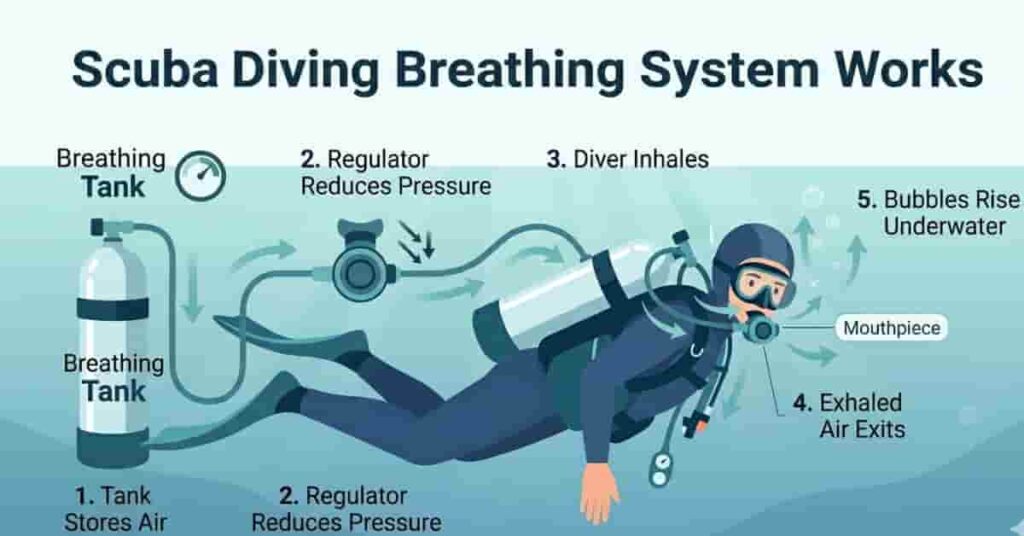
Many beginners ask what scuba divers use to breathe underwater. The answer is a scuba breathing apparatus that delivers air safely through a controlled system. While the gear may look advanced, the process is surprisingly simple.
First, the scuba tank stores compressed breathable air. This air remains under very high pressure inside the cylinder. The tank serves as the diver’s personal air supply throughout the dive.
Next, the first stage regulator lowers the tank’s pressure to a safe intermediate level. This step is essential because raw tank pressure is too powerful for direct breathing.
Then, the second stage regulator delivers air through the mouthpiece when the diver inhales. The system only releases air on demand, which makes breathing efficient and natural.
When the diver exhales, the used air exits through one-way valves in the regulator. This creates the bubbles seen rising to the surface.
In simple terms:
- Tank stores compressed air
- Regulator reduces pressure
- Mouthpiece delivers breathable air.
- Exhaust valves release exhaled air.
- Bubbles rise safely away.
This process allows divers to breathe comfortably underwater while maintaining full mobility and independence.
Why Breathing Underwater Feels Different at First
For first-time divers, breathing underwater can feel unusual at first. The regulator creates slightly more resistance than normal breathing on land. Many beginners notice the sound of each inhale and exhale more clearly.
This sensation is normal. After a short period, most divers adjust quickly and begin breathing comfortably. Slow, steady breaths help reduce anxiety and improve air efficiency.
New divers may also feel surprised by the sound of bubbles and the controlled airflow. With training, these sensations often become calming rather than stressful.
Understanding this adjustment helps beginners feel more prepared before their first dive.
Pro Tip:
Practice slow, shallow breathing in shallow water during training to build confidence with your scuba-diving breathing equipment.
What Air Do Scuba Divers Actually Breathe?
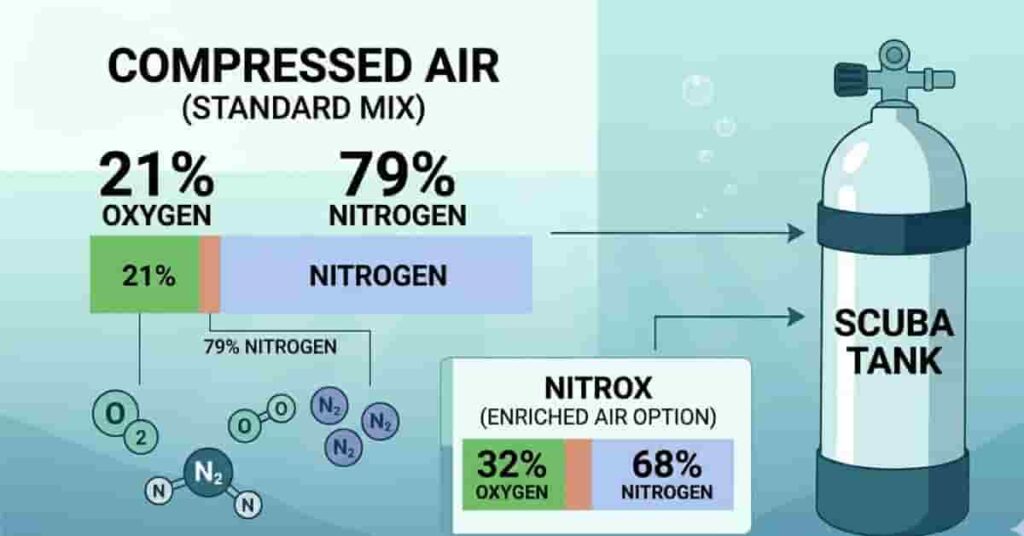
Many beginners assume scuba tanks contain pure oxygen, but that is incorrect. Most recreational divers breathe compressed, filtered air, which is very similar to surface air.
Standard scuba air usually contains about:
- 21% oxygen
- 79% nitrogen
This balanced air mixture is compressed into the tank so divers can carry enough breathable gas underwater. Using regular compressed air makes diving safer for most beginner and recreational dives.
Pure oxygen is not used in standard scuba diving because high oxygen levels can become dangerous at deeper depths. Specialized technical divers may use different gas blends, but beginners almost always start with normal compressed air.
Some divers also use Nitrox, also called enriched air nitrox. Nitrox contains a slightly higher percentage of oxygen than regular air, often around 32% to 36%. This can reduce nitrogen absorption during certain dives, but it requires additional training and certification.
For new divers, understanding that scuba tanks hold clean, filtered compressed air can ease common fears about underwater breathing.
Pro Tip:
Always confirm your tank’s gas mixture before diving, especially when using Nitrox.
Why Is It Called “Self Contained”?
The term scuba, short for self-contained underwater breathing apparatus, describes how divers carry their own breathing system underwater. Unlike other diving methods, scuba divers do not rely on air hoses connected to the surface.
Their air tank, regulator, and breathing equipment stay attached to their body. This portable setup gives divers full independence as they explore underwater environments.
Because the system is self-contained, divers can move freely in open water, reefs, wrecks, and training sites without surface restrictions. This flexibility is one reason scuba diving became so popular for recreation.
The self-contained design also makes training, travel, and equipment management easier than with larger commercial diving systems.
Scuba Diving
Scuba diving uses a portable breathing system that includes:
- Compressed air tank
- Regulator system
- Backup air source
- Gauges or a dive computer
This setup allows divers to swim independently underwater for extended periods. Recreational divers benefit from mobility, convenience, and easier access to underwater environments.
Scuba systems are ideal for:
- Recreational diving
- Dive training
- Underwater photography
- Reef exploration
Surface-Supplied Diving
Surface-supplied diving uses air delivered via a hose from the surface. Divers often wear helmets or specialized equipment while receiving continuous air from a support team.
This system is more common in:
- Commercial diving
- Underwater construction
- Military operations
- Professional salvage work
While surface-supplied systems can support longer dives, they limit movement and require extensive support equipment.
For beginners and recreational divers, scuba’s self-contained system offers far greater freedom and simplicity.
Essential Safety Features in Scuba Breathing Equipment
Modern scuba diving breathing equipment includes multiple safety systems designed to protect divers underwater. These features help monitor air supply, control buoyancy, and support emergency response. For beginners, understanding these systems builds trust and confidence.
One of the most important tools is the pressure gauge. It shows how much air remains in the tank, helping divers avoid low-air emergencies. Divers must check this gauge regularly during every dive.
The alternate air source, often called an octopus regulator, provides backup breathing air if the main regulator fails or a dive buddy needs assistance. This system is a standard part of safe recreational scuba gear.
The BCD, or buoyancy control device, allows divers to control floating, sinking, and underwater positioning. Its inflation system helps maintain safe buoyancy throughout the dive.
Dive computers track:
- Depth
- Dive time
- Ascent rate
- Safety stops
These devices reduce human error and improve dive planning.
Emergency ascent procedures are also essential. Training agencies like PADI and SSI teach divers how to ascend safely while avoiding pressure-related injuries.
Certified divers also learn pre-dive equipment checks to inspect:
- Regulators
- Tank pressure
- BCD inflation
- Air sources
- Gauges
Regular maintenance and annual servicing are critical for long-term safety.
What Does It Feel Like to Breathe Through Scuba Gear for the First Time?
Breathing through scuba diving breathing equipment feels different at first, but it becomes natural very quickly. Many beginners expect something strange, but the experience is mostly about adjusting to a new rhythm.
At the beginning, you may notice a slight resistance when inhaling. This comes from the regulator system controlling airflow from the tank. It is designed to make breathing safe, not difficult.
You will also hear the regulator sound with each breath. This soft hissing sound feels unusual at first, but most divers stop noticing it after a few minutes underwater.
Another common sensation is the feeling of bubbles releasing when you exhale. This is completely normal and shows that the system is working correctly. The bubbles rise away from your face, creating a calm underwater rhythm.
Controlled breathing is very important. Slow, steady breaths help you stay relaxed and conserve air. Fast breathing can make you breathe more quickly and feel more nervous.
Many beginners also feel a bit nervous during their first dive. This is natural because your body is adjusting to a new environment. With training and practice, confidence builds quickly.
Scuba Equipment Maintenance and Inspection
Proper maintenance of scuba diving breathing equipment is essential for safe and reliable dives. Even high-quality gear can fail if it is not regularly inspected and serviced. Beginners should understand that safety starts before entering the water.
One of the most important habits is the pre-dive buddy check. Before every dive, partners inspect each other’s gear. This includes checking air supply, regulator function, BCD inflation, and hose connections. This simple step helps catch problems early and reduces risk underwater.
Annual servicing is also required for key equipment, such as regulators. Over time, internal parts can wear out due to pressure and saltwater exposure. Certified technicians clean, test, and replace parts to keep the system working safely.
Scuba tanks also need routine inspections. Visual inspections check for rust, damage, or contamination inside the cylinder. In many regions, hydrostatic testing is required at regular intervals to confirm that the tank can safely hold high pressure.
Regulator servicing is equally important. The scuba regulator system controls airflow, so even small issues can affect breathing performance. Professional servicing ensures smooth and safe air delivery.
Divers should always use certified dive shops for maintenance. These facilities follow manufacturer standards and international safety guidelines. Trusted agencies, such as training organizations, ensure that equipment meets strict safety standards.
Beginner Mistakes to Avoid with Scuba Breathing Equipment
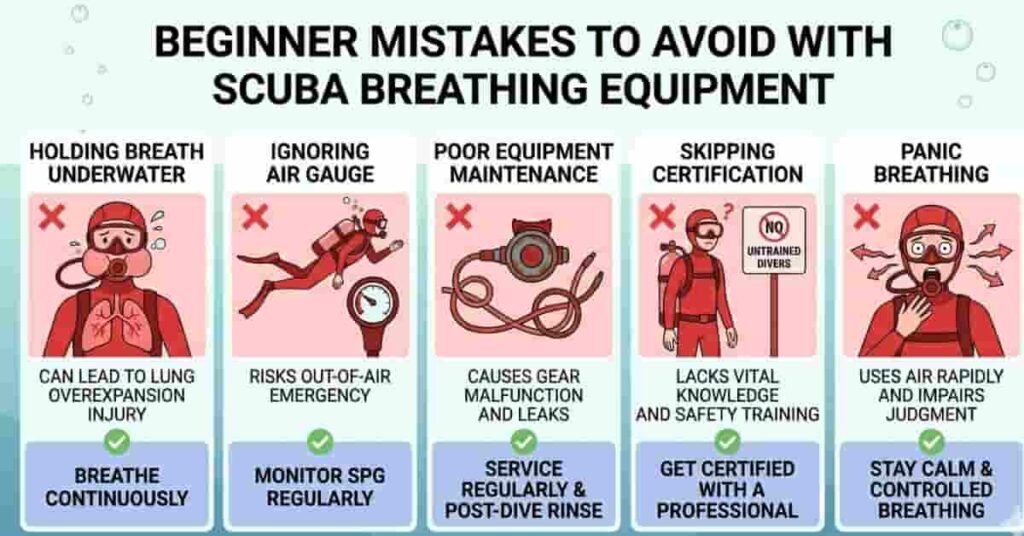
New divers often make simple mistakes when using scuba diving breathing equipment. These mistakes can affect safety, air usage, and overall comfort underwater. Understanding them early helps you become a more confident diver.
One of the most dangerous mistakes is holding your breath underwater. When using a scuba breathing apparatus, you must breathe continuously. Holding your breath can cause serious lung injury due to pressure changes.
Another common mistake is ignoring air gauges. Your pressure gauge shows how much air remains in your tank. Beginners sometimes forget to check it regularly, which can lead to running low on air unexpectedly.
Poor maintenance is also a major issue. If the scuba regulator system or tank is not serviced properly, it may not work safely. Regular inspection and servicing are essential for reliable performance.
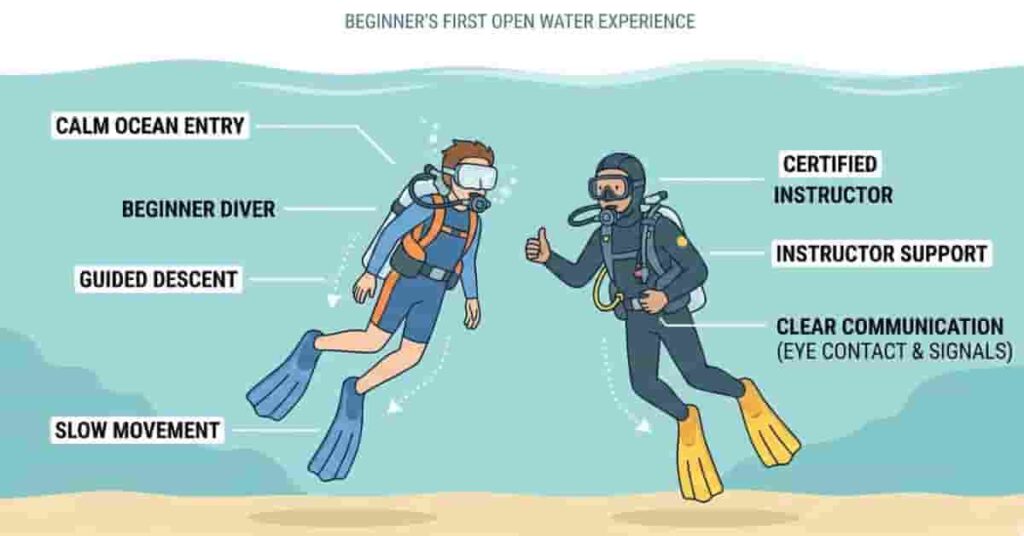
Some beginners skip certification and try diving without proper training. This increases risk because scuba diving requires knowledge of equipment, safety rules, and underwater control techniques.
Panic breathing is another issue. Fast or irregular breathing uses air quickly and can increase stress. Controlled, slow breathing helps you stay calm and conserve air efficiently.
Quick Summary Checklist for Beginners
Scuba-diving breathing equipment may seem complex at first, but it becomes easier when you break it down into simple parts. This quick checklist helps beginners remember the key functions of each system before a dive. It also reinforces safety habits that every diver should follow.
✔ Tank stores compressed air
✔ Regulator makes breathing possible
✔ Mouthpiece delivers air underwater
✔ Backup systems improve safety in emergencies
✔ Training is essential before any dive
✔ Regular maintenance protects diving equipment
This checklist is designed to keep things simple and practical. If you can remember these basics, you already understand the core of how scuba breathing systems work. It also helps you build confidence before entering the water, especially during your first few dives.
For beginners, reviewing this list before every dive can reduce mistakes and improve safety awareness. Scuba diving becomes much more enjoyable when you fully understand your equipment and trust it.
Takeaways:
- A simple checklist improves safety awareness.
- Helps beginners remember core equipment functions
- Builds confidence before diving
- Supports safer and more controlled dives
If you’re preparing for open water, this complete first-time scuba diving guide covers the key skills, gear, and safety basics every new diver should know.
Conclusion
Scuba-diving breathing equipment may look complex at first, but it works through a simple, reliable system. This guide explained how divers use tanks, regulators, and safety devices to breathe safely underwater. You also learned how the scuba breathing apparatus delivers air and supports controlled underwater breathing.
In reality, this system is designed for safety, comfort, and ease of use. With proper training, beginners quickly gain confidence and understand how each part works together. Certification is essential because it teaches you how to handle equipment correctly and stay safe underwater.
The scuba breathing apparatus is designed to enable underwater exploration for anyone who trains properly.
If you found this guide helpful, share it with new diving enthusiasts. You can also explore more beginner scuba resources on our site to continue learning safely.

Scuba Diving Researcher & Beginner Guide
Evan Calder is the creator of DiveBeginner, a website dedicated to helping beginners learn scuba diving simply and practically 🌊
He focuses on scuba fundamentals, beginner safety, and clear diving guidance. Evan has studied ocean and marine science through programs at the Scripps Institution of Oceanography, UC San Diego, a globally recognized leader in ocean research.
Instead of complex technical language, Evan provides easy-to-follow, beginner-friendly guides based on real-world research, helping first-time divers feel confident before their first dive 🤿
DiveBeginner reflects his passion for making scuba diving accessible, safe, and enjoyable for everyone.