Introduction
Your first time thinking about scuba diving probably feels exciting—and a little scary. Breathing underwater isn’t normal, and that fear makes sense.
Many beginners in the USA worry after watching movies or seeing dramatic news stories. They picture gear failure, panic underwater, or sudden danger from the ocean. These scenes stick, even though they rarely show how scuba diving really works. That’s why so many people ask, Is scuba diving dangerous for beginners?, before ever trying it.
The truth sits between hype and reality. Scuba diving has real risks, but it’s also one of the most controlled adventure activities today. With proper training and calm conditions, many beginners are surprised by how safe it feels. In fact, people often wonder if scuba diving is safe for beginners or even more dangerous than driving. This guide clears the noise. You’ll learn what risks actually matter, which fears are exaggerated, and how safety works in real life. No scare tactics. No false promises. Just clear facts explained.
Let’s break down what’s actually risky—and what’s not.
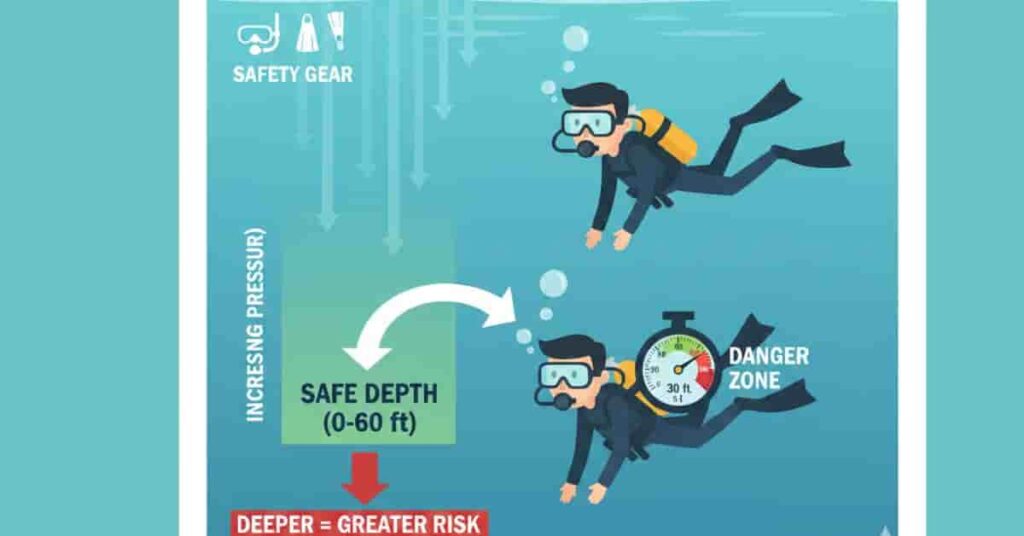
Many beginners also wonder at what depth scuba diving becomes dangerous, especially when planning their first ocean dives.
Why Beginners Think Scuba Diving Is Dangerous
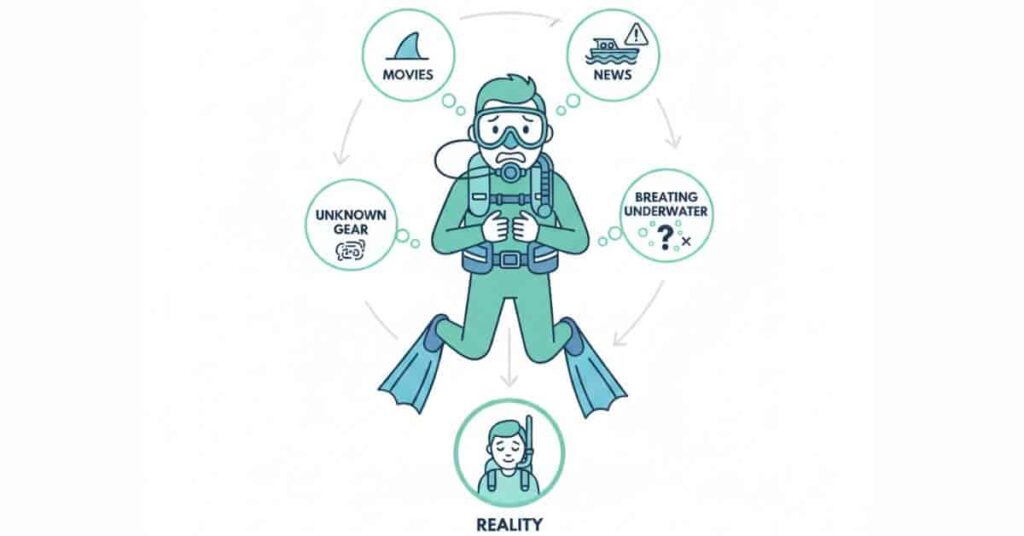
Most beginners don’t fear scuba diving because of facts. They fear it because of what they’ve seen or heard. Movies often show diving as chaotic and risky. Characters run out of air, panic, or face sudden danger underwater. News stories do the same thing. They highlight rare accidents without explaining what went wrong. Over time, this creates the idea that scuba diving is dangerous by default.
Another big reason is simple lack of knowledge. If you’ve never worn scuba gear, it can look complex and intimidating. Tanks, hoses, and gauges feel technical at first glance. Without training, it’s easy to assume one small mistake could be serious.
Breathing underwater also feels unnatural. Your brain links water with holding your breath. Using a regulator goes against instinct, especially for first-timers. That mental barrier alone can create anxiety before the dive even starts.
Many beginners also misunderstand how scuba equipment works. They imagine sudden failures or loss of air. In reality, modern gear is built with backups and safety checks. Training teaches you how each part works before you ever enter the water. These fears are common—and normal. Understanding where they come from is the first step toward feeling confident and informed.
Is Scuba Diving Actually Dangerous for Beginners?
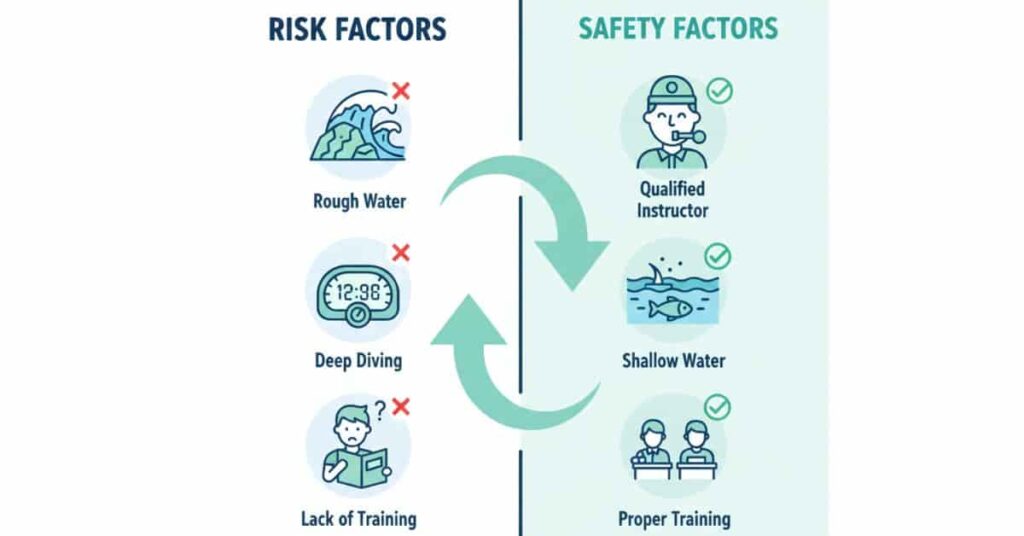
scuba diving is not inherently dangerous for beginners. Safety depends on training, conditions, and how closely rules are followed. Most beginner risks don’t come from the ocean itself. They come from human factors like rushing, panic, or skipping basics. When beginners learn properly and dive within limits, scuba diving becomes a controlled activity—not a reckless one.
Certified programs are designed for first-timers. They limit depth, control the environment, and build skills step by step. That’s why many experts agree scuba diving can be safer than people expect, especially for beginners. Problems usually appear when key safety layers break down. Understanding when diving becomes risky—and when it’s very safe—helps set realistic expectations.
When Scuba Diving Can Be Dangerous
Scuba diving becomes risky when training is poor or rushed. Skipping skills practice or ignoring briefings increases stress underwater. Beginners need time to learn breathing control, buoyancy, and emergency steps. Ignoring safety rules is another major factor. Going deeper than trained limits or diving solo raises risk fast. These rules exist to prevent small issues from becoming serious.
Undisclosed medical issues can also matter. Certain conditions affect pressure, breathing, or awareness underwater. This is why medical questionnaires and honest answers are important. Panic is one of the biggest dangers for beginners. Fear can lead to rapid breathing or poor decisions. Proper training focuses on staying calm and handling issues slowly and safely.
Takeaway: Most danger comes from behavior, not scuba diving itself.
When Scuba Diving Is Considered Very Safe
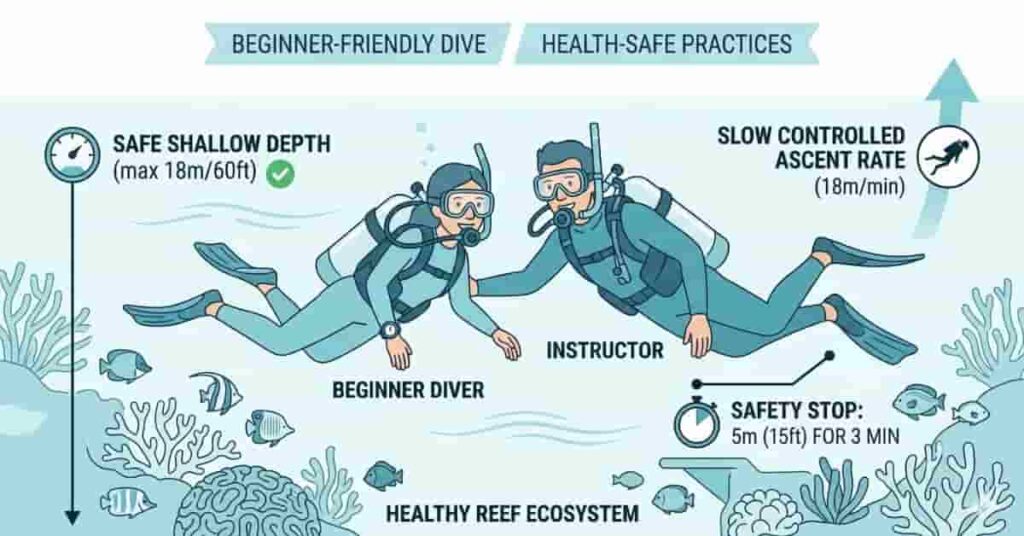
Scuba diving is considered very safe when beginners follow structured training. Certified instructors guide every step and watch closely during dives. You’re never expected to “figure it out” alone. Beginner dives stay shallow and controlled. Shallow water reduces pressure stress and allows easy ascents. Conditions are chosen for calm seas and good visibility.
Locations also matter. Beginner-friendly sites avoid strong currents and complex terrain. These environments lower mental and physical strain. Modern scuba equipment adds another safety layer. Gear is tested, maintained, and designed with backups. Pre-dive checks catch most issues before entering the water.
Pro tip: Staying within training limits is the single best way to stay safe.
When these factors align, scuba diving becomes predictable, calm, and beginner-friendly.
Scuba Diving Risk vs Everyday Activities
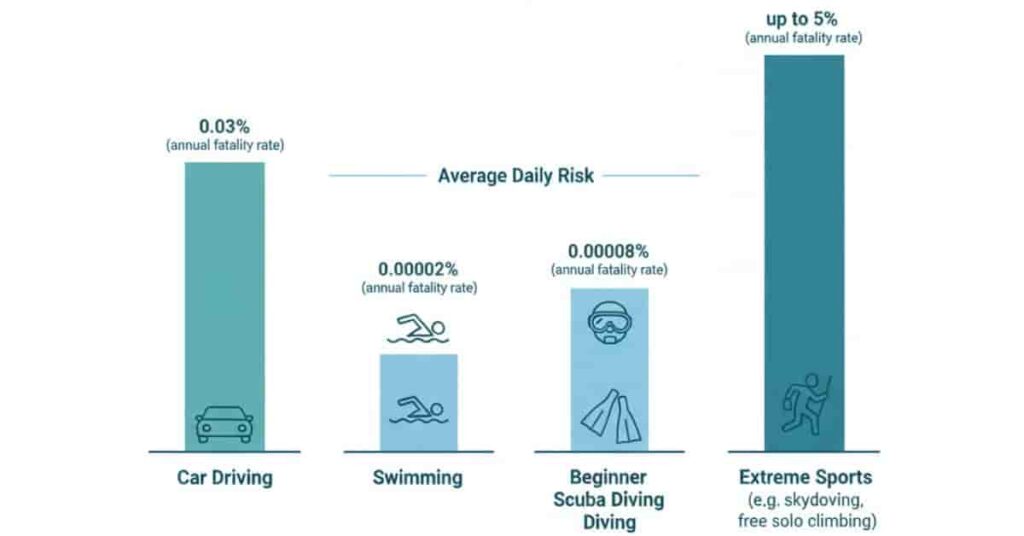
Many beginners don’t ask if scuba diving has risk. They ask how that risk compares to normal life. That’s a smart question. Risk feels bigger when something is new and unfamiliar. When you compare activities side by side, scuba diving often looks less scary than expected.
Most daily activities carry risk we barely notice. Driving, swimming, or even walking near traffic all involve potential danger. We accept them because we understand how they work. Scuba diving feels different because it’s unfamiliar. You’re underwater, using equipment, and trusting training. That unfamiliarity can make the risk feel higher than it actually is.
Here’s a simple comparison to put things in perspective.
Risk Comparison Table
| Activity | Relative Risk Level |
|---|---|
| Driving a car | Higher |
| Swimming | Moderate |
| Scuba diving (beginner, guided) | Lower |
| Extreme sports | Much Higher |
This table reflects controlled, beginner-level scuba diving. It assumes certified instruction, shallow depth, and calm conditions. Driving a car involves unpredictable drivers, traffic, and weather. You do it daily, so the risk feels normal—even though accidents are common. Swimming carries moderate risk, especially without supervision. Fatigue, currents, or panic can happen quickly.
Beginner scuba diving happens in a controlled setting. Dives are planned, supervised, and limited by training rules. Instructors monitor conditions, depth, and behavior closely. Extreme sports sit at the other end. They often involve speed, height, or limited control.
So, Is Scuba Diving More Dangerous Than Driving?
For beginners diving with an instructor, no. In many cases, scuba diving is less dangerous than driving a car. That doesn’t mean scuba diving has zero risk. It means the risks are managed, predictable, and taught upfront.
Takeaway: When done properly, scuba diving isn’t reckless. It’s a structured activity designed to keep beginners safe while they learn.
What Makes Scuba Diving Safe for Beginners
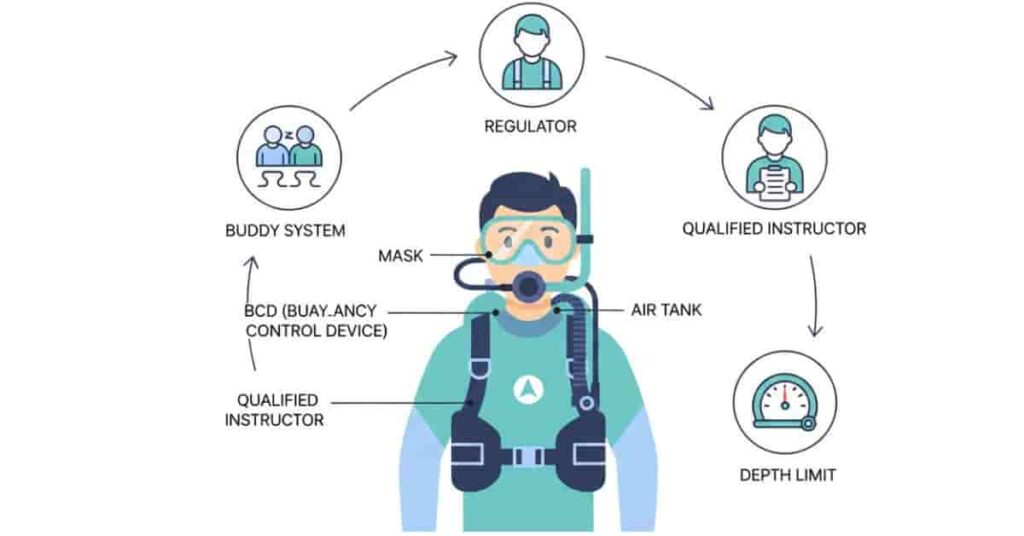
Scuba diving safety doesn’t rely on luck. It’s built into how beginners learn, plan, and dive. Several layers work together to reduce risk and boost confidence from day one. Below are the core factors that make scuba diving safe for beginners.
Training & Certification
Training is the foundation of beginner safety. Certified courses teach skills in a clear, step-by-step way. You practice first in calm, controlled water before any real dive. Instructors focus on problem-solving, not just technique. You learn how to breathe calmly, clear your mask, and control buoyancy. You also practice what to do if something feels off. Certification isn’t a formality. It proves you understand limits, signals, and safety rules. This training reduces panic and builds trust in yourself and the process.
Takeaway: Good training turns fear into understanding.
Pro tip: Never rush a course. Ask questions until things feel clear.
Depth Limits
Beginner dives stay shallow for a reason. Shallow depths reduce pressure stress and air use. They also make it easier to ascend safely if needed. Depth limits aren’t suggestions. They are safety boundaries designed for new divers. Staying shallow gives your body and mind time to adapt. Most beginner dives happen where light, visibility, and conditions feel comfortable. This lowers mental strain and helps you stay relaxed underwater.
Takeaway: Shallow dives equal lower risk and higher confidence.
Buddy System
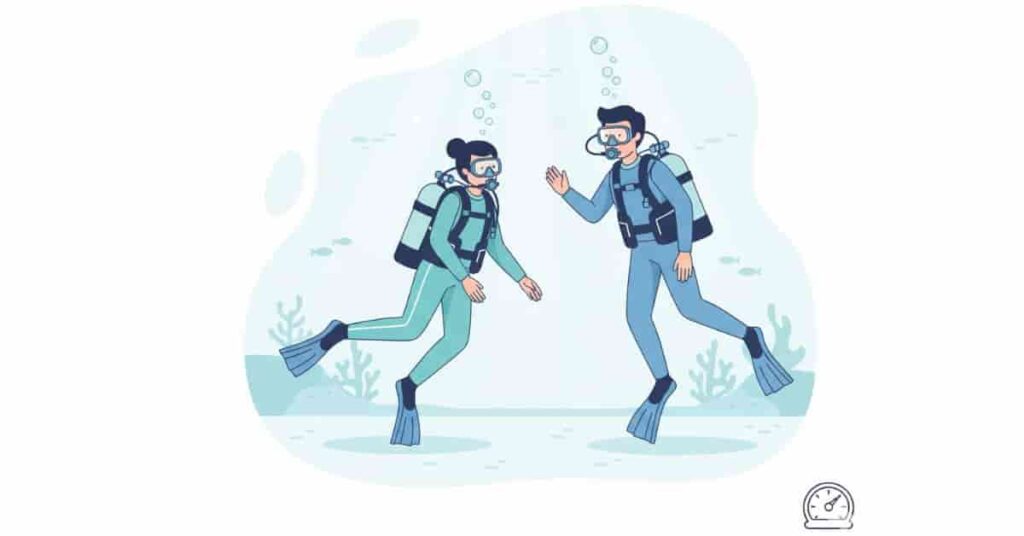
Beginners never dive alone. The buddy system adds an extra layer of safety. Your buddy watches your air, position, and signals. You do the same for them. If one person has an issue, help is immediate. This system reduces isolation and panic. Knowing someone is right beside you builds calm and focus.
Pro tip: Stay close enough to reach your buddy in seconds.
Modern Scuba Equipment Safety
Today’s scuba gear is designed with safety in mind. Most systems include backups and clear indicators. Regulators deliver air smoothly and reliably. Buoyancy control devices help you float, sink, or stay neutral. Gauges show air supply clearly at a glance. Equipment is checked before every dive. Rental gear is serviced and inspected regularly. These checks prevent most issues before entering the water.
Takeaway: Modern gear supports beginners, not challenges them.
Some people also worry about whether scuba diving can affect your health long-term, which is a common concern among new divers.
Is Scuba Diving Safe from Sharks?
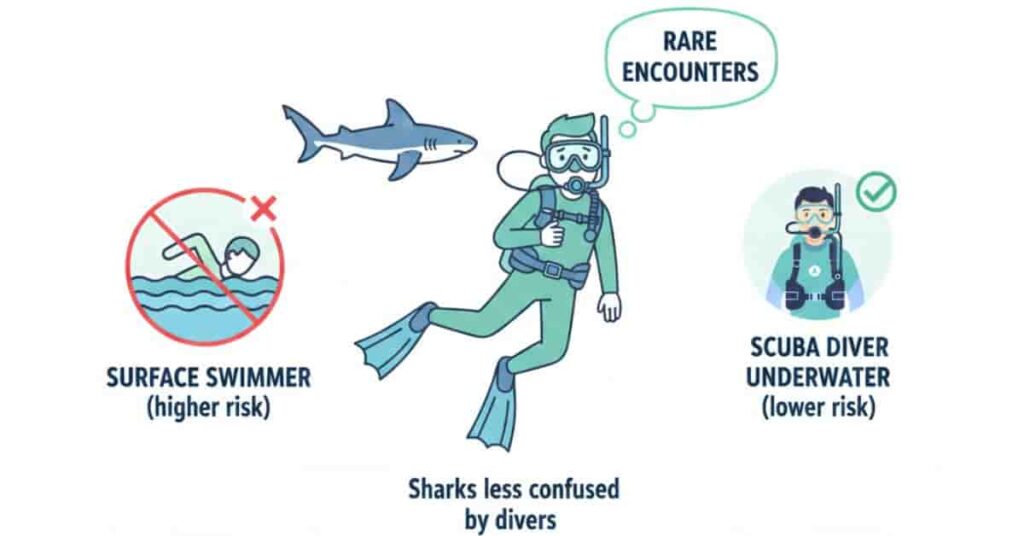
Sharks are one of the biggest fears for new divers, and movies are a big reason why. Films and viral clips often portray sharks as aggressive hunters, but that image doesn’t reflect their actual behavior. In reality, sharks are cautious animals. They don’t see scuba divers as prey and usually keep their distance.
Shark incidents during scuba diving are extremely rare. Most reported encounters involve surfers or swimmers at the surface, not divers underwater. Divers move slowly, make steady bubbles, and stay vertical, which doesn’t resemble natural prey. That’s why many divers see sharks only briefly—or not at all.
Beginner dives also happen in controlled locations. These sites are close to shore, shallow, and carefully chosen by instructors. They’re very different from open-ocean environments where sharks actively hunt. Instructors avoid areas with known shark activity and check conditions before every dive. This context helps answer a common question: Is scuba diving safe from sharks? For beginners diving with professionals, the risk is extremely low and well managed.
Shark Risk Comparison
| Situation | Relative Risk |
|---|---|
| Scuba diving (beginner, guided) | Very Low |
| Swimming at public beaches | Low to Moderate |
| Surfing | Higher |
| Open-ocean activities | Higher |
The ocean always deserves respect, but fear often comes from exaggeration, not facts. When you understand shark behavior and dive in beginner-friendly locations, scuba diving becomes far less intimidating.
Takeaway: Sharks are not a common danger for beginner scuba divers. With proper supervision and a suitable location, this fear is mostly a myth—not a real risk.
Real Scuba Diving Risks Beginners Should Know
Scuba diving isn’t risk-free, and it shouldn’t be presented that way. The goal isn’t fear—it’s awareness. When beginners understand real risks, they’re easier to manage and less stressful. One common issue is ear pressure. As you descend, water pressure increases, which can affect your ears. If you don’t equalize early and often, discomfort can build. Training teaches simple techniques to handle this safely. That’s why instructors descend slowly and watch beginners closely.
Panic and breathing control are other real concerns. New divers may breathe too fast when they feel nervous. Fast breathing uses air quickly and increases anxiety. Proper training focuses on slow, steady breaths and staying calm. If panic starts, divers are taught to stop, signal, and reset. Ascent mistakes can also cause problems. Rising too quickly changes pressure in the body. Beginner courses stress slow, controlled ascents and constant monitoring. Instructors lead the ascent and use clear signals to keep it safe.
Dehydration is often overlooked. Diving can be physically demanding, especially in warm water. Dehydration may increase fatigue and discomfort. Drinking water before and after dives is a simple but important habit.
Takeaway: These risks are real, but they’re well known and manageable. With training, supervision, and basic self-awareness, beginners can dive safely and confidently.
How Beginners Can Make Scuba Diving Even Safer
Scuba diving safety isn’t only about training. Beginners also play a big role in reducing risk. Small, smart choices before and during a dive make a real difference.
Use this simple checklist to stay safe and confident.
- Choose a certified dive center. Look for recognized certifications and experienced instructors. A good dive center follows clear safety procedures and never rushes students.
- Stay within your training limits. Don’t go deeper or try skills you haven’t learned yet. Depth limits and conditions exist to protect beginners, not restrict fun.
- Never dive alone. Always dive with a buddy or under an instructor’s supervision. The buddy system ensures quick help if something unexpected happens.
- Ask questions before diving. If something feels unclear, speak up. Understanding the plan reduces anxiety and prevents mistakes underwater.
- Stop if something feels wrong. Pain, discomfort, or rising panic are signals to pause. Ending a dive early is a smart decision, not a failure.
Pro tip: Safety improves when beginners stay calm, curious, and honest about how they feel.
Takeaway: You don’t need experience to dive safely. You need awareness, communication, and respect for your limits.
Common Scuba Diving Myths
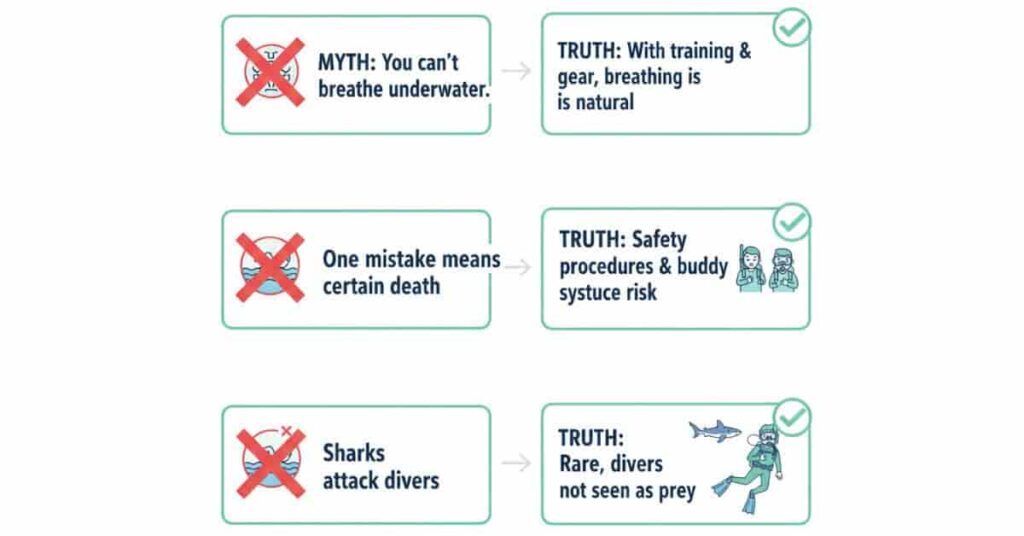
Scuba diving fears often come from myths, not real experience. These ideas spread through movies, social media, and word of mouth. Clearing them up helps beginners approach diving with confidence, not anxiety.
Myth: “You can’t breathe properly underwater.” This is one of the most common worries. Modern regulators deliver air smoothly and on demand. Breathing underwater feels different at first, but it’s steady and controlled. Most beginners adjust within minutes once they relax.
Myth: “One mistake means death.” This belief makes scuba diving sound unforgiving. In reality, beginner diving includes multiple safety layers. Instructors, depth limits, and the buddy system prevent small issues from escalating. Training focuses on slow responses, not split-second reactions.
Myth: “Sharks actively attack divers.” Sharks do not hunt scuba divers. They usually avoid bubbles, noise, and large shapes underwater. Beginner dives take place in locations chosen to reduce encounters even further. These myths exaggerate risk and ignore how structured scuba diving really is. When beginners understand how safety works, fear loses its power.
Takeaway: Scuba diving isn’t about surviving danger. It’s about learning skills in a calm, controlled environment.
Who Should Avoid Scuba Diving
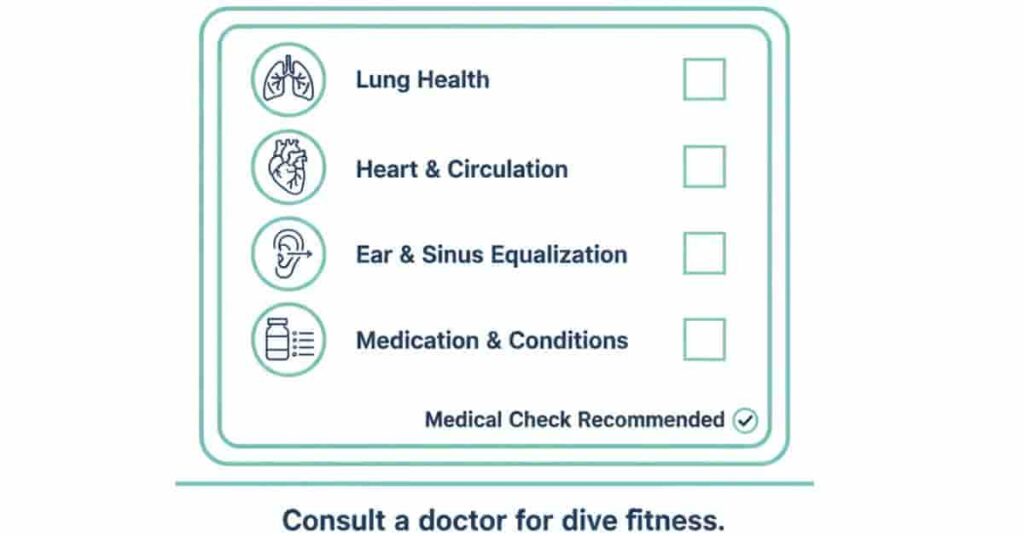
Scuba diving is safe for many people, but it isn’t right for everyone. This section offers general guidance, not medical advice. A doctor or qualified medical professional should always make the final call.
People with certain health conditions may need extra evaluation. Breathing disorders, heart conditions, or issues with blood pressure can affect how the body handles pressure. Chronic ear or sinus problems may also cause discomfort underwater.
Recent surgeries or injuries can be another concern. Healing tissues may react poorly to pressure changes. Diving too soon can slow recovery or increase risk.
Pregnancy is also a reason to avoid scuba diving. The effects of pressure on a developing baby are not fully understood. Most medical organizations advise against diving during pregnancy.
Medications matter as well. Some drugs affect alertness, breathing, or reaction time. These effects can interfere with safe diving. Before any course, beginners complete a medical questionnaire. Answering honestly protects you, not the dive center. If a condition is flagged, a doctor may recommend clearance or alternatives.
Takeaway: Scuba diving rewards caution and honesty. When in doubt, pause and seek medical advice before entering the water.
Final Verdict
We covered the real risks, common myths, and the safety systems built for new divers. We compared scuba diving to everyday activities and addressed fears like sharks and panic. So, is scuba diving dangerous for beginners? No, not when it’s done with proper training, calm conditions, and certified instructors. For many people, it’s a controlled and beginner-friendly adventure. That’s why so many first-timers discover that scuba diving is safe for beginners when they follow the rules.
Scuba diving still demands respect. You must stay within limits, communicate clearly, and listen to your body. When you do, risk stays manageable and predictable. If this guide helped ease your concerns, share it with someone feeling unsure. Have questions or a first-dive story? Drop a comment below. You can also explore our beginner resources to keep learning with confidence.
If you’re completely new, it’s helpful to first understand the scuba diving basics for beginners before worrying about potential risks.

Scuba Diving Researcher & Beginner Guide
Evan Calder is the creator of DiveBeginner, a website dedicated to helping beginners learn scuba diving simply and practically 🌊
He focuses on scuba fundamentals, beginner safety, and clear diving guidance. Evan has studied ocean and marine science through programs at the Scripps Institution of Oceanography, UC San Diego, a globally recognized leader in ocean research.
Instead of complex technical language, Evan provides easy-to-follow, beginner-friendly guides based on real-world research, helping first-time divers feel confident before their first dive 🤿
DiveBeginner reflects his passion for making scuba diving accessible, safe, and enjoyable for everyone.