Introduction
Ever wondered what it really feels like to breathe underwater for the first time?
If you’re curious but nervous, that’s normal. Many first-time divers across the USA feel the same way. The ocean looks exciting, but it can also feel intimidating. That’s why learning the scuba diving basics for beginners is so important before you step off the boat.
You don’t need to be an athlete or an expert swimmer. You just need clear guidance and the right mindset. With simple scuba diving tips for beginners, your first dive can feel calm and controlled. Most fears come from not knowing what to expect. This guide breaks everything down in plain language. You’ll learn how scuba gear works, what happens during training, and practical first-time scuba diving tips that build confidence fast.
No experience needed — this guide starts from zero.
Many beginners naturally ask is scuba diving dangerous for beginners before trying their first dive.
By the end, you’ll understand the basics, feel prepared, and know whether scuba diving is right for you.
What Is Scuba Diving?
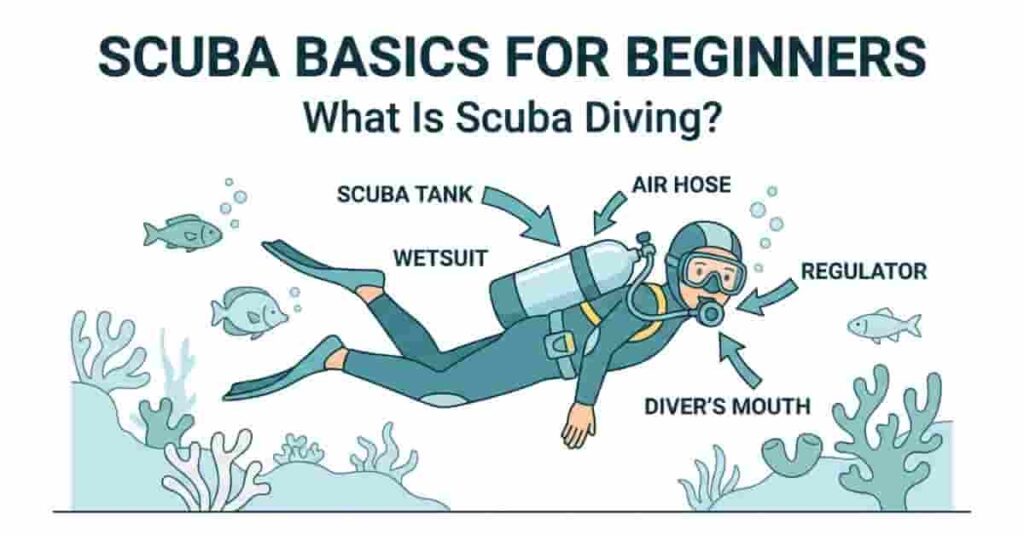
Understanding scuba diving basics for beginners starts with one simple idea. You carry your own air underwater. The word SCUBA means Self-Contained Underwater Breathing Apparatus. The name sounds technical, but the idea is easy to grasp.
Scuba diving allows you to breathe, move, and explore below the surface. You are not holding your breath. You are breathing normally through special equipment designed for safety.
What Does SCUBA Actually Mean?
SCUBA is an acronym for a breathing system. “Self-contained” means the air supply travels with you. You do not rely on the surface for oxygen. The air tank sits on your back. It holds compressed air, not pure oxygen. A regulator connects to the tank and delivers air only when you inhale. This keeps breathing naturally and controlled.
You never breathe directly from the tank. The regulator adjusts air pressure so it feels normal in your lungs.
How Do You Breathe Underwater?
Breathing underwater feels easier than most beginners expect. When you inhale, the regulator releases air from the tank. When you exhale, bubbles float to the surface. The system responds to your breathing. It does not push air constantly. That makes it efficient and comfortable.
You must breathe slowly and steadily. Never hold your breath. Slow breathing keeps you calm and helps control buoyancy.
Scuba Diving vs. Snorkeling
Many beginners mix up snorkeling and scuba diving. They are not the same.
Snorkeling keeps you at the surface. You breathe through a tube while floating face down. You cannot go deep because the tube must stay above water. Scuba diving lets you descend below the surface. Your air supply goes with you. That freedom allows longer exploration and deeper views.
Both activities are fun, but scuba diving offers a more immersive experience.
How Scuba Diving Works (Step-by-Step)
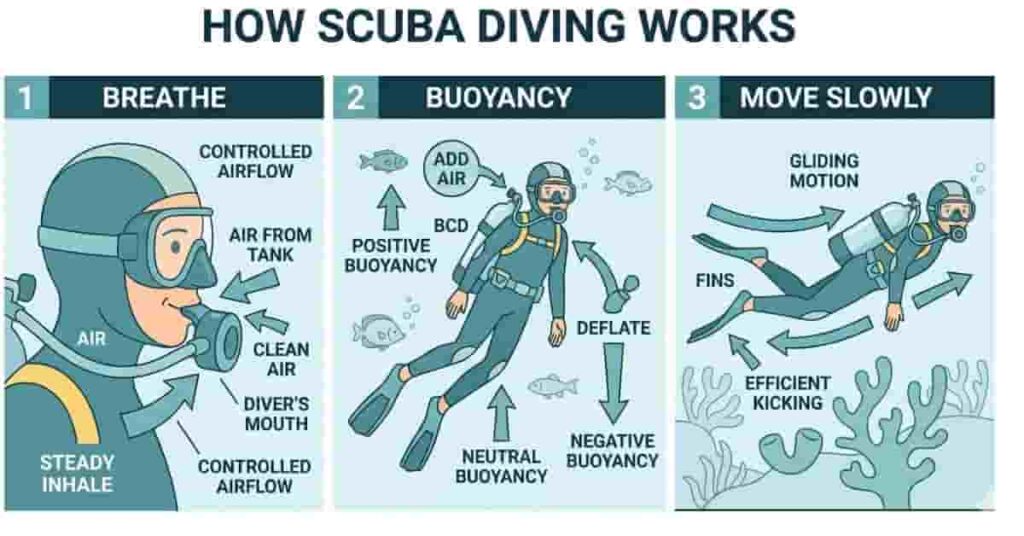
Scuba diving basics for beginners become clear when you see the process step by step. It is not complicated. It is controlled, calm, and guided.
Here is what happens underwater and why it works.
Step 1: Breathing Compressed Air
Your tank holds compressed air. This means more air fits inside the tank. It is the same type of air you breathe on land. When you inhale, the regulator delivers air at a comfortable pressure. When you exhale, bubbles rise to the surface. The system only gives air when you breathe in.
You breathe slowly and steadily. Never hold your breath. Slow breathing keeps you relaxed and helps conserve air.
Most beginners say breathing feels strange at first. After a few minutes, it feels natural.
Step 2: Understanding Buoyancy
Buoyancy controls whether you float, sink, or stay level. Divers use a device called a BCD to adjust this. Adding air helps you float. Releasing air helps you descend. Your breathing also affects buoyancy. A deep breath can lift you slightly. A slow exhale helps you sink a little.
Instructors teach this in shallow water first. You practice until you feel steady and balanced.
The goal is simple. You want to hover comfortably without effort.
Step 3: Why Divers Move Slowly
Scuba diving is never rushed. Divers move slowly for safety and comfort. Going down slowly helps your body adjust to pressure. Moving slowly also protects marine life and improves air quality.
Fast movements waste energy and air. Calm movements keep the dive smooth.
Slow diving is not boring. It helps you notice small details and enjoy the experience.
Takeaways
- You breathe normal air through a regulator.
- Buoyancy keeps you balanced underwater.
- Slow movement keeps diving safe and relaxing.
It’s also important to understand at what depth scuba diving becomes dangerous, especially for beginner divers.
Essential Scuba Diving Gear Beginners Should Know
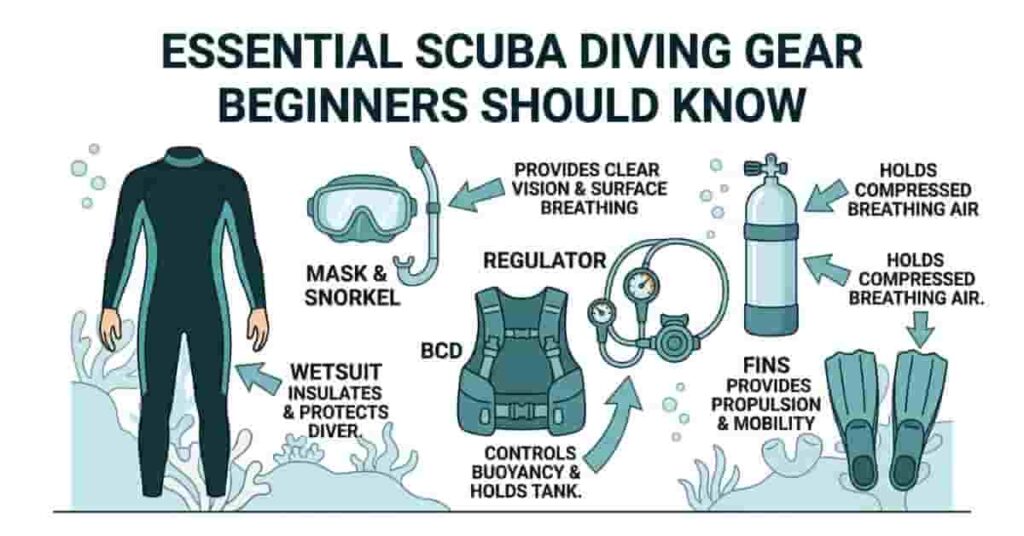
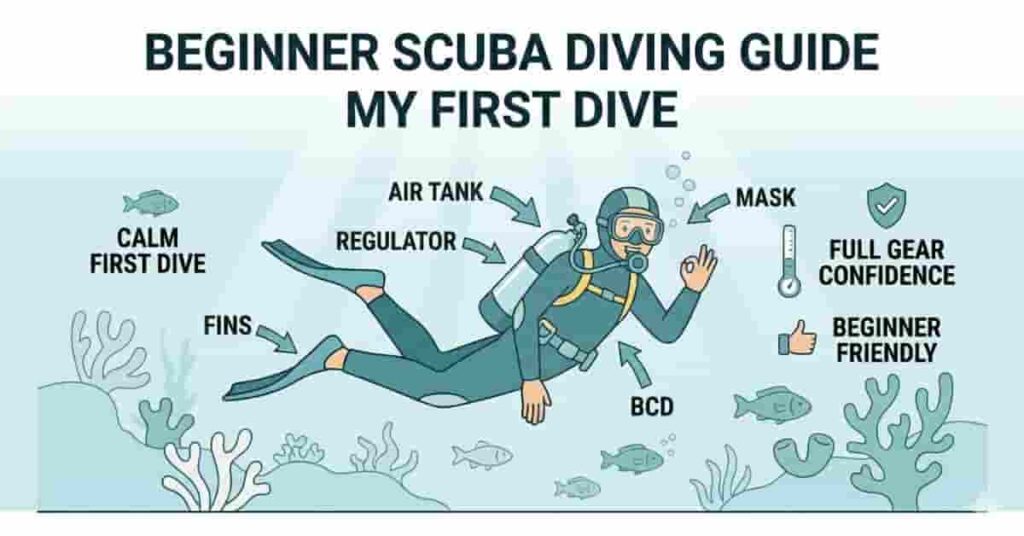
Understanding scuba diving basics for beginners means knowing your core gear. Each piece has one clear job. Together, they keep you safe and comfortable underwater. You do not need to memorize technical details. You only need to understand what each item does and why it matters.
Mask & Snorkel
Your mask lets you see clearly underwater. It creates an air space in front of your eyes. Without it, everything looks blurry. A good mask should seal gently against your face. It should not feel tight or painful. Clear vision builds confidence on your first dive. The snorkel allows you to breathe at the surface without using tank air. Many instructors use it during surface practice.
Beginner tip: Choose comfort over style. A proper fit matters more than brand.
Regulator
The regulator is your breathing device. It connects to the air tank and delivers air when you inhale. You do not breathe directly from the tank. The regulator adjusts the airflow so it feels natural. Most beginners are surprised by how normal breathing feels. It also includes a backup mouthpiece. This adds an extra layer of safety during training.
Beginner tip: Practice breathing slowly in shallow water first. Calm breathing makes everything easier.
Buoyancy Control Device (BCD)
The BCD is a jacket-like vest worn over your tank. It helps control floating and sinking. You add small amounts of air to float. You release air to descend. This keeps you balanced underwater. Your instructor will teach you how to adjust it step by step. It quickly becomes second nature.
Beginner tip: Make small adjustments. Big changes make you rise or sink too fast.
Air Tank
The air tank holds compressed air. It supplies the air you breathe during the dive. Recreational diving uses normal filtered air. It is not pure oxygen. The tank is secured tightly to your BCD. Instructors always check tank pressure before entering the water. You will also learn how to monitor it during the dive.
Beginner tip: Check your air gauge regularly. Awareness builds confidence.
Fins & Wetsuit
Fins help you move efficiently underwater. They reduce effort and save energy. A wetsuit keeps you warm and protects your skin. Even warm water can feel cool after time underwater. Both pieces improve comfort and control. Comfort helps you stay relaxed.
Beginner tip: Use slow, steady kicks. Fast kicking wastes energy and air.
Quick Gear Overview
| Gear | Purpose | Beginner Tip |
|---|---|---|
| Mask & Snorkel | Clear vision and surface breathing | Focus on fit, not brand |
| Regulator | Delivers breathable air | Breathe slowly and steadily |
| BCD | Controls buoyancy | Make small adjustments |
| Air Tank | Stores compressed air | Monitor air levels often |
| Fins & Wetsuit | Movement and warmth | Kick slowly to save energy |
Takeaways
- Each gear piece has one clear role.
- Comfort and fit matter more than brand names.
- Calm breathing and slow movement improve control.
What Happens During Your First Scuba Dive
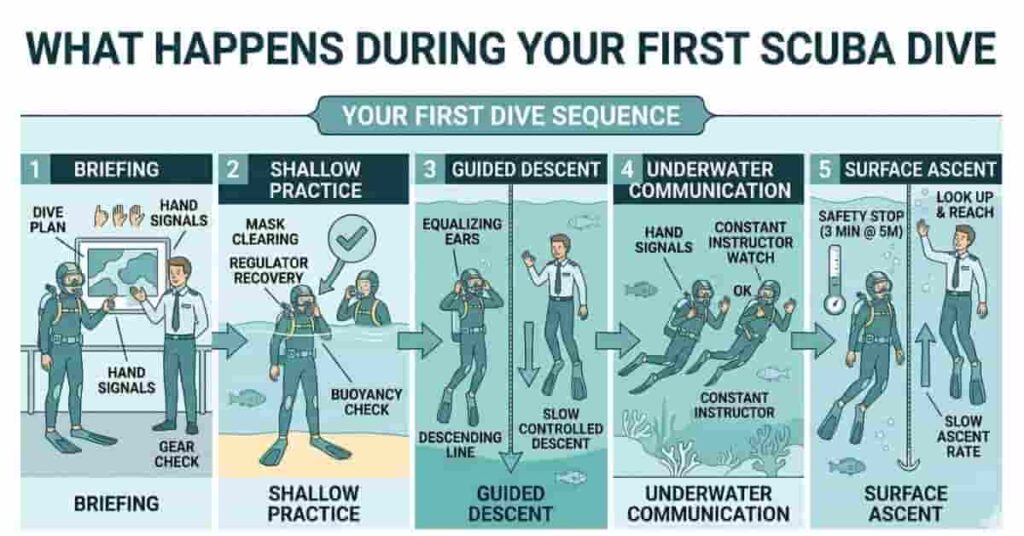
Your first dive is structured, guided, and calmer than you expect. Most fear comes from not knowing the steps. Once you understand the process, confidence builds quickly.
Here’s exactly what happens, step by step.
Pre-Dive Briefing
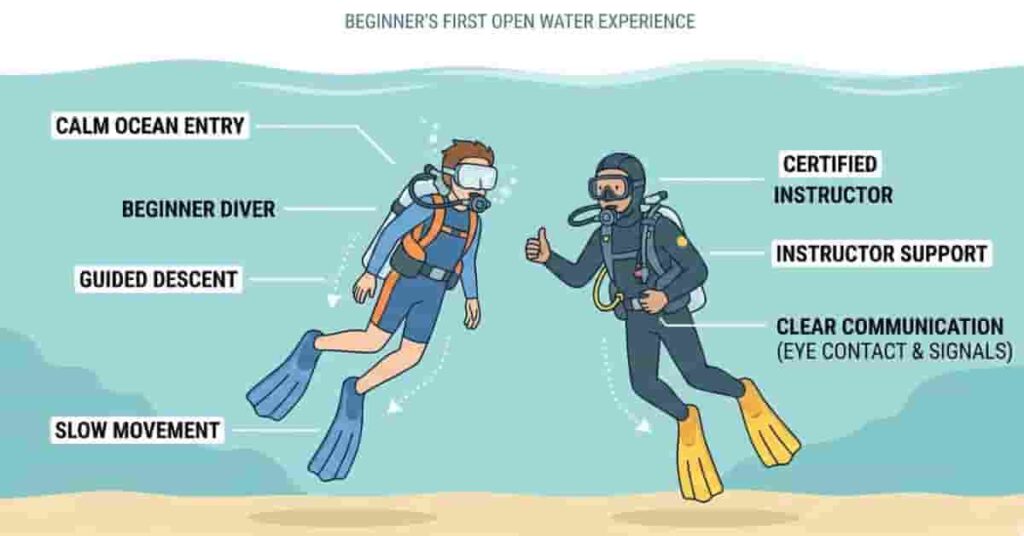
Before entering the water, your instructor explains everything clearly. You’ll learn basic hand signals, safety rules, and how to use your gear. You can ask questions at any time. Nothing feels rushed. This short session builds trust and removes confusion. You’ll also review simple first-time scuba diving tips, like breathing slowly and staying close to your guide.
Pro tip: Pay attention to hand signals. Underwater communication depends on them.
Shallow Water Practice
Your first practice happens in shallow water. This could be a pool or a calm ocean area. You practice breathing through the regulator. You also learn how to clear water from your mask. These skills feel easier than most beginners expect. The goal is comfort, not perfection. You move forward only when you feel ready.
Pro tip: Focus on slow breathing. Calm breathing keeps your heart rate steady.
Guided Descent
When you’re ready, the group begins a slow descent. Your instructor stays close and checks on you often. You equalize your ears gently as you go down. The descent feels gradual and controlled. There is no rushing. If you feel unsure, you signal your instructor. You are never alone.
Pro tip: Descend slowly and stay relaxed. Small adjustments make a big difference.
Communication Underwater
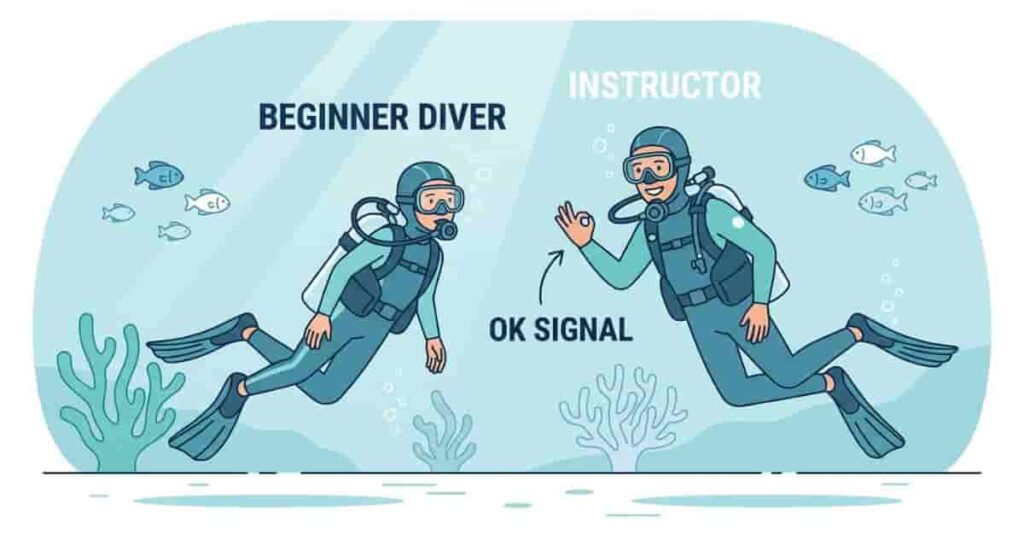
Divers use simple hand signals to communicate. Common signals include “OK,” “Up,” and “Down.” Your instructor checks your comfort level regularly. You respond with signals, not words. Communication is constant and clear. This builds confidence and reduces anxiety.
Pro tip: Make eye contact with your instructor often. It strengthens connection and reassurance.
Ending the Dive
When the dive ends, you ascend slowly with your instructor. You may pause briefly before reaching the surface. Back on the surface, you remove your regulator and inflate your BCD. You return to the boat or shore calmly.
Most beginners feel proud after their first dive. Fear often turns into excitement.
Takeaways
- Your first dive follows a clear, guided structure.
- Practice happens in shallow water first.
- Communication and slow movement keep everything safe.
Scuba Diving Tips for Beginners (Must-Know)
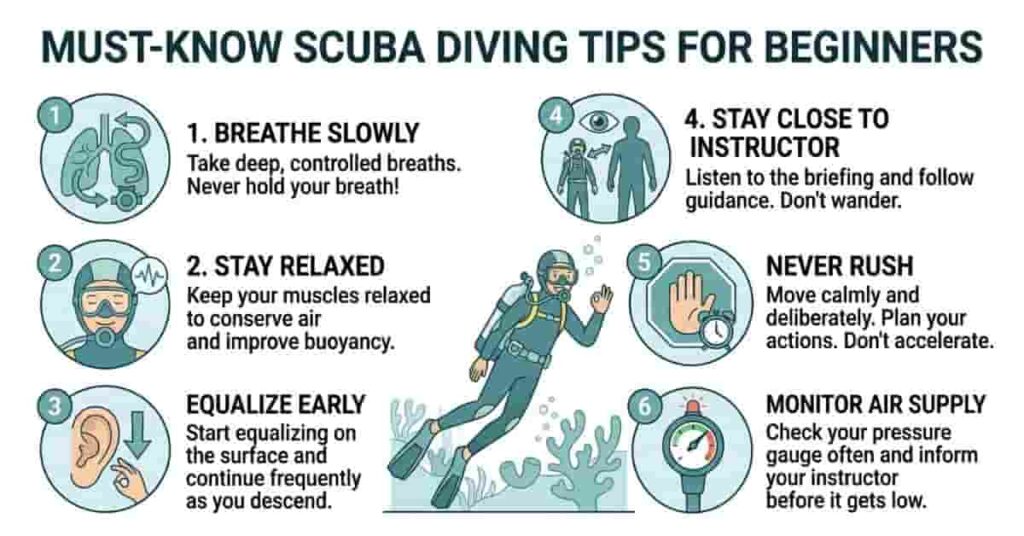
Learning scuba diving basics for beginners is important. But simple habits make the biggest difference underwater. These scuba diving tips for beginners help you stay calm, safe, and confident. Keep this list in mind before your first dive.
Breathe Slowly and Steadily
Slow breathing keeps you relaxed. It also helps control buoyancy and saves air. Never hold your breath. Breathe in and out in a smooth rhythm. If you feel nervous, focus on your breathing first.
Pro tip: Count slowly in your head while breathing. It keeps your pace steady.
Stay Relaxed
Tension makes everything harder. Tight muscles waste energy and air. Let your body float naturally. Trust your gear and your instructor. Most beginners feel calm within minutes. If something feels uncomfortable, signal your instructor right away.
Pro tip: Relax your shoulders and jaw. Small tension adds up underwater.
Equalize Early and Often
As you descend, you may feel pressure in your ears. Equalizing relieves that pressure. Do it early, before discomfort builds. Gentle, frequent equalizing works best. Never force it. If needed, pause and try again slowly.
Pro tip: Equalize before you feel pain, not after.
Stay Close to Your Instructor
Your instructor is your guide and safety partner. Stay within a comfortable distance at all times. Make eye contact often. Use hand signals clearly and confidently. Staying close builds trust and reduces anxiety during your first dive.
Pro tip: If unsure about anything, signal immediately. Questions are normal.
Never Rush
Scuba diving rewards patience. Fast movements waste air and disturb balance. Descend slowly. Move gently. Enjoy the surroundings without hurry. Rushing increases stress. Slow diving feels smoother and safer.
Pro tip: Think “slow and steady” before every movement.
Quick Beginner Checklist
- Breathe slowly and never hold your breath.
- Relax your body and move gently.
- Equalize early and often.
- Stay close to your instructor.
- Move slowly and never rush.
Common Beginner Mistakes (And How to Avoid Them)
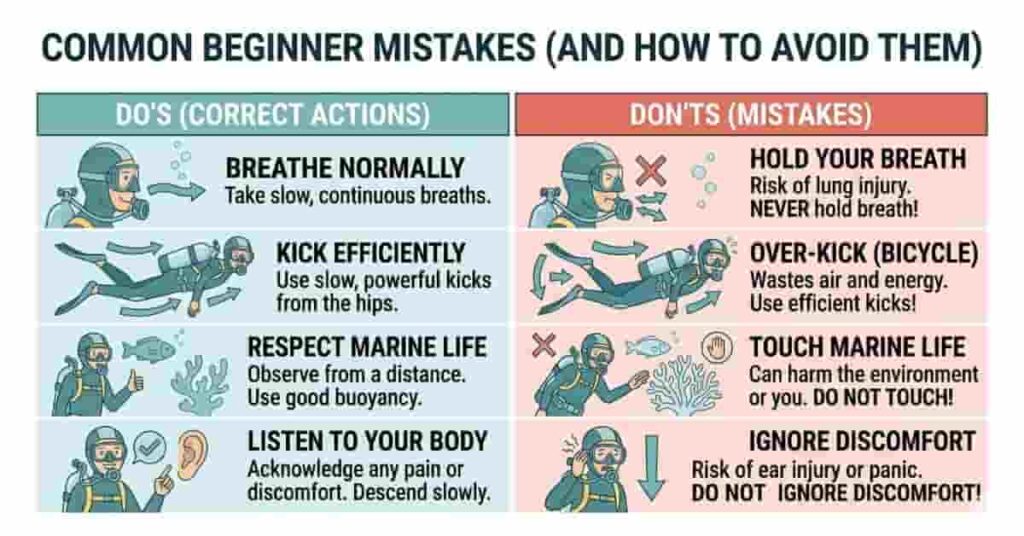
Even small mistakes can make your first dive harder than it needs to be. Learning the most common beginner errors helps you stay safe, relaxed, and confident underwater. Most competitors skip this, but knowing what to avoid sets you apart.
Holding Your Breath
One of the most frequent mistakes is holding your breath. This can cause lung pressure issues and discomfort. Always breathe slowly and steadily through your regulator.
How to avoid it: Focus on calm, regular breaths. Remind yourself: air is always available.
Over-Kicking
Beginners often kick too hard with their fins. This wastes energy, uses more air, and can stir up sand or silt.
How to avoid it: Use slow, gentle kicks from your hips. Keep movements smooth and controlled.
Touching Marine Life
It’s tempting to reach out and touch fish or coral. This can harm delicate ecosystems and sometimes injure you.
How to avoid it: Keep your hands to yourself. Observe and enjoy without contact.
Ignoring Discomfort
Some beginners try to “push through” discomfort, like ear pressure or mask leaks. Ignoring it can turn small issues into bigger problems.
How to avoid it: Signal your instructor immediately. Stop, adjust, and resume only when comfortable.
Is Scuba Diving Safe for Beginners?
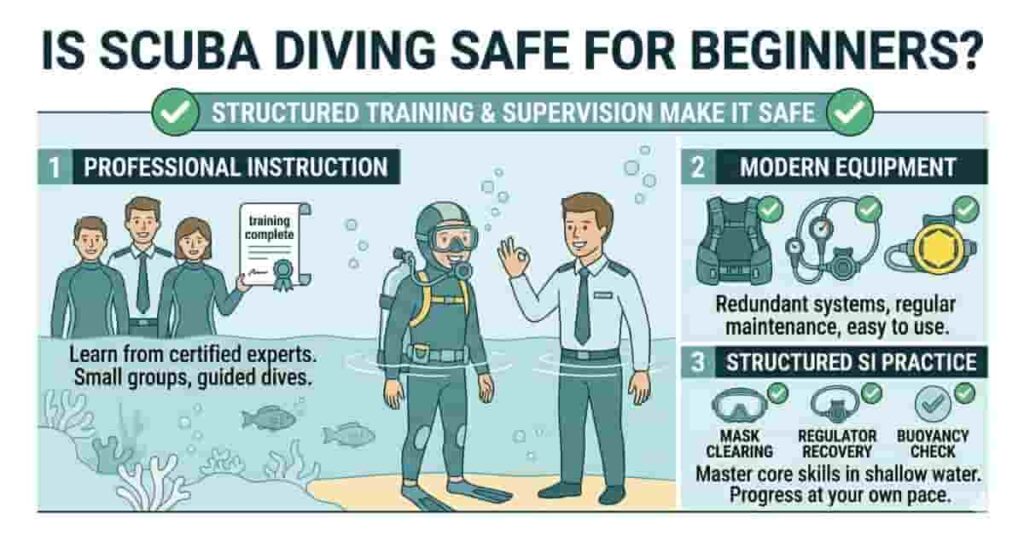
Yes! Scuba diving is designed to be safe for beginners when you follow proper training and guidance. Most first-time dives are structured, controlled, and beginner-friendly.
Structured Training
Every beginner starts with lessons that cover gear use, breathing techniques, and safety rules. You practice in shallow water first, gradually building confidence before going deeper. Training ensures you know exactly what to do at every step.
Built-In Safety Systems
Scuba diving equipment includes multiple safety features. Your regulator delivers air on demand, your BCD controls buoyancy, and instructors monitor you constantly. Backup systems, hand signals, and slow descents all reduce risk.
Conservative Beginner Dives
First dives are shallow, slow, and short. Instructors focus on comfort and safety over adventure. Depth and complexity increase only as your skills improve. This approach minimizes risk and builds trust in the equipment and yourself.
How Deep Do Beginners Go on Their First Dives?
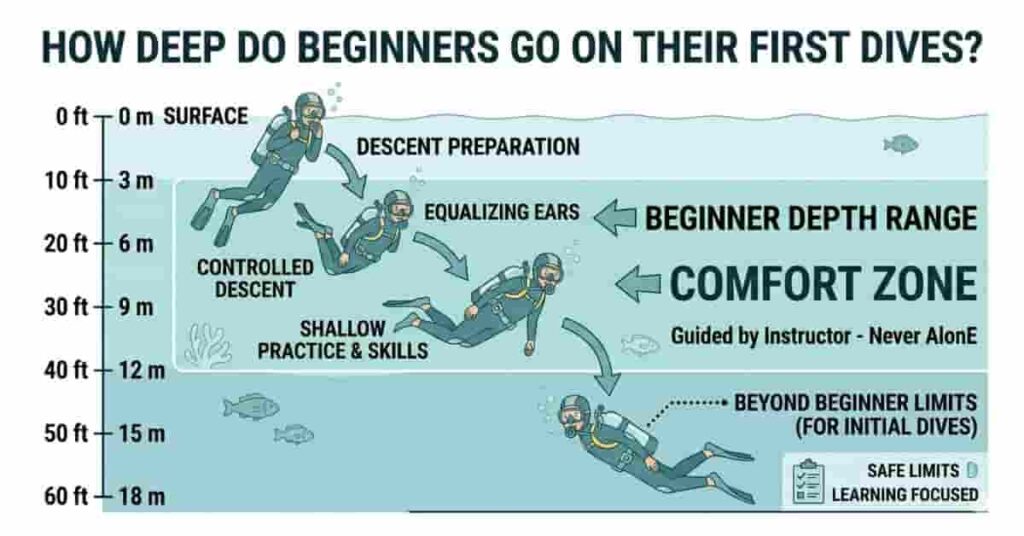
Most first-time dives focus on comfort, not depth. Beginners usually stay in shallow water, allowing them to practice skills and feel safe while breathing underwater. Typical depths range from 10 to 40 feet (3–12 meters), depending on conditions and the training program.
Shallow Depths Build Confidence
Shallow dives let you get used to the gear, buoyancy, and breathing without feeling overwhelmed. You can look around, move slowly, and focus on safety techniques. These controlled environments reduce stress and help you enjoy the experience.
Comfort-Based Progression
Depth increases gradually as your skills improve. Instructors monitor your comfort and adjust the dive accordingly. If you feel anxious or experience discomfort, you can stay shallower or ascend. Your first dive is all about learning at your own pace.
Pro tip: Don’t worry about reaching maximum depth on your first dive. Mastering basic skills in shallow water is far more important.
What Beginners Should Know Before Booking a Dive
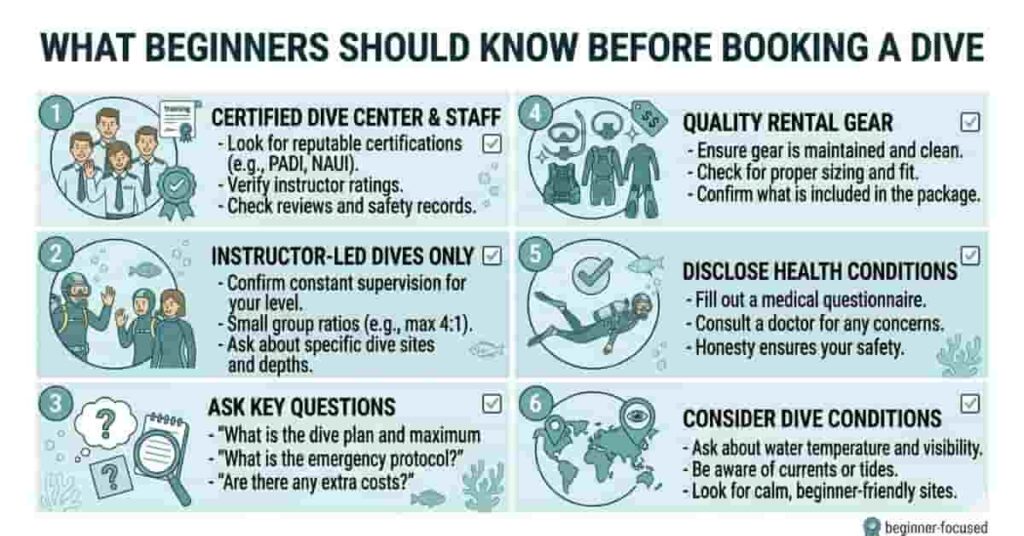
Before your first scuba dive, preparation starts on land. Choosing the right dive center and asking the right questions can make your experience safe, smooth, and enjoyable. Beginners who plan feel more confident and relaxed underwater.
Choosing a Reputable Dive Center
Look for centers certified by recognized organizations like PADI or SSI. Certified centers follow strict safety standards and have trained instructors. Check reviews online and ask about student-to-instructor ratios. Smaller groups usually mean more personal attention.
Pro tip: Avoid the cheapest option. Quality training and safety are more important than saving a few dollars.
Instructor-Led Dives
Always book instructor-led dives for your first experience. Instructors guide every step, monitor safety, and teach skills gradually. Their presence reduces anxiety and ensures proper technique.
Pro tip: Verify instructor credentials before your dive. Confidence in your guide improves comfort underwater.
Asking the Right Questions
Before booking, ask:
- What’s included in the course or dive?
- How long is the session and depth range?
- What safety measures are in place?
- Can I rent gear, and is it sanitized?
Clear answers set expectations and prevent surprises.
Rental Gear Basics
Most beginners rent gear rather than buying. Make sure your mask fits comfortably, fins suit your foot size, and wetsuits provide proper insulation. Rental gear should be well-maintained and regularly inspected.
Pro tip: Test the mask and regulator in shallow water first to ensure comfort and fit.
Who Should Avoid Scuba Diving (Or Ask First)
Scuba diving is fun, but it’s not for everyone. Knowing your limits and being honest about your comfort and health is crucial for a safe experience. Beginners should assess themselves before booking a dive.
Comfort Level
Diving requires calmness in water and the ability to follow instructions. If you feel extreme anxiety around water or confined spaces, it’s better to discuss concerns with an instructor first. Feeling comfortable increases safety and enjoyment.
Health Considerations (Non-Medical)
Certain conditions, like severe asthma, ear problems, or recent injuries, may affect your dive. While instructors don’t provide medical advice, they need to know about any potential issues. Being upfront helps them adapt the dive or suggest consulting a professional.
Importance of Honesty During Training
Always be honest during pre-dive briefings and skill assessments. Instructors rely on accurate information to ensure your safety. Pretending to be more experienced or hiding discomfort can increase risks underwater.
Pro tip: Never hesitate to speak up. It’s normal to ask for pauses, adjustments, or extra guidance during your first dive.
Takeaways
- Assess your comfort in water before diving.
- Share any non-medical health concerns with your instructor.
- Honesty ensures a safe and enjoyable dive.
Conclusion
We’ve covered the essential scuba diving basics for beginners, from understanding gear to first dive steps and safety tips. You now know how to breathe, move, and stay calm underwater. Practical advice, common mistakes, and guided progression make your first dive approachable.
Scuba diving is safe, structured, and designed for beginners. By following simple rules, practicing slowly, and staying close to your instructor, most first-time divers feel confident and enjoy the experience. Using these first time scuba diving tips helps you feel prepared and relaxed.
Some new divers also worry about whether scuba diving is bad for your health long-term.
If you’re ready, take the next step: book a beginner-friendly dive or explore more scuba diving tips for beginners on our site. Share your first dive experience in the comments to inspire others starting their underwater adventure.

Scuba Diving Researcher & Beginner Guide
Evan Calder is the creator of DiveBeginner, a website dedicated to helping beginners learn scuba diving simply and practically 🌊
He focuses on scuba fundamentals, beginner safety, and clear diving guidance. Evan has studied ocean and marine science through programs at the Scripps Institution of Oceanography, UC San Diego, a globally recognized leader in ocean research.
Instead of complex technical language, Evan provides easy-to-follow, beginner-friendly guides based on real-world research, helping first-time divers feel confident before their first dive 🤿
DiveBeginner reflects his passion for making scuba diving accessible, safe, and enjoyable for everyone.