Table of Contents
Introduction
Trying scuba diving for the first time can feel exciting—and a little scary.
Many beginners worry about breathing underwater, using unfamiliar gear, or going too deep. That’s normal. Scuba diving is safe when you understand the basics and prepare properly. These first-time diving tips help beginners feel calm, confident, and ready before entering the water.
In the United States, thousands of people try scuba diving every year during vacations, training courses, or discovery dives. The ocean world looks amazing, but your first dive can feel confusing without guidance. Learning simple first-time scuba-diving tips makes the experience much smoother and safer. This guide explains exactly what to expect the first time scuba diving, step by step. You’ll learn how to prepare mentally, understand basic gear, and follow a simple beginner checklist.
By the end, you’ll know the most important safety tips and feel ready for your first underwater adventure.
Top Tips for Your First Scuba Dive
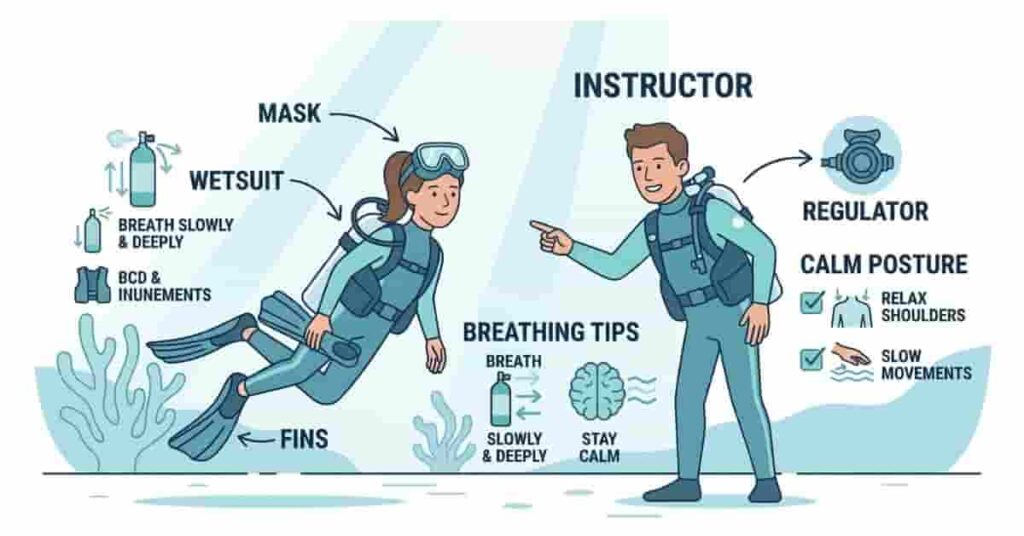
Your first dive becomes much easier when you prepare properly. These scuba diving first-time tips help beginners stay calm, safe, and confident underwater. Many new divers worry about breathing, gear, or going too deep. That’s normal. A little preparation removes most of that stress and makes your dive far more enjoyable.
Before you begin, review the following tips to ensure a smooth start to your first dive.
1. Prepare Your Mind and Stay Calm
Feeling nervous before your first dive is completely normal. The ocean is a new environment, and your brain needs time to adjust. Focus on slow breathing and listen carefully during the dive briefing. Most beginner dives happen in shallow water with an instructor nearby.
When you feel calm, your breathing stays steady, and your body uses less air.
Pro Tips
- Take slow, deep breaths before entering the water.
- Trust your instructor and follow signals carefully.
- If you feel anxious, stop and signal your buddy.
2. Make Sure You’re Physically Ready
You do not need to be an athlete to scuba dive. However, basic swimming comfort and good health make the experience easier. Many training organisations, such as the Professional Association of Diving Instructors, require a short medical questionnaire before diving.
If you have asthma, heart conditions, or recent surgeries, check with a doctor first.
Pro Tips
- Practice basic swimming and floating skills.
- Stay hydrated before your dive.
- Avoid alcohol the night before diving.
3. Get Familiar With Your Gear
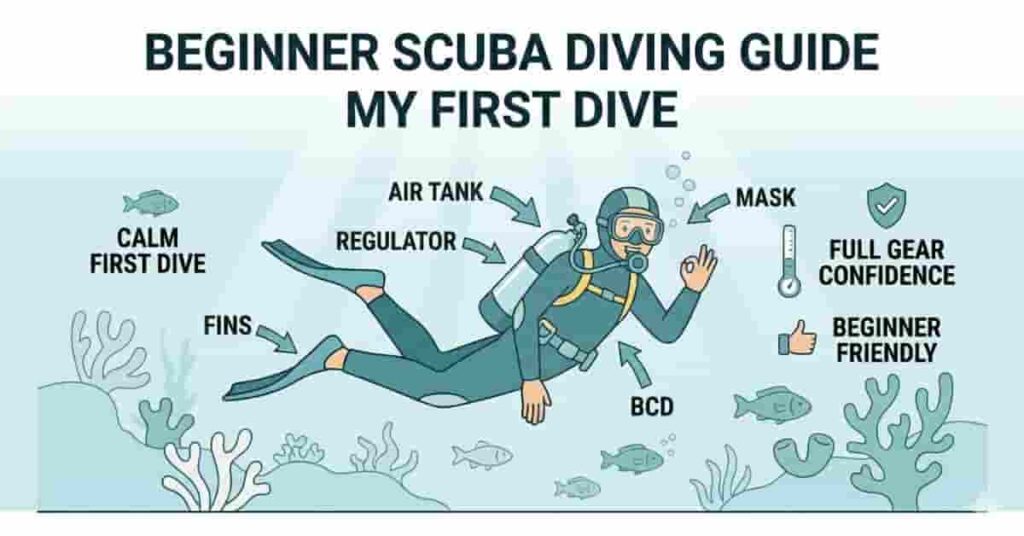
Scuba gear may look complicated at first. Understanding the basics removes much of the fear. Your instructor will explain how to use the mask, fins, regulator, and buoyancy control device (BCD). Ask questions before entering the water.
Knowing your equipment is one of the most useful scuba diving tips for first-time divers.
Pro Tips
- Check that your mask fits comfortably.
- Practice breathing through the regulator on the surface.
- Learn how to clear water from your mask.
4. Practice Breathing and Buoyancy Control
Breathing underwater feels unusual at first. The key rule is simple: breathe slowly and never hold your breath. Your buoyancy control device helps you float or sink gently. Small adjustments keep you balanced in the water.
Learning these basics is one of the most important tips for first-time scuba diving.
Pro Tips
- Breathe slowly and continuously.
- Move slowly to conserve energy and air.
- Use gentle fin movements instead of fast kicks.
Key Takeaways
- Staying calm helps control breathing and reduces air use.
- Basic swimming comfort improves safety and confidence.
- Understanding your gear removes much of the fear of being a beginner.
- Slow breathing and buoyancy control make diving easier.
What to Expect on Your First Dive
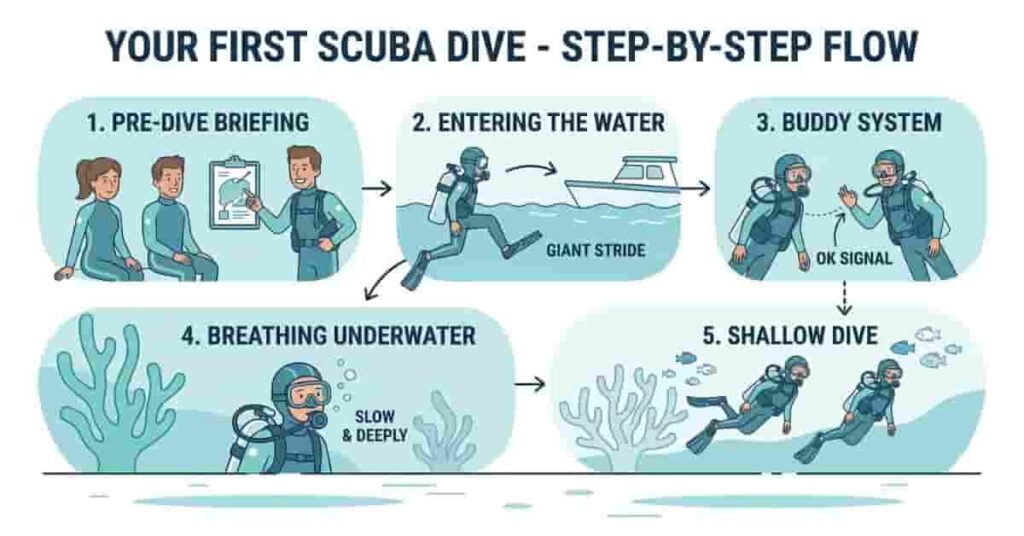
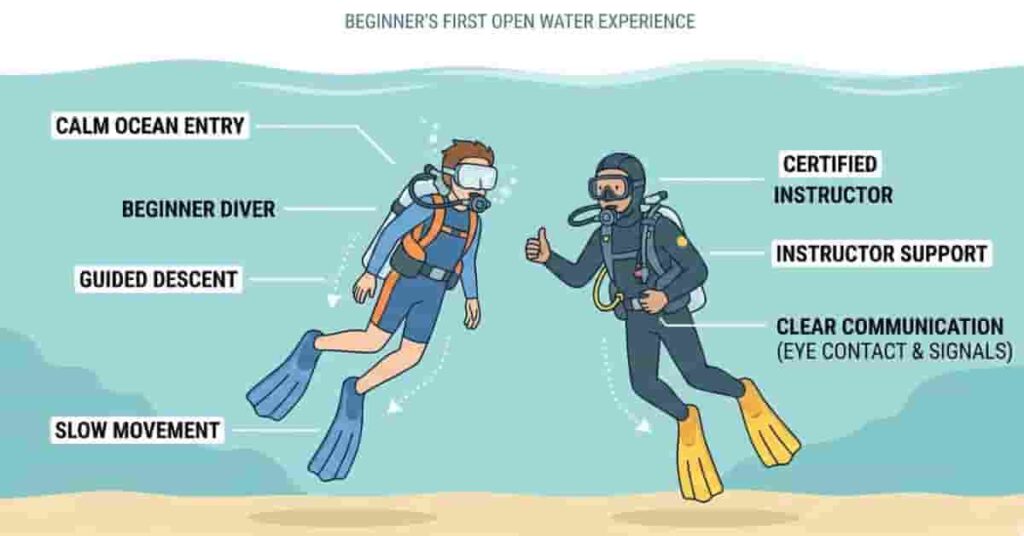
Knowing what to expect on your first scuba dive eases fear. The process is simple and guided for beginners. A trained instructor leads each step, using structured procedures from organisations like the Professional Association of Diving Instructors to keep first dives safe.
Let’s walk through each stage so you know what to expect next.
1. Pre-Dive Briefing
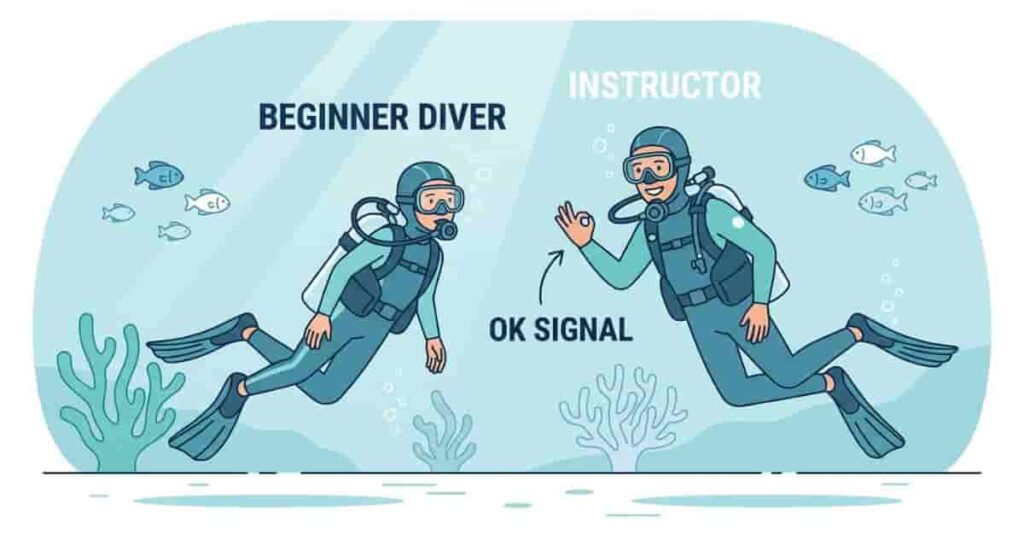
Before entering the water, your instructor explains the dive plan. This briefing covers basic hand signals, breathing rules, and safety procedures. You will also learn how to use your mask, fins, regulator, and buoyancy control device. Many beginners feel nervous here, but the briefing answers most questions.
Pay close attention and ask if anything feels unclear. Understanding the plan helps you stay relaxed underwater.
Pro Tips
- Listen carefully to all hand signals.
- Ask questions before entering the water.
- Check that your gear fits properly.
2. Entering the Water and the Buddy System
Most beginner dives start in calm water, such as a pool or shallow ocean area. You will enter the water slowly under the instructor’s guidance. Divers always dive with a partner called a “buddy.” Your buddy helps monitor safety and communicate underwater.
The instructor usually stays close to both divers during the entire dive.
Pro Tips
- Stay close to your buddy at all times.
- Use simple hand signals to communicate.
- Move slowly when entering the water.
3. Breathing Underwater and Moving Around
The first breath underwater often feels strange. After a few minutes, most beginners relax and adjust to the rhythm. Breathe slowly and never hold your breath. Your regulator supplies air automatically when you inhale.
Movement underwater feels slow and gentle. Small fin kicks help you glide forward while conserving energy.
Pro Tips
- Take slow, steady breaths.
- Use gentle fin movements.
- Stay calm and keep up with the instructor’s pace.
4. Typical Duration and Depth for Beginners
A beginner dive usually lasts between 20 and 40 minutes, depending on air supply and conditions. Depth remains shallow, so new divers feel comfortable. Training agencies like Scuba Schools International limit beginner experiences to controlled depths during training.
Your instructor constantly monitors the group and decides when to ascend safely.
Pro Tips
- Watch your instructor’s signals during the dive.
- Stay relaxed and enjoy the surroundings.
- Ascend slowly when the dive ends.
Simple First Dive Flow
| Step | What Happens |
|---|---|
| 1 | Instructor gives a safety briefing |
| 2 | Divers check gear and buddy partners |
| 3 | Group enters the water slowly |
| 4 | Instructor guides the underwater dive |
| 5 | Divers ascend slowly and exit the water |
Key Takeaways
- Expect a step-by-step, guided introduction tailored for beginners.
- Safety guidelines and rules are clearly explained before entering the water.
- Always dive with a buddy for support and safety underwater.
- Beginner dives are kept shallow and closely supervised to ensure comfort.
First Time Scuba Diving Checklist
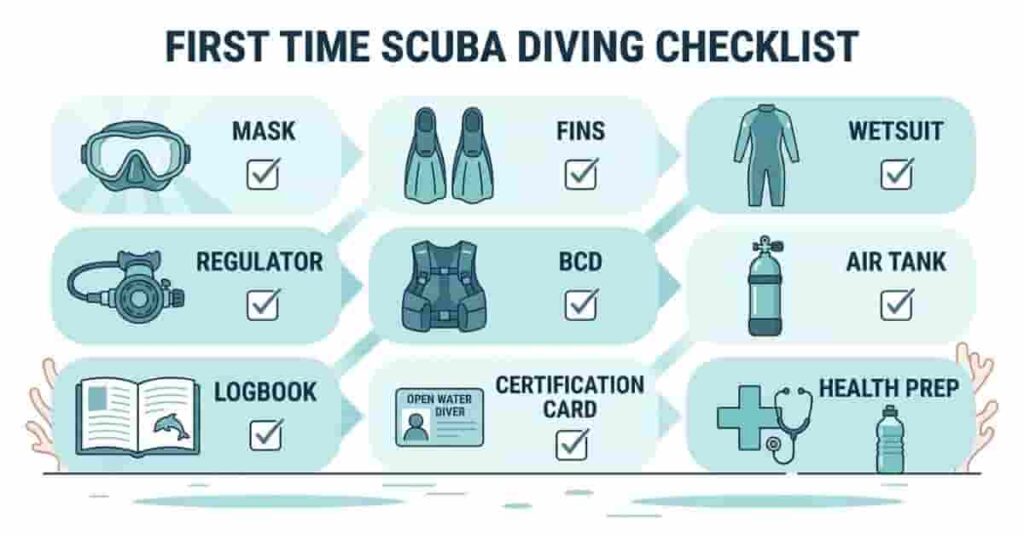
Preparing in advance makes your first dive smoother and safer. A simple first-time scuba diving checklist helps you avoid common beginner mistakes.
Many dive centres provide rental gear and guidance. Still, understanding what you need improves your confidence before entering the water. A clear checklist also helps you stay organised during training or vacation dives.
Before you head to the water, start by reviewing this beginner-friendly checklist for your first scuba experience.
1. Basic Scuba Gear Checklist
Your instructor or dive centre usually provides most equipment. However, knowing the key items helps you understand how everything works together.
Essential scuba gear
- Mask – allows you to see clearly underwater
- Fins – help you move efficiently through the water
- Wetsuit – keeps your body warm and protected
- Regulator – delivers air from the tank so you can breathe.
- Buoyancy Control Device (BCD) – helps control floating and sinking
- Air tank – stores compressed breathing air
Training agencies such as the Professional Association of Diving Instructors teach beginners how to check this equipment before diving.
Pro Tips
- Test mask fit before entering the water.
- Adjust fin straps for comfort.
- Ask the instructor to explain each gear component.
2. Important Diving Essentials
Beyond gear, a few important items support safe diving and good record keeping.
Important dive essentials
- Certification card or training registration
- Logbook to record your dives.
- The dive plan was explained during the briefing.
- Buddy assignment for underwater safety
Many divers track dives for experience and future certifications.
Organisations like Divers Alert Network also recommend following structured dive plans to reduce risk.
Pro Tips
- Bring a waterproof logbook if you plan multiple dives.
- Review the dive plan before entering the water.
- Confirm your buddy and instructor before the dive begins.
3. Personal Preparation Checklist
Physical and mental readiness play a big role in a successful dive. Even experienced divers prepare before entering the water.
Personal preparation
- Get enough sleep the night before diving.
- Drink water to stay hydrated.
- Eat a light meal before your dive.
- Stay calm and relaxed during the briefing.
If you feel nervous, remember that instructors closely supervise beginner dives.
Pro Tips
- Avoid alcohol before diving.
- Stretch lightly before putting on gear.
- Focus on slow breathing to stay relaxed.
Key Takeaways
- A clear checklist helps beginners prepare safely for their first dive.
- Understanding your gear reduces confusion underwater.
- Dive planning and buddy checks improve safety.
- Physical and mental preparation make diving more enjoyable.
Printable Beginner Dive Checklist
You can also create a printable first-time scuba diving checklist for easy reference before each dive.
Quick printable list
- Mask
- Fins
- Wetsuit
- Regulator
- Buoyancy Control Device (BCD)
- Air tank
- Certification or training registration
- Logbook
- Dive plan
- Buddy check
Saving this checklist on your phone or printing it helps beginners stay organised during training or travel dives.
Conclusion
Your first dive becomes much easier when you prepare properly and understand the basics. This guide covered essential first-time diving tips, what to expect underwater, and a simple beginner checklist.
From staying calm to learning basic gear and breathing techniques, small steps make a big difference. These scuba diving first-time tips help beginners feel safer and more confident before entering the water. Remember to review your gear, follow the buddy system, and listen carefully to your instructor. Good preparation turns your first dive into a fun and memorable experience.
If you want a deeper understanding of how diving works, explore our beginner guide on the basics of scuba diving. You can also read our article about common beginner fears and mistakes to dive with more confidence.
Planning your first dive soon? Share your questions or experiences in the comments—we’d love to hear from you.

Scuba Diving Researcher & Beginner Guide
Evan Calder is the creator of DiveBeginner, a website dedicated to helping beginners learn scuba diving simply and practically 🌊
He focuses on scuba fundamentals, beginner safety, and clear diving guidance. Evan has studied ocean and marine science through programs at the Scripps Institution of Oceanography, UC San Diego, a globally recognized leader in ocean research.
Instead of complex technical language, Evan provides easy-to-follow, beginner-friendly guides based on real-world research, helping first-time divers feel confident before their first dive 🤿
DiveBeginner reflects his passion for making scuba diving accessible, safe, and enjoyable for everyone.