Introduction
Have you ever wondered what it feels like to breathe underwater for the first time?
The first time scuba diving sounds exciting, but many beginners also feel nervous. The ocean is unfamiliar, and breathing through equipment can seem strange at first. Some people worry about running out of air, going too deep, or losing control underwater.
These fears are common, especially if this is your first time scuba diving. The good news is that modern scuba training and equipment make beginner dives very safe when done with professionals. Most first dives happen in calm, shallow water with an instructor guiding every step.
Still, many new divers want to know what the first scuba dive experience is really like before they try it. What happens during the dive? Will breathing feel natural? And how do you prepare for your first underwater adventure?
This beginner-friendly guide will explain everything you need to know about going scuba diving for the first time. You’ll learn what to expect, how to prepare, and how to stay calm and confident underwater.
What to Expect on Your First Dive
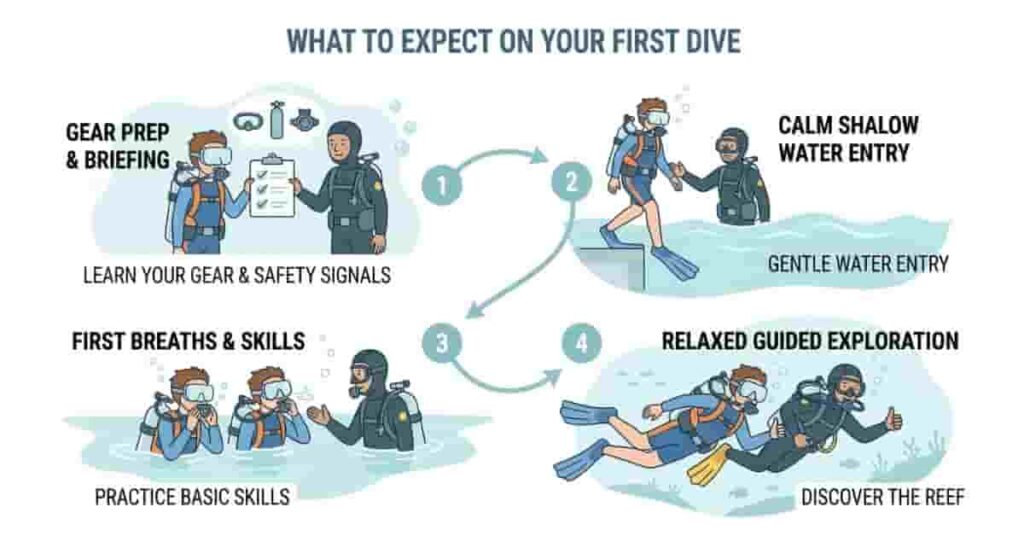
Your first dive underwater often feels exciting and a little unfamiliar. Most beginners feel nervous before entering the water. That’s normal. Instructors guide you through every step, especially when you’re going scuba diving for the first time.
Most beginner dives in the USA start with a short training session. You learn how to use your gear and practice basic breathing. After that, the instructor explains safety rules and simple underwater signals. This briefing helps you feel more confident before the dive begins.
Step-by-Step: Your First Dive Experience
Here’s what usually happens during a beginner scuba experience:
- Arrival and check-in: You meet the dive team and complete simple paperwork.
- Equipment fitting: The instructor helps you choose the right mask, fins, and wetsuit.
- Safety briefing: You learn hand signals, breathing techniques, and basic safety rules.
- Practice in shallow water: Many programs start in a pool or calm, shallow ocean area.
- Entering the water: You slowly enter with your instructor and adjust your breathing.
- Descending gently: The instructor guides you as you take your first dive underwater.
This slow process helps beginners stay calm and comfortable.
What It Feels Like Underwater
Many new divers ask, “What’s it like scuba diving for the first time?”
At first, breathing through a regulator feels unusual. After a few minutes, most people relax and find a steady rhythm. Movements also feel different because water supports your body.
You may notice these sensations:
- Calm, slow breathing through the regulator
- Weightless movement in the water
- Quiet surroundings with only the sound of bubbles
- Marine life is swimming nearby
Within minutes, many beginners stop thinking about the equipment. They simply enjoy the view.
Pro Tips for Your First Dive
- Take slow, steady breaths through the regulator.
- Move gently and avoid sudden movements.
- Stay close to your instructor at all times.
- Focus on relaxing and enjoying the underwater scenery.
These small habits can make your first scuba diving experience much smoother and more enjoyable.
Preparing for Your First Scuba Dive
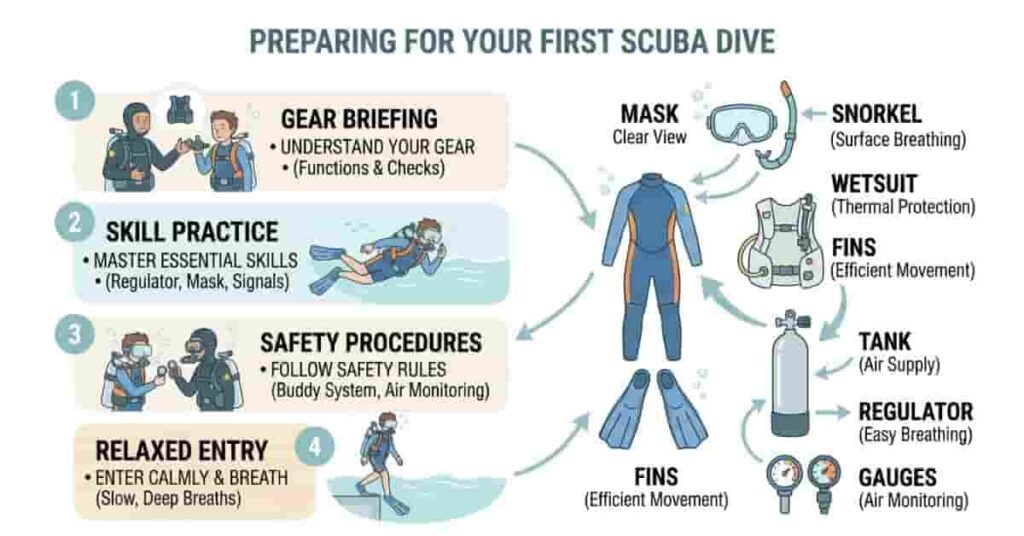
Good preparation helps your first scuba diving experience go smoothly. Planning ahead lets beginners feel calmer and more confident in the water.
Choose a Trusted Dive Operator and Location
Start by selecting a professional dive operator with certified instructors. Many beginner programs in the United States follow training standards from the Professional Association of Diving Instructors or Scuba Schools International.
Look for these signs of a reliable dive center:
- Certified instructors with clear safety briefings
- Small beginner groups for better guidance
- Calm, shallow dive sites
- Well-maintained equipment
Beginner-friendly locations usually offer clear, shallow water for easy instructor guidance.
Beginner Certification or Intro Courses
Most first dives happen through a short beginner program. Popular options include a Discover Scuba experience or a basic introductory course.
These programs usually include:
- A short theory session about safety
- Equipment introduction
- Practice breathing in shallow water.
- A supervised first dive underwater
You don’t always need full certification for a trial dive. However, certification becomes necessary for deeper or independent diving later.
Physical and Mental Preparation
You don’t need to be an athlete to enjoy your first scuba dive experience. Basic swimming ability and comfort in water are enough.
Before the dive:
- Get a good night’s sleep.
- Eat a light meal
- Stay hydrated
- Avoid alcohol before diving.
Mental preparation matters too. Take slow breaths and focus on relaxing. Most beginners feel calm once they start breathing underwater.
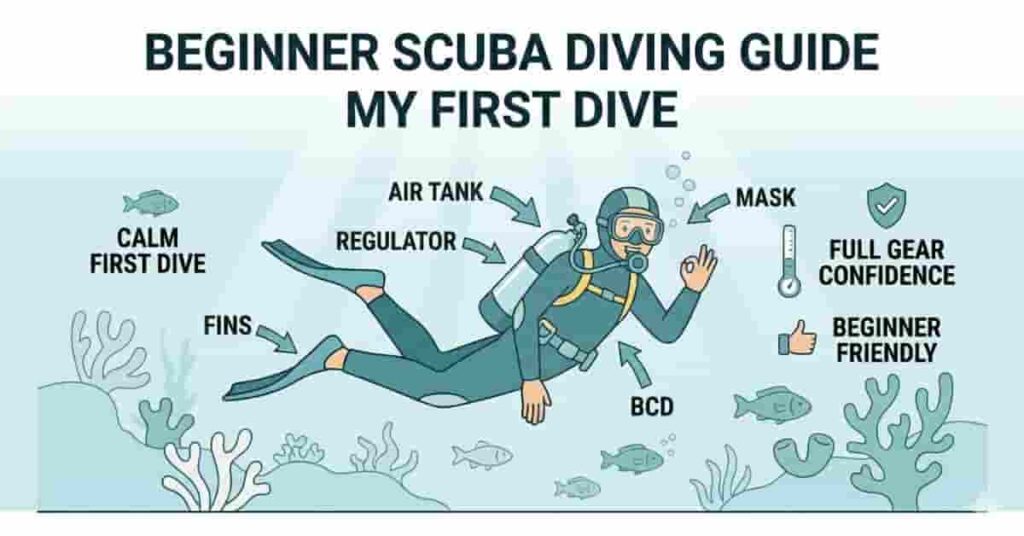
Beginner Equipment Checklist
Your dive center usually provides the equipment. Still, it helps to know the basics.
| Equipment | Purpose |
|---|---|
| Mask | Helps you see clearly underwater |
| Fins | Make swimming easier and more efficient |
| Wetsuit | Keeps your body warm in cooler water |
| Regulator | Allows you to breathe from the air tank |
| Buoyancy Control Device (BCD) | Helps control floating and depth |
Understanding this gear helps beginners feel more comfortable during their first scuba diving experience.
Pro Tips for First-Time Divers
- Test your mask fit before entering the water.
- Practice slow breathing through the regulator.
- Listen carefully during the dive briefing.
- Ask questions if something feels unclear.
Simple preparation is key to making your first dive safe and enjoyable.
Common Beginner Challenges & How to Overcome Them
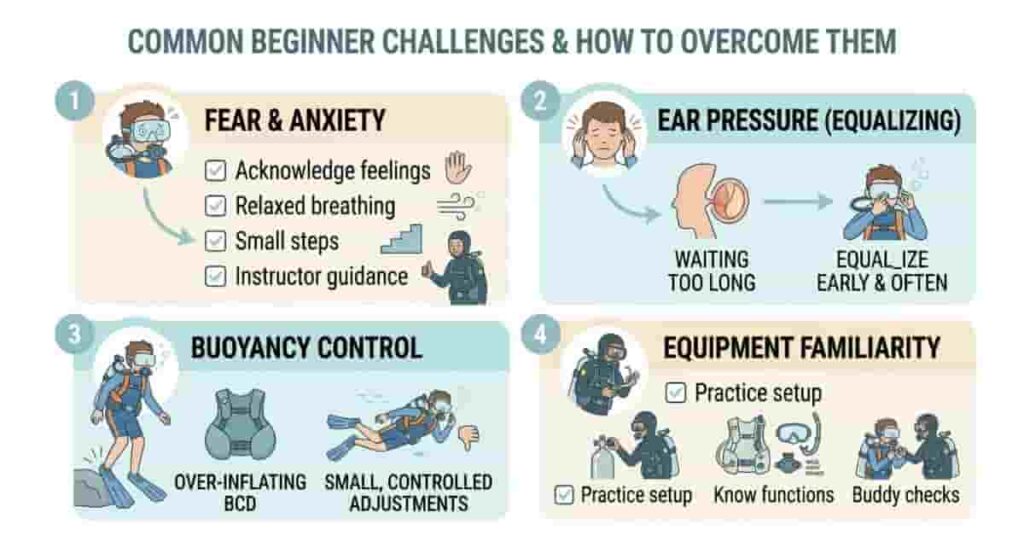
Most people feel nervous before their first dive. The underwater world is new, so your body needs time to adjust. Fortunately, these beginner challenges are normal and manageable with the right guidance.
After initial guidance, you can focus on common challenges faced during your first scuba dive. The next sections address these areas.
Fear or Anxiety Underwater
Feeling anxious is common during the first few minutes underwater. Many beginners worry about breathing or being far from the surface. In reality, your regulator supplies steady air as long as you breathe slowly.
Try these simple breathing techniques:
- Take slow, deep breaths through the regulator.
- Focus on the rhythm of your breathing.
- Avoid holding your breath underwater.
- Stay close to your instructor and follow their signals.
Within minutes, most divers relax and begin enjoying the underwater view.
Equalizing Pressure in Your Ears
As you descend, water pressure increases. This pressure can affect your ears if you do not equalize.
Divers usually fix this by gently clearing ear pressure.
Helpful equalizing tips include:
- Pinch your nose and blow gently through it.
- Swallow or wiggle your jaw during descent.
- Descend slowly and pause if you feel pressure.
- Signal your instructor if discomfort continues.
Taking your time prevents most ear pressure problems.
Staying Calm and Balanced Underwater
Many beginners move too quickly or try to swim too hard. Water naturally supports your body, so slow movements work best.
To stay calm underwater:
- Move slowly and avoid sudden kicks.
- Keep breathing steadily and relaxed.
- Focus on the scenery instead of the equipment.
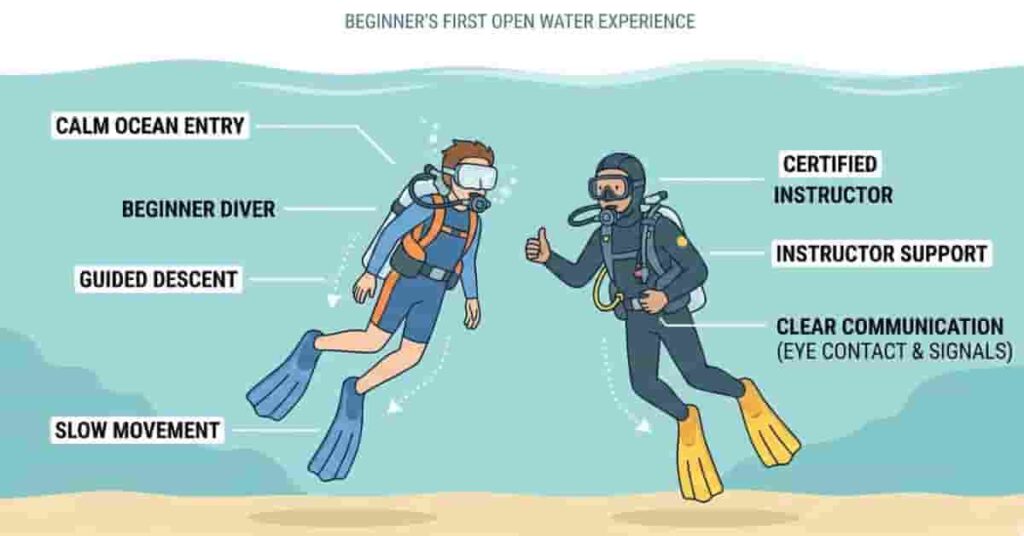
- Maintain eye contact with your instructor when needed.
Staying calm not only boosts confidence but also helps you control buoyancy and movement during your first scuba dive.
Quick Tips for Beginners
- Nervousness before a dive is completely normal.
- Slow breathing helps control anxiety underwater.
- Equalize your ears early and often during descent.
- Remember, every diver was once a beginner. Take a deep breath, trust your training, and enjoy your dive adventure!
Step-by-Step Guide to Your First Dive
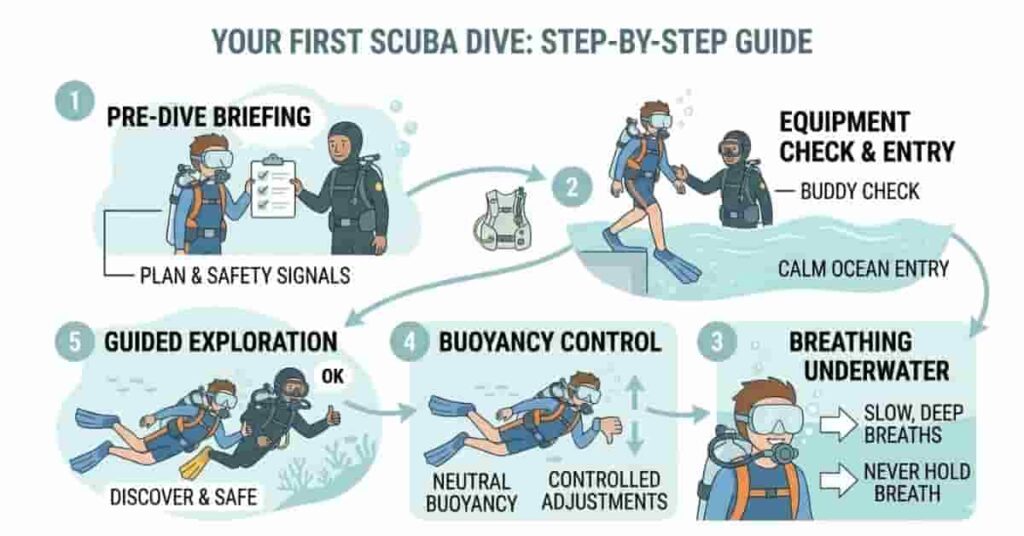
Your first scuba dive follows a simple, organized process. Instructors guide each step so you feel prepared and calm underwater.
Pre-Dive Briefing
Before entering the water, your instructor explains the plan for the dive. This short session covers safety rules, hand signals, and basic equipment use.
You will usually learn:
- How to breathe slowly through the regulator
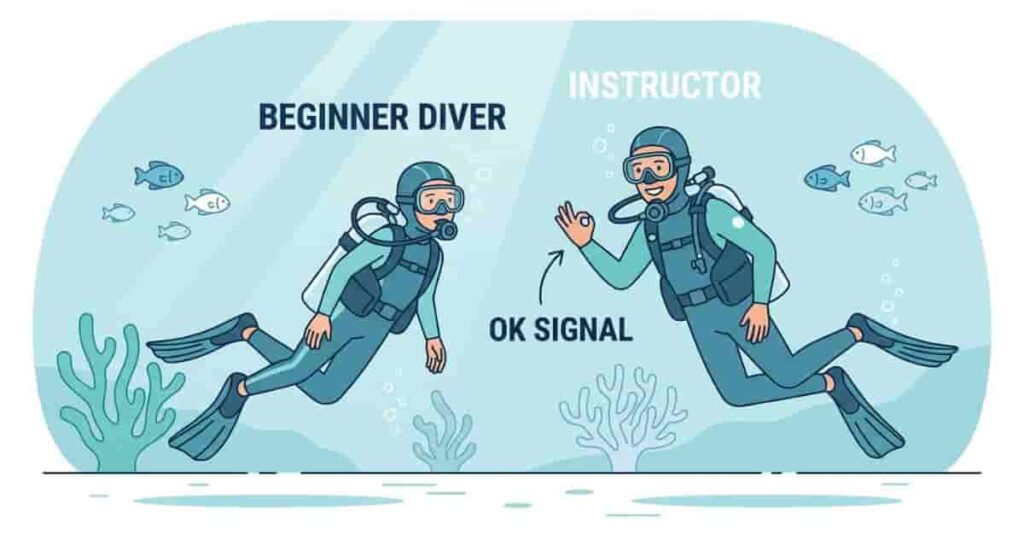
- Simple underwater hand signals
- How to clear water from your mask
- What to do if you feel uncomfortable
The briefing also explains the dive route and maximum depth. Most beginner dives stay shallow and are closely supervised.
Entering the Water and Using the Buddy System
Once everyone is ready, the instructor shows you how to enter the water safely. Many beginner dives start from a beach or a boat platform.
Divers always follow the buddy system, which means you dive with a partner, help each other with equipment checks, monitor each other’s safety, and stay close during the dive.
Typical steps include:
- Entering the water slowly with guidance
- Floating briefly while adjusting equipment
- Checking air supply and mask fit
- Beginning a slow descent with your instructor
The buddy system keeps you safer on your first dive.
Breathing and Buoyancy Basics
The key skill during your first dive is steady breathing through the regulator. Breathe slowly and normally.
At the same time, divers control buoyancy. Buoyancy means staying balanced in the water instead of floating up or sinking down.
Beginner tips for buoyancy:
- Take slow breaths to stay relaxed.
- Avoid fast kicks or sudden movements.
- Use gentle fin movements to move forward.
- Let your instructor guide your depth.
With practice, your body begins to feel almost weightless underwater.
Common Beginner Mistakes to Avoid
Many beginners make small mistakes during their first dive. Learning about them early can prevent stress underwater.
Avoid these common issues:
- Holding your breath instead of breathing slowly
- Kicking too hard or moving too quickly
- Descending too fast without equalizing
- Ignoring hand signals from your instructor
Most mistakes happen because beginners feel excited or nervous. Staying calm and moving slowly solves most problems.
Pro Tips for Your First Dive
- Listen carefully during the pre-dive briefing.
- Stay close to your instructor and buddy.
- Focus on slow breathing and gentle movement.
- Take time to enjoy the underwater scenery.
These habits make your first dive safer and more enjoyable.
Personal Experiences from First-Time Divers
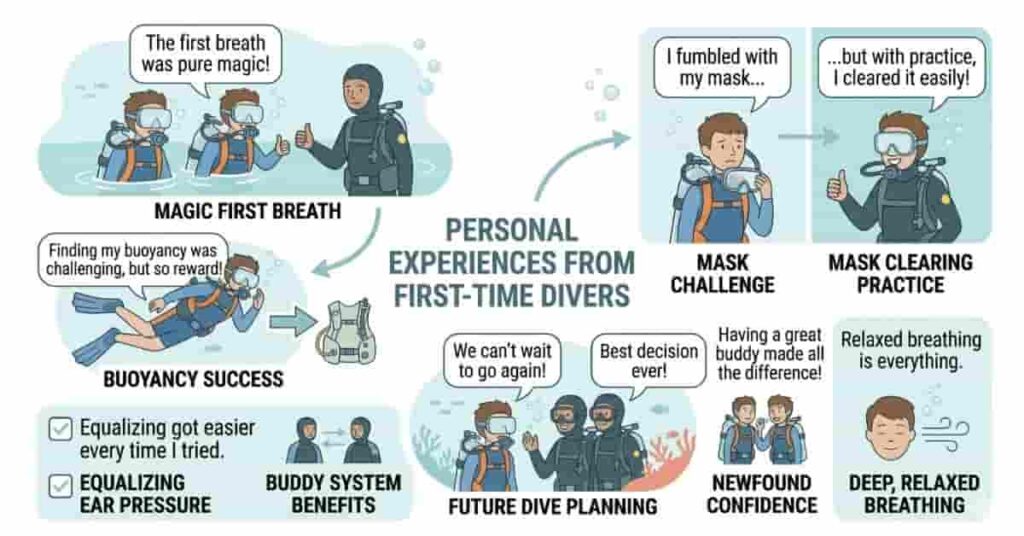
Every diver remembers their first scuba dive: strange at first, but quickly exciting. Initial nerves often turn to amazement.
Hearing real stories can help you understand what a first-time scuba diving experience is actually like. Most beginners describe the same pattern: a little anxiety at the start, followed by calm and curiosity once they settle underwater.
Story 1: “I Forgot I Was Nervous”
Sarah, a beginner diver from Florida, felt very nervous before entering the water. She worried about breathing through the regulator during her first dive.
“The first few breaths felt strange,” she said. “But after a minute, it felt natural. Then I saw a small school of fish pass by, and I forgot I was nervous.”
Sarah later said the underwater silence surprised her the most. The calm environment helped her relax and enjoy the moment.
Story 2: Discovering the Underwater World
James tried scuba diving during a vacation in Hawaii. Like many beginners, he expected the equipment to feel complicated.
“I thought it would be hard,” James explained. “But the instructor guided every step. Once we started the first dive underwater, it felt like floating in space.”
Seeing coral reefs and marine life made the experience unforgettable for him.
What Beginners Often Say After Their First Dive
Many new divers share similar reactions after their first scuba diving experience:
- “Breathing underwater became easier than expected.”
- “The underwater world felt peaceful and quiet.”
- “I wish I had tried scuba diving earlier.”
- “The instructor made everything feel safe.”
These stories show that most fears disappear once the dive begins. For many people, that first underwater breath becomes the start of a lifelong passion for diving.
Pro Tips from Beginner Divers
- During your first few minutes, practice slow and steady breathing. This helps you feel comfortable and reduces nervousness.
- Make sure to stay close to your instructor. This gives you extra reassurance and quick help if you need it.
- Take time to look around and notice the underwater scenery. Enjoy the new sights and sensations around you.
Small moments during your first time scuba diving experience often become memories you never forget.
Conclusion
Your first time scuba diving may feel exciting, mysterious, and a little intimidating. This guide explained what to expect, how to prepare, and how to handle common beginner fears. With the right instructor and preparation, your first scuba dive experience can feel safe, calm, and unforgettable.
Most beginners discover that breathing underwater becomes natural within minutes. Once you relax, the ocean reveals a quiet world full of marine life and beauty. That first dive often turns curiosity into a lifelong passion.
If you’re going scuba diving for the first time, preparation and confidence make all the difference. Take your time, follow your instructor, and enjoy the adventure.
Ready for your adventure? Dive in, explore our beginner tips, and share your first dive story below.

Scuba Diving Researcher & Beginner Guide
Evan Calder is the creator of DiveBeginner, a website dedicated to helping beginners learn scuba diving simply and practically 🌊
He focuses on scuba fundamentals, beginner safety, and clear diving guidance. Evan has studied ocean and marine science through programs at the Scripps Institution of Oceanography, UC San Diego, a globally recognized leader in ocean research.
Instead of complex technical language, Evan provides easy-to-follow, beginner-friendly guides based on real-world research, helping first-time divers feel confident before their first dive 🤿
DiveBeginner reflects his passion for making scuba diving accessible, safe, and enjoyable for everyone.