Introduction
Ever wondered at what depth scuba diving is dangerous for beginners? It’s a question many first-time divers in the USA ask before taking the plunge. Diving deep can seem thrilling, but it also feels intimidating if you don’t know your limits. Understanding how depth affects your body and safety is essential to enjoying every dive.
The truth is, depth itself isn’t dangerous—most scuba accidents happen when divers exceed their training limits or dive unprepared. Beginners often worry about going too deep, but with the right guidance, supervision, and risk awareness, even open-water dives can be safe and enjoyable.
In this guide, we’ll explain safe beginner depth ranges, the risks associated with moderate and extreme depths, and why following certification limits matters. You’ll also discover tips to stay comfortable underwater, common myths about deep dives, and how to plan your first adventures safely. By the end, you’ll know exactly how to enjoy scuba diving while keeping risks low and confidence high.
Before discussing depth limits, many new divers first ask is scuba diving dangerous for beginners in general.
Why Depth Matters in Scuba Diving
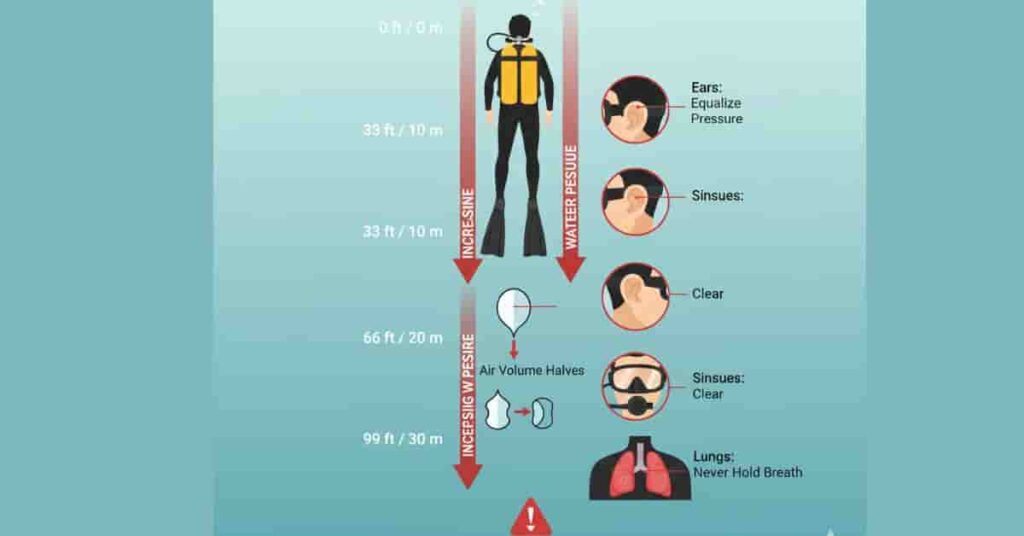
Understanding why depth matters is key for every beginner diver. Water pressure increases as you descend. Even a few feet of water adds noticeable pressure on your body. Your ears, sinuses, and lungs feel this pressure first, which is why proper equalization is essential.
Breathing underwater also changes with depth. Scuba tanks provide compressed air, and the deeper you go, the denser the air becomes. This means your body absorbs more nitrogen, which can affect alertness, reaction time, and overall safety if limits aren’t respected.
Depth affects the body in other ways, too. Blood circulation, heart rate, and breathing all adapt to higher pressures. Minor mistakes, like ascending too quickly, can lead to decompression problems. That’s why staying within recommended depth ranges and following your instructor’s guidance is crucial.
Tip for Beginners: Always check your depth gauge and never push past the limits set in your training. Most beginner dives are intentionally shallow for safety and confidence-building.
At What Depth Does Scuba Diving Become Dangerous?
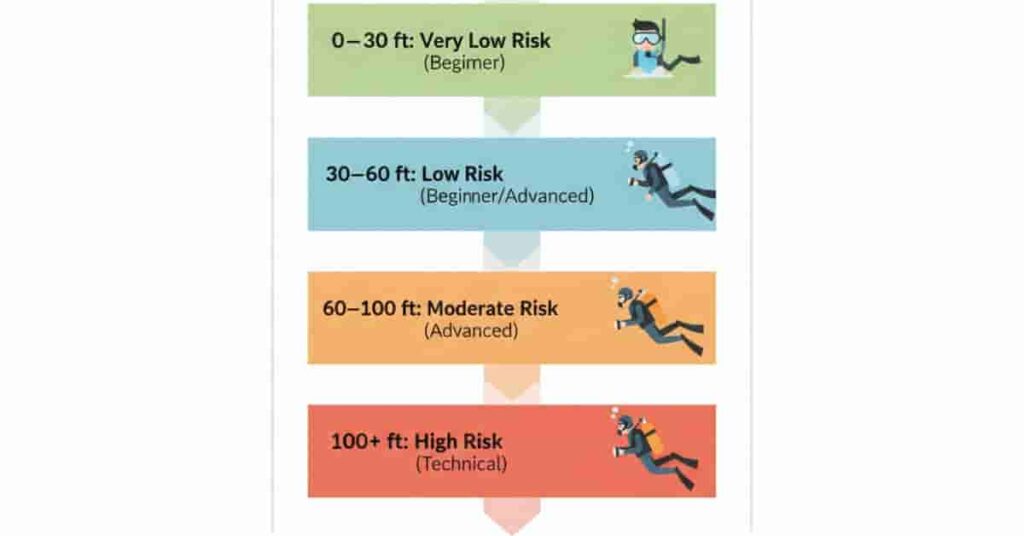
Knowing at what depth scuba diving is dangerous helps beginners plan safe dives and build confidence underwater. Depth itself isn’t inherently risky, but certain limits matter because pressure, air consumption, and nitrogen absorption all increase with depth. Let’s break down typical depth ranges and what they mean for beginner divers.
Shallow Depths (0–30 feet)
Shallow dives are the safest for beginners. These usually take place in pools or confined water training areas. Supervised practice dives focus on mastering buoyancy, breathing, and equalization. The risks are minimal when an instructor is present. Most beginners start here to gain confidence before exploring open water.
Pro Tip: Focus on slow, controlled movements and practice clearing your mask and ears. Safety habits learned here carry over to deeper dives.
Moderate Depths (30–60 feet)
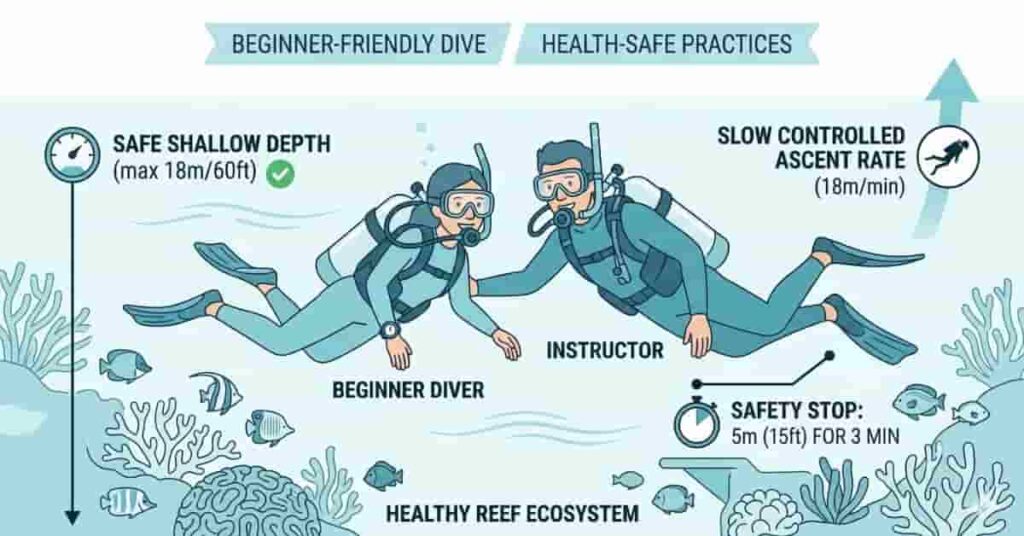
This is the typical beginner range for open-water certification dives. Depths between 30 and 60 feet allow you to explore reefs and small wrecks safely. With guidance from a certified instructor, the risks remain low. Beginners should always monitor their depth gauges and air supply carefully.
Visual Idea: Photo of a beginner guided dive at a shallow reef (Caption: “Open water dives at 30–60 feet are safe with supervision.”)
Deeper Depths (60–100 feet)
Dives beyond 60 feet enter advanced territory. The risks increase because nitrogen absorption accelerates, air consumption rises, and reaction time slows. Only divers with advanced training should attempt these depths. Beginners should avoid this range until they are certified and experienced.
Extreme Depths (100+ feet)
Extreme depths fall into the technical diving zone. These dives are not for beginners. They require specialized training, equipment, and careful planning. Attempting these dives without experience can be very dangerous.
Depth vs Risk Level Table
| Depth Range | Skill Level | Risk Level |
|---|---|---|
| 0–30 ft | Beginner | Very Low |
| 30–60 ft | Beginner (guided) | Low |
| 60–100 ft | Advanced | Moderate |
| 100+ ft | Technical | High |
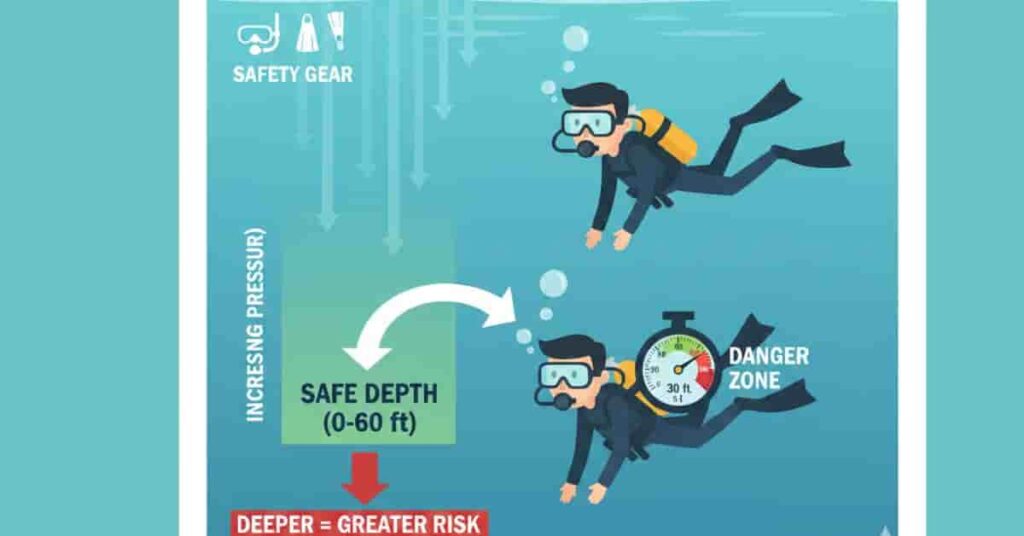
Takeaway for Beginners: Staying within 0–60 feet under guidance ensures a safe, enjoyable first diving experience. Depth becomes dangerous mainly when limits are ignored.
How Deep Is Scuba Diving for Beginners?
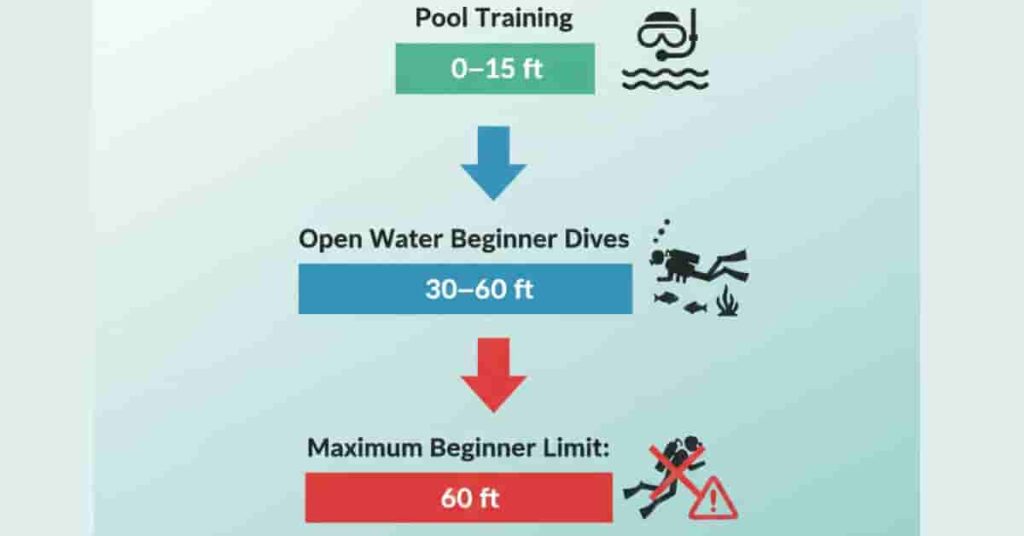
Many beginners ask, “How deep is scuba diving for beginners?” The answer depends on training and certification. Most first-time divers stay within 30–60 feet (10–18 meters). This range is considered safe, allows you to explore interesting underwater environments, and helps build confidence while learning essential skills.
Certification programs set depth limits for beginners to reduce risks. Pool sessions or confined-water dives are usually kept very shallow, around 10–15 feet (3–5 meters), giving you a chance to master breathing, buoyancy, and equalization. Open-water certification dives gradually increase in depth but rarely exceed 60 feet for new divers. Staying within these limits ensures safety while letting you enjoy real underwater experiences.
Beginners rarely go deeper because pressure and nitrogen effects increase, air consumption rises, and reaction time can slow. Controlled environments, like guided dives or instructor-supervised sessions, are key to safe progression. Diving deeper is safe only after advanced training, experience, and careful planning.
Pro Tip: Always follow your instructor’s depth limits, check your gauge frequently, and dive with a buddy. Enjoying the experience safely is more important than pushing limits early.
Learning the scuba diving basics for beginners can help you better understand why depth limits exist.
What Actually Makes Deeper Dives More Dangerous
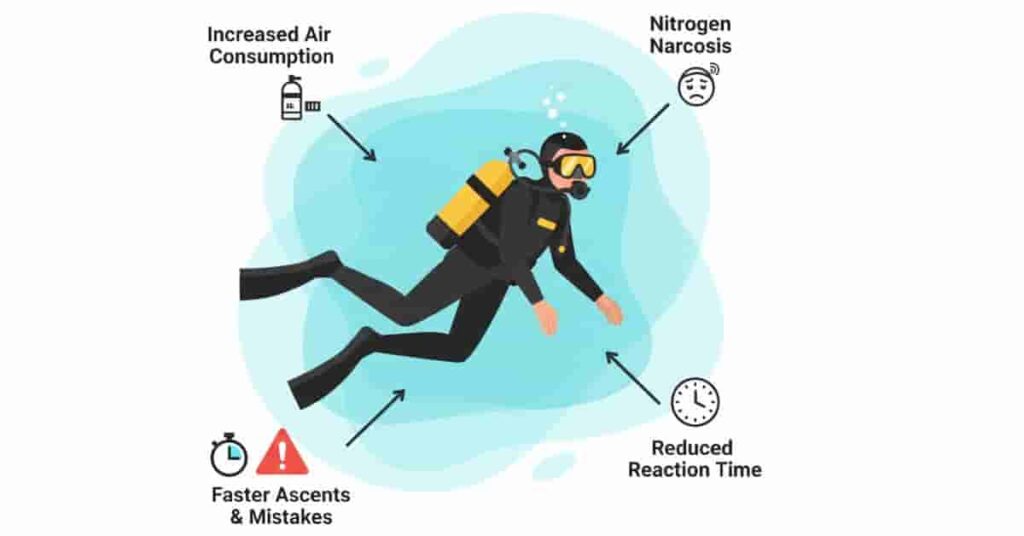
Many beginners worry about depth, but it’s not the number of feet that makes a dive risky—it’s how your body reacts and how limits are managed. Understanding these factors helps you stay safe and confident underwater.
Increased Air Consumption
The deeper you go, the denser the air becomes. This means you use your tank faster, even if you feel calm. Running low on air is one of the most common beginner risks at greater depths. Monitoring your gauge and planning dives conservatively keeps you safe.
Pro Tip: Start with shorter dives in shallow water to learn how your breathing changes with depth.
Nitrogen Narcosis
At moderate to deep levels, nitrogen in your blood can temporarily affect your brain, causing a light “drunk feeling.” This can reduce judgment, coordination, and alertness. Beginners usually experience this only beyond certification limits, but understanding it reinforces why staying shallow is important.
Faster Ascents & Mistakes
Deep dives make it easier to ascend too quickly. Rapid ascents can lead to decompression sickness, even in healthy divers. Practicing slow, controlled ascents with your instructor is crucial to avoid accidents.
Visual Idea: Chart showing safe ascent rate vs depth.
- Caption: “Slow ascents reduce the risk of decompression problems.”
- Alt Text: “Diagram illustrating safe ascent rates for scuba diving at different depths.”
Reduced Reaction Time
Pressure, nitrogen effects, and higher stress levels can slow your reaction time. Even simple tasks—like clearing your mask or adjusting buoyancy—take longer at depth. Staying within beginner limits ensures you have time to react safely to any situation.
Takeaway for Beginners: Depth itself isn’t dangerous—ignoring limits, rising too fast, or underestimating air consumption creates risk. Staying shallow and controlled keeps every dive safe.
Is Depth the Biggest Danger for Beginners?
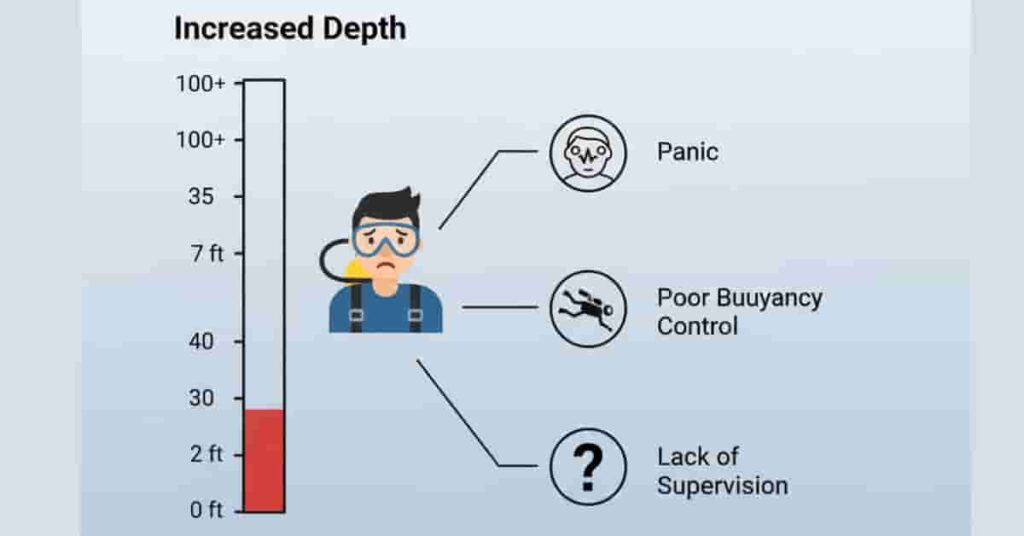
It’s a common misconception that going deep is the main risk for new divers. The truth is simple:
❌ depth alone is not the biggest danger.
✅ What really matters is staying within your training limits and diving under proper supervision.
Depth vs Panic
Beginners sometimes panic underwater, especially if they feel they’re too deep. Panic can lead to fast ascents, holding your breath, or poor decision-making—all of which are far more dangerous than the actual depth.
Depth vs Poor Buoyancy
Proper buoyancy control keeps you stable at any depth. Beginners who skip practice or ignore training may struggle to maintain neutral buoyancy. This can lead to collisions, rapid descents, or exhausting swimming.
Depth vs Lack of Supervision
Diving without an instructor or experienced buddy increases risk dramatically. Even shallow dives can become unsafe without guidance. Supervision ensures that mistakes are corrected quickly and emergencies are handled calmly.
Pro Tip: Focus on skills, comfort, and supervision rather than the number of feet you descend. Safe diving isn’t about depth—it’s about how prepared you are.
How Beginners Stay Safe Within Depth Limits
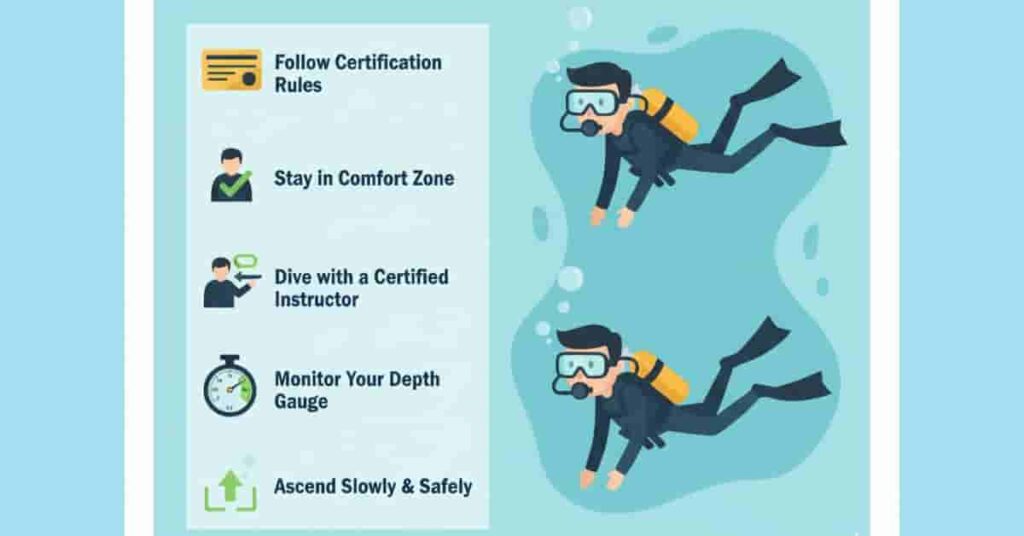
Safety underwater is all about staying within your limits and following good practices. For beginners, keeping dives safe doesn’t require complicated rules—just consistent habits.
Here’s a simple checklist to follow on every dive:
- Follow certification rules—always dive within the depth limits set by your training program. These limits exist for your safety.
- Stay within your comfort zone—only go as deep as you feel confident. Overconfidence can lead to mistakes.
- Dive with instructors or experienced buddies—supervision ensures guidance and quick help if anything goes wrong.
- Monitor your depth gauge constantly—know your current depth and how far you’ve planned to go.
- Never rush deeper dives—gradually increase depth as your experience and confidence grow.
Pro Tip: Practice slow descents and ascents even in shallow water. This reinforces safe habits and reduces stress underwater.
Common Depth Myths Beginners Believe
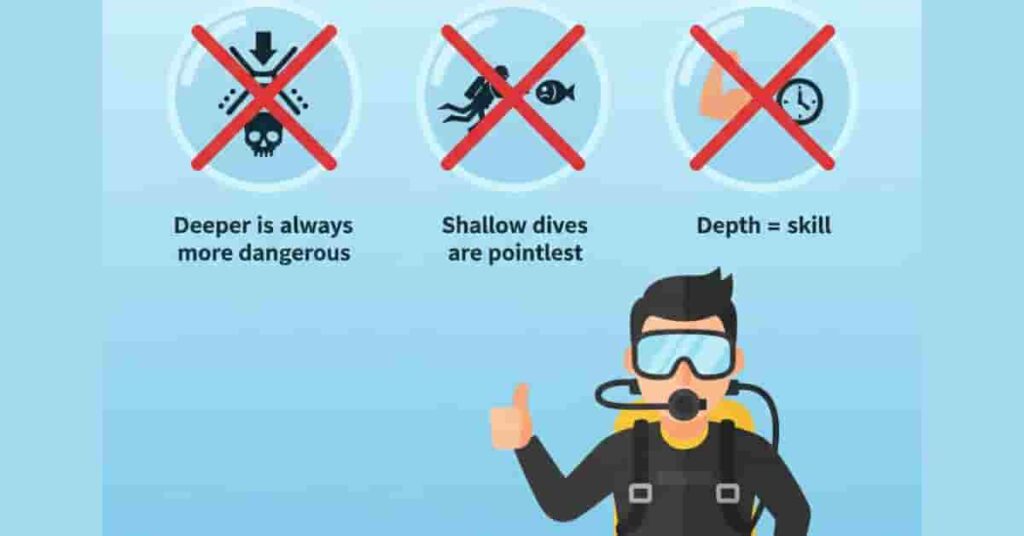
Scuba diving can feel intimidating at first, and beginners often worry about depth. Let’s clear up a few common myths so you can dive confidently:
Myth 1: Deeper is always more dangerous.
Depth alone doesn’t create risk. Supervised shallow dives can be just as safe, or even safer, while deep dives without proper training increase the danger. The key is to follow your certification limits and dive under guidance.
Myth 2: Shallow dives are pointless.
Shallow dives are where beginners learn essential skills: buoyancy control, breathing techniques, and equalization. These dives are crucial for building confidence and preparing for deeper adventures. No depth is wasted when it teaches safety and comfort.
Myth 3: Depth equals skill.
Being able to reach 100+ feet doesn’t automatically make someone an experienced diver. Skill comes from training, practice, and safe habits, not just how deep you can go. Many advanced divers recommend gradual progression to develop true competence.
Pro Tip: Focus on learning skills, enjoying the underwater world, and staying within your limits rather than comparing your depth achievements with others’. Safe diving is enjoyable diving.
When Beginners Should Avoid Going Deeper
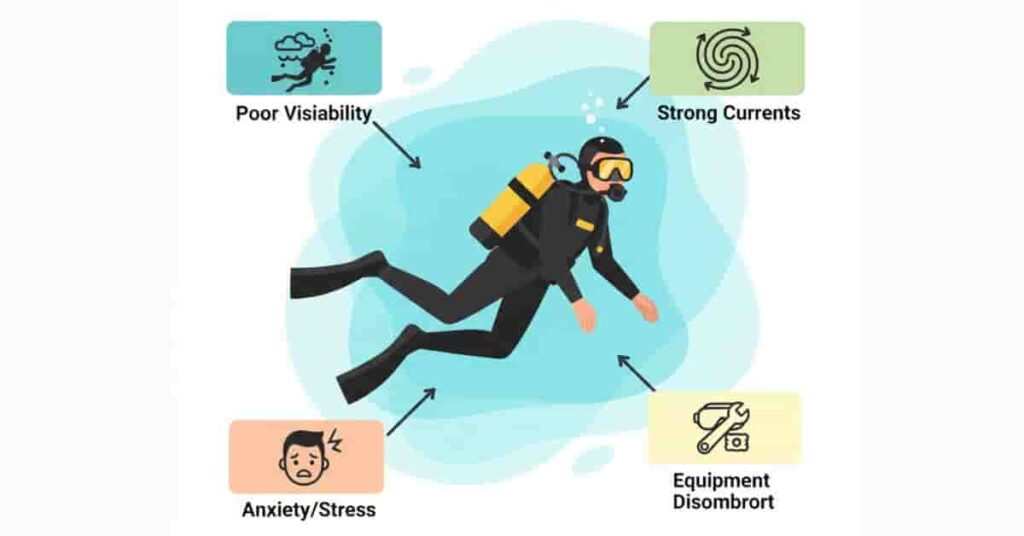
Even within safe depth ranges, some situations make diving riskier for beginners. Knowing when to pause or turn back helps prevent accidents and keeps your dives enjoyable.
Poor Visibility
If water clarity is low, it’s harder to see your surroundings and hazards, buddy. Shallow dives may feel safe, but reduced visibility can make navigation confusing and increase stress. Wait for clearer conditions or stick to well-marked dive sites.
Strong Currents
Strong water currents can push you off course, increase exertion, and make it difficult to maintain buoyancy. Beginners should avoid diving deeper when currents are strong, as controlling position and ascent becomes more challenging.
Anxiety or Stress
Feeling anxious, tired, or mentally unprepared can make any dive unsafe. Stress can cause rapid breathing or panic, which is more dangerous than the depth itself. Take time to relax, practice skills in shallow water, and dive when confident.
Equipment Discomfort
Ill-fitting masks, wetsuits, or gear issues can distract you underwater. If something feels wrong before a dive, it’s better to postpone or adjust your equipment than risk a deeper dive where problems are harder to manage.
Pro Tip: Always listen to your instincts. Feeling unsure is a valid reason to stay shallow. Comfort and confidence are the foundations of safe diving.
Final Verdict
In this guide, we explored the depth at which scuba diving is dangerous, breaking down shallow, moderate, and advanced ranges. We covered why depth affects the body, common risks, myths, and practical safety tips.
For beginners, staying within 0–60 feet (0–18 meters) under instructor supervision is considered safe. Training, gradual progression, and controlled environments matter far more than the exact depth. Following certification limits, monitoring your gauge, and diving with a buddy ensures confidence and safety underwater.
Remember, depth itself isn’t the main danger—exceeding your limits or ignoring safety practices is what increases risk.
Going too deep can increase certain health risks related to deep scuba dives, which divers should understand early.
Share your first dive experience in the comments, or explore our beginner guides to plan your next safe adventure!

Scuba Diving Researcher & Beginner Guide
Evan Calder is the creator of DiveBeginner, a website dedicated to helping beginners learn scuba diving simply and practically 🌊
He focuses on scuba fundamentals, beginner safety, and clear diving guidance. Evan has studied ocean and marine science through programs at the Scripps Institution of Oceanography, UC San Diego, a globally recognized leader in ocean research.
Instead of complex technical language, Evan provides easy-to-follow, beginner-friendly guides based on real-world research, helping first-time divers feel confident before their first dive 🤿
DiveBeginner reflects his passion for making scuba diving accessible, safe, and enjoyable for everyone.