Introduction
Is it hard to breathe the first time scuba diving?
Many beginners in the USA worry about this before their first dive, but most feel confident by the end of their first session. The idea of breathing underwater can feel strange and even a little scary. You might wonder how do scuba divers breathe without panic or discomfort. The good news is that your body adapts faster than you expect.
To help with this adjustment, scuba divers use a regulator that delivers air from a tank at the same pressure as the surrounding water, making breathing feel natural and controlled.
Once you get comfortable with the equipment, understanding how to breathe while scuba diving helps everything feel calm and smooth. With a little practice, your breathing becomes slow, steady, and automatic.
To guide you through this process, this guide will introduce simple breathing techniques, helpful exercises, common mistakes to avoid, and pro tips from instructors. By the end, you’ll feel more confident and ready for your first dive.
One of the most important scuba safety lessons is understanding why divers should never hold their breath underwater during any part of a dive.
How Do Scuba Divers Breathe?
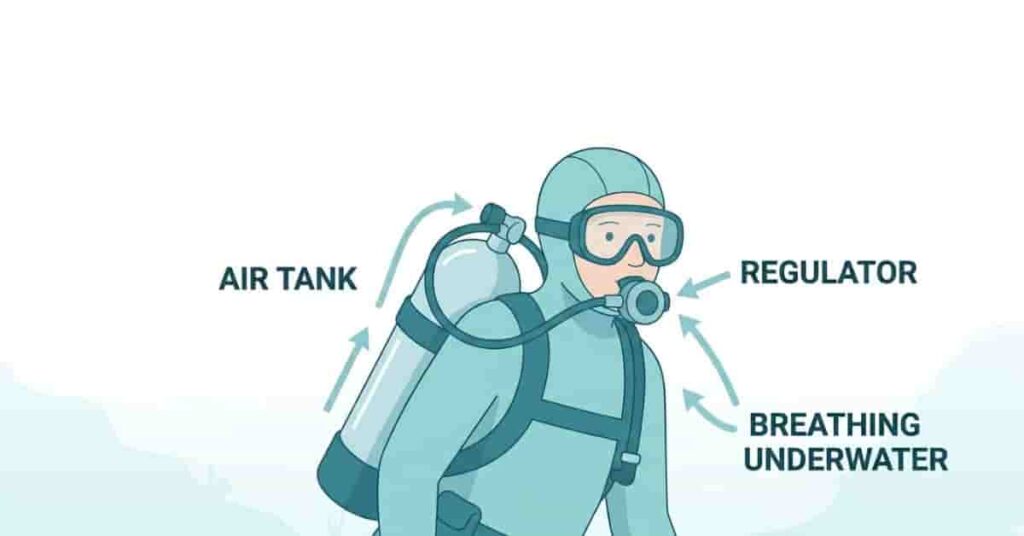
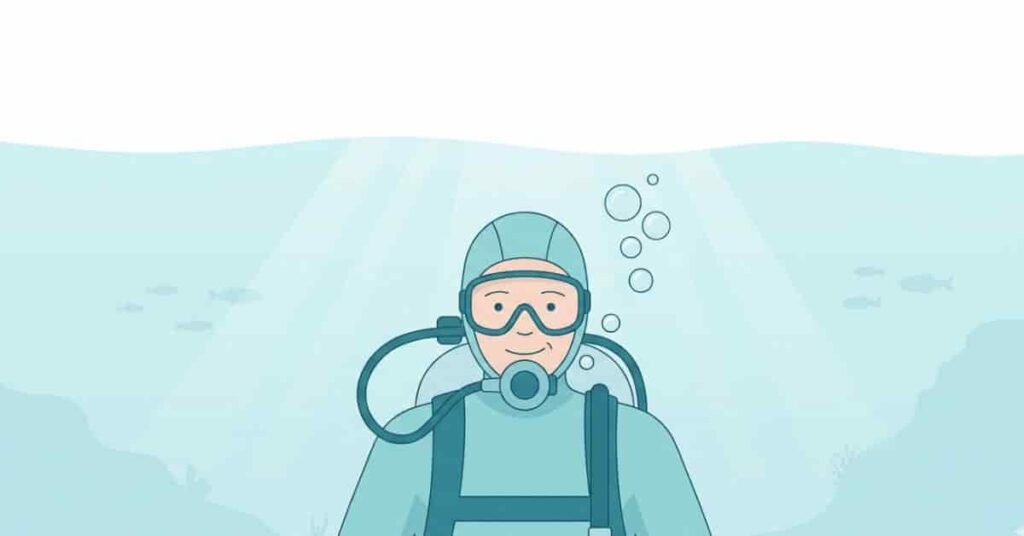
Scuba divers use a regulator attached to an air tank that supplies compressed air at ambient pressure, allowing them to breathe normally underwater.
So, how do scuba divers breathe underwater in simple terms? Each diver carries a tank filled with compressed air. This air is not pure oxygen. It’s regular air, similar to what you breathe on land, but compressed to fit safely inside the tank.
The regulator reduces the tank’s high-pressure air to match the surrounding water pressure, making breathing natural at any depth. You simply inhale and exhale gently through your mouth.
Scuba divers always breathe through their mouths, not their noses. The mask covers your nose, but it’s not designed for breathing. The regulator stays in your mouth and delivers air with each breath.
Adjusting to underwater breathing may feel different at first. Within a few minutes, though, most beginners say it feels just like normal breathing, only underwater.
Takeaways:
- Scuba tanks hold compressed air, not pure oxygen.
- The regulator makes breathing easy and controlled.
- Always breathe through your mouth.
- Breathing feels natural after a short adjustment.
Is It Hard to Breathe While Scuba Diving?
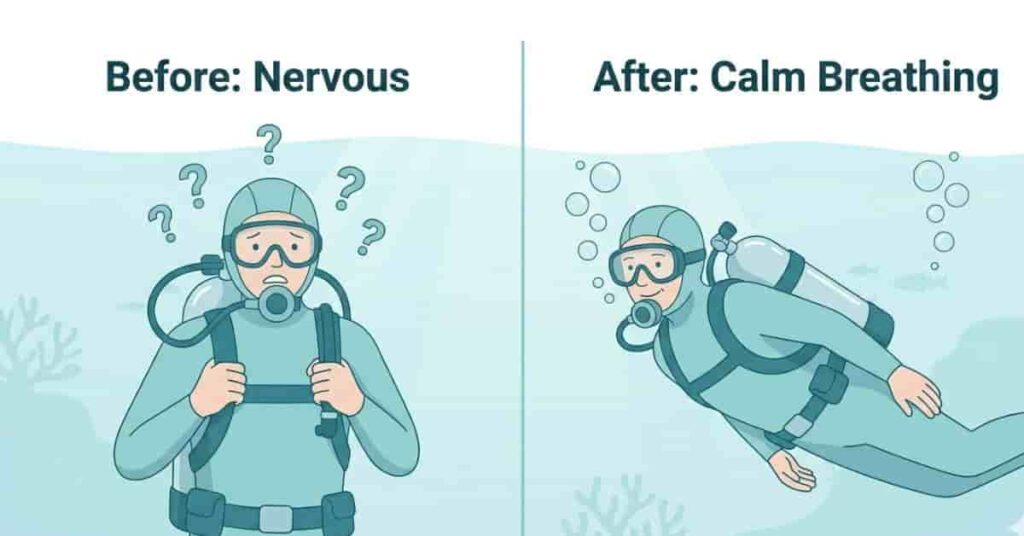
No, breathing while scuba diving is not hard if you stay calm and follow proper techniques; most beginners adjust within a few minutes.
Many beginners ask, ” Is it hard to breathe while scuba diving before their first dive. The fear is normal. Your brain isn’t used to the idea of breathing underwater. But in reality, the challenge is more mental than physical.
Your body already knows how to breathe. The regulator delivers air smoothly, just like normal breathing. The only difference is that you breathe through your mouth instead of your nose. Once you focus on slow, steady breaths, your body quickly relaxes.
The first 3–5 minutes may feel unusual, with noticeable bubbles or heightened awareness of each breath. Such sensations are normal. Soon after, breathing becomes automatic.
Here’s a quick real experience: During a beginner’s first open water dive, they often feel slightly tense at first. But within minutes, their breathing slows, and everything feels calm and natural.
Pro Tips:
- Focus on slow, deep breaths.
- Don’t rush your breathing.
- Stay relaxed and trust your gear.
- Give yourself a few minutes to adjust.
Knowing how your essential scuba gear helps you breathe underwater safely can make your first diving experience feel much easier.
The Correct Way to Breathe While Scuba Diving
Breathe slowly and deeply, without holding your breath, for proper scuba-diving technique.
If you’re learning how to breathe while scuba diving, start with one simple rule: keep your breathing slow and steady. Fast, shallow breaths waste air and can make you feel anxious. Instead, focus on long, gentle inhales and relaxed exhales.
Always maintain continuous breaths, never holding your breath. Regulators provide smooth air flow, so a steady breathing rhythm will keep the body relaxed and safe.
Engage your diaphragm, not just your chest. Allow your belly to expand as you inhale and to fall as you exhale. Such breathing refines control and supports calmness during dives.
Relax your shoulders and jaw to make breathing easier. Loose muscles encourage a calm, natural rhythm for underwater breathing.
Pro Tips:
- Inhale slowly through your mouth.
- Exhale fully without force
- Keep a steady rhythm, like a calm cycle.
- Check your body for tension and relax it.
Scuba Diving Breathing Techniques That Improve Air Control
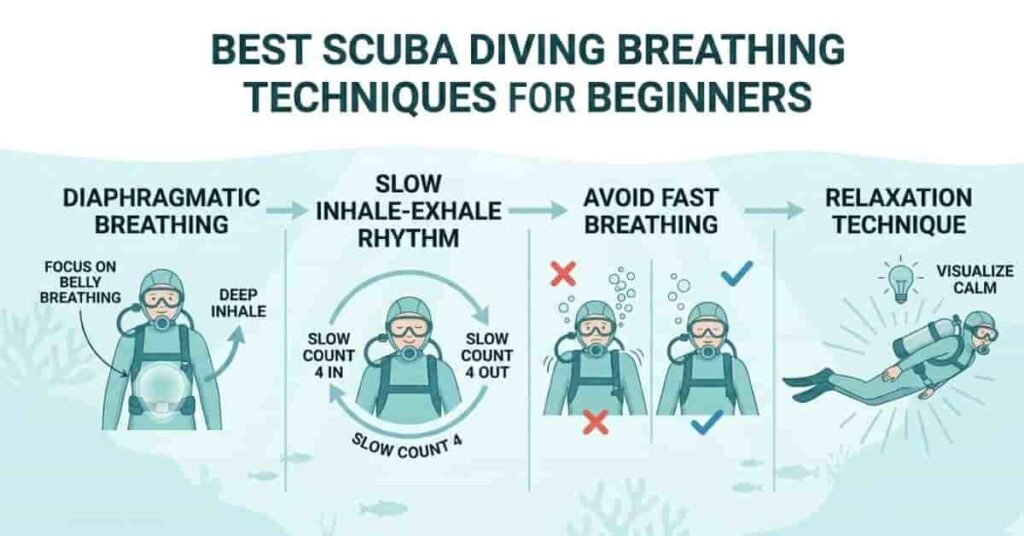
Use proper breathing techniques to conserve air, remain calm, and extend dive time.
Practice proper scuba-diving breathing techniques to remain relaxed and conserve air. As a result, you can enjoy longer dives and improved underwater experiences.
Below are the most effective scuba breathing techniques every beginner should practice.
Diaphragmatic Breathing
Master diaphragmatic breathing, or belly breathing, as a fundamental scuba skill. Rather than shallow chest breaths, use deep breaths driven by your diaphragm.
As you inhale, your belly expands. As you exhale, it relaxes. This method helps you take in more air with less effort. It also slows your breathing rate, which saves air during the dive.
Many instructors teach this first because it builds strong breathing control. With practice, it becomes natural and automatic underwater.
Slow Inhale, Slow Exhale Rhythm
Keep a steady breathing rhythm by inhaling slowly for about 4 seconds and exhaling gently for about 6 seconds.
This rhythm prevents rushed breathing and helps your body relax. It also improves buoyancy control because your breathing stays consistent.
Avoid forced breathing. Use a smooth, calm cycle for each inhale and exhale.
Avoiding Rapid, Shallow Breathing
Fast, shallow breaths are one of the most common beginner mistakes. This type of breathing wastes air quickly and can make you feel anxious.
When you breathe too fast, your heart rate increases. This leads to higher air consumption and less dive time. It can also make you feel out of control.
Pause, then reset your breathing with slow, deep breaths to restore control and peace.
Why Relaxation Improves Air Consumption
Relax to reduce air use. Stress and tension speed up breathing and oxygen consumption.
Stay calm to slow your breathing and efficiently use air for longer underwater experiences.
Benefit from relaxation to feel more in control, comfortable, and confident during your dive.
Pro Tips:
- Practice breathing slowly before your dive.
- Stay aware of your breathing rhythm.
- Relax your body to reduce your breathing rate.
- Don’t rush your breaths underwater.
Breathing Exercises for Scuba Diving Preparation
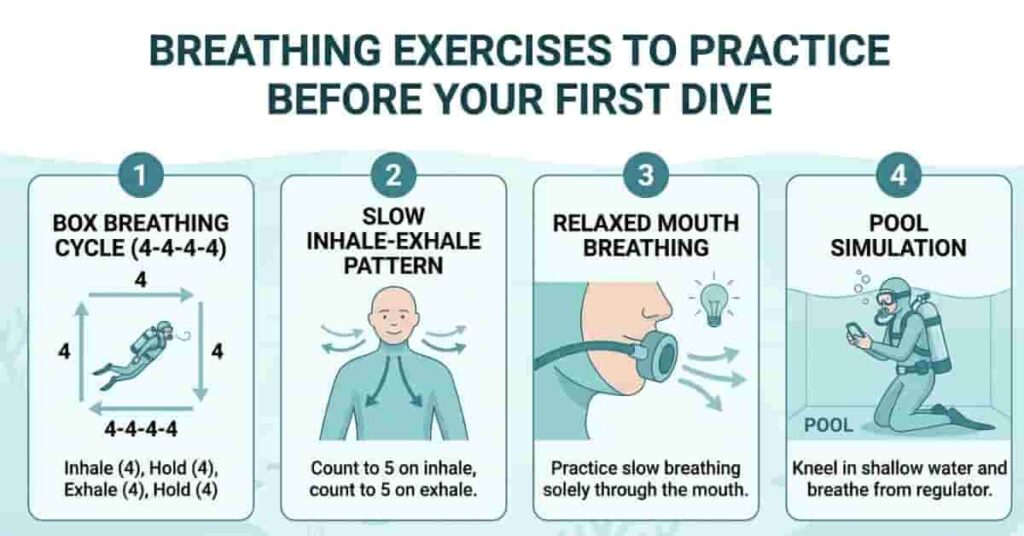
Practicing breathing exercises before scuba diving helps improve lung control, reduce anxiety, and increase underwater breathing efficiency.
If you want to master breathing exercises for scuba diving, start practicing before you enter the water. These simple drills train your body to stay calm and breathe efficiently. They also help you feel more confident during your first dive.
Here are the most effective scuba breathing exercises for beginners:
- Box Breathing (4-4-4-4): Inhale for 4 seconds, hold for 4 seconds, exhale for 4 seconds, then pause for 4 seconds. This builds control and reduces stress.
- 4–6 Breathing Pattern: Inhale slowly for 4 seconds and exhale for 6 seconds. This trains your body to slow down breathing and conserve air.
- Relaxed Mouth Breathing: Practice breathing only through your mouth while keeping your body relaxed. This mimics real scuba conditions.
- Pool Simulation Practice: If possible, practice in a pool using a snorkel or under supervision. This helps you get used to breathing in water.
A quick example: Many beginners feel nervous before their first dive. After practicing these exercises for a few days, they often report calmer breathing and better control underwater.
Common Scuba Breathing Mistakes (And How to Fix Them)
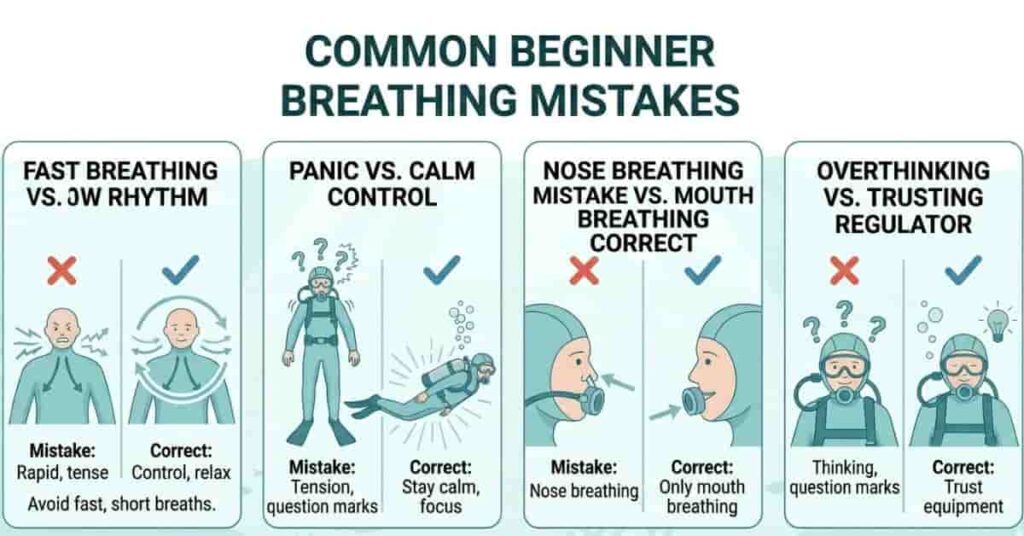
Most scuba breathing problems come from fast breathing, panic, or improper technique, all of which can be corrected with simple adjustments.
When beginners learn scuba diving, breathing mistakes are very common. The good news is that most of them are easy to fix once you understand what is going wrong. These errors often come from stress, lack of practice, or trying to control breathing too much.
Here are the most common mistakes and how to fix them:
- ❌ Fast breathing → wastes air → ✅ slow rhythm
Many beginners breathe too quickly underwater. This burns air fast and increases stress. The fix is simple: slow down your inhale and exhale. Keep a steady, calm rhythm. - ❌ Panic breathing → loss of control → ✅ pause + relax
Panic causes short, rushed breaths. This can make you feel out of control. Stop for a moment, relax your body, and return to slow breathing. - ❌ Nose breathing attempt → ineffective → ✅ mouth breathing
Some beginners try to breathe through their nose, but the mask blocks it. Always breathe through your mouth using the regulator. - ❌ Overthinking regulator → anxiety → ✅ trust equipment
Focusing too much on the regulator can increase anxiety. Trust your gear. It is designed to deliver air safely and smoothly.
A quick real example: Many first-time divers panic slightly in the first minute. Once they slow down and correct their breathing, they immediately feel more comfortable.
What Proper Breathing Feels Like Underwater
Proper breathing underwater feels calm, rhythmic, and natural, with steady inhale and exhale cycles and the sound of bubbles.
When your breathing is correct, everything starts to feel surprisingly peaceful. You stop thinking about each breath and begin to follow a smooth rhythm. Each inhale feels light, and each exhale releases a steady stream of bubbles that rise gently around you.
One of the first things you’ll notice is the sound of bubbles. It becomes a calming background noise, almost like a natural underwater rhythm. This sound helps many beginners relax and focus on steady breathing.
Proper breathing also improves your buoyancy control. When you breathe slowly and evenly, your body stays balanced in the water. You don’t feel rushed or unstable. Instead, you float naturally and move with ease.
As you get comfortable, your air usage also improves. You start using less air without even trying. This means longer dive time and a more relaxed experience overall.
A real beginner experience: many divers say that after a few minutes underwater, they forget they are “learning to breathe” and simply feel like they are floating and breathing normally.
Advice from Certified Dive Instructors
Certified dive instructors emphasize slow, continuous breathing as the foundation of safe and efficient scuba diving.
Professional instructors from training systems like PADI and SSI always teach beginners one core rule first: control your breathing before anything else. They focus on helping new divers stay calm, breathe slowly, and build confidence underwater. This approach reduces stress and improves safety from the very first dive.
In training, instructors use simple drills to develop controlled breathing. They often guide students to slow their inhales and exhales until it becomes natural. These repeated exercises help your body adapt to underwater conditions without panic or rushed breathing.
Over time, this practice builds muscle memory. Your body starts to remember how to breathe correctly without conscious effort. This is important because real dives require calm reactions, not overthinking.
Confidence also comes from repetition. The more you practice controlled breathing in training sessions, the more comfortable you feel in open water. Beginners who follow instructor guidance usually adapt faster and use air more efficiently.
A real training insight: many instructors notice that students who focus on breathing control from day one show better buoyancy and longer dive times compared to those who rush the process.
When to Be Concerned About Breathing Problems
Breathing issues during scuba diving should be taken seriously if they involve persistent shortness of breath, panic, or discomfort.
Most scuba dives feel smooth when you use the correct technique. But sometimes, your body may signal that something is wrong. Knowing these signs helps you stay safe and respond quickly underwater.
One key warning sign is shortness of breath that doesn’t improve even after slowing down your breathing. This may happen if you are stressed, overexerted, or not relaxing properly. In this case, stop, stabilize your breathing, and reduce movement.
Another concern is anxiety or panic signals. If you start breathing too fast, feel overwhelmed, or lose control of your rhythm, it’s important to pause mentally and return to slow, steady breathing. Panic usually gets worse if ignored, so early control is important.
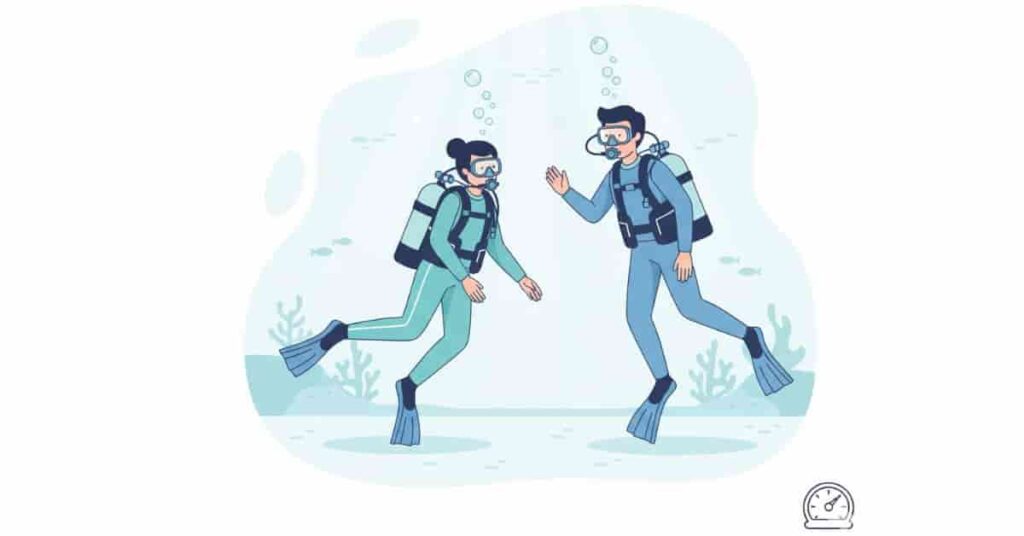
If you ever feel uncomfortable, always signal your dive buddy immediately. Simple hand signals are used in scuba diving for communication. Your buddy or instructor can help you regain control or safely end the dive if needed.
You should also always dive with a certified instructor or trained buddy, especially as a beginner. Training systems like PADI and SSI emphasize buddy safety for this exact reason.
Pro Tips:
- Stop and breathe slowly if you feel discomfort.
- Never ignore ongoing breathing difficulty.
- Communicate early using hand signals.
- Stay close to your buddy at all times.
Quick Beginner Breathing Checklist
A simple breathing checklist helps beginners stay relaxed, safe, and efficient during their dive.
When you are new to scuba diving, it is easy to forget proper breathing habits under pressure. This quick checklist keeps you focused on what actually matters underwater. It helps you stay calm and avoid common mistakes that waste air or increase stress.
Follow these simple points every time you dive:
- ✔ Slow and steady breathing
Keep your inhale and exhale smooth. Do not rush your breath. - ✔ Never hold your breath
Always breathe continuously. Holding your breath can cause discomfort and is unsafe underwater. - ✔ Relax jaw and shoulders
Tension makes breathing harder. Loosen your body to stay calm and comfortable. - ✔ Use diaphragm breathing
Let your belly move as you breathe. This improves air control and reduces effort. - ✔ Stay calm
A relaxed mind leads to better breathing and longer dive time.
This checklist works like a mental reset. If you ever feel nervous underwater, go back to these basics. Most beginners find that their breathing improves instantly when they follow these simple rules.
Conclusion
In this guide, we covered how scuba divers breathe underwater, common beginner concerns, and simple techniques to stay calm. You also learned breathing exercises, mistakes to avoid, and tips from certified instructors to build confidence.
Learning how to breathe while scuba diving is the first and most important skill for beginners, and it becomes second nature with practice. Once you understand the rhythm, breathing underwater feels natural, steady, and controlled.
With the right scuba diving breathing techniques, you can improve air efficiency, stay relaxed, and enjoy longer dives without stress. Over time, your confidence grows with every session.
If this guide helped you, share it with other beginners or leave a comment with your experience. Explore more scuba diving tips on our site to prepare for your next underwater adventure.

Scuba Diving Researcher & Beginner Guide
Evan Calder is the creator of DiveBeginner, a website dedicated to helping beginners learn scuba diving simply and practically 🌊
He focuses on scuba fundamentals, beginner safety, and clear diving guidance. Evan has studied ocean and marine science through programs at the Scripps Institution of Oceanography, UC San Diego, a globally recognized leader in ocean research.
Instead of complex technical language, Evan provides easy-to-follow, beginner-friendly guides based on real-world research, helping first-time divers feel confident before their first dive 🤿
DiveBeginner reflects his passion for making scuba diving accessible, safe, and enjoyable for everyone.