Introduction
Is scuba diving secretly harming your body?
Many beginners ask the same question: Is scuba diving bad for your health in the long term? News stories about diving accidents can sound scary. Online forums also spread mixed advice that confuses new divers. Most recreational divers follow established safety rules, and millions of people dive every year without serious health issues. Problems are usually linked to uncommon incidents or extreme conditions—not everyday diving. Following the rules goes a long way in keeping you healthy.
If you’re new to diving in the United States, it’s perfectly normal to feel concerned about safety. You may hear intimidating terms like decompression sickness or sudden diving deaths, but with the right perspective, you’ll see that diving is much safer than headlines suggest. This guide will walk you through what really happens to your body during recreational scuba diving. You’ll discover how uncommon health risks are and how proper training helps ensure you stay safe.
We’ll also break down decompression sickness, long-term health effects, and what really causes scuba diving incidents. Our goal is simple: give you clear facts, calm explanations, and welcoming guidance to support your confidence.
Many health concerns actually come from the broader question: is scuba diving dangerous for beginners.
By the end, you will understand the real risks and safeguards of recreational scuba diving, enabling you to make informed decisions and dive confidently.
Why Scuba Diving Health Concerns Worry Beginners
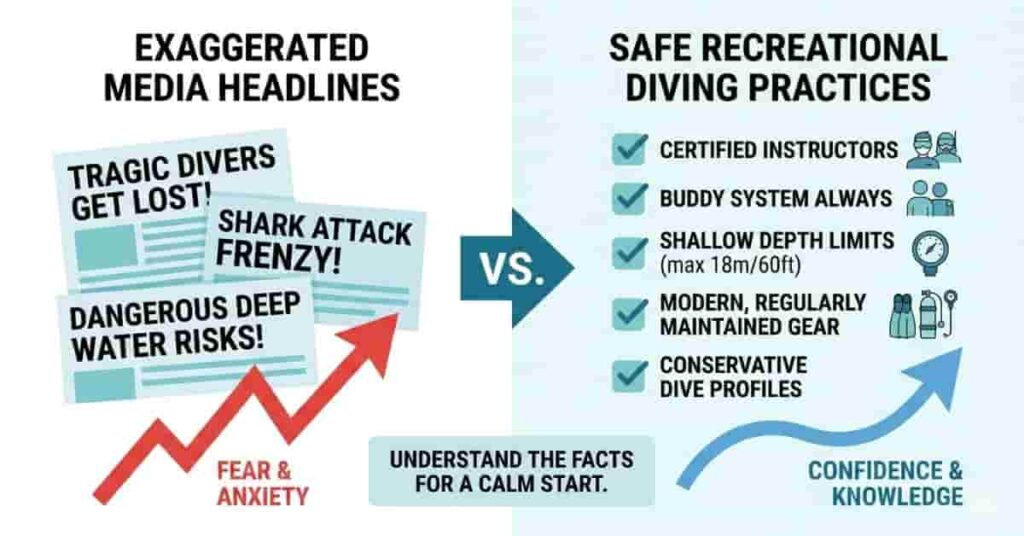
Dramatic headlines spark a common question among beginners: Is scuba diving bad for your health in the long term? This concern usually arises from stories shared online. Videos, news reports, and social media often highlight rare diving accidents.
These stories spread quickly because they sound shocking. However, they rarely explain the full situation behind the incident. Important details such as training level, dive depth, or health conditions are often left out.
Viral Stories Make Risks Feel Larger
Social media often focuses on extreme events. A single diving accident can reach millions of viewers within hours. For a beginner, this creates the impression that serious injuries happen often. In reality, most recreational dives follow strict safety guidelines. Divers train carefully and stay within safe limits. Problems usually appear when people ignore those limits or attempt advanced dives.
Misunderstanding Diving Injuries
Many beginners also misunderstand how diving injuries happen. Terms like decompression sickness or lung barotrauma can sound frightening. Without context, they may seem unavoidable. In reality, these injuries usually happen when divers break safety rules. Examples include ascending too fast or diving deeper than their training allows. When divers follow training guidelines, the risk becomes much lower.
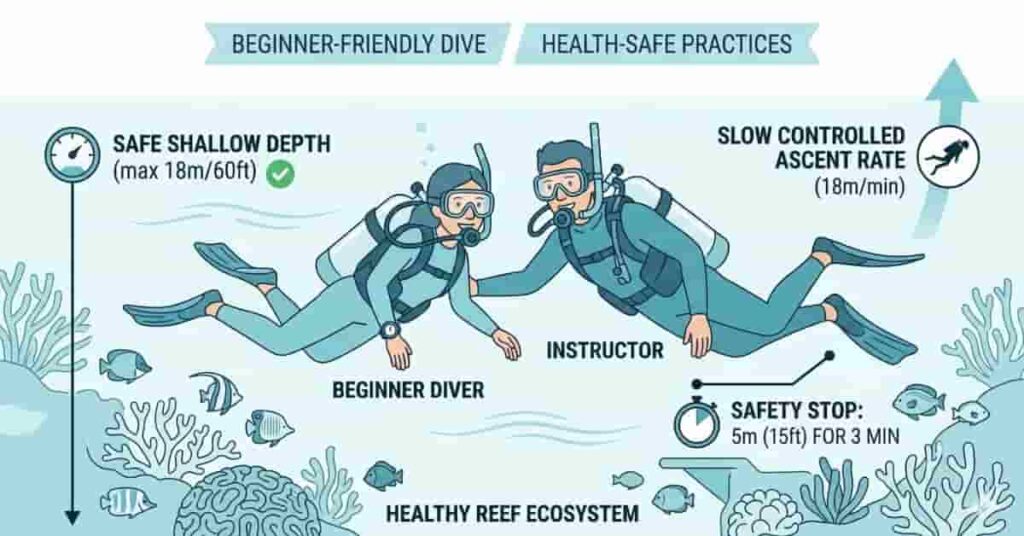
Most beginner dives stay within controlled depth limits. Instructors monitor new divers closely during training and guided trips.
Confusion Between Professional and Recreational Diving
Another common mistake is mixing professional diving with recreational diving. Commercial divers, military divers, and technical divers work in very different environments. They may dive deeper, stay underwater longer, and face more complex conditions. Another common mistake is confusing recreational diving with professional or technical diving. Commercial divers, military divers, and technical divers operate in environments significantly different from those of recreational divers. conservative safety practices.
A beginner training dive at a resort typically includes an instructor, controlled depth, and strict ascent rules. Understanding this difference helps beginners see the bigger picture. Recreational scuba diving is structured and carefully taught.
Key Takeaways
- Rare accidents in viral stories rarely reflect typical diving experiences.
- Following safety rules greatly reduces the risk of diving injuries.
- Beginner recreational diving is much safer than professional diving, with structured training and limits.
- Training and conservative limits make beginner diving much safer.
Is Scuba Diving Bad for Your Health Long-Term?
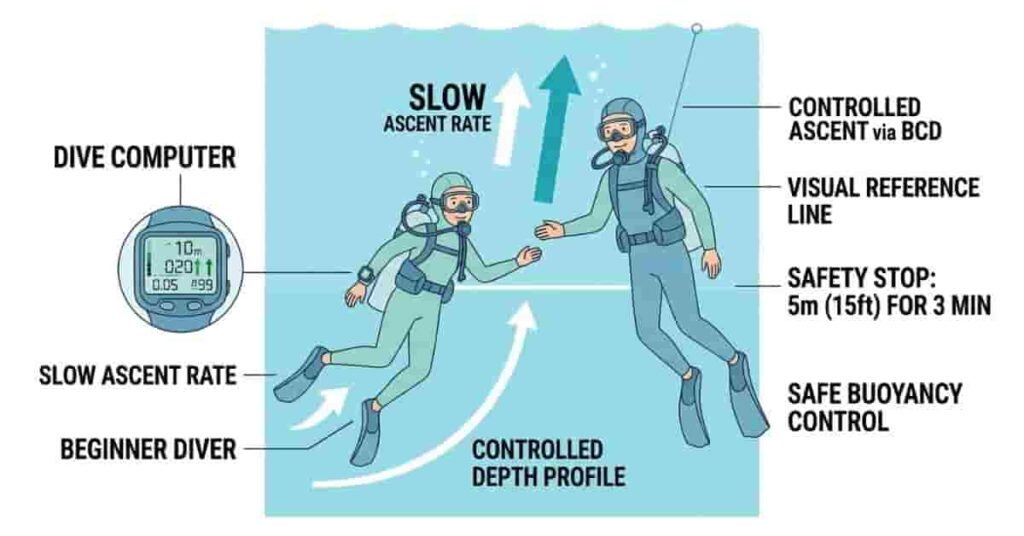
So, is scuba diving bad for your health in the long term? For most recreational divers, the answer is a reassuring no. When people follow training guidelines, long-term health problems are rare.
While scuba diving does place pressure on the body, modern training ensures divers understand how to manage it safely. Certification programs focus on controlled depth, slow ascents, and careful planning. These well-established habits help divers avoid nearly all serious health issues. Problems are rare and almost always occur only when people push past safe limits. This is most likely in extreme or highly technical dives, which most divers never attempt.
Recreational Diving vs. Extreme Diving
Most beginners start with recreational scuba diving. These dives are carefully designed for safety and comfort, following conservative rules. Typical beginner dives stay within moderate depths and include frequent safety checks, giving new divers every opportunity to feel confident and secure. Technical or professional diving is very different. These dives may go deeper, last longer, or use more complicated gear. Water pressure is higher in these situations, and the risks are greater.
This important difference is why some dramatic diving stories may sound alarming. They almost always involve advanced diving situations and not typical beginner dives, so recreational divers can feel confident about their own experience.
How Safe Practices Protect Long-Term Health
Divers protect their health by following simple but important habits, which are taught from the very first certification course. These practices are designed to keep divers safe both in the short and long term.
Key safety habits include:
- Ascend slowly to avoid pressure injuries.
- Follow the dive computer or dive table limits.
- Take safety stops during ascent.
- Stay hydrated before and after dives.
- Avoid diving when sick or extremely tired.
These proven practices help prevent conditions such as decompression sickness and lung pressure injuries, keeping divers healthy and able to enjoy their hobby for years to come.
Why Training and Recovery Matter
Proper training is key to long-term safety. Certified instructors teach divers how pressure affects the body and how to respond calmly underwater, building greater confidence on every dive. Divers also learn to respect recovery time between dives. Rest periods allow the body to safely release absorbed gases. This simple habit greatly reduces stress on the body.
Many experienced divers choose conservative schedules for exactly this reason. They find that enjoyable, safe dives are more rewarding than pushing limits, making diving a comfortable and lasting activity.
Takeaways
- Recreational scuba diving is designed with safety limits in mind.
- Most long-term health risks are only a concern if divers go beyond these well-established limits, something recreational divers are trained to avoid.
- Training teaches divers how to manage pressure and ascent safely.
- Rest and recovery between dives help protect long-term health.
Pro Tip Many experienced divers choose conservative dive profiles. By staying well within established limits, they keep diving comfortable, enjoyable, and sustainable for many years.
Understanding Decompression Sickness (DCS)
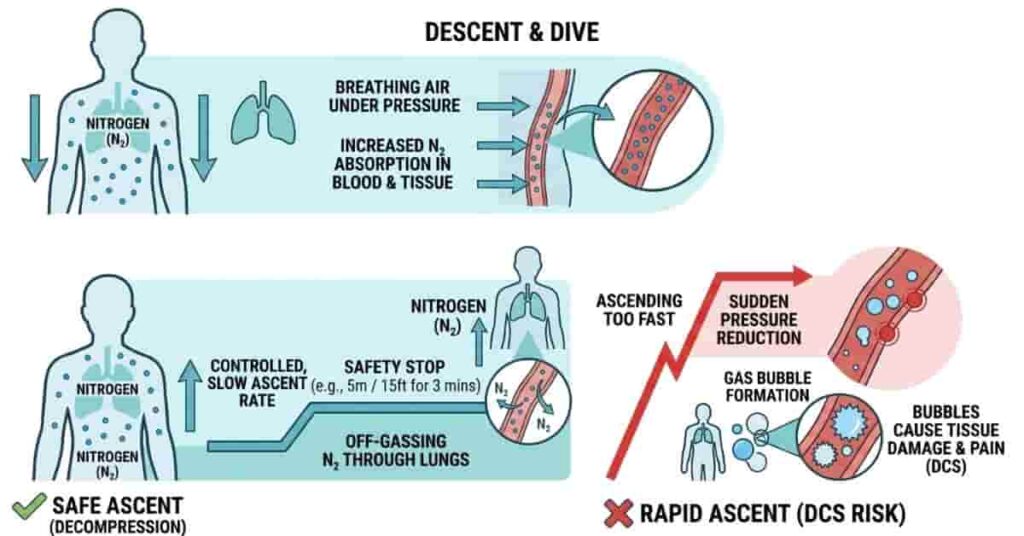
Many beginners worry about decompression sickness, often called “the bends.” The term sounds alarming, but understanding how it actually works helps. DCS relates to how gases behave in your body under pressure during a dive. As divers descend, the body absorbs additional nitrogen from breathing gas. When divers follow ascent guidelines, the body releases this gas steadily and safely. Issues usually surface when divers ascend too quickly or surpass safe limits.
Mastering the basics of decompression sickness helps beginners distinguish genuine risks from inflated fears. Recreational diving courses devote ample instruction to these safety foundations.
What Decompression Sickness Is (Simple Explanation)
Decompression sickness arises when nitrogen forms bubbles in the body after a dive. These bubbles may collect in tissues or the bloodstream if gas escapes too abruptly.
During a dive, pressure increases as you go deeper. This pressure allows nitrogen from breathing gas to dissolve into body tissues. The longer and deeper the dive, the more nitrogen your body absorbs. Ascending slowly allows nitrogen to be safely exhaled through normal breathing. Rapid ascent may cause nitrogen bubbles to form before safe release.
Training emphasizes controlled ascent rates and planned stops to gradually release gas.
How Common DCS Is in Recreational Diving
Decompression sickness attracts considerable attention online, but it remains rare in recreational diving. Most certified divers adhere to strict limits crafted to prevent problems. Beginner dives stay within conservative depth ranges. Divers also track time underwater using dive computers or dive tables.
These tools enable divers to plan safe dive profiles. They direct divers on when to ascend and when to pause for safety stops. When divers honor these limits, risk diminishes substantially. Problems typically emerge when divers disregard training or exceed recommended depth and time parameters.
How Beginners Reduce DCS Risk
Beginner divers learn several simple habits that reduce the chance of decompression sickness.
Key practices include:
- Ascend slowly at the recommended rate.
- Perform a safety stop near the end of the dive.
- Follow the dive computer or dive table limits.
- Stay hydrated before and after dives.
- Avoid pushing depth or time limits.
These habits become routine for most divers and are reinforced by instructors during training and guided dives.
Takeaways
- Decompression sickness happens when gas forms bubbles during rapid ascent.
- Recreational diving guidelines help control this risk.
- Dive computers and safety stops support safe gas release.
- Following training rules greatly reduces the chance of DCS.
Pro Tip
New divers should focus on relaxed, controlled ascents. Slow ascents give the body time to safely release nitrogen.
Understanding the scuba diving basics for beginners can significantly reduce most diving-related risks.
Sudden Death After Scuba Diving — How Rare Is It?
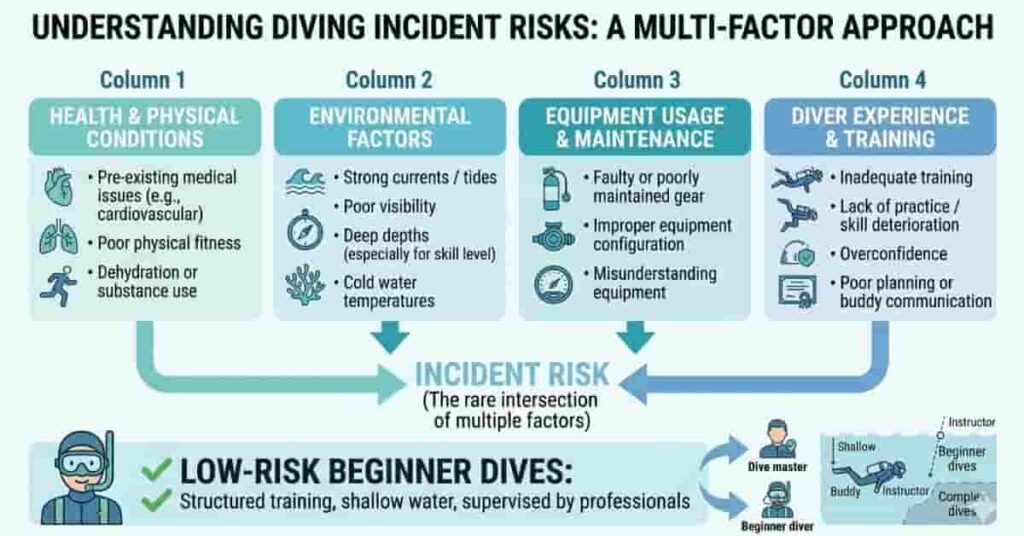
Stories of sudden death after scuba diving can be frightening, especially for beginners.
Many incidents involve several factors, such as pre-existing health conditions, extreme dive environments, or breaches of safety guidelines. Without all the facts, people often blame the dive itself. Know the difference between coincidence and direct cause. Recreational diving uses strict safety standards to protect divers.
Coincidence vs. Direct Cause
Sometimes a medical event happens shortly after a dive, but the dive may not be the direct cause. For example, heart issues or other health conditions can occur during any physical activity. Investigators check the diver’s health history, dive profile, and environment. Only a detailed review can determine whether diving contributed to the incident.
Experts do not jump to conclusions about diving incidents reported in the news.
The Role of Underlying Health Conditions
Some divers have health issues that raise risk during activity. Heart or lung problems can make the body less able to handle stress. Diving does not cause these medical problems. However, physical exertion during a dive can expose them. Responsible dive operators require divers to complete health questionnaires before training or trips.
This step helps identify when to use extra caution or seek medical advice.
Why Proper Screening Matters
Most beginner courses include a basic health screening. Divers answer questions about their medical history before training or guided dives. If certain health conditions arise, instructors may require a doctor’s clearance. This keeps each diver safe.
Screening protects divers and helps instructors deliver safe training.
Takeaways
- Headlines may oversimplify stories about sudden death after scuba diving.
- Many incidents involve multiple factors, not diving alone.
- Underlying health conditions can influence risk during physical activities.
- Health screening helps instructors identify potential concerns early.
Pro Tip
Before scuba training, review the standard medical questionnaire carefully. Honest answers keep you safe.
Scuba Diving Deaths — What the Numbers Actually Mean
Scuba diving can seem risky, but numbers alone rarely capture the full context of incidents.
Most incident reports cover a wide range of situations. These may involve advanced dives, poor weather, equipment misuse, or divers exceeding their training limits. When people see a single statistic online, they rarely see the full story behind it.
Recognizing this context is essential. With that in mind, let’s look at how incident details provide a fuller picture for beginners.
Context Behind Reported Incidents
When organizations study diving incidents, they usually analyze several details. These details help explain what happened and why.
Common factors examined include:
- Dive depth and bottom time
- Diver training and experience level
- Environmental conditions such as currents or visibility
- Equipment use and maintenance
- Health conditions or fatigue
Many reports show that incidents often involve a combination of factors rather than a single mistake.
Example table structure:
| Contributing Factor | Often Preventable? | Example Situation |
|---|---|---|
| Exceeding depth limits | Yes | Diving deeper than training allows |
| Rapid ascent | Yes | Ignoring ascent rate guidelines |
| Poor visibility conditions | Sometimes | Diving in unfamiliar environments |
| Health issues | Sometimes | Undiagnosed or unmanaged conditions |
Depth, Experience, and Environment Matter
Many incidents occur during challenging dives. These might involve deeper water, strong currents, cold environments, or overhead settings. Experienced divers sometimes explore these environments after advanced training. However, beginners rarely encounter such situations during normal certification dives.
To support safety, training programs introduce diving gradually. Instructors choose calm locations, controlled depths, and clear safety procedures—an approach that directly connects to the safety of beginner dives.
Why Guided Beginner Dives Are Low Risk
Beginner dives typically happen under close supervision. Instructors monitor new divers throughout the experience and oversee key safety procedures.
For example, instructors help manage:
- Safe descent and ascent speeds
- Depth limits
- Air supply checks
- Navigation and dive timing
This structure reduces uncertainty and helps keep dives within conservative safety limits—a principle especially important for new divers as summarized in the following takeaways.
Takeaways
- Numbers about scuba diving deaths often lack important context.
- Many incidents involve advanced dives or the violation of safety rules.
- Factors like depth, experience, and environment strongly affect risk.
- Guided beginner dives follow conservative safety practices.
Potential Long-Term Effects of Scuba Diving
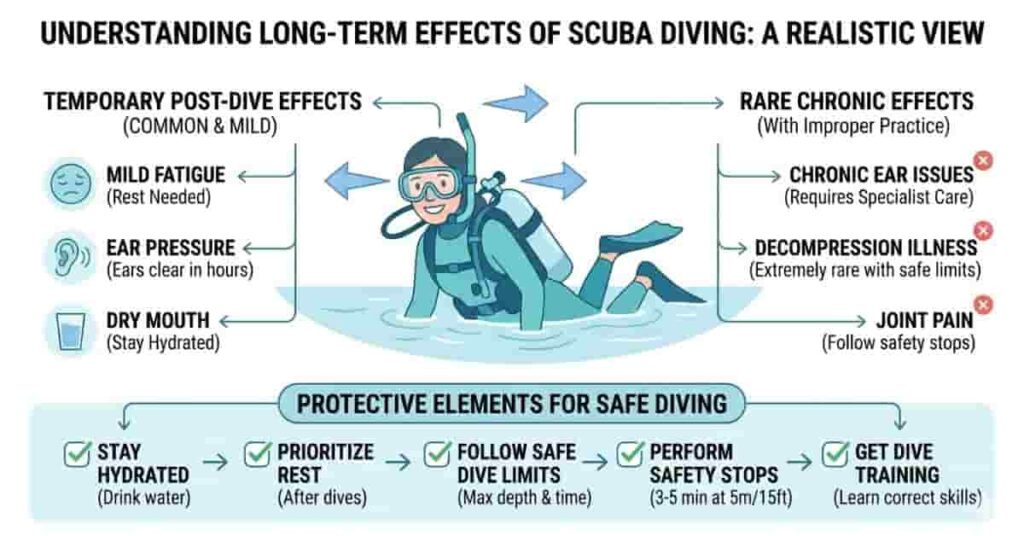
Many beginners wonder again: Is scuba diving bad for your health in the long term? For most recreational divers, long-term problems are uncommon. However, as with any physical activity, diving can affect the body if people ignore safe practices.
Being informed about realistic effects helps new divers avoid unnecessary worry. Most issues are temporary and manageable when following training guidelines.
Ear Pressure and Equalization
Most divers notice ear pressure as the most common issue. As divers descend underwater, water pressure increases around their ears. To manage this, divers equalize by gently balancing the pressure in their middle ears. If divers equalize early and often, discomfort usually disappears quickly. When someone descends without equalizing, it may cause ear pain or temporary irritation.
Few recreational divers develop chronic ear problems. Repeatedly ignoring discomfort or diving while sick with congestion often leads to these issues.
Fatigue and Post-Dive Recovery
Divers sometimes feel tired after a day of diving. This tiredness results from physical activity, carrying equipment, moving against water resistance, and exposure to cooler water temperatures.
Rest and hydration typically help divers recover quickly. Many divers treat diving days like outdoor adventure days that require energy and recovery. Fatigue itself does not indicate long-term harm. It serves as a reminder for divers to pace their dive schedule and allow proper rest between dives. Over-Diving vs Recreational Limits
And diving frequency plays a significant role. Recreational diving programs set conservative limits for depth, time, and number of dives per day.PrDivers face more problems when they exceed these limits. Examples include diving too many times in a short period or attempting advanced dives without proper training. Recreational divers who follow training guidelines remain within safe exposure levels.
Takeaways
- Most recreational divers experience few long-term health issues.
- Ear pressure discomfort is usually temporary and manageable.
- Fatigue after diving is common but typically mild.
- Following recreational dive limits helps protect long-term health.
Who Should Be Extra Careful Before Scuba Diving
Most beginners can dive safely with proper training. Have you considered what extra precautions might be needed before getting underwater? This guidance is informational only and not a substitute for professional medical advice.
Pre-Existing Health Conditions
Certain health conditions can increase the risk of diving. Examples include:
- Heart or lung conditions
- Severe asthma
- Uncontrolled high blood pressure
- History of seizures
Do you know if your health conditions prevent you from diving? These conditions do not automatically keep you from the water, but they may require additional medical clearance. Have you spoken with a doctor familiar with diving medicine to ask if diving is safe for you?
Age Considerations
Are you an older adult interested in diving? While diving is possible at many ages, older adults may need more careful planning. Have you assessed your physical fitness, flexibility, and cardiovascular health? Beginners in the USA often start in their 20s or 30s, but even older adults can dive safely with guidance.
Importance of Medical Clearance
Have you filled out a dive health questionnaire? If any risk factors appear, will you consult a doctor first? This step ensures diving is appropriate and safe for you.
Pro Tip
Are you honest when filling out dive health forms? Early disclosure helps instructors adapt the dive safely for you. Will you share accurate information for your own safety?
How Beginners Can Protect Their Health While Diving
Embracing simple, practical habits can make your diving experience enjoyable and safe from the very start. By following these routines, beginners set themselves up for positive, rewarding underwater adventures with fewer long-term risks.
Key Practices for Health and Safety
- Follow Certification Limits
Confidently stick to the depth and time limits from your training. Remember, these certification rules are in place to keep you safe and help you grow as a diver. - Rest Between Dives
Give your body time to safely off-gas nitrogen. Avoid back-to-back dives without proper recovery. Even one extra hour of rest can make a difference. - Stay Hydrated
Staying hydrated boosts your energy and reduces risks while diving. Drink water before, during, and after your dives—your body will thank you! - Avoid Pushing Boundaries
Trust your comfort level and training when deciding your dive parameters. Progress comes with experience—there’s no rush. Staying within your boundaries today sets you up for future success! - Listen to Instructors
Your instructors are dedicated to your success and safety. By following their guidance, you’re making the most of your learning journey and building a solid foundation for confident diving.
Takeaways
- By practicing good habits consistently, you empower yourself to stay healthy and strong during and after dives.
- Recovery, hydration, and limits reduce the risk of issues such as fatigue or decompression sickness.
- Rely on your instructors for support and feedback—they are there to help you succeed and stay safe.
Pro Tip
Keep a personal dive log to track your depths, times, and recovery periods. This proactive step helps you stay within safe limits, notice positive patterns, and celebrate your progress.
Common Health Myths About Scuba Diving
Many beginners have concerns about scuba diving due to some alarming claims, which can understandably make the sport seem daunting. Let’s gently clear up myths and offer a reassuring, beginner-friendly perspective.
Myth 1: “Scuba Diving Permanently Damages Your Lungs”
With proper training, long-term lung damage from recreational diving is very uncommon. Safe pressure limits and correct breathing techniques help protect your lungs. Occasionally, temporary discomfort may occur if you hold your breath or ascend too quickly, but lasting issues are rare for well-trained divers.
Myth 2: “One Dive Can Ruin Your Health”
A single recreational dive conducted in accordance with training is extremely unlikely to cause lasting health problems. Most beginner dives are shallow, supervised, and controlled. Issues only occur when safety rules are ignored or extreme conditions are involved.
Myth 3: “All Divers Eventually Get Decompression Sickness (DCS)”
DCS is rare for recreational divers. Following dive tables, using computers, and performing safety stops further reduce the risk. Millions of beginner dives happen every year without any incident, proving that DCS is not inevitable.
Takeaways
- Recreational divers can relax knowing lung damage is very rare.
- A well-planned, supervised dive lets you explore without worrying about lasting health effects.
- When you follow safety steps, the risk of DCS stays low, so you can dive with confidence.
- Myths often exaggerate risks that beginners actually face.
Pro Tip
Focus on learning and following safe dive practices. By understanding the science behind diving, you can avoid unnecessary fear and build your confidence step by step.
Conclusion
This guide examined real scuba diving health risks and how beginners can stay safe. We covered decompression sickness, ear pressure, fatigue, diving myths, and why proper training matters.
For most recreational divers, is scuba diving bad for your health in the long term? The answer is reassuring: risks exist but are rare and manageable when you follow safe practices. Beginner dives are structured, supervised, and designed to reduce stress on the body. Following certification limits, safety stops, and instructor guidance keeps diving enjoyable and safe.
Remember, extreme stories often involve advanced diving or the violation of safety rules, not typical beginner experiences.
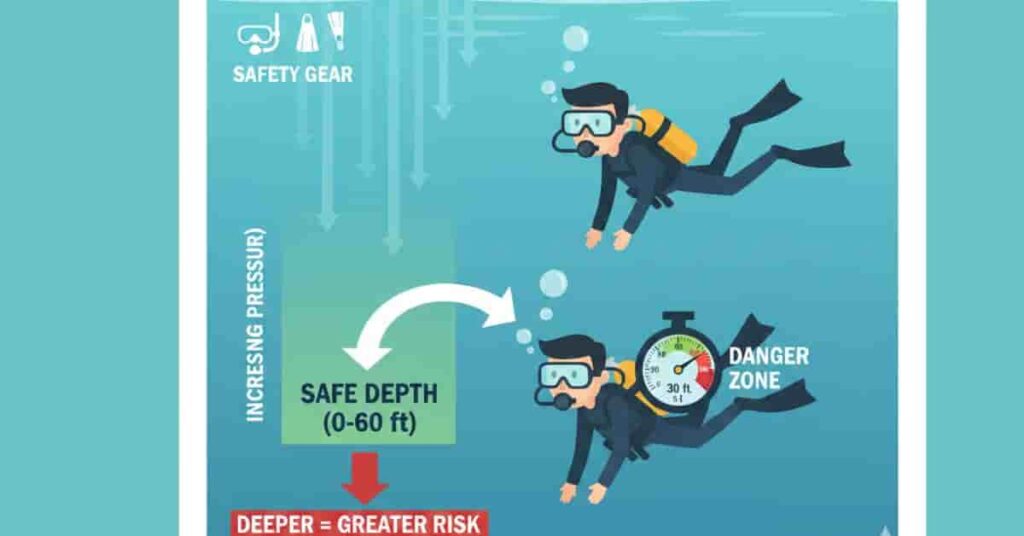
Another key factor beginners should learn is how depth affects scuba diving safety during a dive.
Share your first diving experience in the comments, and explore our other guides on beginner scuba safety for more tips.

Scuba Diving Researcher & Beginner Guide
Evan Calder is the creator of DiveBeginner, a website dedicated to helping beginners learn scuba diving simply and practically 🌊
He focuses on scuba fundamentals, beginner safety, and clear diving guidance. Evan has studied ocean and marine science through programs at the Scripps Institution of Oceanography, UC San Diego, a globally recognized leader in ocean research.
Instead of complex technical language, Evan provides easy-to-follow, beginner-friendly guides based on real-world research, helping first-time divers feel confident before their first dive 🤿
DiveBeginner reflects his passion for making scuba diving accessible, safe, and enjoyable for everyone.